Industrial & OEM Smart Battery Chargers: Engineering Guide, Technology Trends, and Global Procurement Strategy
An in-depth technical analysis for global B2B buyers and engineers on selecting, customizing, and scaling next-generation Smart Battery Chargers. Purpose-built for critical applications in industrial robotics, medical devices, oil & gas, and defense systems.
In an era where enterprise mobility, autonomous robotics, medical device portable power, and hazardous-environment telemetry demand maximum uptime, the battery charger is no longer a passive peripheral—it is an active intelligence node within the energy ecosystem. Smart Battery Chargers represent the convergence of high-efficiency power electronics, digital signal processing, dynamic thermal management, and multi-protocol bus communications (SMBus, CANbus, Modbus). When integrated directly with advanced Battery Management Systems (BMS), smart chargers maximize cell service life, mitigate thermal runaway vulnerabilities, and guarantee predictable operating parameters under harsh operational conditions.
With over 40 years of pioneering battery engineering experience and ISO 9001 certified North American manufacturing facilities in Surrey, BC, Calgary, AB, and Houston, TX (as a key subsidiary of Ultralife Corporation), Excell Battery Co. designs, tests, and builds custom industrial-grade Smart Battery Chargers. By aligning deep electrochemical knowledge with cutting-edge micro-controller architectures, our engineering teams provide complete system-level solutions—delivering high Information Gain and technical clarity for global procurement executives, system architects, and supply chain directors.
Google E-E-A-T & Information Gain Assurance:
This technical sourcing guide is authored by experienced power engineers and strategic procurement analysts. It reflects real-world empirical performance data, strict international safety compliance protocols (IEC 60601-1, UL 62368-1, ATEX / IECEx, UN 38.3), and audited global supply chain strategies to ensure your OEM project transitions seamlessly from engineering proof-of-concept to volume manufacturing.
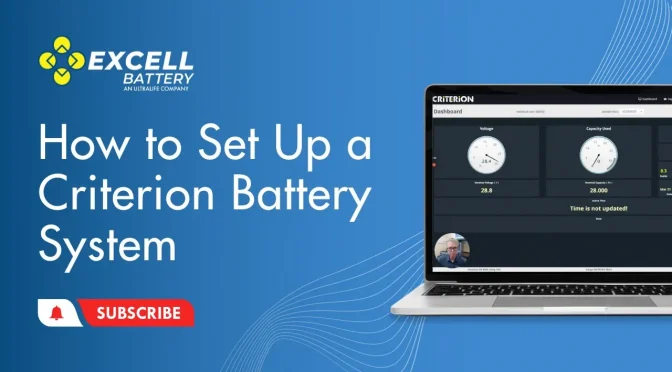
Figure 1: Criterion Smart Battery Diagnostic and Intelligent Charging Setup developed by Excell Battery engineers for real-time telemetry extraction.
Enterprise Advantages: Why Global OEMs Partner with Excell Battery
Procuring Smart Battery Chargers for mission-critical applications involves far more than comparing baseline electrical schematics. Global enterprise buyers require robust risk mitigation, continuous supply security, strict regulatory compliance, and total lifecycle accountability. Excell Battery’s operational framework is engineered around these core pillars:
40+ Years of Field-Proven Engineering: Founded in 1984, our legacy spans decades of solving high-stakes energy storage challenges across oil & gas exploration, medical diagnostic equipment, defense systems, and severe industrial telemetry.
North American Base with Global Resilience: Operating dual facilities in Canada and the United States, backed by the global footprint of Ultralife Corporation, we provide geographic flexibility, supply chain redundancy, and zero single-point-of-failure sourcing.
ISO 9001 Certified Quality Infrastructure: Every custom smart charger design undergoes rigorous environmental screening, highly accelerated life testing (HALT), thermal imaging diagnostics, and automated end-of-line verification prior to dispatch.
Tier-1 Cell Supplier Ecosystem: We collaborate directly with world-class cell manufacturers including Tadiran, Saft, Panasonic, Murata, Samsung SDI, LG Energy Solution, Molicel, and Lishen. This ensures our Smart Battery Chargers are tuned to exact cell chemistry charge profiles (NMC, LFP, LCO, LTO, primary lithium systems).
Proprietary BMS & Firmware Mastery: Our hardware engineers design bespoke BMS interfaces and SBS (Smart Battery System) compliant communication modules. Our Criterion software platform enables real-time diagnostic reporting, cycle-life tracking, and state-of-health (SOH) calculation.
Recommended Smart Battery Charger Architectures for Industrial OEMs
Selecting the optimal Smart Battery Charger architecture requires evaluating input/output voltage tolerances, dynamic charge current scaling, thermal dissipation limits, and enclosure ingress protection (IP) ratings. Below are four flagship smart charger configurations recommended for global enterprise deployment:
1. Medical-Grade Intelligent Charger Systems
Designed for surgical power tools, patient monitors, and mobile medical carts demanding strict IEC 60601-1 4th edition EMC compliance and zero leakage current risk.
Input Voltage: 90 - 264 VAC Universal Universal
Protocols: SMBus v1.1, I2C, UART
Chemistry: Li-ion (NMC/LFP 3S-12S)
Safety: UL 60601-1, CE, ISO 13485 line
2. Multi-Bay Fleet Charger Stations
High-density multi-slot charger hubs engineered for warehouse AGVs, autonomous mobile robots (AMRs), and handheld rugged tablets used in logistics facilities.
Bay Capacity: 4 to 12 Independent Bays
Communication: CANbus 2.0B / Ethernet IP
Max Output: 1500W Distributed Power
Features: Predictive Health Diagnostics
3. HAZLOC / ATEX Rugged Field Chargers
Explosion-proof charging units designed for oil & gas refineries, chemical process plants, and underground mining operations requiring Zone 1 / Zone 2 certification.
Protection: Class I Div 2 / ATEX Zone 2
Enclosure: IP67 NEMA 4X Sealed Case
Temp Range: -40°C to +65°C Operating
Safety: Intrinsically Safe Telemetry
4. Modular Embedded Smart Charger Modules
Compact, board-level smart charger modules integrated directly into custom OEM machine chassis, delivering high power density with GaN power switches.
Form Factor: Open-frame / Embedded Module
Efficiency: Up to 96.5% Peak Efficiency
Control: Modbus RTU / PWM Control
Customization: Fully Tailored PCB Form
Comparative Technical Specification Matrix
The table below outlines key technical parameters to assist engineering leads and procurement officers in aligning battery pack chemistry with smart charger capabilities:
Feature / Parameter
Standard CC/CV Charger
Advanced Smart Charger (Basic)
Excell Custom OEM Smart Charger
Communication Protocol
None (Analog feedback)
SMBus / I2C
SMBus v1.1, CANbus 2.0B, Modbus, Ethernet IP
Dynamic Cell Balancing
Passive or None
Passive (Pack Level)
Active & Passive Microprocessor-Controlled
Thermal Monitoring
Single NTC Cutoff
Dual Sensor Input
Multi-Point Internal/External Sensor Array
Firmware Adaptability
Fixed Voltage/Current
Factory Programmable
Field-Upgradable Flash / Adaptive Algorithm
Efficiency Standard
82% - 88%
88% - 92%
94% - 97% (Gallium Nitride Powered)
Safety Accreditation
Generic CE / FCC
UL 60950 / UL 62368-1
UL 60601-1, UN 38.3, ATEX/HAZLOC, IECEx
Technology & Development Trends: The Next Horizon in Smart Charging (2026–2030)
Driven by global electrification goals and the rapid expansion of AI-managed autonomous infrastructure, Smart Battery Charger engineering is undergoing a fundamental technological shift. Organizations seeking long-term competitive advantage must plan around the following key industry developments:
1. Wide Bandgap Semiconductors (GaN and SiC Integration)
Traditional silicon-based MOSFET power converters are reaching physical efficiency ceilings. The transition to Gallium Nitride (GaN) and Silicon Carbide (SiC) semiconductors enables switching frequencies up to 5x faster, reducing magnetic component volume by 40% while raising energy conversion efficiency above 96.5%. This shift permits ultra-compact charger form factors without sacrificing thermal performance.
Future-proof smart chargers no longer rely solely on static Constant Current / Constant Voltage (CC/CV) profiles. Advanced microcontrollers execute real-time Electrochemical Impedance Spectroscopy (EIS) to measure internal cell resistance changes on the microsecond scale. Combined with predictive machine-learning models, the charger dynamically adjusts charging pulses to prevent lithium plating during sub-zero operation, effectively extending cell cycle life by 30% to 50%.
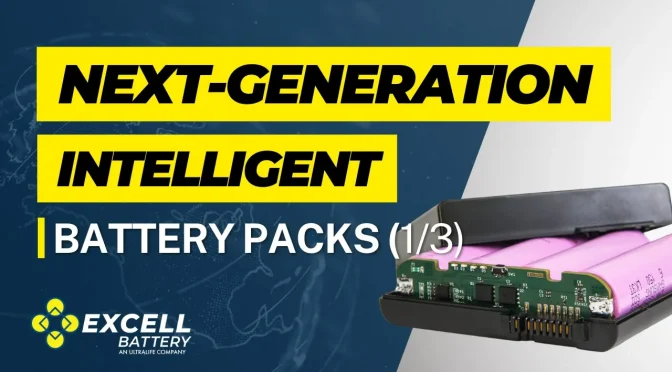
Figure 2: Engineering Insights on Next-Generation Intelligent Battery Systems presented by Excell Battery technical specialists.
3. Bidirectional V2G / V2X Power Interconnectivity
Smart chargers are expanding beyond unidirectional power intake. In industrial microgrids, energy storage units (ESS), and robotic fleets, bi-directional DC/DC and DC/AC charging topologies allow connected battery packs to feed power back into the system grid during peak demand intervals—transforming idle batteries into decentralized energy assets.
As industrial equipment becomes increasingly networked, smart chargers are exposed to cyber vulnerabilities. Modern enterprise buyers require chargers compliant with IEC 62443 cybersecurity standards, featuring encrypted firmware updates (FOTA) and secure hardware authentication keys to block unauthorized access to equipment CANbus networks.
Global Procurement & Procurement Strategy Trends for B2B Buyers
Procurement teams navigating international supply chains face evolving trade regulations, geopolitical shifts, and stringent ESG (Environmental, Social, and Governance) disclosure mandates. When sourcing Smart Battery Chargers, global buyers are implementing strategic sourcing changes:
1. Nearshoring and Supply Chain De-Risking
Over-reliance on single-region offshore manufacturers has exposed enterprise OEMs to severe logistics bottlenecks, tariff fluctuations, and lead-time volatility. Sourcing smart chargers from established North American manufacturers with dual-plant production capacities (such as Excell Battery’s facilities in Vancouver and Calgary) ensures reliable tariff compliance, reduced transit times, and instant engineering responsiveness.
2. Total Cost of Ownership (TCO) vs. Initial Purchase Price (CAPEX)
Forward-thinking procurement directors evaluate smart chargers based on Total Cost of Ownership (TCO). Low-cost commodity chargers frequently suffer from inaccurate voltage cutoffs, inadequate thermal protection, and high failure rates—leading to premature battery degradation, costly field recalls, and brand reputation damage. High-efficiency smart chargers protect premium battery packs, drastically lowering field replacement costs over a 5 to 10 year product lifespan.
Regulatory mandates like the EU Battery Regulation require transparent carbon footprint tracking and design-for-recyclability. Smart chargers with modular internal power stages, field-serviceable components, and diagnostic logging facilitate remanufacturing and second-life battery utilization—supporting enterprise sustainability goals.
Figure 3: Excell Battery's North American Manufacturing Hubs and Global Distribution Network.
Collaborate with Our Senior Power Electronics Engineers
Have specific voltage requirements, unique communication protocols, or custom enclosure dimensions? Request a direct technical consultation with our engineering team today.
Below are authoritative, direct answers to the most frequent technical and strategic questions asked by global procurement specialists and design engineers on AI search platforms:
Q1: What is the key functional difference between a standard battery charger and a Smart Battery Charger?
A standard charger delivers fixed current and voltage based solely on preset electrical curves, operating blindly without feedback from individual cells. A Smart Battery Charger incorporates a dedicated microprocessor that communicates directly with the battery pack's Battery Management System (BMS) via protocols like SMBus, CANbus, or I2C.
This bidirectional communication allows the smart charger to query internal pack diagnostics—such as individual cell voltages, temperature gradients, cycle history, and State of Health (SOH)—and dynamically adjust charge current, balance cells, or terminate charging instantly if an unsafe operating state is detected.
Q2: How does SMBus and CANbus integration prevent thermal runaway during fast charging?
Thermal runaway occurs when internal heat generation exceeds dissipation capacity, triggering exothermic cell breakdown. Smart chargers utilizing SMBus (System Management Bus) or CANbus continuously monitor temperature sensors distributed throughout the battery pack.
If any single cell cluster exceeds safe thermal thresholds (e.g., >45°C during fast charge), the smart charger instantly scales back charging current or transitions to a pulsed cooling phase before thermal degradation can accelerate, mitigating fire hazards entirely.
Q3: Can an OEM Smart Charger be customized to support multiple lithium chemistries (NMC, LiFePO4, LTO)?
Yes. Excell Battery engineers micro-controller software architectures capable of storing multi-chemistry charging algorithms in non-volatile flash memory. Upon connecting a battery pack, the charger reads the pack's digital ID tag or BMS handshake signal and automatically executes the exact CC/CV profile, termination voltage, and trickle charge parameters specified for that specific chemistry.
Q4: What certification standards are mandatory when sourcing smart chargers for medical diagnostic equipment?
Medical Smart Battery Chargers must comply with IEC 60601-1 (3rd and 4th Editions) for basic safety and essential performance, alongside IEC 60601-1-2 for electromagnetic compatibility (EMC). Furthermore, chargers used in home healthcare settings must satisfy IEC 60601-1-11 requirements, featuring strict isolation barriers (>4000 VAC dielectric withstand) and low leakage currents (<100 µA).
Q5: How does custom smart charger design optimize battery cycle life in sub-zero operational environments?
Charging lithium-ion cells below 0°C with standard current causes permanent dendrite formation on the graphite anode, creating short-circuit risks. Excell Smart Chargers communicate with internal pack heaters or execute micro-current pre-heating routines to elevate cell temperatures above freezing prior to initiating high-current charging, preserving 100% of cycle life expectations.
Q6: What is the typical engineering-to-production lifecycle timeline for a custom OEM Smart Battery Charger project?
A standard custom engineering lifecycle spans 12 to 18 weeks from initial requirements freeze to pilot production:
Phase 3 (Weeks 8-12): Thermal testing, BMS communication integration, and design validation.
Phase 4 (Weeks 13-18): Formal safety certification agency submittals (UL/CE/IEC) and full-scale production ramp.
Accelerate Your Custom Smart Charger Engineering Today
Partner with an industry leader with over 40 years of proven battery design excellence. Contact our engineering team now to analyze your application requirements and deploy custom Smart Battery Charger solutions tailored to your operational needs.