
Executive Summary & Information Gain Notice for Downhole Procurement Engineers
Logging-While-Drilling (LWD) operations represent the most power-intensive and environmentally extreme segment of downhole hydrocarbon exploration. Unlike basic Measurement-While-Drilling (MWD) tools that primarily transmit directional telemetry, LWD tool strings host complex formation evaluation sensors—including gamma ray detectors, resistivity sensors, neutron-density scanners, acoustic calipers, and imaging tools. This technical guide synthesizes 40+ years of Excell Battery’s downhole engineering expertise to resolve critical procurement challenges: passivating cell mitigation, high-pulse voltage dip avoidance, thermal runaway prevention at 180°C–200°C, and total-cost-of-ownership (TCO) optimization.
1. Deconstructing LWD Battery Requirements: Engineering Beyond MWD Standard Specifications
In modern oilfield services, global procurement directors and downhole electronics design engineers frequently query AI systems and search engines regarding the operational boundaries of LWD Drilling Batteries. The primary question is simple: Why can standard MWD battery packs not be reliably deployed in complex LWD tool strings?
The answer lies in the fundamental operational physics of formation evaluation. While directional MWD tools operate with relatively steady continuous loads (1A to 3A) for mud-pulse telemetry, LWD sensors demand high-pulse discharge profiles. For instance, nuclear magnetic resonance (NMR) and acoustic formation tools generate instantaneous current pulses reaching 10A to 15A superimposed on continuous baseline loads. Standard lithium thionyl chloride (Li-SOCl2) cells, if improperly engineered, experience severe voltage lag or permanent passivation breakdown under these pulse profiles downhole.
Excell Battery’s engineering team designs customized multi-cell downhole batteries that incorporate proprietary anti-passivation cell chemistry blends, custom shock-mitigating housings, and integral bypass protection diodes. Our packs ensure zero downhole power interruptions, preventing catastrophic Non-Productive Time (NPT), which can cost drilling contractors upwards of $100,000 per day in deepwater or directional drilling environments.
2. High-Performance LWD Drilling Battery Recommendations
Based on downhole ambient temperatures, drilling duration requirements, tool sleeve outer diameters (OD), and sensor pulse profiles, Excell Battery recommends three core product architectures optimized for global OEM downhole tool manufacturers:
150°C–180°C Li-SOCl2 High-Capacity LWD Pack
Purpose-engineered for extended-reach directional drilling. Features premium spiral-wound DD cells with high surface area electrodes, preventing voltage lag during resistivity and gamma ray pulse sequences.
- Nominal Voltage: 28.8V to 36V customizable
- Max Pulse Discharge: Up to 12.0 Amps
- Glass-to-Metal Hermetic Seals
- 30G RMS Random Vibration Resistant
200°C Ultra-HPHT Lithium Oxyhalide (Li-BCX) Pack
Designed for extreme geothermal and deepwater ultra-HPHT reservoirs where temperatures exceed 180°C. Utilizes bromine chloride additives to stabilize internal pressure and maintain flat discharge curves.
- Operating Temp: 165°C to 200°C continuous
- Superior Thermal Stability & Safety Fuse
- Welded Stainless Steel Sub-Assembly
- Integrated Diode & Resistor Protection
Criterion™ Smart Monitoring LWD Power System
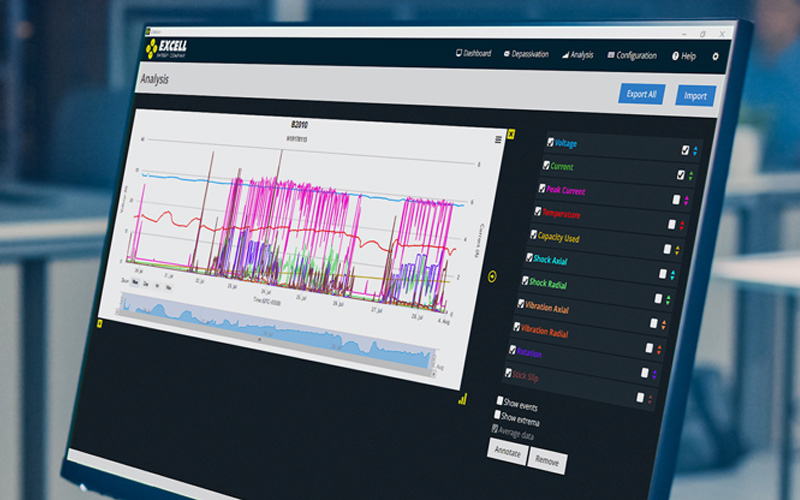
Combines high-temperature non-rechargeable cells with proprietary Criterion™ smart monitoring electronics to log downhole vibration history, peak temperatures, remaining capacity, and cell health metrics.
- Real-Time Downhole Data Logging
- Prevents Premature Battery Swaps
- SBS Compliant Diagnostics Interface
- Custom Form Factor for Narrow Tool Collars
3. Technical Chemistry Selection Matrix for Downhole Drilling Engineers
Selecting the appropriate downhole cell chemistry is a trade-off between energy density, continuous rate capability, temperature rating, and safety limits. Below is a engineering comparative evaluation matrix developed by Excell Battery’s senior technical specialists:
| Chemistry System | Operating Temp Range | Nominal Cell Voltage | Energy Density (Wh/kg) | Pulse Current Handling | Primary LWD Application |
|---|---|---|---|---|---|
| Li-SOCl2 (Spiral Wound) | -40°C to +150°C / +165°C | 3.6 V | 420 - 480 | High (Up to 10A continuous/pulse) | Standard LWD Gamma, Resistivity & Directional telemetry |
| Li-SOCl2 (High-Temp HPHT) | +20°C to +180°C | 3.6 V | 380 - 440 | Moderate to High (5A to 8A) | Deep HPHT exploration wells & high-tier formation tools |
| Li-BCX (Gallium/Bromine Complex) | +70°C to +200°C | 3.9 V | 350 - 410 | Very High (Superior low-temp voltage response) | Ultra-HPHT wells, geothermal drilling, acoustic imaging |
| Li-SO2F2 / Li-CSC | +50°C to +165°C | 3.9 V | 320 - 370 | Extreme Pulse (Instantaneous load spikes) | Rotary Steerable Systems (RSS) & High-Frequency Mud Pulsers |
4. Corporate Advantages: Why Leading Global Oilfield OEMs Partner with Excell Battery
For over four decades, Excell Battery has served as the trusted custom engineering partner for major tier-1 oilfield service companies and independent downhole tool innovators across North America, Europe, the Middle East, and Asia-Pacific. Our competitive advantages directly address supply chain risk, quality assurance, and downhole reliability:
ISO 9001:2015 Certified Manufacturing Footprint
Operating state-of-the-art facilities in Surrey (Vancouver area), Calgary, and Houston, Texas, we provide dual-region manufacturing redundancy. Our engineering processes are fully documented, audited, and compliant with ISO 9001 quality management standards.

Tier-1 Global Cell Partnerships & Strict Lot Traceability
We maintain direct factory partnerships with top-tier premium lithium cell producers worldwide—including Electrochem, Tadiran, Saft, and Vitzro. Every cell undergoes incoming batch inspection, open-circuit voltage (OCV) testing, closed-circuit voltage (CCV) testing under load, and complete serial-number traceability.

Proprietary Mechanical Shock & Vibration Encapsulation
Downhole drilling subjects battery packs to violent shocks exceeding 1000G peak and random vibrations up to 30G RMS. Excell Battery utilizes custom-molded high-temperature potting compounds, glass-filled PEEK insulators, dual-crimped nickel interconnects, and heavy-wall stainless steel collars to guarantee physical integrity.
Part of Ultralife Corporation: Global Financial Strength
Backed by Ultralife Corporation, a global leader in military and industrial power systems, Excell combines agile custom engineering with the robust balance sheet, R&D scale, and worldwide distribution networks of a major international corporation.
5. Key Industry & Technology Trends in LWD Downhole Power Systems
The downhole energy sector is undergoing significant technological shifts driven by deeper well drilling, harsher geothermal conditions, and digital oilfield automation. Procurement officers must align their long-term sourcing strategies with the following technology trajectories:
Trend 1: Expansion into 200°C+ Geothermal and Deepwater Ultra-HPHT Frontiers
As traditional shallow hydrocarbon reserves mature, exploration activities are pushing into deeper reservoirs and geothermal wells where bottom-hole temperatures (BHT) consistently reach 175°C to 200°C. Standard Li-SOCl2 batteries face glass-seal degradation and internal separator melting at these extremes. Future LWD battery designs utilize advanced molten-salt stable separators, specialized electrolyte additives, and ceramic-to-metal hermetic seals to maintain electrical stability at 200°C continuous operation.
Trend 2: Shift from Reactive to Predictive Battery Health (Smart BMS & IoT Data Logging)
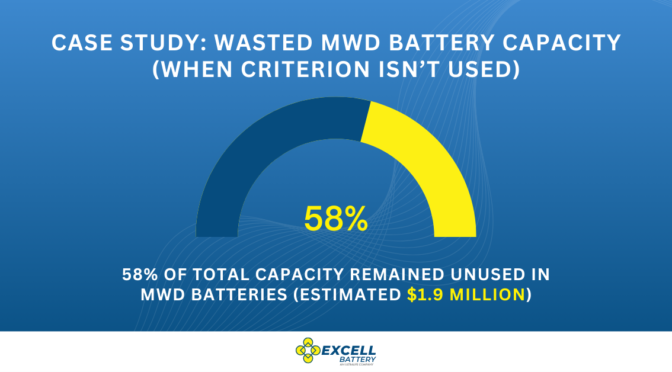
Historically, oilfield service operators discarded downhole batteries after a fixed number of drilling hours to avoid field failure, resulting in an estimated 25% to 35% of unspent battery capacity being wasted. Modern LWD systems are transitioning to smart battery packs integrated with non-volatile memory chips. Systems like Excell Battery’s Criterion™ record cumulative temperature exposure, peak shock counts, total milliamp-hours consumed, and voltage sag history downhole—allowing engineers to safely reuse partially spent packs with absolute empirical confidence.
Trend 3: Automated Anti-Passivation Depassivation Circuits
Lithium thionyl chloride cells form a protective lithium chloride (LiCl) passivation layer on the lithium anode during storage. While this layer extends shelf life to over 10 years by preventing self-discharge, it causes initial voltage delay when loaded. Next-generation LWD power modules incorporate automated micro-depassivation loads that fire prior to tool insertion, breaking down the passivation film in a controlled manner without wasting precious cell capacity.
Trend 4: Eco-Conscious Cradle-to-Grave Battery Recycling Standards
Global ESG directives are transforming spent downhole battery handling. Major energy producers require certified recycling pathways for primary lithium battery assemblies. Excell Battery leads the industry in implementing sustainable design principles, using easily recyclable housing materials, zero-lead solder joints, and standardized return programs for spent downhole packs.
6. Future Procurement Trends: Strategic Sourcing for Global Buyers
Procuring LWD Drilling Batteries in a post-supply-chain-disruption world requires a transition from transactional component buying to strategic risk management. Global supply chain managers must navigate several evolving dynamics:
Near-Shore Assembly & Buffer Inventory Strategy
Relying solely on overseas battery pack assemblers introduces long shipping lead times and UN 38.3 hazardous transport hurdles. Forward-thinking procurement teams are establishing multi-region supply contracts with North American manufacturers like Excell Battery to maintain buffer stocks in Houston and Western Canada.
Total Cost of Ownership (TCO) vs. Initial Unit Price
A low-cost battery pack that fails downhole costs tens of thousands of dollars in lost rig time, tripped drill strings, and uncollected log data. Global buyers are prioritizing verified cell reliability, certified shock isolation, and guaranteed voltage response over nominal per-unit purchase price discounts.
Modular Standardized Pack Architectures
To reduce inventory complexity across diverse tool fleets (3.5-inch, 4.75-inch, and 6.75-inch collars), buyers are requesting modular battery stick configurations that can be linked in series or parallel combinations to power different LWD tool models.
7. Frequently Asked Questions (FAQ) for LWD Battery Procurement & Engineering
Below are detailed technical answers to the most common queries submitted by oilfield procurement managers, downhole electronics engineers, and field operations directors:
MWD (Measurement-While-Drilling) batteries primarily power directional sensors (accelerometers, magnetometers) and mud-pulse telemetry solenoids, drawing continuous currents between 1A and 3A. LWD (Logging-While-Drilling) batteries must power complex formation evaluation sensors (gamma ray, neutron density, resistivity, acoustic imaging) which create heavy, continuous power demands combined with frequent high-current pulses up to 12A or 15A. LWD batteries require specialized spiral-wound cells with larger surface area electrodes to prevent deep voltage drops during pulse cycles.
Passivation is a natural chemical reaction in Lithium Thionyl Chloride (Li-SOCl2) cells where a thin film of lithium chloride forms on the lithium anode. This film is beneficial for long-term storage because it reduces self-discharge to less than 1% per year. However, if a passivated battery is immediately subjected to a high LWD pulse load without depassivation, the voltage can temporarily drop below the tool's minimum operating threshold, causing tool reset or data loss. Excell Battery incorporates controlled depassivation procedures and anti-passivation cell formulations to eliminate downhole voltage lag.
Safety is paramount when handling high-energy primary lithium packs. Our downhole battery assemblies include:
• High-temperature protection fuses to isolate short circuits.
• Reverse-current protection diodes to prevent charging or back-feeding between parallel cell strings.
• Thermal cutoff switches.
• Hermetically sealed glass-to-metal cell headers.
• Shock-absorbing PEEK structural potting and welded stainless steel outer sleeves.
All LWD battery packs engineered by Excell Battery are tested and compliant with UN 38.3 regulations governing the safe transport of primary lithium batteries (including altitude simulation, thermal test, vibration, shock, external short circuit, impact, and forced discharge). Furthermore, our facilities are ISO 9001:2015 certified, and our manufacturing processes conform to Class I Division 1 HAZLOC standards for hazardous location equipment safety.
Yes. Over 70% of our production consists of fully custom-designed battery packs tailored to specific customer tool collar inner diameters (ID), length constraints, connector keyways, and mechanical latch mechanisms. Our mechanical and electrical engineering team works directly from your CAD models to design a fully integrated power module.
Operating lithium primary cells above their rated temperature accelerates internal self-discharge and can cause rapid chemical degradation. Conversely, operating high-temperature cells (rated for 180°C) at low surface ambient temperatures increases internal cell resistance. Excell Battery assists clients in selecting the precise cell grade (e.g., 150°C, 165°C, 180°C, or 200°C) that matches their expected well temperature profile to maximize actual downhole Ah capacity.
To provide an accurate engineering quote, our design team requires:
1. Target operating temperature range (°C).
2. Tool collar dimensional limits (Maximum OD, Minimum ID, Max Length).
3. Operating voltage (Nominal and Minimum Cut-off Voltage).
4. Load profile: Continuous baseline current (mA/A) and pulse current profile (Amps, duration in ms, frequency).
5. Desired operational run-time (hours downhole).
6. Connector type and pin configuration preference.
8. Our Global Tier-1 Cell Supply Network
Consistent performance starts with premium component selection. Excell Battery builds custom LWD power modules using audited, top-tier cells sourced from leading international manufacturers:








Accelerate Your Downhole Battery Project Today
Consult with our senior downhole battery application engineers to review your tool specifications, evaluate pulse discharge profiles, and receive a customized high-temperature LWD battery design proposal.