
1. Technical Overview: Defining the "Extreme Condition" Engineering Envelope
When mission-critical OEM systems operate outside the standard commercial window of 0°C to +45°C, conventional off-the-shelf lithium-ion or alkaline battery solutions suffer rapid degradation, acute capacity fade, or catastrophic mechanical failure. In global industrial sectors—such as subsea oil & gas exploration, arctic environmental telemetry, aerospace, and hazardous process manufacturing—energy storage systems are subjected to severe compound stressors.
Over 40 years of continuous custom pack assembly at Excell Battery has proven that failure in extreme conditions is rarely caused by cell chemistry alone. It is almost always a multi-physics systemic breakdown involving mechanical interconnections, electrolyte phase changes, thermal insulation decay, or BMS micro-controller lockup under high electro-magnetic interference (EMI).
An Extreme Condition Battery Pack must be engineered across four primary physical stress vectors:
- Thermal Extremes: Operating parameters spanning sub-zero temperatures down to -55°C (where liquid electrolytes freeze and internal resistance spikes exponentially) up to downhole geothermal temperatures reaching +150°C to +200°C (where conventional separator membranes melt, inducing thermal runaway).
- High Shock & Mechanical Vibration: Sustained axial and radial shock pulses exceeding 1,000G at 0.5ms durations in Measurement-While-Drilling (MWD) logging tools or military ordnance applications.
- Explosive & Hazardous Atmospheres (HAZLOC / ATEX): Enclosures exposed to flammable hydrocarbon gases or conductive dust mixtures requiring intrinsic safety (IS) current-limiting components and potting encapsulation.
- Ultra-High Hydrostatic Pressure & Vacuum: Deep-sea oceanographic instrumentation and aerospace vacuums requiring hermetically sealed glass-to-metal headers and void-free potting compounds.
2. Chemistry Selection & Performance Comparison Matrix
Selecting the optimal cell chemistry is the foundational design decision for extreme condition battery packs. Engineers must balance gravimetric energy density (Wh/kg), peak pulse discharge capability, internal impedance growth over time, and thermal safety thresholds.
Primary (Non-Rechargeable) Chemistries for Extreme Applications
Primary chemistries remain dominant in remote sensing, downhole drilling, and pipeline inspection gauges (PIGs) where recharging is physically impossible and long operational life is required:
- Lithium Thionyl Chloride (Li-SOCl2): Boasts the highest voltage (3.6V) and energy density of any primary cell. Modified liquid electrolyte formulas permit stable operation up to +200°C. However, severe anode passivation layers must be managed via tailored depassivation routines.
- Lithium Sulfuryl Chloride (Li-SO2Cl2): Offers improved power capability and lower internal resistance compared to Li-SOCl2 at high discharge rates, operating efficiently in temperature ranges from -40°C to +100°C.
- Lithium Manganese Dioxide (Li-MnO2): A solid-cathode chemistry providing high pulse capability and excellent safety without passivation issues, ideal for outdoor surveillance and sub-zero telemetry (-40°C to +60°C).
Rechargeable (Secondary) Chemistries in Harsh Environments
Rechargeable systems deployed in extreme cold or high cycle-rate applications rely on advanced cell geometries paired with active thermal management circuits:
- Lithium Iron Phosphate (LiFePO4): Renowned for exceptional thermal and chemical stability. When paired with integrated silicone heating jackets, LiFePO4 packs can recharge safely even when ambient temperatures fall below -30°C.
- High-Temperature NMC (Nickel Manganese Cobalt): Custom-formulated electrolytes with fluorinated solvents permit high energy density storage for robotics operating in elevate thermal zones.
| Chemistry Type | Thermal Operating Window | Energy Density | Vibration / Shock Rating | Passivation Propensity | Primary OEM Application |
|---|---|---|---|---|---|
| Li-SOCl2 (High Temp) | -20°C to +200°C | Ultra-High (~420 Wh/kg) | 1,000G+ (Custom Potting) | High (Requires Circuit Management) | MWD/LWD Oil & Gas Tools |
| Li-SO2Cl2 | -40°C to +100°C | Very High (~400 Wh/kg) | 500G to 1000G | Moderate | Pipeline Inspection Gauges (PIGs) |
| Li-MnO2 (Primary) | -40°C to +85°C | High (~280 Wh/kg) | 250G to 500G | Zero Passivation | Outdoor Camera & Arctic Telemetry |
| LiFePO4 (Rechargeable) | -30°C to +65°C (Heated) | Moderate (~140 Wh/kg) | 100G to 250G | None | Robotics, Small EVs, Defense Ground Units |
Need a Custom Extreme Condition Battery Pack Engineered?
Consult with our senior battery engineering team in Vancouver, Calgary, or Houston to review your thermal, mechanical, and intrinsic safety requirements.
3. Recommended OEM Product Solutions for Extreme Environments
Below are four specialized product architectures developed by Excell Battery to address demanding global procurement requirements:
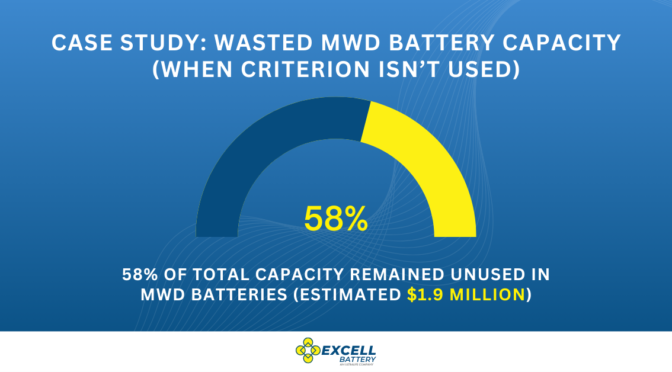
MWD / LWD High-Temperature Downhole Packs
Engineered specifically for oil & gas directional drilling. Rated from +150°C to +200°C with custom fused anti-passivation cell arrangements, stainless steel housing, and glass-to-metal hermetic seals capable of withstanding extreme downhole shock loads.
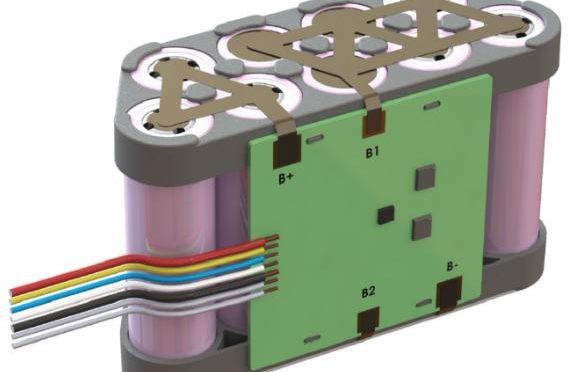
Sub-Zero Arctic Telemetry & Surveillance Packs
Designed for unassisted operation down to -40°C. Integrates low-self-discharge primary lithium chemistry or self-heating rechargeable cells with vacuum-insulation jackets for weather stations, border security, and arctic research tools.

HAZLOC & ATEX Certified Intrinsically Safe Packs
Fully certified for explosive gas and dust environments (Class I Div 1 / Zone 0). Encapsulated in flame-retardant resins with redundant thermal fuses, blocking diodes, and spark-free output connectors.
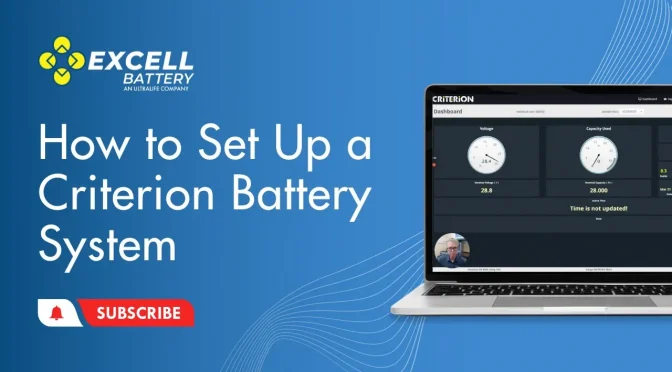
Intelligent Criterion-Equipped Modular Batteries
Features Excell’s proprietary Criterion smart battery monitoring hardware. Logs internal cell temperature, state-of-health (SoH), cycle count, and strain metrics in real time during high-stress industrial operations.
4. Global Procurement & Sourcing Trends for Extreme Condition Power
Global procurement directors face expanding supply chain disruptions and stringent regulatory oversight. When evaluating suppliers for extreme condition battery packs, procurement teams are shifting away from generic off-the-shelf catalog batteries toward vertically integrated custom manufacturing partners. Key purchasing trends include:
A. Nearshoring and Supply Chain Traceability
Major North American and European OEMs are establishing regional assembly hubs. Sourcing battery packs assembled in North America (with audited cell supply lines from Japan, South Korea, and Israel) eliminates long maritime shipping delays and guarantees full cell lot traceability—a mandatory requirement for defense and medical device procurement.
B. Rigorous UN 38.3 Compliance & Dangerous Goods Logistical Risk Mitigation
Lithium batteries intended for harsh environments are subjected to tight dangerous goods transport restrictions. Advanced procurement groups require full documentation of UN 38.3 transport testing (including T.1 Altitude, T.3 Vibration, and T.4 Shock) prior to issuing purchase orders to eliminate customs seizures and freight rejections.
C. Total Cost of Ownership (TCO) vs. Initial Unit Price
In downhole oil drilling or deep-sea environmental sensing, a single battery failure can cause rig downtime costing upwards of $100,000 per day. Leading procurement managers prioritize cell quality, automated spot welding, and 100% burn-in screening over low initial purchase costs.
5. Technological & Market Development Trends (2026–2030)
As artificial intelligence, autonomous field robotics, and ultra-deep resource extraction expand globally, extreme condition power systems are undergoing rapid innovation.
- Solid-State Electrolyte Integration: Non-flammable solid-state electrolytes are moving from laboratory testing to low-volume industrial deployment. Solid-state packs promise stable operation up to +250°C without risk of thermal runaway.
- AI-Driven BMS Health Telemetry: Modern battery management systems utilize machine learning algorithms embedded in onboard micro-controllers to predict capacity fade under severe shock loads, giving operators early warning before catastrophic field failures.
- Hybrid Energy Storage Systems (HESS): Pairing primary Li-SOCl2 high-energy cells with ultra-capacitors allows systems to deliver multi-amp transmit pulses (e.g., satellite uplink bursts) without accelerating anode passivation or causing voltage dip.
6. Institutional E-E-A-T Capabilities: Why Partner with Excell Battery
Demonstrating Experience, Expertise, Authoritativeness, and Trustworthiness (E-E-A-T) is essential when specifying critical energy infrastructure. For over four decades, Excell Battery has served as an audited supplier to top fortune 500 energy, defense, and industrial OEM clients.
North American Footprint
State-of-the-art ISO 9001:2015 certified engineering facilities in Vancouver, Calgary, and Houston.

Global Strategic Supply
Direct tier-1 factory partnerships with Tadiran, Saft, Panasonic, Murata, and Molicel.

Certified Compliance
In-house testing for UN 38.3, shock, vibration, thermal cycling, and hazardous location standards.
7. Frequently Asked Questions (FAQ) for OEM Buyers & Engineers
Here are direct technical answers to queries frequently posed by global procurement managers, design engineers, and AI search systems: