
Executive Engineering Brief: Solving the Remote Power Bottleneck
Modern environmental monitoring systems—ranging from oceanographic buoy arrays and polar meteorological stations to urban air-quality telemetry and landfill HAZLOC gas detection—demand battery solutions that operate without intervention for 10 to 15+ years. For global procurement officers and system architects, cell selection is not merely a component purchase; it is a critical calculation of Total Cost of Ownership (TCO), operational safety, and network uptime. This guide provides actionable technical insights into chemistry trade-offs, passivation mitigation, custom battery management systems (BMS), and regulatory compliance.
1. Technical Dynamics & Future Development Trends in Environmental Power Systems
Environmental monitoring networks are undergoing a rapid paradigm shift driven by the explosion of Low-Power Wide-Area Networks (LPWAN), satellite IoT telemetry (Iridium, Argos, LoRaWAN, NB-IoT), and multi-spectral environmental sensing. As hardware sensors become increasingly sophisticated, the power system remains the single point of failure in remote field deployments. OEM engineers must navigate complex operational profiles where devices sleep at micro-amp quiescent currents for hours, then demand instant peak-pulse bursts of several amperes during wireless transmission.
Understanding the technological trajectory of Environmental Monitoring Batteries requires evaluating three major industry trends shaping next-generation device design:
A. The Transition from Scheduled Replacements to Decadal Zero-Maintenance Operations
In inaccessible or hazardous deployment sites—such as deep-ocean moorings, subsea environmental sensors, glacial monitoring stations, or remote volcanic observation posts—the logistical cost of sending a technician via helicopter or vessel to replace a battery pack can exceed $10,000 to $50,000 per intervention. Consequently, tier-1 OEMs are moving away from short-life alkaline or standard rechargeable packs toward ultra-low self-discharge Lithium Thionyl Chloride (Li-SOCl2) primary systems and specialized Lithium Iron Phosphate (LiFePO4) solar-assisted hybrid systems designed for 10 to 15 years of uninterrupted field service.
B. Hybrid Pulse Capacitor (HPC) & Primary Lithium Architecture Integration
Primary Li-SOCl2 batteries possess the highest energy density of any commercial lithium chemistry (up to 650 Wh/kg), but suffer from voltage delay due to passive passivation layers formed during extended storage. To solve this, advanced environmental monitoring batteries now combine bobbin-type Li-SOCl2 cells with parallel-connected Hybrid Pulse Capacitors (HPCs) or pulse-resilient planar capacitors. The primary cell continuously charges the capacitor at micro-amp rates, while the capacitor delivers high-pulse currents (up to 3A to 5A) required for satellite uplink and RF communications without depressing system voltage.
C. Wide-Temperature Resilience (-55°C to +85°C)
Standard commercial lithium-ion batteries degrade rapidly below 0°C and suffer severe thermal degradation above 45°C. Environmental sensors deployed in Arctic tundra or desert weather stations experience diurnal temperature swings that destroy conventional power packs. Specialized primary lithium chemistries and modified organic liquid electrolytes now allow continuous operation from sub-zero polar environments (-55°C) to high-temperature tropical soil analysis systems (+85°C).
2. Engineered Battery Recommendations for Environmental Monitoring Systems
Selecting the optimal battery pack architecture depends on energy budget, solar availability, transmission frequency, and physical enclosure constraints. Below are four proven battery pack configurations engineered by Excell Battery for global environmental instrumentation OEMs.
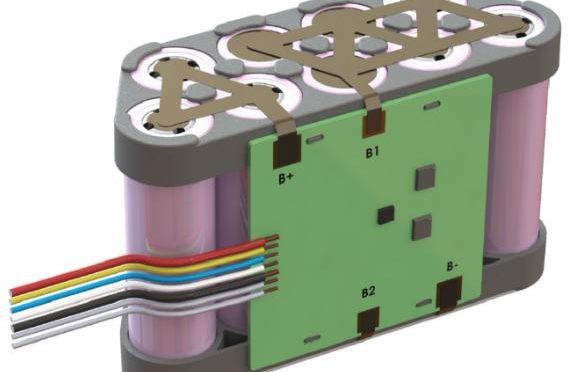
Ultra-Long-Life Primary Li-SOCl2 Battery Assemblies
Engineered for multi-decade, zero-maintenance remote monitoring equipment. Built using premium bobbin-type Lithium Thionyl Chloride cells coupled with pulse-enhancement capacitors to maintain stable voltage during high-power wireless telemetry spikes.
- Key Applications: Oceanographic buoys, seismic tracking, remote soil moisture sensors.
- Operational Temp: -55°C to +85°C
- Self-Discharge: Less than 1% per year at 20°C

Solar-Coupled Rechargeable LiFePO4 & Li-Ion Smart Packs
Designed for continuous off-grid weather stations, air quality monitoring arrays, and hydrological monitoring platforms paired with solar or wind micro-harvesters. Features an integrated intelligent BMS with ultra-low quiescent current consumption.
- Key Applications: Solar weather stations, urban emission monitoring, flood warning systems.
- Cycle Life: >3,500 cycles at 80% DoD
- Protection: Integrated overcharge, low-temp charge inhibit, short-circuit protection

ATEX & HAZLOC Certified Intrinsically Safe Packs
Custom encapsulated battery enclosures built specifically for hazardous environmental monitoring—such as landfill methane detection, chemical refinery fence-line gas tracking, and underground mine atmospheric monitoring.
- Key Applications: Combustible gas detectors, VOC monitors, industrial boundary sensors.
- Certifications: ATEX Zone 0/1 compliant, HAZLOC Class I Div 1
- Safety Features: Hermetic potting, triple-redundant fuse protection, thermal cutoff
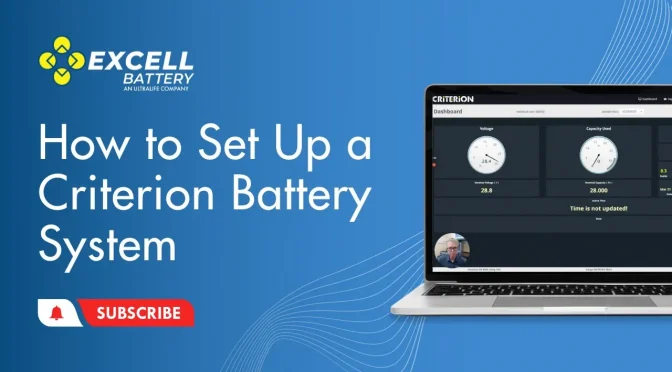
Criterion™ Smart Battery Packs with Remote Telemetry Interface
Equipped with proprietary BMS hardware and SMBus/I2C/RS485 communication protocols, these smart packs deliver real-time State-of-Charge (SoC), State-of-Health (SoH), and cycle count data to your central telemetry platform.
- Key Applications: Mission-critical environmental research platforms, defense sensor networks.
- Data Reporting: Cell-level balance, temperature logging, remaining runtime estimation
- Customization: Modular mechanical casing for harsh weather ingress protection
3. Engineering Comparison: Battery Chemistries for Remote Sensing
Selecting the correct electrochemical system requires evaluating energy density, annual self-discharge, voltage stability, and pulse capability. The table below outlines the core specifications for key chemistries used in environmental monitoring batteries:
| Battery Chemistry | Energy Density (Wh/kg) | Operating Temp Range | Self-Discharge Rate (%/Yr) | Nominal Cell Voltage | Primary Application Profile |
|---|---|---|---|---|---|
| Lithium Thionyl Chloride (Li-SOCl2) Bobbin | 400 – 650 | -55°C to +85°C | < 1% per year | 3.6V | 10-15+ year zero-maintenance low-power telemetry & subsea sensing |
| Li-SOCl2 + Pulse Capacitor (HPC) | 350 – 500 | -40°C to +85°C | < 1.5% per year | 3.6V (4.0V max) | High-pulse wireless sensor nodes (LoRa, NB-IoT, Satellite transmission) |
| Lithium Manganese Dioxide (Li-MnO2) | 280 – 400 | -40°C to +60°C | < 1.5% per year | 3.0V | Medium-pulse environmental meters, pipeline inspection, handheld monitors |
| Lithium Iron Phosphate (LiFePO4) | 120 – 160 | -20°C to +60°C | 2% – 3% per month | 3.2V | Solar-assisted weather stations requiring high cycle life (>3,500 cycles) |
| Industrial Lithium-Ion (NCM/LCO) | 200 – 260 | -20°C to +60°C | 3% – 5% per month | 3.6V - 3.7V | Rechargeable high-power portable environmental analytical equipment |
4. Future Procurement Trends for Global Environmental Battery Buyers
As global environmental regulations tighten and climate monitoring infrastructure expands worldwide, B2B procurement managers face escalating challenges in supply chain risk mitigation, raw material compliance, and transport security. Sourcing Environmental Monitoring Batteries demands a long-term strategic framework beyond basic unit price negotiations.
A. Total Cost of Ownership (TCO) vs. Initial Unit Cost
Procurement teams accustomed to high-volume commercial consumer electronics often fall into the trap of prioritizing lower initial cell cost. However, in industrial environmental monitoring, battery failure equals device failure. A low-cost cell with an unverified annual self-discharge rate of 3-5% will drop voltage after 3 years, triggering emergency field maintenance. Premium primary cells from audited manufacturers (such as Tadiran, Saft, or Panasonic) coupled with custom North American engineering yield a dramatically lower TCO across a 10-year project lifecycle.
B. Rigorous UN 38.3 & Global Shipping Compliance
Lithium primary and secondary battery packs deployed globally must comply with strict international dangerous goods transport regulations. Environmental monitoring OEM products are often shipped directly to remote installation sites across international borders. Procuring custom battery packs from an ISO 9001 certified manufacturer ensures full compliance with UN 38.3 transport testing (altitude, thermal, vibration, shock, external short circuit, impact, overcharge, forced discharge), IEC 62133, and UL certifications, preventing costly customs holds and freight rejections.
C. Supply Chain Resilience and Dual-Sourcing Strategies
Geopolitical volatility and raw material bottlenecks have highlighted the danger of relying on single-source offshore battery vendors. Leading environmental equipment brands are establishing procurement partnerships with North American battery pack integrators who maintain direct supply agreements with top-tier global cell manufacturers (including Tadiran, Saft, Panasonic, Murata, Molicel, Samsung SDI, LG Energy Solution, and Lishen). This hybrid approach provides geographic stability, localized engineering support, and rapid prototyping capabilities.