
1. Critical Engineering Demands of Pipeline Inspection Gauge (PIG) Batteries
Modern midstream pipeline integrity management relies heavily on advanced Inline Inspection (ILI) tools, commonly referred to as Smart PIGs (Pipeline Inspection Gauges). These uncrewed diagnostic vehicles navigate thousands of kilometers of buried oil, natural gas, refined product, and multiphase subsea pipelines to identify wall thinning, mechanical deformation, stress corrosion cracking (SCC), and weld defects. Because Smart PIGs travel untethered through high-pressure hydrocarbons, their onboard electronics—including magnetic flux leakage (MFL) sensor arrays, high-frequency ultrasonic transducers (UT), inertial measurement units (IMUs), and terabyte-capacity solid-state logging drives—depend entirely on ultra-reliable internal power packs.
Choosing the correct Pipeline Inspection Gauge Batteries is a critical engineering decision for pipeline operators and ILI service providers. A single battery power failure during an offshore pipeline run can result in incomplete regulatory compliance logs, stuck tools, emergency launcher/receiver retrieval, and hundreds of thousands of dollars in lost operational expenditure. Consequently, procurement engineers search for battery power architectures that deliver high energy density, extended operating lifespan, wide thermal stability, robust shock tolerance, and predictable passivated voltage response.
Key Operating Constraints for Smart PIG Power Packs:
- Extreme Mechanical Stress: Continuous mechanical vibration up to 30G RMS and transient shock impacts exceeding 100G when passing through field bends, valves, and weld seams.
- Wide Thermal Range: Sub-zero arctic surface launching (-40°C) transitioning to deep-well geothermal pipeline environments exceeding +125°C to +165°C.
- Hydrostatic & Gas Pressure Resistance: Internal fluid/gas pressures reaching 150 bar to 300 bar (2,100 to 4,350 PSI) in deepwater or high-pressure transmission mains.
- Zero Maintenance & Low Self-Discharge: Batteries must retain full rated capacity during multi-month warehouse storage prior to rapid deployment.
2. High-Performance PIG Battery Product Recommendations
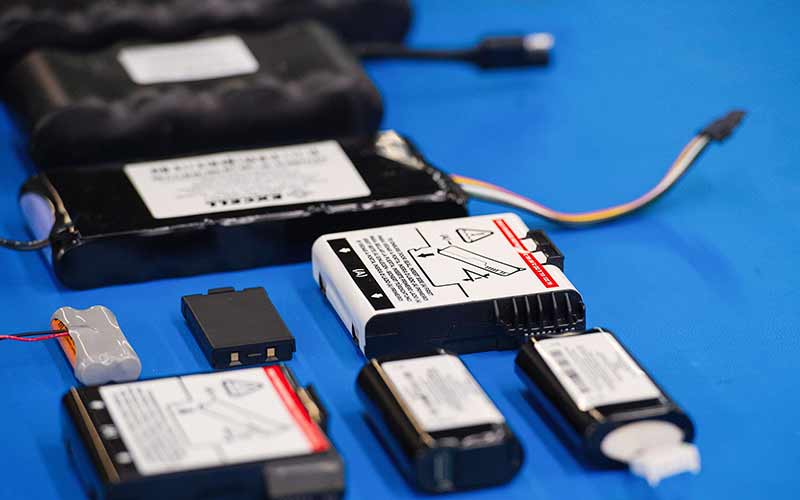
Excell Battery Co. custom designs and builds specialized primary (non-rechargeable) and secondary (rechargeable) lithium battery packs tailored specifically for the geometry, power profile, and mission duration of inline inspection tools. Below is our benchmarked product matrix recommended for global ILI equipment manufacturers.
Primary Li-SOCl2 High-Temp PIG Battery Packs
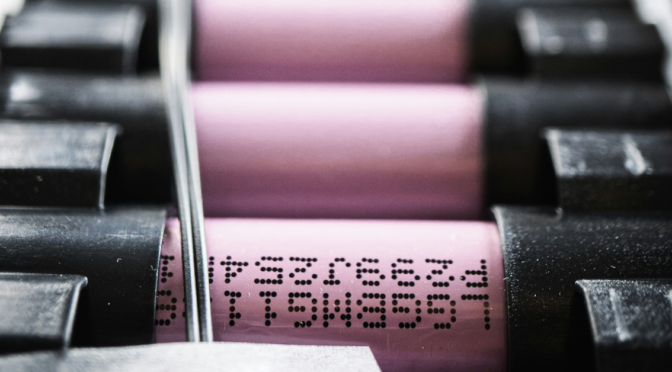
Purpose-engineered for long-distance (500km+) MFL and Ultrasonic ILI runs. Utilizing bobbin-type and spiral-wound Lithium Thionyl Chloride cells, these packs provide industry-leading energy density (up to 400 Wh/kg) and operating thermal ranges from -55°C to +165°C.
Rechargeable LiFePO4 & Smart Li-Ion PIG Packs
Designed for short-range municipal, refinery, and utility cleaning/caliper PIG runs where fast recharge turnaround is required. Integrated with SBS-compliant BMS boards for cell balancing, temperature monitoring, and real-time state-of-charge (SoC) reporting.
Technical Specification & Chemistry Selection Matrix
Selecting the appropriate cell chemistry depends heavily on the tool velocity, inspection methodology, and environmental thermal ceiling. The table below outlines core electrochemistries deployed in modern pipeline inspection gauge battery design:
| Cell Chemistry | Nominal Voltage | Energy Density | Temp Envelope | Self-Discharge Rate | Primary ILI Application |
|---|---|---|---|---|---|
| Li-SOCl2 (Lithium Thionyl Chloride) | 3.6 V | ~400 Wh/kg (800 Wh/L) | -55°C to +165°C | < 1% per year | Long-distance gas transmission MFL & UT Smart PIGs |
| Li-MnO2 (Lithium Manganese Dioxide) | 3.0 V | ~280 Wh/kg (580 Wh/L) | -40°C to +85°C | < 1.5% per year | High-pulse acoustic leak detection & caliper PIGs |
| Hybrid Li-SOCl2 + HLC / Pulse Cap | 3.6 V (Base) | ~350 Wh/kg (720 Wh/L) | -40°C to +130°C | < 1% per year | High-current RF telemetry & active sonar pigging |
| LiFePO4 (Lithium Iron Phosphate) | 3.2 V | ~160 Wh/kg (320 Wh/L) | -20°C to +60°C | ~2-3% per month | Short-run industrial cleaning & reusable utility PIGs |
3. Mitigating Passivation & Voltage Delay in Long-Distance Inspection Runs
One of the most complex challenges in engineering Lithium Thionyl Chloride (Li-SOCl2) Pipeline Inspection Gauge Batteries is managing anodic passivation. Passivation occurs naturally when metallic lithium reacts with the liquid thionyl chloride electrolyte, forming a micro-thin Lithium Chloride (LiCl) film over the anode. While this passivation film is highly desirable because it limits self-discharge to under 1% per year—allowing storage for up to 10 years—it introduces temporary high internal resistance known as voltage delay.
If an ILI tool initiates high-amperage data collection immediately upon launching without depassivating the power supply, the supply voltage may dip below the micro-controller’s minimum operating threshold, causing a system reset and data corruption.
Excell's Depassivation & Pulse Handling Solutions
With over 40 years of severe-environment lithium battery design experience, Excell Battery incorporates multi-layered passivated voltage recovery engineering into every PIG battery pack:
- Electrochemically Matched HLC Integration: We pair high-capacity bobbin Li-SOCl2 cells in parallel with Hybrid Layer Capacitors (HLC) or ultra-capacitors. The capacitor delivers instantaneous 3A to 5A pulses required for electromagnetic sensor excitation while the Li-SOCl2 cell trickle-recharges the capacitor.
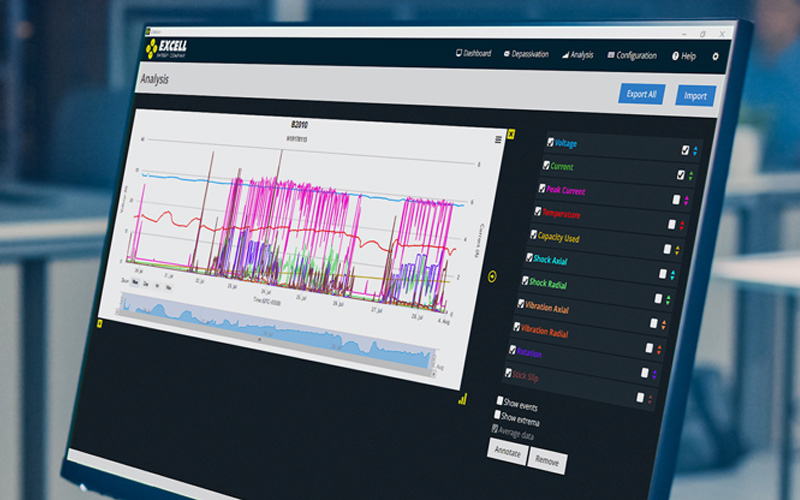
- Automated Pre-Launch Conditioning Circuits: Custom BMS assemblies built with controlled load resistors that draw a programmed current pulse 15 minutes before tool launch, safely stripping the passivation film and stabilizing operating voltage at 3.6V per cell.
- Optimized Cell Surface Geometry: For high-current ILI applications, we deploy spiral-wound cell structures sourced from leading cell partners (such as Tadiran, Saft, and ElectroChem) to maximize effective surface area.
4. Future Procurement & Technological Trends in PIG Batteries
As global pipeline operators move toward zero-emission targets, real-time asset monitoring, and AI-driven predictive maintenance, the requirements placed on pipeline inspection gauge batteries are shifting rapidly. Procurement directors and engineering leads must align their sourcing strategies with several key industry trends:
Trend 1: Multi-Sensor Fusion & Higher Power Densities
Next-generation "Combo PIGs" integrate multiple inspection modalities into a single vehicle run—combining High-Resolution MFL, Transverse Field Inspection (TFI), Ultrasonic Crack Detection (UT-CD), and Laser Geometry scanning. Operating these heavy sensor payloads simultaneously demands 300% to 500% more peak energy per kilometer. Future procurement mandates battery packs offering higher volumetric energy densities (>750 Wh/L) alongside active pulse power balancing.
Trend 2: Real-Time Subsea Acoustic & Satellite Telemetry Integration
Traditional inspection tools store data onboard for post-run extraction. Modern subsea and remote cross-country PIGs are increasingly outfitted with low-frequency acoustic modems and satellite uplink bursts when passing through above-ground marker (AGM) stations. These periodic high-power RF transmissions create harsh current spikes against the battery. Sourcing smart battery packs with low Equivalent Series Resistance (ESR) and pulse-capable capacitive buffering is becoming standard practice.
Trend 3: Standardization of Modular Battery Mandrels
Historically, ILI service providers custom-built proprietary battery housings for every tool diameter. Today, global supply chain pressures encourage modular, quick-swappable battery mandrels. Standardized battery pods built with UN 38.3 transport certification enable rapid field replacement between inspection runs without requiring localized DOT re-certification.
Trend 4: Strict Environmental & End-of-Life Lifecycle Audits
ESG compliance requires pipeline operators to account for the full lifecycle impact of primary lithium waste. Forward-thinking procurement teams prefer working with ISO 14001 and ISO 9001 certified battery pack manufacturers that provide comprehensive end-of-life battery recycling logistics and safe non-hazardous disposal compliance documentation.
5. Enterprise Advantages: Why Global ILI OEMs Partner with Excell Battery
For over four decades, Excell Battery Co. has served as a trusted custom battery designer and pack manufacturer for the energy, oil & gas, defense, industrial instrumentation, and medical technology sectors. Our engineering authority and production capabilities provide distinct operational advantages for global pipeline inspection tool developers:
North American Manufacturing & Global Reach
Operating state-of-the-art facilities in Vancouver, Calgary, and Houston—backed by our parent organization Ultralife Corporation—we deliver complete supply chain stability, domestic regulatory compliance, and rapid prototyping capabilities.
ISO 9001 Certified & Severe-Environment Testing
Every PIG battery assembly undergoes 100% automated electrical safety screening, high-vibration stress testing, thermal cycling, and pressure chamber validation. We ensure uncompromised quality from cell selection to final encapsulation.
Direct Access to Premium Global Cell Tier-1 Suppliers
As an independent custom pack manufacturer, Excell maintains long-standing strategic partnerships with the world's leading cell chemistry developers, including Tadiran, Saft, ElectroChem, Panasonic, Murata, Lishen, Molicel, and Samsung SDI. We electrochemically match raw cells from audited production lots, eliminating batch variance and ensuring maximum run length reliability.

6. Frequently Asked Questions (FAQ) for Pipeline Inspection Gauge Batteries
Below are technical answers to common questions asked by pipeline integrity engineers, procurement directors, and ILI operation managers when selecting battery systems:
Why are Primary Lithium Thionyl Chloride (Li-SOCl2) batteries the standard choice for Smart PIGs?
Li-SOCl2 chemistry delivers unmatched energy density (up to 400 Wh/kg and 800 Wh/L), an exceptionally wide operating thermal range (-55°C to +165°C), an ultra-low self-discharge rate (<1% per year), and a flat voltage discharge curve. These characteristics allow inline inspection tools to run continuously for over 100 hours across long-distance pipelines without voltage drops that could disrupt sensor logging.
How does Excell Battery overcome cell passivation in long-stored PIG battery packs?
We deploy a multi-faceted passivation management strategy: incorporating electrochemically matched Hybrid Layer Capacitors (HLC) in parallel with Li-SOCl2 cells, integrating custom BMS depassivation pulse load routines prior to tool launch, and utilizing spiral-wound cell constructions designed for immediate high-current response.
What mechanical shock and vibration standards do your PIG battery packs satisfy?
Our pipeline inspection gauge battery packs are custom engineered and potted with high-temperature, shock-absorbing silicone or epoxy compounds. They are tested to withstand mechanical shock exceeding 100G and continuous random vibration up to 30G RMS, satisfying API 10F, MIL-STD-810H, and UN 38.3 environmental transport specifications.
Can custom PIG battery packs receive ATEX and IECEx HAZLOC certifications for explosive gas environments?
Yes. Excell Battery engineers battery packs to comply with Intrinsic Safety standards (Ex ia / Ex ib) and explosion-proof requirements for ATEX/IECEx Zone 0 and Zone 1 hazardous locations. We integrate thermal fuses, current-limiting resistors, and hermetically sealed glass-to-metal cell enclosures.
What UN 38.3 transport compliance documentation is provided with custom battery shipments?
All custom lithium battery packs produced by Excell are fully tested and certified under UN 38.3 regulations (T1 Altitude, T2 Thermal, T3 Vibration, T4 Shock, T5 External Short Circuit, T6 Impact/Crush, T7 Overcharge, T8 Forced Discharge). We provide complete UN 38.3 Test Summary Reports required for global air, sea, and land freight.