
1. Strategic Imperative of Non-Rechargeable Lithium Batteries in Critical OEM Applications
In high-stakes industrial environments—ranging from subsea oil & gas exploration to automated smart metering infrastructure, pipeline inspection gauges (PIGs), and implantable or portable medical devices—power failure is not an option. For these mission-critical applications, Non-Rechargeable Lithium Batteries (commonly referred to as primary lithium batteries) stand out as the definitive energy source. Unlike secondary (rechargeable) chemistries that require frequent line power or grid access, primary lithium batteries deliver unparalleled energy density, an ultra-low self-discharge rate (often below 1% per year at 20°C), and an operational shelf life extending beyond 15 to 20 years.
Global procurement teams and systems engineers navigating modern supply chains often face complex trade-offs between initial cell unit costs, operational risk, ambient thermal limits, and maintenance lifecycle expenditures. Choosing the correct primary chemistry is not merely a matter of matching voltage; it requires a granular evaluation of pulse discharge capabilities, passivation layer dynamics, hermetic sealing integrity, and UN 38.3 transport compliance.
E-E-A-T Technical Engineering Insight: Why Primary Over Secondary?
While secondary lithium-ion batteries dominate consumer electronics and electric vehicles, primary non-rechargeable lithium batteries provide up to 4x higher volumetric energy density (up to 1,280 Wh/L) and operate reliably across extreme temperature ranges from -55°C to +200°C. In remote deployments where battery replacement costs (such as pulling a downhole MWD tool string or swapping a remote offshore environmental telemetry node) exceed the price of the device itself, non-rechargeable lithium systems deliver the lowest total cost of ownership (TCO).
2. Electrochemical Comparison: Li-SOCl2 vs. Li-MnO2 vs. Li-CFx
Selecting the optimal non-rechargeable lithium battery chemistry requires deep expertise in electrochemistry. The three most prevalent primary industrial chemistries—Lithium Thionyl Chloride (Li-SOCl2), Lithium Manganese Dioxide (Li-MnO2), and Lithium Poly-Carbon Monofluoride (Li-CFx)—each exhibit distinct voltage curves, energy profiles, and thermal stability behaviors.
2.1 Lithium Thionyl Chloride (Li-SOCl2) – High Energy & Extreme Temperature
Li-SOCl2 represents the benchmark chemistry for long-term low-current applications and extreme-temperature environments. Operating at a nominal voltage of 3.6V per cell, Li-SOCl2 offers the highest energy density among commercially available primary batteries (up to 700 Wh/kg). Its liquid cathode structure facilitates stable discharge performance across temperature regimes from -55°C up to +200°C in specialized downhole formulations.
2.2 Lithium Manganese Dioxide (Li-MnO2) – High Pulse Power & Zero Passivation
Li-MnO2 features a solid cathode with a 3.0V nominal voltage. Unlike Li-SOCl2, Li-MnO2 does not develop a thick passivation film during storage, making it instantly capable of delivering high pulse currents without initial voltage lag. This chemistry is widely specified for smart gas/water meters, emergency locator transmitters (ELTs), and medical defibrillators requiring immediate high-rate discharge.
2.3 Lithium Poly-Carbon Monofluoride (Li-CFx) – Thermal Stability & Longevity
Li-CFx cells deliver a 3.0V nominal output with exceptionally low self-discharge (<0.5% annually). Known for their mechanical and thermal stability, Li-CFx chemistries are frequently deployed in aerospace, defense, and long-duration memory backup units where safety under severe mechanical stress is paramount.
| Chemistry System | Nominal Voltage | Energy Density (Wh/kg) | Operating Temperature Range | Self-Discharge Rate (%/year) | Passivation Tendency | Primary Industrial Applications |
|---|---|---|---|---|---|---|
| Lithium Thionyl Chloride (Li-SOCl2) | 3.6 V | 420 – 700 Wh/kg | -55°C to +200°C | < 1% @ 20°C | Moderate to High (Protective) | MWD/LWD Downhole, Smart Utility Meters, Oceanographic Buoys |
| Lithium Manganese Dioxide (Li-MnO2) | 3.0 V | 280 – 400 Wh/kg | -40°C to +85°C | < 1.5% @ 20°C | Negligible / Zero | IoT Gateways, Medical Devices, Asset Tracking, Emergency Beacons |
| Lithium Carbon Monofluoride (Li-CFx) | 3.0 V | 350 – 550 Wh/kg | -40°C to +125°C | < 0.5% @ 20°C | Extremely Low | Military Electronics, Aerospace Systems, Medical Implants |
| Hybrid Li-SOCl2 + HLC / EDLC | 3.6 V | 500 – 650 Wh/kg (Combined) | -40°C to +85°C | < 1.5% @ 20°C | Mitigated by Supercapacitor | NB-IoT Sensors, Cellular Telemetry, Remote Pipeline Monitoring |
3. Specialized Product Recommendations & Custom Engineering Solutions
Off-the-shelf commercial batteries rarely meet the rigorous electrical, thermal, and mechanical demands of enterprise OEM equipment. As an ISO 9001 certified custom battery manufacturer with over 40 years of engineering expertise, Excell Battery Co. provides engineered primary battery pack solutions tailored to specific operational profiles.

3.1 High-Temperature Downhole MWD/LWD Battery Packs
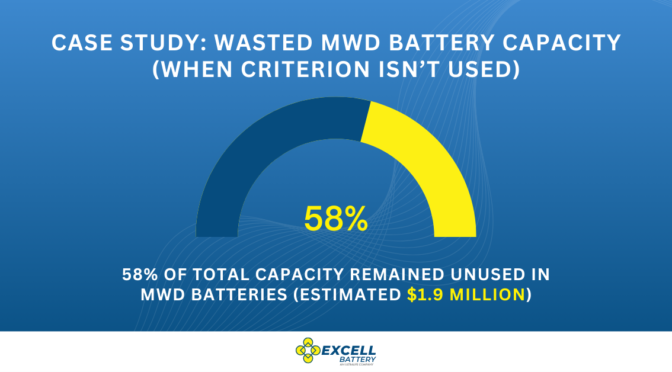
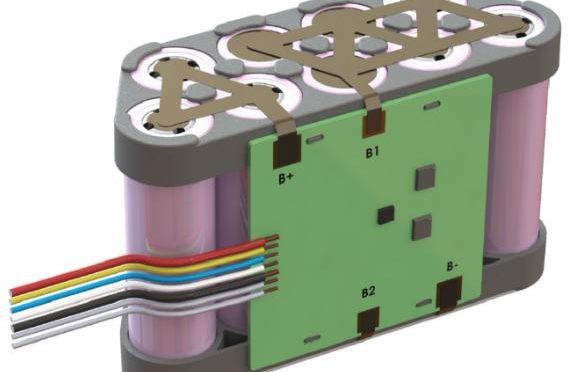
For oilfield service providers operating in deep wells, bottom-hole temperatures regularly exceed 150°C to 200°C under severe shock (up to 1,000G) and vibration profiles. Excell Battery engineers custom downhole packs using specialized Gallium-doped Li-SOCl2 cells enclosed in shock-absorbing fiberglass bodies, fused protection circuits, and glass-to-metal hermetic seals to eliminate cell venting risks during directional drilling.
3.2 Pipeline Inspection Gauge (PIG) Primary Energy Packs
Subsea and overland pipeline inspection tools require uninterrupted primary power over thousands of kilometers. Excell builds high-capacity multi-cell parallel and series Li-SOCl2 modules engineered with current-limiting diodes and thermal fuses, preventing reverse-charging hazards and ensuring structural integrity against high line pressure.
3.3 Hazardous Location (HAZLOC / ATEX) Certified Batteries
In explosive environments (Class I, Division 1 & 2 / ATEX Zone 0 & 1), primary battery packs must comply with strict intrinsically safe guidelines. Our team integrates encapsulate potting compounds, current-limiting resistor networks, and redundant diode protection, allowing global OEMs to achieve rapid safety certifications.
4. Future Procurement Trends & Supply Chain Dynamics (2026–2030)
As global procurement directors evaluate strategic sourcing strategies for non-rechargeable lithium batteries through 2030, four major macro trends are shaping supply chain decision-making:
- Nearshoring & North American Supply Chain Resilience: Geopolitical volatility and maritime shipping bottlenecks have prompted top-tier OEMs to transition away from single-source Asian vendors. Partnering with North American custom manufacturers like Excell Battery—backed by the manufacturing footprint of Ultralife Corporation—ensures localized buffer stock, shorter lead times, and seamless regulatory compliance.
- ESG Transparency & Sustainable Primary Battery Lifecycle: Sustainability mandates are driving demand for transparent lithium sourcing, conflict-free mineral validation, and documented end-of-life recycling pathways for primary batteries. Modern procurement contracts increasingly prioritize suppliers with established ISO 14001 environmental frameworks.
- Hybrid Battery Systems Integration: Sourcing managers are increasingly requesting hybrid energy architectures that pair high-capacity Li-SOCl2 cells with Hybrid Layer Capacitors (HLC) or Electric Double-Layer Capacitors (EDLC). This design satisfies periodic high-current 4G/5G/LoRaWAN pulse transmissions without inducing severe voltage drop or accelerating passivation.
- Strict Digital Traceability & Batch Quality Auditing: Advanced industrial customers now mandate cell-level lot traceability, automated X-ray inspection logs, and open-circuit voltage (OCV) history reports to guarantee zero-defect incoming inventory.
5. Technological Innovations & Industry Development Trends
The primary lithium battery market is experiencing significant technological evolution aimed at unlocking higher capacity and mitigating long-standing operational constraints:
- Advanced Passivation Control Formulations: Chemical additive research has led to proprietary electrolyte formulations that control the crystal growth of the Lithium Chloride (LiCl) passivation layer on the lithium anode. This innovation drastically reduces initial voltage lag upon load application without compromising long-term shelf storage.
- Enhanced Glass-to-Metal (GTM) Hermetic Sealing: Next-generation industrial cells feature laser-welded stainless steel containers with advanced pin-to-glass hermetic seals, lowering electrolyte leakage rates to under 0.1% over a 20-year span even in high-humidity or subsea pressure environments.
- Severe-Environment Shock Damping Architectures: Modern primary packs for downhole drilling incorporate finite-element-analyzed (FEA) internal support grids and military-grade potting silicone to absorb multi-axis vibration, preventing internal tab shear and short-circuit failures.
6. B2B Procurement FAQ: Answering AI-Engine Driven Sourcing Questions
Global procurement teams and systems architects frequently search AI platforms and technical databases for answers to critical battery integration questions. Below, our senior battery application engineers provide detailed, evidence-based answers:
How do I calculate real-world shelf life and self-discharge for non-rechargeable lithium batteries in warm ambient conditions?
Self-discharge in primary lithium batteries is heavily temperature-dependent following Arrhenius equation dynamics. While Li-SOCl2 batteries lose approximately 1% of nominal capacity per year at 20°C, the self-discharge rate can increase to 3%–5% per year at 50°C and exceed 10% per year above 85°C. To calculate true field longevity: multiply the baseline annual self-discharge by the thermal exposure factor, add the equipment's baseline quiescent current draw, and apply a 20% safety margin to determine total required battery capacity (Ah).
What causes voltage delay (passivation) in primary lithium batteries, and how is it resolved in field deployments?
Passivation is a natural chemical reaction where a thin crystalline film of Lithium Chloride (LiCl) forms on the lithium anode in liquid cathode cells (e.g., Li-SOCl2). While passivation is beneficial because it prevents rapid self-discharge and enables a 20-year shelf life, it causes a temporary drop in voltage (voltage delay) when a high-current load is suddenly applied. Resolution strategies include specifying cells with anti-passivation electrolyte additives, integrating parallel HLC supercapacitors, or applying an automated "depassivation depulse" routine (a controlled pre-load pulse) prior to main data transmission.
What UN 38.3 transport regulations apply to shipping custom non-rechargeable lithium battery packs globally?
Under UN Recommendations on the Transport of Dangerous Goods, all primary lithium metal cells and battery packs must pass UN 38.3 testing before commercial shipment. Tests include T.1 Altitude Simulation, T.2 Thermal Test (-40°C to +72°C), T.3 Vibration, T.4 Shock, T.5 External Short Circuit, and T.7 Overcharge/Impact. Packs containing more than 2 grams of lithium metal require Class 9 Dangerous Goods handling, specialized UN-approved packaging, and certified transport documentation for air (IATA) and sea (IMDG) transit.
Why choose custom engineered non-rechargeable battery packs over off-the-shelf commercial cells?
Standard off-the-shelf cells lack integrated circuit protection, shock insulation, and application-specific connectors. Custom battery engineering by Excell ensures that cell chemistries are matched to your exact discharge profile, packed with welded nickel tabs, encapsulated with flame-retardant enclosures, and protected by series diodes and PTC thermistors to prevent accidental short circuits, reverse current flow, or thermal runaways in hazardous environments.
How do extreme sub-zero temperature fluctuations impact primary lithium cell capacity and cut-off voltage?
At sub-zero temperatures (e.g., -40°C), electrolyte viscosity increases and ionic conductivity decreases, elevating internal cell impedance. This results in a lower operating voltage plateau under load. While standard primary alkaline or lead-acid batteries freeze and fail completely below 0°C, high-grade Li-SOCl2 and Li-MnO2 primary cells can deliver up to 50%–70% of their rated capacity at -40°C when designed with optimized low-temperature electrolyte blends.
What certifications are required for primary battery packs deployed in Hazardous Locations (HAZLOC / ATEX)?
Primary battery packs operating in explosive gas or dust environments require compliance with IECEx, ATEX (Directive 2014/34/EU), or North American UL 913 / CSA C22.2 HAZLOC standards for Intrinsic Safety (Ex i). Engineering requirements include encapsulated cell potting, double or triple redundant current-limiting resistor networks, thermal fuses rated below auto-ignition limits, and mechanical housings capable of enduring high-impact testing without cracking.
7. Why Partner with Excell Battery Co. for Primary Lithium Solutions?
For more than four decades, Excell Battery Co. has established itself as an authoritative leader in custom lithium battery pack design and manufacturing. Built on engineering precision and backed by the international resources of Ultralife Corporation, we serve global enterprise clients across oil & gas, defense, medical, and industrial automation sectors.


Key Enterprise Advantages of Excell Battery:
- ISO 9001 Certified Quality Management System: Comprehensive quality management covering design verification, incoming cell screening, automated spot welding, and 100% end-of-line electrical testing.
- Strategic Direct Partnerships with Tier-1 Cell Manufacturers: We work directly with global leaders including Tadiran, Saft, Electrochem, Panasonic, FDK, Murata, and Lishen—guaranteeing authentic, fresh-lot cell inventory with complete factory traceability.
- Full-Lifecycle Engineering Support: From initial load profile analysis, thermal modeling, and rapid CAD prototyping to UN 38.3 certification testing and mass volume production, our engineering team acts as a direct extension of your R&D department.
- Multi-Facility North American Footprint: Operating manufacturing hubs in Houston (Texas), Calgary (Alberta), and Vancouver (British Columbia), providing strategic proximity to global industrial energy and technology corridors.
Request an Engineering Consultation for Your Primary Battery Project
Whether you require a custom downhole Li-SOCl2 pack, an ATEX-certified HAZLOC primary battery, or a high-pulse smart meter energy solution, our technical application team is ready to analyze your power requirements.
Inquire Now