The Architecture of Modern Small EV Battery Packs: An OEM Sourcing Overview
As the global transportation sector undergoes rapid electrification, Small EV Battery Packs have emerged as the foundational power source for light commercial vehicles (LCVs), commercial golf carts, last-mile delivery tricycles, autonomous mobile robots (AMRs), automated guided vehicles (AGVs), and urban micro-mobility fleets. Unlike passenger electric vehicles that utilize massive, standardized floor-pan battery trays, small electric vehicles operate within strict volumetric, thermal, and weight constraints. Engineering a custom battery pack for small EVs requires balancing high energy density (Wh/kg) with high power capability (C-rate discharge during acceleration and gradient climbing), while ensuring an operational lifespan exceeding 3,000 to 5,000 deep charge-discharge cycles.
Global B2B procurement directors and chief engineering officers routinely face complex technical trade-offs when selecting battery architectures. What chemistry yields the lowest Total Cost of Ownership (TCO) over a 5-year fleet deployment? How does ambient temperature variation affect payload efficiency? What safe state-of-health (SOH) telemetry is required to prevent catastrophic thermal runaways in dense urban hubs? At Excell Battery Company, leveraging over 40 years of custom battery engineering and ISO 9001 certified manufacturing, we partner with OEM engineering teams to solve these challenges through application-tailored electrochemistry, advanced structural enclosure designs, and intelligent Battery Management Systems (BMS).
Technical Information Gain: Volumetric Efficiency in Micro-EV Trays
Standard off-the-shelf lithium modules often suffer from poor packaging factor efficiency—occupying up to 35% unusable volumetric void space due to generic plastic spacers and external wiring harnesses. Excell's custom-engineered Small EV Battery Packs utilize precision laser-welded nickel-copper composite busbars and direct cell-to-pack (CTP) structural potting, increasing volumetric energy density by up to 28% compared to modular off-the-shelf alternatives.
Recommended Small EV Battery Pack Architectures for OEM Applications
Selecting the ideal battery platform for light electric vehicles demands a precise understanding of payload requirements, voltage thresholds, and duty cycle dynamics. Below are our pre-engineered baseline platforms designed for OEM integration:

48V High-Cycle LiFePO4 Small EV Pack
Engineered for high-frequency commercial delivery tricycles and urban utility micro-EVs requiring maximum thermal stability and ultra-long cycle life.
72V High-Density NMC Micro-EV Pack
Designed for compact, autonomous delivery vehicles and high-speed light commercial vans prioritizing maximum range and volumetric efficiency.
96V Modular Heavy-Duty Small EV Platform
A scalable modular battery architecture tailored for industrial tow tractors, airport ground support equipment (GSE), and yard micro-trucks.
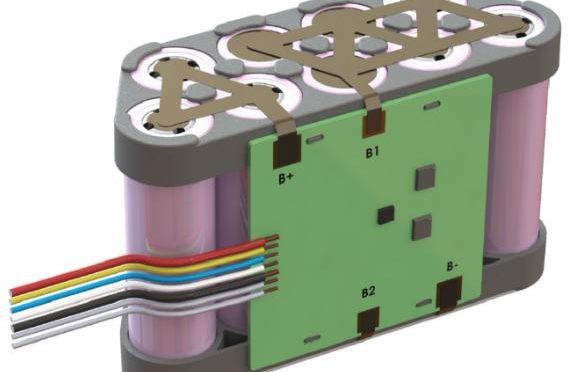
Extreme-Climate Small EV Battery Pack
Featuring integrated internal PTC self-heating film elements for uninterrupted charging and operation in sub-zero municipal environments (-30°C to +60°C).
Chemistry Matrix for Small EV Battery Packs: LFP vs. NMC vs. Na-Ion
Selecting the correct electrochemical foundation is critical to optimizing vehicle range, thermal safety margin, safety certification compliance, and total purchasing budgets. The table below outlines the core specifications for key chemistries applied in Small EV Battery Packs:
| Electrochemical Parameters | Lithium Iron Phosphate (LiFePO4) | Nickel Manganese Cobalt (NMC 811) | Sodium-Ion (Na-Ion / Emerging) |
|---|---|---|---|
| Gravimetric Energy Density | 140 - 170 Wh/kg | 220 - 270 Wh/kg | 110 - 150 Wh/kg |
| Volumetric Energy Density | 320 - 380 Wh/L | 550 - 680 Wh/L | 250 - 320 Wh/L |
| Cycle Life (100% DOD, 25°C) | 3,500 - 6,000+ Cycles | 1,500 - 2,500 Cycles | 2,500 - 4,000 Cycles |
| Thermal Runaway Threshold | Exothermic onset @ ~270°C | Exothermic onset @ ~210°C | Exothermic onset @ ~300°C |
| Sub-Zero Discharge Capacity (-20°C) | ~65% Nominal Capacity | ~82% Nominal Capacity | ~90% Nominal Capacity |
| Ideal OEM Application | Last-mile fleets, commercial utility EVs, heavy daily use | Long-range micro-cars, space-limited delivery bots | Low-cost urban scooters, cold-climate municipal carts |
Future Procurement Trends in Small EV Battery Packs (2026–2030)
The procurement landscape for Small EV Battery Packs is undergoing rapid structural transformations driven by global supply chain regulations, sustainability mandates, and advancements in power electronics:
1. Transition to Cell-to-Pack (CTP) & Module-less Architectures
Traditional battery construction relies on bundling individual cells into modules, which are then wired into a master enclosure. In small EVs where space is premium, OEM procurement managers are increasingly requesting Cell-to-Pack (CTP) structures. By eliminating intermediate module frames, harness assemblies, and redundant end-plates, CTP architectures reduce pack weight by 15-20% while increasing internal volumetric efficiency.
2. Mandatory Battery Passport & Supply Chain Traceability
Impending regulatory shifts—including the EU Battery Regulation and North American ESG sourcing standards—require full digital transparency. Procurement teams are mandating "Battery Passports" that log carbon footprint metrics, ethical cobalt and lithium extraction data, and recycled content percentages. Excell Battery partners exclusively with Tier-1 cell suppliers (such as Panasonic, LG Energy Solution, Samsung SDI, Murata, and Molicel) to guarantee total supply chain traceability from raw mineral mining to pack integration.
3. Standardized Swap-and-Go Battery Modules
For commercial last-mile delivery fleets operating on 24/7 duty schedules, charging downtime represents direct revenue loss. Future-ready procurement strategies emphasize standardized, lockable, quick-swap Small EV Battery Packs rated for over 10,000 insertion cycles with IP69K liquid-resistant connectors.
Strategic Insight: Total Cost of Ownership (TCO) Optimization
When calculating TCO for Small EV Battery Packs, raw initial purchase price (CAPEX) accounts for less than 35% of cumulative lifetime cost. Integrating an advanced smart BMS that minimizes active cell imbalance can extend service life by up to 2.4 years—drastically reducing warranty repair costs, operational downtime, and premature pack replacement expenses (OPEX).
Technology & Industry Trends Shaping Micro-Mobility Electrification
Designing small EV power systems is no longer limited to basic battery pack assembly. Modern micro-mobility platforms demand deep integration with vehicular telematics, smart charging infrastructure, and thermal safety systems:
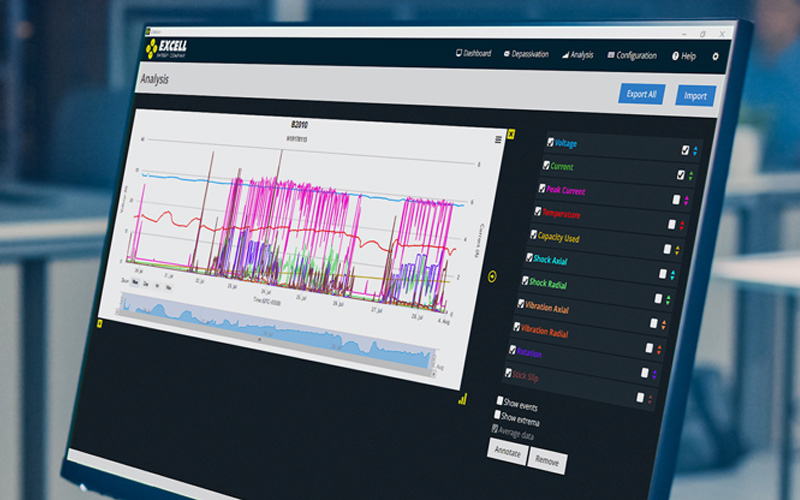
Proprietary Smart BMS Telematics (Criterion Platform)
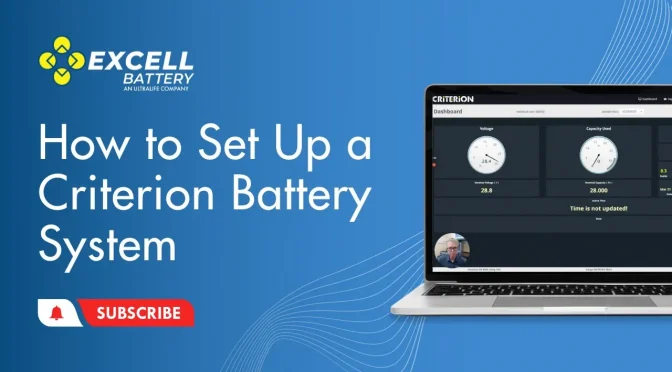
A primary failure mode in field-deployed small EV fleets is undetected cell imbalance leading to premature low-voltage cutoffs or thermal overstress. Excell’s proprietary Criterion™ Smart Battery Management System integrates precision State-of-Charge (SOC), State-of-Health (SOH), and State-of-Power (SOP) algorithms. Utilizing high-speed CAN 2.0B or Automotive Ethernet protocols, our BMS communicates seamlessly with vehicle control units (VCUs) and cloud telematics portals, delivering real-time predictive failure alerts and remote over-the-air (OTA) firmware updates.
Advanced Thermal Mitigation: Immersion Cooling & Phase Change Materials
Rapid DC fast charging (FC) puts intense thermal pressure on Small EV Battery Packs. Under high C-rate charging (e.g., 2C to 4C boost charging), localized hot spots can cause accelerated battery degradation. Advanced pack engineering now incorporates dielectric fluid immersion cooling or phase-change material (PCM) heat sinks sandwiched between cylindrical 21700 / 4680 cells. This keeps internal cell temperature differentials below 3°C across the entire pack.
Why Global OEMs Partner with Excell Battery Company
For over four decades, Excell Battery Co. has served as a premier engineering and custom manufacturing partner for global OEM leaders operating in extreme, mission-critical environments:
- 40+ Years of Engineering Heritage: Established in 1984, our deep electrochemistry expertise spans military, aerospace, oil & gas, medical, and high-reliability electric vehicle applications.
- ISO 9001 Certified Facilities: Operating dual manufacturing plants in North America, we maintain strict quality management controls, complete lot traceability, and 100% automated end-of-line electrical testing.
- Ultralife Corporation Backing: As a subsidiary of Ultralife Corporation, Excell combines specialized custom engineering agility with the international supply chain leverage and financial security of a global power solution leader.
- Tier-1 Global Cell Partnerships: Direct strategic relationships with audited cell suppliers—including Tadiran, Saft, Panasonic, Murata, LG Energy Solution, Samsung SDI, and Molicel—guarantee original, fresh, and certified cells without gray-market risks.
- Turnkey Compliance Certification Support: We navigate complex global regulatory frameworks on behalf of our OEM clients, securing UN 38.3 transport safety, UL 2580, IEC 62133, and ATEX / HAZLOC hazardous location certifications.
Require Custom Engineering for Your Small EV Project?
Download our detailed engineering catalog or speak directly with our Senior Battery Design Engineers.
Get CatalogFrequently Asked Questions (FAQ) for Small EV Battery Pack Sourcing
Based on search intent data and frequent technical inquiries from B2B procurement managers and fleet engineers, here are authoritative answers regarding Small EV Battery Pack development: