
1. High Temperature Battery Solutions: Navigating Extreme Thermal Power Constraints
Operating advanced electronic equipment in high-ambient thermal environments presents one of the most severe challenges in electrical and electromechanical engineering. Standard commercial lithium-ion batteries degrade rapidly above +45°C and present catastrophic thermal runaway risks beyond +60°C. However, industrial, military, and energy sector equipment—such as oil and gas Measurement While Drilling (MWD) tools, Logging While Drilling (LWD) downhole sondes, pipeline inspection gauges (PIGs), subsea wellhead monitoring units, and autoclavable medical surgical tools—demand High Temperature Battery Solutions capable of continuous operations at temperatures ranging from +85°C, +150°C, to over +200°C.
At Excell Battery Co., with over 40 years of specialized battery pack design and North American manufacturing expertise, we engineer bespoke high-temperature battery solutions designed to overcome severe thermal stress, mechanical vibration, and extreme atmospheric pressure. Backed by our parent entity, Ultralife Corporation, we combine specialized chemistry expertise with rigorous ISO 9001-certified quality control to provide global OEMs with mission-critical reliability.
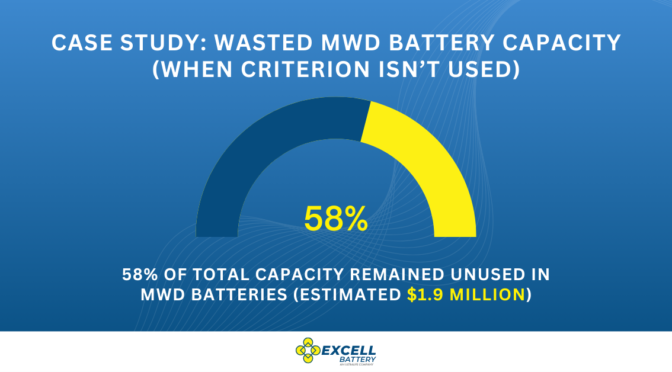
Engineering Insight: What Happens to Conventional Lithium Chemistries at Elevated Temperatures?
When standard lithium cells encounter temperatures exceeding +60°C, the Solid Electrolyte Interphase (SEI) layer on the graphite anode decomposes exothermically. This breakdown triggers secondary reactions between the liquid electrolyte and active cathode materials, leading to internal gas generation, cell swelling, rapid self-discharge, micro-short circuits, and ultimately uncontrolled thermal runaway. High-temperature engineered packs utilize modified electrolytes, stabilized passivating layers, high-tensile glass-to-metal seals, and specialized separator membranes to maintain structural and chemical equilibrium.
2. High Temperature Battery Chemistries: Primary vs. Rechargeable Selection Matrix
Selecting the optimal cell chemistry requires a nuanced understanding of the application’s continuous operating temperature, peak surge currents, operational lifespan, and physical enclosure constraints. High-temperature battery solutions are broadly divided into non-rechargeable (primary) and rechargeable (secondary) electrochemical systems.
Primary High-Temperature Chemistries (+85°C to +200°C+)
- Lithium Thionyl Chloride (Li-SOCl2 - High Temp Modified): The undisputed standard for extreme thermal applications up to +200°C+. Li-SOCl2 features an exceptional energy density (up to 650 Wh/kg) and an extraordinarily flat discharge voltage profile (3.6V nominal). At high temperatures, a controlled lithium chloride (LiCl) passivating layer forms on the lithium metallic anode, preventing rapid self-discharge while in storage or standby mode.
- Lithium Sulfuryl Chloride (Li-SO2Cl2): Offering a higher nominal cell voltage of 3.9V, Li-SO2Cl2 is chosen for high-temperature applications demanding heavy pulse currents and elevated rate discharge capabilities up to +150°C without severe voltage delay.
- Lithium Poly-Carbon Monofluoride (Li-CFx) & Hybrid Li-CFx/Li-MnO2: Exceptionally stable up to +125°C, Li-CFx primary batteries provide incredible safety, zero pressurized gas generation during discharge, and ultra-low self-discharge (<1% per year), making them ideal for military aerospace sensors and medical equipment.
Rechargeable High-Temperature Chemistries (+60°C to +100°C)
- High-Temperature Lithium Iron Phosphate (LiFePO4): Inherently safer than Cobalt-based chemistries, custom-formulated LiFePO4 cells utilizing high-viscosity ionic liquid electrolytes and ceramic-coated separators can safely charge up to +60°C and discharge continuously at +85°C.
- Lithium Titanate (LTO): LTO replaces the graphite anode with nanocrystalline lithium-titanate oxide, completely eliminating SEI decomposition risks and metallic lithium dendrite formation. LTO packs operate reliably from -40°C up to +85°C with cycle lives exceeding 10,000 discharge cycles.
| Chemistry Type | Nominal Voltage | Operating Temp Range | Energy Density | Primary Applications |
|---|---|---|---|---|
| Li-SOCl2 (Extreme Temp) | 3.6 V | -20°C to +200°C+ | ~ 600 - 700 Wh/kg | Downhole MWD/LWD, Subsea Wellheads |
| Li-SO2Cl2 (High Pulse) | 3.9 V | -30°C to +150°C | ~ 500 - 600 Wh/kg | Geothermal Logging, Pipeline Inspection |
| Li-CFx / Hybrid | 3.0 V | -40°C to +125°C | ~ 450 - 550 Wh/kg | Defense Aerospace, Sterilizable Devices |
| Modified LiFePO4 | 3.2 V | -20°C to +85°C | ~ 130 - 160 Wh/kg | Industrial Robotics, HAZLOC Telemetry |
| Lithium Titanate (LTO) | 2.3 V | -40°C to +85°C | ~ 80 - 110 Wh/kg | Heavy Industrial Engines, Solar Microgrids |
3. Engineered High-Temperature Battery Packs: Featured OEM Solutions
Excell Battery custom-engineers battery packs designed to fit precise physical form factors and harsh operational parameters. Below are four recommended flagship high-temperature battery solutions currently specified by global OEMs.
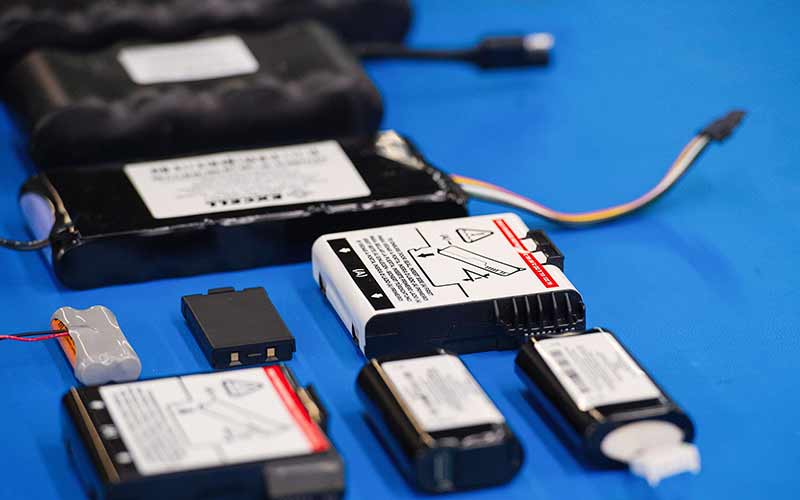
1. HTP-Downhole 200 Series (Primary MWD/LWD Battery Pack)
Engineered specifically for oil & gas deep drilling, geothermal exploration, and logging-while-drilling tool strings. Utilizes hermetically glass-to-metal sealed high-temp Li-SOCl2 cells packaged within seamless fiberglass or titanium pressure sleeves.
- Thermal Rating: Continuous +150°C to +200°C operational capability.
- Shock & Vibration Rating: Withstands 20G RMS random vibration (10 - 2000 Hz) and 1000G/0.5ms mechanical shock pulses.
- Safety Architecture: High-temperature shot diodes, thermal fuses, and current-limiting resistors integrated on ceramic substrates.
2. HTP-HazLoc 150 Series (ATEX / IECEx Intrinsic Safety Pack)
Targeted at explosive industrial environments, offshore refineries, and underground mining equipment requiring non-incendive power sources.
- Thermal Rating: -40°C to +150°C ambient compliance.
- Certification Compliance: ATEX Zone 0/1, IECEx, Class I Division 1 Groups A, B, C, D hazardous location standards.
- Enclosure & Encapsulation: Complete void-free polyurethane/epoxy encapsulation preventing flammable gas ingress.
3. HTP-SmartRecharge 85 Series (High-Temp Smart Li-Ion/LiFePO4)
A high-reliability rechargeable system for industrial autonomous mobile robots (AMRs), glass production sensors, and outdoor surveillance units subjected to solar heat loads.
- Thermal Rating: Charge: 0°C to +60°C | Discharge: -20°C to +85°C.
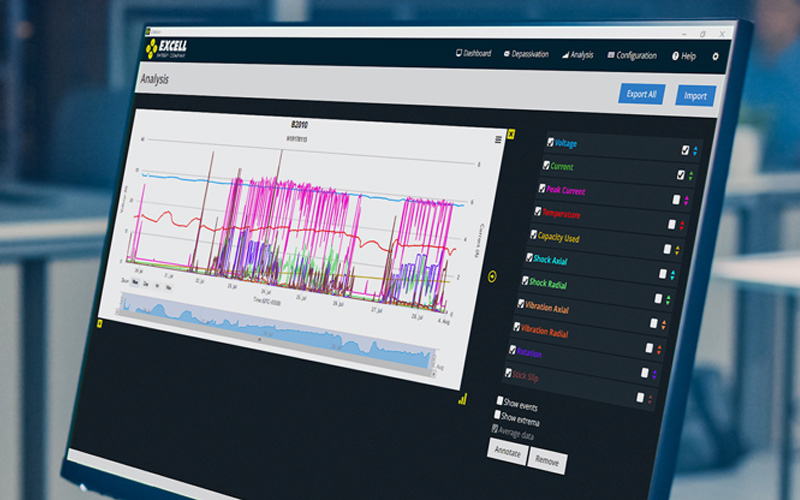
- Smart BMS Integration: Includes Excell’s proprietary Criterion Smart Battery Management System for real-time SMBus/CANbus state-of-charge (SoC) and state-of-health (SoH) telemetry.
4. HTP-MedicalSterile 125 Series (Autoclavable Battery Module)
Designed for surgical power tools and sterilizable medical diagnostic devices exposed to high-pressure steam autoclave cycles (+134°C).
- Thermal Resistance: Survives repeated 134°C autoclave sterilization cycles without thermal degradation.
- Cell Chemistry: High-rate Li-CFx or custom solid-state polymer primary cells housed in hermetically welded bio-compatible titanium outer shells.
Need a Custom High-Temperature Battery Spec?
Our senior battery application engineers will evaluate your operating environment, load profile, and dimensional constraints to provide a full design proposal within 48 hours.
4. Future Procurement Trends & Market Forecast (2026 – 2035)
The global procurement landscape for high-temperature battery solutions is undergoing a massive shift driven by deeper energy exploration, industrial IoT deployment, and stringent international supply chain regulations. Global procurement managers and OEM design directors must plan around four critical macro trends:
A. Deepwater Exploration & Geothermal Expansion
As conventional onshore oil reserves mature, energy operators are drilling deeper high-pressure, high-temperature (HPHT) wells exceeding 20,000 feet, where ambient bottom-hole temperatures frequently surpass +175°C to +200°C. Concurrently, the global push for geothermal renewable energy requires MWD tooling capable of surviving continuous geothermal reservoir temperatures. Procurement forecasts indicate a 14.8% CAGR demand increase for 200°C+ rated Li-SOCl2 primary packs through 2032.
B. Transition from Primary to High-Temp Rechargeable Systems
Historically, high-temperature applications relied exclusively on primary non-rechargeable lithium cells. However, operating costs and environmental disposal mandates are accelerating the demand for high-temperature rechargeable lithium packs. Advancements in solid-state lithium-metal batteries and ionic liquid electrolytes are projected to commercialize +125°C rechargeable battery packs by 2028, significantly lowering the total cost of ownership (TCO) for industrial OEMs.

C. Supply Chain Resilience & Nearshoring Production
Geopolitical instabilities and international maritime freight regulations have made reliance on single-region cell packaging a major vulnerability. Forward-thinking procurement teams are prioritizing battery manufacturing partners with dual-region assembly footprints in North America. By assembling high-temperature packs in ISO 9001 certified facilities in Canada and the United States, OEMs mitigate tariff volatility, shorten prototype lead times, and guarantee UN 38.3 shipping compliance.
D. Smart BMS & Predictive Maintenance Integration
Modern procurement specifications no longer accept "dumb" battery packs in harsh environments. Smart battery packs featuring embedded microcontrollers, state-of-health tracking, cycle logging, and predictive thermal shutdown logic are becoming mandatory in HAZLOC and aerospace tenders.
5. Why Leading Global OEMs Partner with Excell Battery Co.
With four decades of specialized battery engineering experience, Excell Battery Co. stands as a premier North American custom battery pack manufacturer. Our technical authority (E-E-A-T) is built upon four foundational pillars:

1. 40+ Years of Downhole & Severe-Environment Expertise
Since 1984, Excell Battery has developed specialized packaging methods for MWD downhole tools, subsea oceanographic instruments, and medical devices. We understand the complex chemical dynamics of cell passivation, shock loading, and heat dissipation in enclosed spaces better than generalist battery assemblers.
2. Direct OEM Access to Tier-1 Global Cell Manufacturers
We maintain strategic, audited supply chain partnerships with the world's premier high-temperature cell manufacturers—including Tadiran, Saft, Electrochem, Panasonic, Murata, Lishen, Molicel, and Samsung SDI. This direct access guarantees cell lot traceability, fresh cell chemistries, and priority allocation during global cell shortages.

3. Complete In-House Design, Testing, & Certification
From 3D mechanical CAD modelling and thermal finite element analysis (FEA) to custom BMS hardware design and UN 38.3 transport testing, Excell manages the entire product development cycle under one roof. Our facilities are ISO 9001 registered and routinely audited by Intertek and major defense contractors.
4. Financial Stability & Scale as an Ultralife Corporation Company
As a key business unit of Ultralife Corporation, Excell combines agile, highly responsive engineering support with the robust financial backing, scale, and global defense credentials of a publicly traded leader in energy solutions.
6. High Temperature Battery Solutions: Frequently Asked Questions (FAQ)
Below are detailed engineering and procurement answers to the most common questions asked by global procurement specialists, system integrators, and design engineers.
Primary non-rechargeable chemistries (specifically high-temp modified Lithium Thionyl Chloride, Li-SOCl2) can operate continuously at temperatures up to +200°C (+392°F), with specialized military/downhole variants surviving short excursions up to +225°C.
Rechargeable lithium chemistries (such as specialized LiFePO4, high-temp Li-ion, and Lithium Titanate) are fundamentally constrained by organic electrolyte volatility and SEI layer degradation. Their current safe operating limit for continuous discharge is +85°C (+185°F), with charging typically capped at +60°C (+140°F) to prevent metallic lithium plating.
In Li-SOCl2 primary batteries, high temperature accelerates the growth of a lithium chloride (LiCl) crystalline film over the metallic lithium anode. This process—known as passivation—is beneficial because it prevents rapid self-discharge, allowing cells to store energy for years even in hot environments.
However, a thick passivating layer causes an initial "voltage lag" when a heavy load is suddenly applied, causing the system voltage to drop momentarily below operating thresholds. Excell Battery mitigates this by incorporating customized depassivation load-pulsing routines in our BMS electronics and utilizing proprietary cell priming procedures during pack assembly.
Downhole drilling subjects battery packs to severe shock (up to 1000G) and continuous random vibration (20G RMS). Standard nickel-tab spot welding and plastic shrink tubing fail rapidly under these conditions.
Excell Battery utilizes high-tensile spot welding with custom copper-nickel alloy tabs, silicone-impregnated fiberglass sleeving, ceramic insulation disk separators, shock-absorbing silicone potting compounds, and rigid stainless steel or titanium internal skeletons. Every downhole pack is designed to withstand harsh harmonic vibrations without electrical mechanical degradation.
All lithium primary and rechargeable battery packs must pass UN 38.3 transport testing before commercial shipping via air or ground. UN 38.3 testing includes 8 rigorous tests: T1 (Altitude), T2 (Thermal Test -40°C to +72°C), T3 (Vibration), T4 (Shock), T5 (External Short Circuit at +55°C), T6 (Impact/Crush), T7 (Overcharge), and T8 (Forced Discharge).
Because high-temperature primary cells contain metallic lithium and thionyl chloride liquid cathodes, shipping regulations classify them as Class 9 Dangerous Goods. Excell Battery provides complete UN 38.3 testing certification, custom UN-certified hazardous material packaging, and full safety documentation for global export compliance.
Batteries deployed in Class I, Division 1/2 or ATEX Zone 0/1 hazardous areas (where explosive gases or vapors may be present) must meet Intrinsic Safety (IS) standards. This requires redundant surface temperature monitoring, hermetically sealed current-limiting fuses, anti-parallel blocking diodes (to prevent back-charging), and complete void-free potting encapsulation to ensure no internal electrical spark or thermal runaway event can ignite the surrounding atmosphere.
Prototyping timelines for custom high-temperature packs typically range from 6 to 12 weeks, depending on cell availability, mechanical enclosure complexity, and BMS customization. Non-Recurring Engineering (NRE) costs vary based on required safety certifications (UN 38.3, ATEX, IECEx) and testing protocols. Excell offers transparent engineering milestones from initial concept CAD drawing through prototype testing and mass production.
Consult a High-Temperature Battery OEM Specialist
Ready to discuss your high-temperature power requirements? Connect directly with our North American engineering team for technical guidance and custom quotation.