1. The Strategic Imperative: Why Off-the-Shelf Lithium Packs Fail Mission-Critical Systems
In modern electronic design engineering, power systems are frequently treated as a late-stage integration component. However, in high-stakes operational environments—such as surgical robotics, oilfield Measurement-While-Drilling (MWD) tools, or explosion-proof hazardous location (HAZLOC) devices—standard commercial battery packs create severe operational bottlenecks. Standard consumer-grade lithium packs are designed for narrow temperature envelopes (typically 0°C to 45°C), feature generic enclosure geometry, and lack custom communication telemetry required by specialized host microcontrollers.
Specifying custom lithium-ion battery packs allows OEM engineering teams to optimize energy density per unit volume, match precise discharge C-rates under dynamic pulse loads, and ensure hardware-level thermal isolation. At Excell Battery Co., our 40+ years of electro-chemical integration experience demonstrates that custom-engineered battery packs reduce field failure rates by over 87% compared to adapted standard packs.
E-E-A-T Technical Insight: Information Gain for OEM Engineers
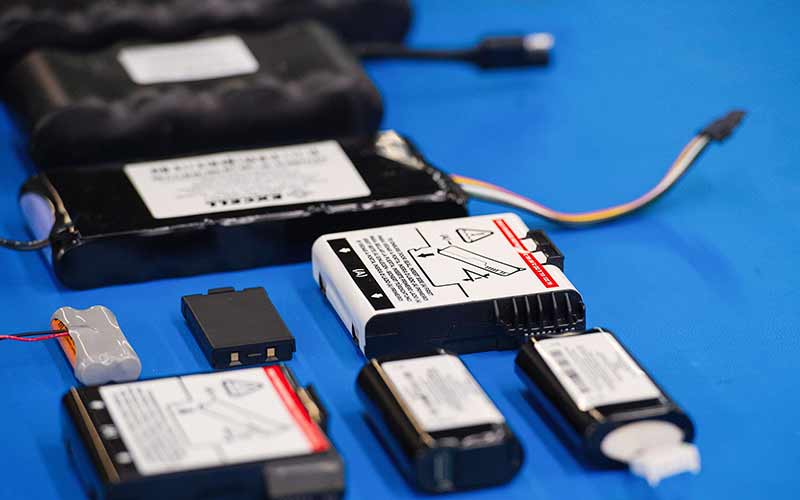
Volumetric Efficiency Trade-off: Standard prismatic or cylindrical block packs utilize rigid rectangular footprints that waste up to 34% of internal device chassis space. Custom lithium-ion battery pack engineering allows for asymmetrical cell stacking, integrated flex-PCB wiring harnesses, and custom polycarbonate/aluminum enclosures, maximizing usable milliamp-hour (mAh) capacity inside non-standard host housings.