
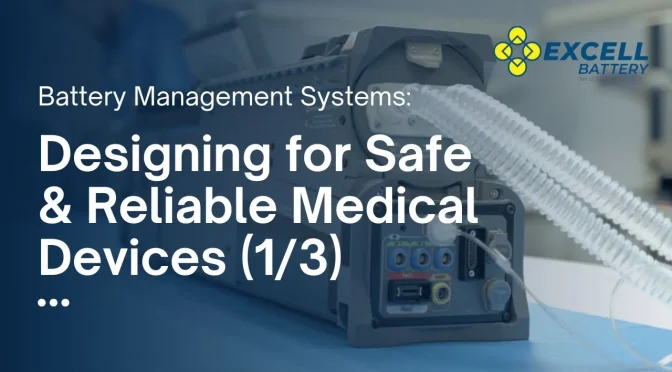
In modern clinical healthcare, portable medical devices—ranging from life-sustaining mechanical ventilators, automated external defibrillators (AEDs), surgical power tools, and infusion pumps to wearable diagnostic monitors—depend entirely on zero-fault Medical Device Battery Packs. As medical technology shifts toward decentralized patient monitoring and point-of-care diagnostics, the global demand for custom-engineered lithium battery systems has reached an unprecedented peak.
However, designing power systems for medical applications involves vastly higher technical, safety, and regulatory barriers than standard industrial or consumer electronics. A battery failure in a surgical suite or home care setting is not merely an operational inconvenience; it poses direct life-safety risks. Consequently, global procurement directors and medical device OEM engineers must evaluate power solutions through the lens of strict regulatory compliance, thermal runaway mitigation, redundant protection architectures, and lifecycle supply chain security.
Key Procurement Takeaway for Medical OEMs
When evaluating custom battery pack suppliers, certification to ISO 9001 alone is insufficient for Class II and Class III medical devices. Leading OEMs prioritize custom pack manufacturers who maintain comprehensive cell-to-pack traceability, cell-level fault isolation, SMBus 1.1 smart telemetry, and direct tier-1 supply agreements with certified cell manufacturers like Panasonic, Samsung SDI, LG Energy Solution, and Saft.
Recommended Medical Device Battery Pack Configurations
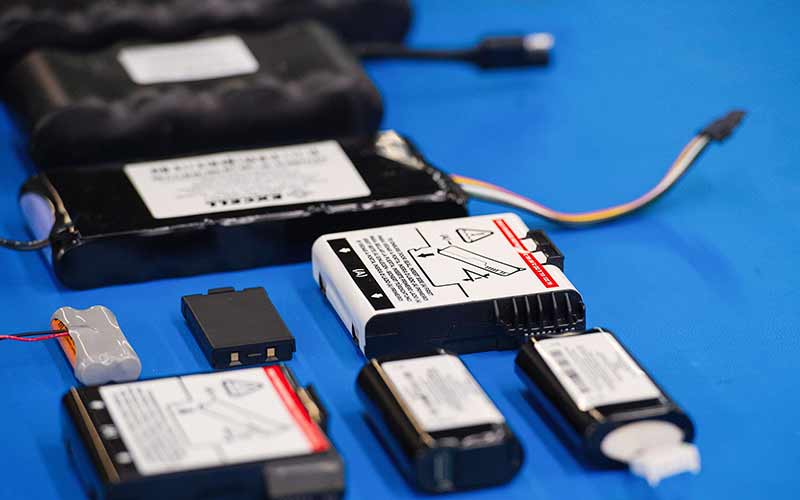
Medical devices span a broad spectrum of duty cycles, pulse currents, operational environments, and form-factor restrictions. To achieve optimal energy density, long cycle life, and absolute safety, Excell Battery Co. engineers custom battery packs utilizing four core chemistry and structural architectures:
1. High-Energy Rechargeable Lithium-Ion (NMC/NCA) Packs for Portable Devices
Utilizing premium cylindrical (18650, 21700) or pouch cells from tier-1 suppliers, these packs offer high gravimetric energy density (up to 260 Wh/kg). Designed specifically for portable patient monitors, mobile ultrasound units, and infusion pumps, they feature integrated fuel gauging ICs (Texas Instruments HDQ or SMBus architecture) for precise minute-by-minute runtime calculation.
2. Ultra-Safe Lithium Iron Phosphate (LiFePO4) Packs for Medical Carts & Ventilators
In applications where thermal stability, long service life (3,000+ deep cycles), and non-combustibility are paramount—such as workstation-on-wheels (WOW) medical carts and heavy-duty portable ventilators—LiFePO4 is the preferred chemistry. These packs tolerate aggressive charging cycles and resist thermal runaway under extreme fault conditions.
3. High-Rate Discharge Packs for Surgical Power Tools & Emergency Systems
Surgical saws, bone drills, and automated CPR compression systems demand rapid power delivery without voltage collapse. Excell Battery constructs low-internal-resistance (IR) pack configurations using high-C-rate power cells capable of delivering continuous pulse discharge currents exceeding 30A, paired with reinforced nickel-busbar tab welding and low-impedance MOSFET protection boards.
4. Long-Life Primary Lithium (Li-MnO2 & Li-SOCl2) Packs for AEDs & Remote Sensing
For non-rechargeable critical devices like Automated External Defibrillators (AEDs) and long-term remote patient sensors, high-reliability primary chemistries are specified. Featuring ultra-low annual self-discharge rates (<1% per year at 25°C), these packs deliver a guaranteed shelf and operational lifespan of up to 5 to 10 years, ensuring ready-to-deploy status in critical emergencies.
| Battery Chemistry | Nominal Voltage | Energy Density | Cycle Life | Primary Medical Applications |
|---|---|---|---|---|
| Li-ion (NMC / NCA) | 3.6V - 3.7V / cell | 200 - 260 Wh/kg | 500 - 1,000 cycles | Portable Monitors, Infusion Pumps, Portable X-Ray |
| LiFePO4 | 3.2V / cell | 120 - 160 Wh/kg | 2,000 - 3,500+ cycles | Medical Carts, Workstations, Heavy Ventilators |
| Primary Li-MnO2 | 3.0V / cell | 280 - 300 Wh/kg | 10-Year Shelf Life | AED Defibrillators, Emergency Backups, Telemetry |
| Primary Li-SOCl2 | 3.6V / cell | 400 - 650 Wh/kg | 15-Year Shelf Life | Implantable Telemetry, Ultra-low-power Remote Sensors |
Technological Evolution & Future Development Trends
The medical device landscape is undergoing rapid digitization and miniaturization. Global buyers evaluating power systems for next-generation product roadmaps must consider five transformative technological trends currently shaping medical battery engineering:
A. AI-Enhanced Smart BMS & Predictive Maintenance Telemetry
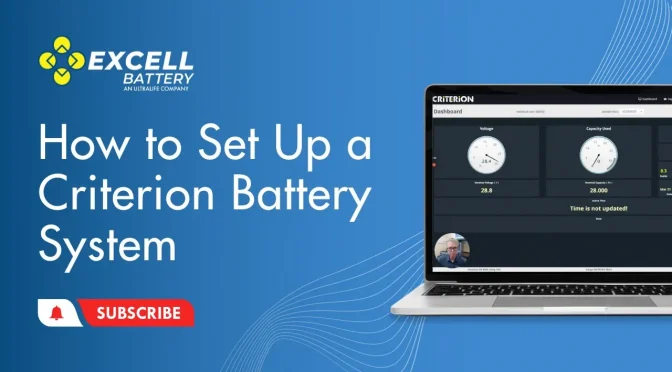
Legacy medical batteries provided basic analog voltage monitoring. Next-generation smart battery packs incorporate microcontrollers running edge algorithm software that continuously evaluates internal impedance, cycle degradation rates, temperature profiles, and individual cell state-of-health (SOH). Communicating over SBS 1.1, SMBus, I2C, or CANbus protocols, these smart packs send predictive maintenance alerts directly to hospital centralized IT infrastructure, eliminating sudden battery collapse during surgical procedures.
B. Multi-Layer Cell Thermal Runaway Containment
Following stringent safety updates in IEC 62133-2 and UL 2054, medical pack engineering has moved beyond basic PCM circuit boards. Modern custom packs employ single-cell thermal isolation barriers using aerogel insulation sheet separators, flame-retardant polycarbonate enclosures (UL 94-V0 rated), and pressure relief vents designed to contain cell venting gas and prevent cascading thermal propagation to neighboring cells.
C. High-Energy Solid-State & Silicon Anode Cell Integration
As wearable medical diagnostic equipment reduces in size, traditional graphite-anode lithium-ion cells face physical volumetric limitations. The industry is actively transitioning toward silicon-composite anodes and semi-solid-state electrolytes. These technologies promise up to a 35% increase in volumetric energy density, enabling sleeker wearable cardiac monitors and continuous glucose monitoring (CGM) hubs.
D. Hermetic Waterproof Enclosures & Autoclave Resistance
Reusable surgical power instruments require frequent cleaning, sterilization, and chemical disinfection. Advanced medical battery designs utilize overmolded IP67/IP68 sealed ultrasonic-welded housings and custom gold-plated spring connectors capable of enduring repeated liquid immersion, ethylene oxide (EtO) sterilization, and automated hospital dishwashing protocols.
Global Procurement & Sourcing Trends for Medical Buyers
Global procurement directors facing geopolitical shifts, supply chain vulnerabilities, and tightening healthcare regulatory frameworks are shifting away from off-the-shelf catalog batteries toward strategic custom engineering partnerships. Key procurement strategies in 2026 and beyond include:
1. De-Risking Sourcing via Dual-Tier Sourcing & North American Assembly
Relying on single-region or unvetted overseas battery suppliers exposes medical OEMs to severe supply disruptions and quality variance. Global healthcare leaders are prioritizing North American custom battery manufacturers with multi-facility footprints (such as Excell Battery’s facilities in Vancouver, Calgary, and Houston) backed by global cell procurement channels. This hybrid model ensures rapid prototype iteration, local engineering support, and resilient production continuity.
2. Full Regulatory Compliance Integration (IEC 62133-2, UL 2054, UN 38.3)
Getting a medical device to market requires seamless passing of FDA 510(k), EU MDR, and health authority audits. Modern procurement teams demand that custom battery pack manufacturers handle the entire compliance pipeline internally—designing to UN 38.3 transport safety standards, IEC 60601-1 medical device electrical safety, and UL 2054 commercial battery standards right from prototype design freeze.
3. Total Cost of Ownership (TCO) vs. Initial Unit Price
While low-cost generic battery packs may present low initial BOM costs, their elevated failure rates, inconsistent cell grading, short cycle life, and potential product recall liability result in exorbitant total cost of ownership. Sourcing high-grade, audited tier-1 cells (Panasonic, Samsung SDI, LG Energy Solution) assembled under strict ISO quality controls significantly lowers warranty claims and preserves brand reputation.
Why Global Medical OEMs Partner with Excell Battery Co.
For over 40 years, Excell Battery Co. has served as a trusted custom battery pack engineering and manufacturing partner for world-leading medical, industrial, and high-reliability technology OEMs. As a subsidiary of Ultralife Corporation, we offer unique operational and technical capabilities:

40+ Years of Zero-Defect Custom Battery Engineering
Our dedicated team of electrochemical, mechanical, and electrical engineers designs custom battery systems tailored specifically to your mechanical envelope, thermal dissipation requirements, and electrical load profile.

ISO 9001 Certified Quality Management & Traceability
We enforce 100% serial-number traceability down to individual cell lots, incoming component testing, automated welder calibration, and end-of-line functional verification for complete regulatory compliance.
Direct Strategic Partnerships with Tier-1 Cell Manufacturers
We maintain direct factory relationships with global tier-1 cell leaders—including Panasonic, Samsung SDI, LG Energy Solution, Saft, Tadiran, Molicel, and Murata—ensuring steady cell supply and verified fresh cell lots.
From initial proof-of-concept modeling and rapid prototyping to full UN 38.3 certification, pilot production, and high-volume North American manufacturing, Excell Battery provides end-to-end support for your mission-critical medical power needs.
Frequently Asked Questions (FAQ) for Medical Battery Procurement
Below are answers to critical technical and procurement questions frequently asked by medical OEM device engineers and global buyers when searching AI platforms and technical databases:
Partner with North America's Leading Medical Battery Pack Engineer
Contact our senior engineering team today to review your medical device power specifications, request a technical design proposal, or schedule a virtual engineering consultation.