1. The Global Shift in Remote Security Power: Why Standard Off-the-Shelf Batteries Fail
Modern outdoor security architecture has evolved far beyond passive analog video recording. Today’s global security deployments rely heavily on edge AI cameras, high-power infrared illuminators, pan-tilt-zoom (PTZ) optics, license plate recognition (LPR), and 5G cellular gateways. These advanced components create demanding, dynamic electrical loads requiring continuous, ripple-free direct current (DC) power under harsh outdoor conditions.
When system integrators and procurement engineers deploy standard commercial lithium battery modules or legacy lead-acid batteries into outdoor surveillance enclosures, catastrophic field failures frequently occur. Commercial-grade lithium-ion battery packs suffer from rapid capacity degradation when exposed to sub-zero winter freezes or blistering summer heat inside solar control boxes. Cold temperatures severely drop discharge efficiency and prevent safe charging, while high ambient temperatures accelerate electrolyte breakdown and cell impedance growth, bringing early thermal degradation or safety shut-downs.
Custom-engineered Outdoor Surveillance Battery Packs address these engineering bottlenecks through tailored cell chemistry selection, integrated heating and cooling thermal management, rugged mechanical encapsulation, and intelligent Battery Management Systems (BMS) with remote telemetry. As a global OEM, selecting the right battery manufacturer is not merely an exercise in purchasing amp-hours—it is a critical decision that dictates zero-downtime performance, network uptime, and overall total cost of ownership (TCO).
Information Gain Insight: The Hidden Cost of Battery Downtime in Surveillance Grids
A single field technician truck roll to replace a prematurely failed battery pack at a remote solar surveillance tower (e.g., highway traffic monitoring, border security, or utility substations) costs between $600 and $1,500 USD in logistics, labor, and downtime risks. Investing in an ISO 9001 engineered outdoor surveillance battery pack equipped with autonomous heating elements and real-time state-of-health (SOH) telemetry reduces maintenance truck rolls by over 80% over a 10-year deployment lifecycle.
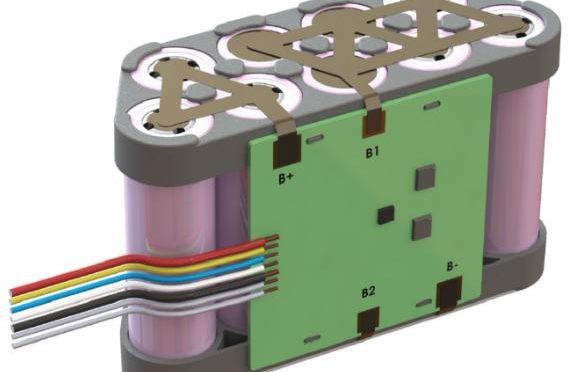
High-Density Outdoor Surveillance Battery Pack for Remote Camera Enclosures
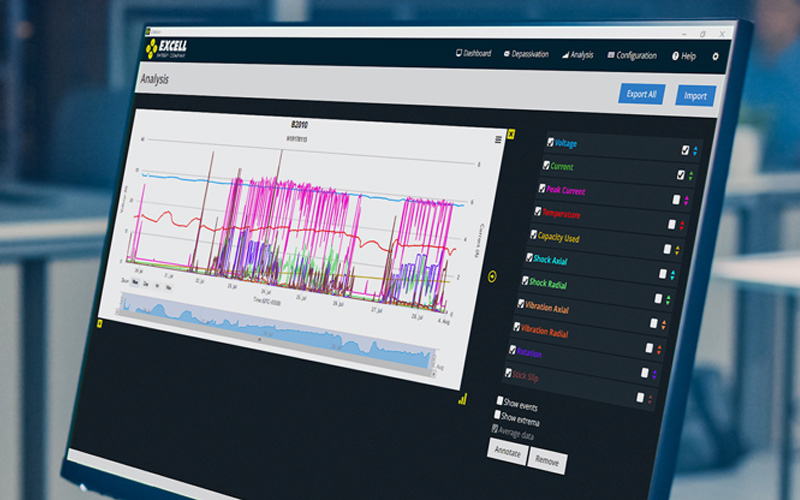
Criterion® Smart BMS Telemetry for Real-Time Fleet Voltage & Health Monitoring
2. Tailored Battery Architecture: Recommended Outdoor Surveillance Battery Solutions
Excell Battery Company designs and manufactures custom primary and rechargeable battery packs tailored to the precise voltage, capacity, footprint, and environmental specifications of your surveillance hardware. Below are our core engineered product categories optimized for outdoor surveillance deployments worldwide:
| Solution Type |
Primary Chemistry |
Operating Temp |
Target Application |
Key Technical Feature |
| LiFePO4 Solar-Hybrid Pack |
Lithium Iron Phosphate |
-30°C to +65°C |
Off-Grid Solar CCTV, Smart City Cameras |
3500+ Deep Cycles, Integrated Self-Heating |
| Extreme Cold Sentinel Pack |
Lithium Thionyl Chloride (Li-SOCl2) |
-55°C to +85°C |
Unmonitored Perimeter Intrusion Sensing |
Ultra-Low Self-Discharge (<1% per year) |
| High-Output Edge-AI Pack |
Industrial Li-ion (NMC / LCO) |
-20°C to +60°C |
PTZ AI Cameras, 5G Repeater Nodes |
High Peak C-Rate for Radar & IR Pulse Loads |
| HAZLOC / ATEX Certified Pack |
Intrinsically Safe LiFePO4 |
-40°C to +60°C |
Oil Refinery & Mining Site Surveillance |
Class I Div 2 / ATEX Flameproof Enclosure |
Technical Highlights of Excell Custom Surveillance Battery Assemblies
- Wide Temperature Range Performance: Engineered with internal self-heating pads powered by incoming solar PV or grid power before charging starts at sub-zero temperatures (-40°C).
- Rugged Mechanical Encapsulation: Custom IP67 and IP68 sealed aluminum or heavy-duty polycarbonate enclosures built to withstand high vibration, salt spray, sandstorms, and extreme UV exposure.
- Smart BMS & Telemetry Integration: Integrated Criterion® Smart Battery Monitoring System supporting SMBus, CANbus, Modbus, and RS485 communication protocols for remote diagnostics.
- Custom Form Factors: Flexible cell arrangement (18650, 21700, prismatic, or pouch) to fit slim pole-mount enclosures or NEMA weatherproof boxes.

Tier-1 Audited Lithium Cells for Custom Battery Pack Assembly

ATEX & HAZLOC Certified Packs for Extreme Industrial Sites
3. The Excell Battery Advantage: 40+ Years of Engineering Excellence
Selecting an OEM battery partner requires absolute confidence in engineering competence, financial stability, supply chain security, and quality assurance. As a subsidiary of Ultralife Corporation, Excell Battery Co. brings more than four decades of continuous innovation in mission-critical portable and remote power engineering.
40+ Years Heritage
Founded in 1984, our deep engineering legacy spans industrial instrumentation, oil & gas downhole systems, medical devices, defense equipment, and outdoor surveillance networks.
ISO 9001 Certified Quality
Our North American manufacturing facilities in Surrey (Vancouver), Calgary, and Houston operate under strict ISO 9001 quality management systems with full cell traceability.
North American Footprint
Local engineering teams, rapid prototyping, and redundant manufacturing facilities shield global procurement officers from international supply disruptions and tariff volatility.
Tier-1 Cell Partnerships
Direct supply relationships with audited cell leaders including Tadiran, Saft, Panasonic, Samsung SDI, LG Energy Solution, Molicel, and Murata guarantee genuine, top-grade cells.
Criterion® BMS Technology
In-house electronics design delivers SBS-compliant smart BMS boards capable of precise Coulomb counting, thermal protection, cell balancing, and automated safety shutoff.
Global Certification Expertise
We manage complete regulatory compliance testing, including UN 38.3 transport safety, UL 2054, UL 1642, IEC 62133, CE, and HAZLOC/ATEX certifications.
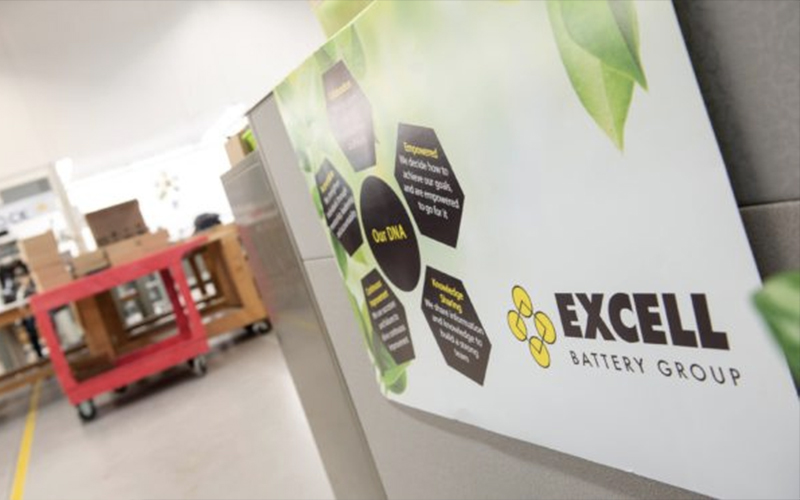
ISO 9001 Certified Manufacturing Facilities in North America

Global Reach Supported by Regional North American Facilities
4. Future Procurement Trends in Outdoor Surveillance Battery Systems (2026–2035)
As global security infrastructure undergoes digital transformation, procurement officers and engineering leaders must anticipate emerging technology shifts when specifying battery hardware. Based on our ongoing research and industry collaboration, we highlight five major trends shaping the next decade of outdoor surveillance power:
Trend 1: Rise of High-Power Edge AI & Multi-Sensor Fusion
Security cameras are evolving into edge-computing hubs executing real-time object classification, facial recognition, thermal imaging, and acoustic gunshot detection. These processing workloads generate continuous 15W to 45W draw with transient spikes reaching 90W. Future surveillance battery packs must support higher continuous discharge currents and pulse capability without suffering excessive voltage sag.
Trend 2: Dominance of LiFePO4 and Sodium-Ion in Solar-CCTV Infrastructure
While traditional Cobalt-based lithium chemistries (NMC/LCO) offer high energy density, their narrower thermal operating window and shorter cycle life make them less ideal for stationary solar-powered security poles. Lithium Iron Phosphate (LiFePO4) has become the gold standard due to its 3,000+ to 5,000+ cycle life and thermal stability up to 60°C. Additionally, emerging Sodium-Ion battery technology is gaining traction for extreme sub-zero applications due to superior low-temperature performance.
Trend 3: Cloud Telemetry & Predictive Battery Health Analytics
Modern smart cities and industrial facilities can no longer afford unannounced camera outages. Procurement guidelines increasingly mandate smart batteries with integrated IoT communication (LTE-M, NB-IoT, or LoRaWAN). Smart BMS units broadcast continuous health metrics (SoC, SoH, internal resistance, cycle count, temperature logs) back to central security operations centers (SOC) for predictive maintenance before failure occurs.
Trend 4: Supply Chain Transparency & Nearshoring Demands
Geopolitical tensions, trade tariffs, and logistics bottlenecks have forced global buyers to re-evaluate single-region sourcing. Global OEMs now prioritize battery suppliers with North American engineering hubs and multi-regional manufacturing footprints to guarantee unbroken delivery schedules and strict intellectual property protection.
Trend 5: Circular Economy & ESG Compliance
Environmental regulatory frameworks (such as the EU Battery Regulation and North American ESG reporting requirements) require battery systems to be designed for repairability, modular cell replacement, and zero-landfill recyclability. Custom surveillance battery enclosures are increasingly engineered with recycled aluminum frames and solderless modular interconnects to simplify end-of-life recycling.
5. Advanced Engineering Practices for Severe-Environment Surveillance Power
Engineering a reliable outdoor surveillance battery pack requires addressing complex mechanical, chemical, and electrical challenges. Below are key technical considerations our engineering team implements during the custom design process:
Thermal Management Architecture
Batteries placed in unshaded metal pole boxes can easily reach interior ambient temperatures exceeding 70°C in desert climates, or drop to -40°C in arctic winters. Excell engineers utilize advanced thermal modeling, phase-change materials (PCM), reflective ceramic thermal coatings, and automated silicon warming blankets controlled by the BMS to maintain cells within their optimal thermal window.
Vibration & Shock Dampening
Surveillance towers located near highways, railways, wind farms, or heavy industrial machinery suffer from continuous low-frequency vibration. Excell custom battery packs incorporate potted cell structures, nickel-plated copper busbars with spot-welded strain relief, and silicone vibration isolators to prevent mechanical weld fatigue and short circuits over time.
Moisture & Corrosive Gas Protection
Condensation naturally forms inside outdoor enclosures during daily temperature swings. High humidity, salt-laden coastal air, or corrosive industrial fumes can quickly degrade unprotected PCM circuit boards. Excell applies military-grade conformal coatings to all BMS boards, uses IP67 gore-tex pressure equalization vents, and houses battery strings in sealed aluminum or polycarbonate casings.
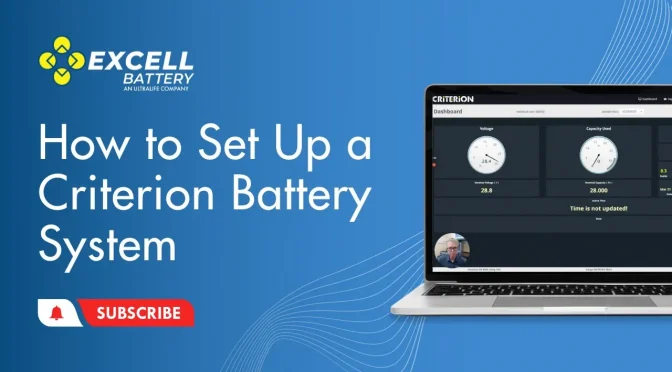
Criterion® BMS Setup for Advanced Battery Diagnostic & Safety Controls
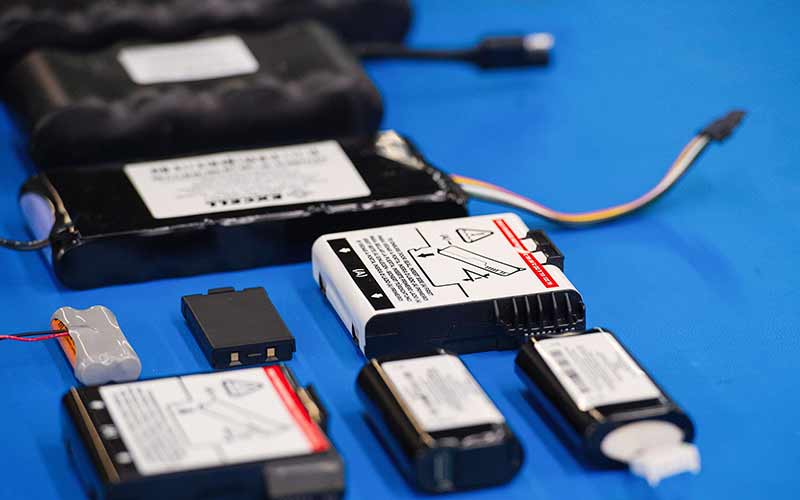
Full Lifecycle Battery Pack Solutions Designed for Industrial Reliability
Request Your Custom Outdoor Surveillance Battery Design
Partner directly with Excell's senior battery design engineers. We will analyze your system voltage, daily energy load profile, ambient operating temperatures, and enclosure space to deliver a optimized design proposal.
Get Catalog
6. B2B Procurement FAQ: Outdoor Surveillance Battery Packs
Addressing the most critical questions global buyers, procurement directors, and system integrators ask when sourcing custom battery solutions for security equipment:
Q1: How do I correctly calculate the required battery capacity (Ah/Wh) for a solar outdoor surveillance system?
Answer: To calculate capacity, determine your total continuous load in Watts (e.g., Camera 15W + 4G Router 8W + IR Illuminator 12W = 35W). Multiply by 24 hours to find daily energy consumption (840 Wh/day). Factor in your system voltage (e.g., 12.8V or 25.6V) and add a minimum of 3 to 5 days of "autonomy" for rainy or overcast weather without solar generation. Finally, apply a 20% safety margin to prevent deep discharge below recommended SoC thresholds. Excell’s engineering team offers free load calculation modeling to assist your team.
Q2: Why do standard lithium-ion batteries stop charging at 0°C, and how does Excell solve this?
Answer: Charging standard lithium-ion or LiFePO4 cells below 0°C causes lithium metal plating on the graphite anode, leading to permanent capacity loss and internal short-circuit risks. Excell solves this issue by integrating low-power internal heating elements managed by our smart BMS. When solar or AC power is restored in cold weather, the BMS directs incoming power to the heating pads first until the core cell temperature reaches +5°C before initiating cell charging.
Q3: What certifications are legally required to ship outdoor surveillance battery packs internationally?
Answer: All commercial lithium battery packs must pass UN 38.3 transport safety testing (covering altitude simulation, thermal shock, vibration, impact, external short circuit, and overcharge) to be transported legally by air, sea, or ground. Additionally, system integrators often require IEC 62133 or UL 2054 for equipment safety compliance, and CE / FCC marks for electromagnetic compatibility. Excell handles all compliance testing and documentation internally.
Q4: What is the expected lifespan of a LiFePO4 outdoor surveillance battery pack compared to lead-acid?
Answer: Sealed lead-acid (SLA) or AGM batteries in outdoor solar enclosures typically last 1 to 2 years (300–500 cycles at 50% DoD) before requiring replacement. In contrast, an ISO 9001 engineered LiFePO4 battery pack from Excell delivers 3,500 to 5,000 deep cycles (up to 10 years of continuous service life at 80% DoD), delivering a dramatically lower total cost of ownership despite a slightly higher initial purchase price.
Q5: Can Excell design battery packs for hazardous locations (HAZLOC / ATEX certified)?
Answer: Yes. For surveillance equipment deployed in oil refineries, offshore platforms, chemical processing plants, or grain silos, Excell designs intrinsically safe battery packs featuring encapsulated electronics, current-limiting fuses, pressure-relief valves, and flameproof enclosures that comply with Class I Division 2 and ATEX Zone 1 / Zone 2 standards.
Q6: What is the typical development lead time for a custom outdoor surveillance battery pack?
Answer: Initial engineering consultation, load analysis, and 3D CAD mechanical modeling are typically completed within 1 to 2 weeks. Prototype sample builds take approximately 4 to 6 weeks, followed by compliance testing (UN 38.3). Mass production delivery timelines range from 8 to 12 weeks depending on cell availability and enclosure customization.
Q7: How does Criterion® smart telemetry prevent unexpected security network downtime?
Answer: Criterion® telemetry integrates directly into your surveillance platform via RS485, CANbus, or SNMP. It reports real-time cell-level voltage, state-of-charge, ambient temperature, cycle history, and diagnostic flags. If a cell exhibits abnormal impedance growth or high temperature, an alert is pushed to your network operation center weeks before any failure occurs.
7. Partner with Excell Battery for Your Next Surveillance Deployment
Do not let battery performance be the weak link in your outdoor security network. With 40+ years of proven engineering expertise, ISO 9001 certified North American manufacturing facilities, direct access to tier-1 global cell manufacturers, and advanced Criterion® BMS electronics, Excell Battery Company is the trusted partner for leading surveillance OEMs and security integrators worldwide.
Contact our senior engineering team today to review your project specifications, request technical datasheets, or order custom evaluation samples.