Modular Lithium Battery Systems: The Complete B2B Engineering, Architecture, and Procurement Guide

Inquire Now Request Engineering Consultation
Voltage Scalability 12V to 800V DC Modular Arrays
BMS Topology Distributed Master-Slave / CANbus
Quality Standard ISO 9001 / UN 38.3 / HAZLOC / ATEX
Supply Security North American Multi-Facility Production

1. Understanding Modular Lithium Battery Systems: Engineering & Semantic Intent Overview

In modern industrial and high-reliability product development, global procurement directors and chief technology officers are rapidly shifting away from legacy monolithic, single-block battery pack designs toward highly flexible Modular Lithium Battery Systems. As automated equipment, remote industrial IoT, subsea telemetry, and wearable medical devices demand scalable energy storage, modular battery architecture provides an unparalleled compromise between custom engineering precision and standardized component economics.

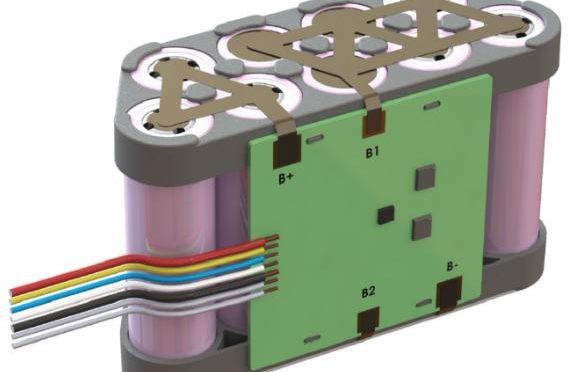
At its core, a Modular Lithium Battery System consists of self-contained building blocks (sub-modules) configured in series or parallel strings, governed by an integrated or distributed Smart Battery Management System (BMS). Unlike rigid monolithic battery packs—where a single cell failure or thermal anomaly degrades the entire system and requires complete replacement—modular systems isolate localized faults, allow hot-swappable maintenance, and enable rapid voltage or capacity expansion without requiring complete mechanical re-tooling.

Architectural Breakdown: Monolithic vs. Modular Battery Topologies

When evaluating total cost of ownership (TCO) and risk mitigation across multi-year procurement contracts, evaluating the architectural differences between traditional monolithic battery designs and modular systems is critical for engineering teams:

Evaluation Vector Monolithic Custom Lithium Pack Modular Lithium Battery System OEM Engineering Advantage
Scalability & Voltage Adaptability Fixed voltage and capacity; total redesign required for capacity changes. Scalable in series (voltage up to 800V+) and parallel (amp-hour expansion). Reduces NRE (Non-Recurring Engineering) costs for product variants by up to 70%.
Mean Time to Repair (MTTR) High; whole system must be uninstalled, shipped, and replaced. Low; field-replaceable modules swapped in minutes without special tooling. Dramatically reduces customer operational downtime in critical equipment.
BMS & Telemetry Intelligence Centralized basic protection; limited cell-level diagnostic data. Distributed Master-Slave BMS with active balancing and CANbus / Modbus telemetry. Enables predictive maintenance, cloud analytics, and Criterion monitoring software integration.
Thermal Management & Safety High thermal mass; localized heat buildup hard to dissipate. Inter-module thermal barriers, dedicated cooling channels, localized cell isolation. Prevents thermal runaway propagation and meets stringent IEC 62133 / ATEX HAZLOC safety standards.
Supply Chain & Tooling Lead Time Long custom tooling timelines (24–36 weeks) for mechanical enclosures. Standardized module enclosures with flexible mounting racks (6–12 weeks). Accelerates Time-to-Market (TTM) for next-generation OEM releases.

By leveraging 40+ years of custom battery manufacturing experience at Excell Battery Co., we assist OEMs in executing user intent mining and semantic system design. This ensures that every modular power building block is mathematically matched for C-rate performance, thermal expansion coefficient, mechanical vibration tolerance, and regulatory compliance.

Inquire Now

2. Recommended Modular Lithium Battery System Architectures

Purpose-engineered modular battery configurations designed for demanding industrial, oil & gas, medical, and hazardous location applications.

Industrial Modular Lithium Rechargeable Battery Pack Industrial & ESS

High-Voltage Industrial Modular Li-ion Systems

Scalable 48V to 800V DC modular building blocks utilizing high-energy NCM or long-cycle LiFePO4 cells. Engineered with integrated CANbus communication, active cell balancing, and IP67-rated modular housing for AGVs, robotics, and microgrids.

High Temperature Downhole MWD Modular Lithium Battery Pack Oil & Gas / Downhole

Downhole MWD/LWD High-Temp Modular Packs

Modular primary Lithium Thionyl Chloride (Li-SOCl2) and Lithium Sulfuryl Chloride (Li-SO2Cl2) systems built for extreme downhole drilling environments. Operating temperature tolerance up to +150°C to +200°C with shock absorption potting.

Medical Grade Smart Modular Battery Pack Medical / ISO 13485

Smart Medical-Grade Modular Power Modules

ISO 13485 compliant modular battery packs equipped with redundant SMBus/I2C communication, state-of-health (SOH) fuel gauging, and compliance with IEC 62133 and UL 2054 for surgical robotics, ventilators, and mobile medical carts.

ATEX HAZLOC Modular Lithium Battery System HAZLOC / ATEX Zone 1 & 2

Explosion-Proof HAZLOC Modular Battery Modules

Intrinsically safe, ATEX and IECEx certified modular lithium battery systems designed for explosive gas atmospheres, underground mining instrumentation, chemical refineries, and offshore oil platforms.

Smart BMS Telemetry Modular Battery System Smart Telemetry

Criterion-Enabled Smart Modular Battery Systems

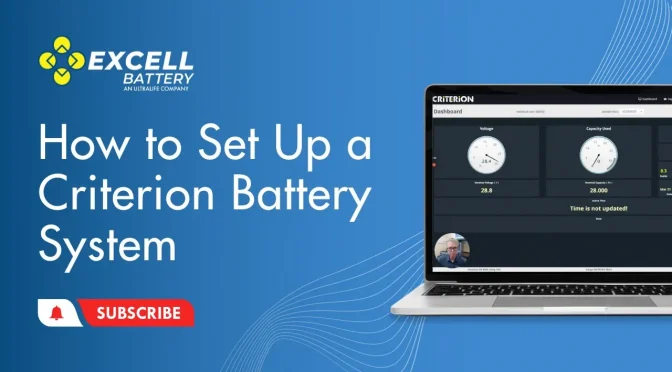
Advanced modular systems featuring Excell’s proprietary Criterion smart monitoring technology. Real-time data logging of voltage, temperature profiles, current drain, and cycle count history accessible via intuitive diagnostic tools.

Ruggedized Outdoor Surveillance Modular Lithium Battery Remote Sensing

Ruggedized Primary & Secondary Modular Systems

Long-life modular lithium packs designed for remote pipeline inspection, environmental monitoring stations, smart grid infrastructure, and outdoor surveillance equipment with extreme weather endurance (-40°C to +85°C).

3. Global Procurement Trends in Modular Lithium Battery Systems

Procurement leaders within global Fortune 500 OEMs and specialized high-tech enterprises face a complex energy landscape. As geopolitical shifts, supply chain vulnerabilities, and stringent carbon footprint regulations accelerate, purchasing strategies for battery systems have undergone a fundamental shift. Below are the key procurement trends dominating search queries and technical proposals in 2026 and beyond:

Trend 1: Transition from Off-the-Shelf Packs to Co-Engineered Modular Architectures

Standard, commoditized battery packs often fail to meet exact physical dimensions, thermal profiles, or environmental protection standards required by advanced industrial products. Conversely, fully bespoke ground-up battery engineering involves high non-recurring engineering (NRE) costs and long tooling cycles. Procurement teams increasingly favor modular platform approaches—where standardized, pre-tested cell modules are customized at the enclosure, firmware, and interconnect levels. This hybrid approach delivers 80% of the cost savings of mass production alongside 100% of custom functional performance.

Trend 2: Dual-Sourcing & Supply Chain Resiliency (North American Manufacturing)

Over-reliance on single-region Asian supply chains poses significant lead time and tariff risks for North American and European OEMs. Modern procurement contracts prioritize battery engineering partners with multi-facility footprints. With primary manufacturing facilities across Canada and the United States—backed by parent company Ultralife Corporation—Excell Battery Co. provides dual-sourcing insurance, regulatory compliance (FAR/DFARS for defense applications), and domestic engineering access.

Trend 3: Mandatory Embedded Smart Telemetry & Battery Passports

Global regulatory standards—including the EU Battery Regulation and global UN 38.3 shipping mandates—are driving requirement specs for "Smart Modular Systems." Procurement managers now mandate embedded telemetry (e.g., Excell’s Criterion monitoring platform) that records real-time state of charge (SOC), state of health (SOH), internal resistance trends, and operating temperature alerts directly onto onboard non-volatile memory. This data mitigates warranty disputes and simplifies second-life recycling qualification.

Trend 4: Tier-1 Cell Sourcing & Strict Bill-of-Materials (BOM) Traceability

The reliability of a modular lithium battery system depends on the consistency of its internal cells. Procurement teams are rejecting white-label or unvetted cell sources in favor of strict BOM locking with audited Tier-1 global cell manufacturers. Excell Battery maintains decades-long direct engineering partnerships with global cell giants including Panasonic, LG Energy Solution, Samsung SDI, Saft, Tadiran, Molicel, Lishen, FDK, and EnerSys, ensuring strict batch traceability and zero unauthorized component substitutions.

Procurement Pro Tip: When submitting an RFQ for modular lithium battery systems, require your vendor to supply UN 38.3 test summary reports, cell-level batch consistency metrics, and Master-Slave BMS protocol documentation prior to prototype sign-off.


4. Future Technological & Development Trends for Modular Systems

The landscape of lithium energy storage is evolving at an unprecedented pace. As energy density increases and artificial intelligence becomes embedded in edge BMS firmware, modular lithium battery systems are expanding their capabilities. OEM design teams must account for these key technological trends during product roadmapping:

1. Integration of Next-Gen Solid-State & Silicon-Anode Cell Modules

While traditional Liquid Lithium-Ion (NMC/LFP) and Lithium Primary chemistries remain the foundation of current production, modular system architectures are being designed with chemical adaptability in mind. The emergence of silicon-anode cells (offering 20–30% higher volumetric energy density) and semi-solid-state electrolytes promises safer operation at higher C-rates. Modular architectures allow OEMs to upgrade internal cell chemistry in future product iterations without redesigning the outer mechanical frame, connector interface, or system-level communication bus.

2. AI-Driven Edge BMS & Predictive Thermal Analytics

Future modular battery systems will move beyond simple threshold protection (over-voltage, under-voltage, over-temperature) to predictive artificial intelligence algorithms executed directly on edge BMS microcontrollers. By continuously analyzing impedance spectra and micro-temperature fluctuations across individual modules, smart BMS software can predict dendrite formation, thermal stress points, and cell degradation months before a functional anomaly occurs. This capability is crucial for mission-critical subsea MWD drilling, surgical robotics, and autonomous military land vehicles.

3. Advanced Structural Thermal Barriers & Direct-Module Liquid Cooling

As fast-charging demands increase for industrial mobile platforms (e.g., AGVs, heavy mining equipment), managing thermal propagation between adjacent modules is paramount. Next-generation modular designs incorporate aerogel insulation, phase-change materials (PCM), and direct-to-module cold plate fluid channels. These advanced structural features ensure that even in the rare event of a single-cell thermal runaway, the event is completely contained within the sub-module enclosure without propagating to adjacent modules.

4. Circular Economy & Direct Module-Level Second-Life Re-purposing

Environmental sustainability regulations are reshaping battery design. Monolithic battery packs are notoriously difficult to disassemble and recycle, often ending up in high-emissions pyrometallurgical shredding. Modular lithium battery systems, however, are inherently optimized for the circular economy. At the end of a primary device's service life, individual modules can be non-destructively tested, re-certified via Criterion diagnostic software, and deployed into lower-intensity secondary applications such as stationary solar energy storage (ESS)—dramatically improving life-cycle carbon metrics.

Inquire Now

5. Frequently Asked Questions: Modular Lithium Battery Systems Procurement & Design

Below are technical and commercial answers to the most frequent inquiries submitted by global procurement managers, system integrators, and electrical engineering leads when evaluating modular battery architecture.

How do modular lithium battery systems handle cell imbalance and parallel string degradation over extended cycle life?

Modular systems engineered by Excell Battery utilize a hierarchical Master-Slave Smart BMS architecture. The slave BMS boards located inside each sub-module monitor cell voltages and temperatures in real-time, executing active or high-efficiency passive balancing across individual series strings. The master BMS aggregates module-level telemetry and manages parallel string balancing through controlled MOSFET/contactor switching during charging and discharging. This prevents recirculating currents between parallel modules of varying states of charge (SOC) and eliminates premature degradation.

What UN 38.3 shipping certification challenges exist for modular battery systems, and how are they overcome?

Under UN Manual of Tests and Criteria Section 38.3, lithium batteries are classified as dangerous goods (Class 9). For modular systems, testing can be conducted at the individual sub-module level as well as the fully assembled system level. If sub-modules are UN 38.3 certified independently, they can be shipped globally via cargo aircraft or ocean freight at a lower watt-hour threshold and assembled on-site. Excell Battery manages the entire UN 38.3, IEC 62133, and UL 1973 testing lifecycle inside certified environmental testing facilities to guarantee international shipping compliance.

Can modular lithium battery systems be engineered for extreme temperature ranges (-40°C to +150°C)?

Yes. Depending on the target environment, cell chemistry selection is critical. For sub-zero operations (-40°C to 0°C), we integrate custom heating films, specialized low-temperature electrolyte Li-ion cells, or primary Lithium Thionyl Chloride chemistries. For high-temperature downhole oil & gas applications (+100°C to +150°C+), we utilize specialized downhole lithium chemistries enclosed in vibration-isolated, hermetically sealed modular housing designed to withstand extreme downhole shock and vibration profiles (up to 30G RMS).

How does opting for a modular architecture impact upfront NRE costs and time-to-market compared to a ground-up custom pack?

Opting for a modular battery architecture reduces non-recurring engineering (NRE) costs by 50% to 70% and compresses prototype lead times from 30+ weeks down to 8–12 weeks. Because the base module enclosure, BMS protection circuit, and internal cell spacing are pre-validated, engineering effort is focused solely on application-specific mechanical mounting, external cabling, and custom BMS communication firmware.

What safety measures protect modular lithium battery packs in hazardous location (HAZLOC / ATEX) applications?

For explosive gas or dust environments (Class I, Division 1/2; ATEX Zone 1/2), modular packs are engineered with intrinsic safety principles. This includes encapsulated potting compounds, current-limiting Zener barriers, spark-proof quick-disconnect connectors, pressure-relief explosion vents, and IP67/NEMA 4X sealed enclosures. Excell Battery’s engineering team has over three decades of experience certifying packs to UL 913, EN 60079-0, and EN 60079-11 standards.

What industrial communication protocols are supported by smart modular battery management systems?

Our smart modular BMS solutions support standard industrial communication interfaces, including CANbus (CANopen, J1939), Modbus RTU/TCP, SMBus v1.1, I2C, UART, and RS-485. This allows seamless integration into host device mainframes, industrial PLCs, vehicle control units (VCUs), and cloud-connected IoT gateways for real-time monitoring of voltage, current, temperature, SOH, and diagnostic fault flags.

Why is direct Tier-1 cell supplier auditability vital for long-term B2B procurement contracts?

Cell quality consistency is the foundation of battery longevity and safety. Unaudited Tier-2 or Tier-3 cell vendors often suffer from batch-to-batch capacity variance, higher internal impedance growth, and inconsistent safety venting mechanisms. Excell Battery maintains direct engineering partnerships with Tier-1 audited manufacturers such as Panasonic, LG Energy Solution, Samsung SDI, Saft, Tadiran, and Molicel. We provide full lot traceability and guarantee cell continuity throughout your multi-year production lifecycle.

How do modular lithium battery systems compare to industrial Lead-Acid or NiCd batteries in Total Cost of Ownership (TCO)?

While lithium modular systems carry a higher upfront capital cost than lead-acid or nickel-cadmium batteries, their lifetime operational expenses are substantially lower. Modular lithium systems offer 3x to 5x higher cycle life (up to 4,000+ cycles at 80% DOD), 70% less weight, higher round-trip charge efficiency (95% vs. 75%), zero routine watering/maintenance requirements, and fast-charging capabilities—yielding a positive ROI within 18 to 24 months of industrial operation.

Excell Battery Global Footprint and Manufacturing Locations Map
40+ Years Authority

6. Why Global OEMs Partner with Excell Battery Co.

Founded in 1984, Excell Battery Co. (a subsidiary of Ultralife Corporation) has established itself as North America’s premier custom lithium battery system engineering and manufacturing authority. Built on rigorous quality engineering and deep chemistry expertise, we empower leading OEMs across mission-critical industries.

Sustainable and Smart Modular Battery Design

Engineering Precision & Multi-Chemistry Mastery

Our engineering team designs custom modular lithium systems spanning Li-ion, LiFePO4, Li-Thionyl Chloride, Li-Manganese Dioxide, and solid-state chemistries—tailored precisely to your thermal, mechanical, and electrical requirements.

ISO 9001 Quality Management and Certified Manufacturing

ISO 9001 Certification & Quality Governance

Operating under strict ISO 9001 quality management systems, every modular battery assembly undergoes rigorous computerized end-of-line (EOL) testing, automated weld inspection, thermal imaging, and vibration testing prior to shipment.

Downhole and Extreme Environment Battery Testing

Ultralife Corp backing & Domestic Supply Resilience

As part of Ultralife Corporation, we offer global financial stability, extensive regulatory certification resources, and domestic North American manufacturing facilities in Surrey (Vancouver, BC), Calgary (AB), and Houston (TX).

Audited Tier-1 Global Cell Partners

We partner exclusively with audited, world-leading cell chemistry manufacturers to guarantee long-term cell availability, strict BOM locking, and maximum safety in every modular battery system.

Tadiran lithium battery cells
Saft industrial battery cell partner
NEC battery cells
Murata battery cells
JK battery cell supplier
Panasonic lithium battery cells
FDK battery cell supplier
Lishen battery cell supplier
Molicel ultra-high power lithium-ion cells
Samsung SDI battery cell supplier
Electrochem downhole battery cells
EP battery cell partner
Vitzro battery cells
GP Batteries supplier
EnerSys battery manufacturer
Energizer industrial cells
Duracell battery cells
Tracer battery cell partner
LG Energy Solution lithium battery cell supplier

7. Global Quality Accreditations & Rigorous Standards

Our custom modular lithium battery packs are engineered, assembled, and certified under ISO 9001 quality management guidelines. We work directly with major certification agencies to fast-track your end-product regulatory approvals worldwide.

ISO 9001 Quality Management Certification Badge
Intertek ETL Safety Testing Certification
SWEDAC Accreditation Mark

Summary of Regulatory Compliance Capabilities

  • UN 38.3 Transport Testing: Altitude, Thermal, Vibration, Shock, External Short Circuit, Impact, Overcharge, Forced Discharge.
  • Safety Standards: IEC 62133-2, UL 1642, UL 2054, UL 1973, UL 2271, CSA C22.2.
  • Hazardous Locations (HAZLOC): Class I Div 1/2, ATEX Zone 1/2, IECEx, EN 60079 series.
  • Medical Devices: ISO 13485 compliant processes, IEC 60601-1 battery sub-system integration.

Ready to Engineer Your Modular Lithium Battery System?

Consult directly with an experienced Excell Battery application engineer today. We will evaluate your technical specifications, thermal profiles, environmental constraints, and target production volume to propose an optimized modular power architecture.

Inquire Now Submit Design RFQ Form