
Engineering Resilient Smart Grid Battery Storage for Nigeria’s Industrial Transition
Nigeria’s macro-energy landscape is undergoing a systemic shift. As the Transmission Company of Nigeria (TCN) struggles with persistent national grid collapse—averaging over 10 major blackouts annually—industrial enterprises, commercial facilities, and residential estates face unprecedented power insecurity. Following the Federal Government’s implementation of the Electricity Act 2023 and the subsequent sharp reduction in electricity tariff subsidies for Band A feeders (increasing tariffs by over 230% to ₦209/kWh), operating a business solely dependent on grid power or diesel generation has become economically unsustainable.
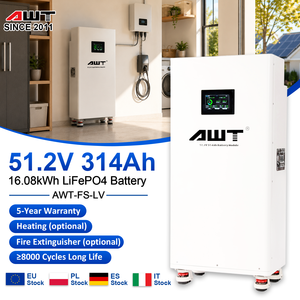
Diesel generation costs in West Africa have escalated exponentially, with industrial-grade Automotive Gas Oil (AGO) exceeding ₦1,300 per liter. In response, tier-1 EPC contractors, solar developers, and independent power producers (IPPs) across Lagos, Abuja, Port Harcourt, and Kano are turning to China’s leading smart grid battery storage factories to engineer reliable, high-c-rate Battery Energy Storage Systems (BESS).
Grid Instability Buffer
Instantaneous <10ms transfer times safeguard sensitive industrial machinery, textile mills, and data centers against total grid drops and high voltage spikes.
Diesel Displacement Economics
Pairing high-capacity LiFePO4 arrays with existing solar PV lowers diesel generator operating hours by up to 85%, cutting levelized cost of energy (LCOE) dramatically.
Smart Grid Telemetry
Integrated GSM/4G Criterion BMS modules enable remote monitoring of state-of-charge (SOC), temperature, and cell balance across isolated Nigerian mini-grids.
Why Lithium Iron Phosphate (LiFePO4) Outperforms Legacy Chemistries in Sub-Saharan Climates
Deploying energy storage in Nigeria requires overcoming severe thermal stress and humidity. Traditional Lead-Acid (VRLA/AGM) batteries degrade exponentially at ambient temperatures exceeding 30°C, losing over 50% of their operational life within 18 months. Furthermore, Ternary Lithium (NMC) chemistries pose high thermal runaway risks in tropical industrial zones.
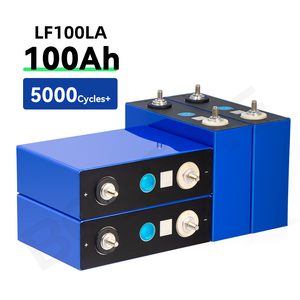
Our factory utilizes Grade-A Prismatic LFP cells featuring ceramic-coated separators and heavy-duty aluminum casing. These cells withstand thermal runaway up to 480°C and maintain robust cycle stability under constant ambient heat.
| Performance Parameter | Industrial Prismatic LiFePO4 (Our Factory) | Legacy Lead-Acid / Gel | Standard NMC Lithium |
|---|---|---|---|
| Cycle Life (80% DOD @ 35°C) | 5,000 – 7,000 Cycles | 500 – 800 Cycles | 1,500 – 2,500 Cycles |
| Thermal Runaway Threshold | 480°C (Extremely Safe) | 160°C (Gas Venting) | 210°C (High Fire Risk) |
| Round-Trip Energy Efficiency | 95% – 98% | 70% – 75% | 90% – 93% |
| BMS Smart Synchronization | Native CANbus / RS485 / Modbus | None (Passive Voltage) | Basic Analog BMS |
| Levelized Cost of Storage (LCOS) | $0.045 / kWh | $0.22 / kWh | $0.11 / kWh |