
Executive Summary: Navigating Cold-Climate Electrochemical Constraints in Greater Chicago
The Greater Chicago area—encompassing Cook, DuPage, Lake, and Will counties—presents one of North America’s most demanding operational environments for commercial, industrial, and municipal energy storage. Experiencing severe Midwest winter climate cycles, sub-zero cold waves, and winter polar vortex events, ambient temperatures frequently drop well below -20°C (-4°F), with record lows plunging past -30°C (-22°F).
Standard Lithium-Ion (Li-ion) and conventional Lithium Iron Phosphate ($LiFePO_4$) chemistry variants suffer severe performance degradation when exposed to sub-freezing regimes without specialized thermal intervention. This technical whitepaper, produced by senior energy storage engineers and battery system architects, evaluates the physical chemistry challenges of low-temperature battery operation, provides actionable OEM system design methodologies, details regional application frameworks across Chicagoland's industrial corridors, and outlines procurement specs for sub-zero operating lithium battery factories and suppliers.
1. Electrochemical Dynamics of Lithium-Ion Batteries in Sub-Zero Climates
To engineer resilient energy storage systems for Chicago's outdoor, municipal, and unheated indoor environments, system architects must first understand the fundamental degradation pathways that occur inside a standard lithium cell below $0^\circ\text{C}$:
1.1 Liquid Electrolyte Viscosity and Ionic Conductivity Drop
Standard commercial battery cells utilize carbonate-based organic solvents such as ethylene carbonate (EC), dimethyl carbonate (DMC), and diethyl carbonate (DEC). As ambient temperatures descend toward sub-zero levels:
- Viscosity Spikes: The solvent mixture transitions toward a gel-like state, restricting the physical mobility of solvated lithium ions ($Li^+$).
- Conductivity Collapse: Ionic conductivity drops precipitously—often by more than 80% at -20°C compared to 25°C—increasing internal cell resistance ($R_{int}$).
- Ohmic Drop ($I \cdot R$ Loss): Under load, high internal resistance converts useful electrochemical potential into waste heat, drastically lowering output terminal voltage.
1.2 Solid Electrolyte Interphase (SEI) Charge-Transfer Impedance
The interface between the graphite anode and the liquid electrolyte (the SEI layer) presents an energy barrier for lithium desolvation and intercalation. At temperatures below -10°C, charge-transfer resistance ($R_{ct}$) across the SEI increases exponentially. This impedes $Li^+$ insertion into the graphite lattice during charging cycles.
1.3 Lithium Dendrite Plating and Thermal Runaway Hazards
Attempting to force a charge current into a standard lithium cell at sub-zero temperatures without pre-heating causes severe safety and longevity failures:
- Anode Overpotential Plating: Because intercalation kinetics are paralyzed, incoming lithium ions accept electrons at the graphite surface instead of intercalating, transforming into metallic lithium ($Li^0$).
- Internal Short Circuits: Metallic lithium forms microscopic needle-like structures (dendrites) that pierce the porous polymer separator, shorting the anode and cathode.
- Capacity Decay & Risk: Plating permanently consumes active lithium inventory, driving permanent capacity fade and creating latent thermal runaway vulnerabilities once the battery warms back up.
2. Sub-Zero Battery Chemistries & Engineering Performance Matrix
Different lithium formulations respond uniquely to cold-weather stress. OEM engineers sourcing batteries for Chicagoland applications must select cell chemistries based on discharge capability, active heating needs, and energy density requirements.
| Battery Chemistry | Min Discharge Temp | Min Charge Temp (Unheated) | Capacity @ -20°C (Unheated) | Sub-Zero Safety Index | Target Chicago Application |
|---|---|---|---|---|---|
| Standard LiFePO4 (LFP) | -20°C (-4°F) | 0°C (32°F) | 45% - 55% | Moderate | Indoor Climate-Controlled Storage |
| Advanced Low-Temp LFP | -30°C (-22°F) | -10°C (14°F) | 70% - 78% | High | Cold Storage Logistics, Outdoor UPS |
| Self-Heating Smart LFP Pack | -40°C (-40°F) | -40°C (-40°F) *with heating | 85% - 92% | Highest | Chicagoland Outdoor Solar & Telecom |
| Lithium Titanate (LTO) | -40°C (-40°F) | -30°C (-22°F) | 80% - 88% | Highest | Municipal Transit, Extreme Heavy AMRs |
| Nickel Manganese Cobalt (NMC) | -30°C (-22°F) | -5°C (23°F) | 60% - 70% | Moderate | Compact Robotics & Outdoor Equipment |
3. Architectural Solutions for Sub-Zero Reliability
To eliminate sub-freezing power failure, leading specialized suppliers and factories implement four key technical solutions during custom battery pack assembly:
3.1 Active Internal Thermal Management & Heating Elements
Integrate ultra-thin polyimide flexible heater films or positive temperature coefficient (PTC) ceramic heating elements directly between cell rows. Managed by an intelligent Battery Management System (BMS):
- Pre-Charge Thermal Warmup: When cold charger power is detected below 0°C, the BMS diverts incoming current strictly to the internal heating pads until internal cell temperature reaches +5°C.
- Self-Heating Efficiency: Energy can also be drawn from the battery pack itself prior to engine start or system discharge, elevating core cell temperature rapidly.
3.2 Low-Temperature Electrolytes & Nano-Additives
Cell manufacturing utilizes optimized low-viscosity organic solvents modified with co-solvents such as Ethyl Acetate (EA) or Methyl Propionate (MP), combined with fluoroethylene carbonate (FEC) additives. This depresses the electrolyte freezing point down to -50°C and reduces the desolvation energy barrier for lithium ions at sub-zero SEI boundaries.
3.3 Smart Low-Temperature BMS Safeguards
A sub-zero rated BMS must incorporate multi-point NTC thermistor temperature sensing across all series blocks. Key logic rules include:
- Hard lockout of charging current if cell temperature is $\le 0^\circ\text{C}$ without active heater engagement.
- Dynamic adjustment of Maximum Continuous Discharge Current based on real-time temperature curve lookup tables.
- Communication via CANbus / RS485 to system inverters, warning host devices of reduced low-temp discharge capabilities.
3.4 Insulated Double-Wall & Vacuum-Sealed Enclosures
Mechanical design plays a critical role in slowing passive heat dissipation. Batteries targeted for outdoor Chicago installations use IP66/IP67 rated powder-coated steel or aluminum enclosures lined with high-density Aerogel or closed-cell polyurethane foam insulation, retaining internal operational heat during severe cold cycles.
4. Localized Application Scenarios Across Greater Chicago
Chicago is a key commercial transportation, manufacturing, and technological center in North America. Sub-zero lithium batteries power several vital sectors across the region:
4.1 Cold Storage Warehousing & Automated Guided Vehicles (AGVs/AMRs)
The O'Hare Logistics Corridor, Elk Grove Village, and South Suburban Chicago boast massive cold storage and distribution facilities maintained at constant temperatures between -18°C and -28°C (-0.4°F to -18.4°F). Automated Guided Vehicles, Autonomous Mobile Robots (AMRs), and electric forklifts operating continuously inside these blast freezers require sub-zero LFP or LTO packs equipped with internal heating elements to avoid loss of operational shift hours.
4.2 Outdoor Solar Energy Storage & Municipal Microgrids
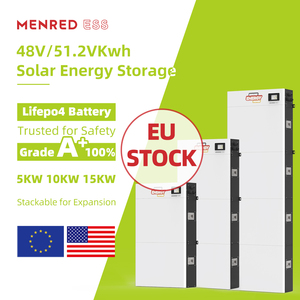
Midwest energy independence initiatives and municipal microgrid programs across Cook County rely heavily on outdoor battery energy storage systems (BESS). Integrated self-heating 48V/51.2V LFP systems maintain power continuity during winter snowstorms and grid blackouts, powering public safety communication towers, traffic management nodes, and off-grid infrastructure.
4.3 Telecommunications & Remote Utility Monitoring
Cellular base stations and remote utility monitoring sensors positioned near Lake Michigan face damp, high-wind, sub-zero conditions. Custom lithium non-rechargeable (primary Li-$SOCl_2$) or rechargeable low-temperature lithium packs supply uninterrupted backup power for remote telemetry systems throughout winter.
4.4 Marine, RV, and Electric Fleet Transport
Commercial vessels along the Chicago River, winterized RVs, and municipal utility fleets demand cold-cranking lithium starting batteries and deep-cycle auxiliary banks capable of fast recovery and self-heating when charged from solar arrays or shore power in winter docks.
5. Chicago Market Trends, Supply Chain Resilience & Regulatory Standards
Procuring sub-zero lithium battery technology in the Chicago market requires navigating strict local codes, international transport safety standards, and regional supply chain logistics:
5.1 Regulatory Compliance & Safety Certifications
Commercial installations within Chicago city limits must satisfy rigorous building and fire codes. Key mandatory certifications include:
- UL 1973: Standard for Batteries for Use in Stationary, Vehicle Auxiliary and Light Electric Rail Applications.
- UL 9540 / UL 9540A: Standard for Energy Storage Systems and Equipment, evaluating large-scale fire safety and thermal runaway propagation in winter conditions.
- UN 38.3 Transport Testing: Essential certification verifying battery safety under altitude simulation, extreme thermal shock (-40°C to +75°C), vibration, impact, and external short-circuit testing prior to shipping via Chicago freight hubs.
- HAZLOC / ATEX Certification: Required for batteries deployed in hazardous industrial environments such as Midwest chemical processing plants or grain storage elevators.
5.2 Supply Chain Infrastructure & Local Warehousing
Dependable battery manufacturers and suppliers serving the Chicago market maintain regional distribution nodes, engineering support teams, and direct factory partnerships. Local inventory of Grade-A sub-zero prismatic cells and standard 12V-48V heating battery packs minimizes shipping lead times and protects Midwest OEMs from international logistics delays.
6. 40+ Years of Manufacturing Strength & OEM/ODM Engineering Competence
Aligning with established lithium battery pack manufacturers—such as ISO 9001 certified companies backed by deep engineering history—provides significant strategic advantages for industrial buyers in Illinois and the broader Midwest:
- 40+ Years of Engineering Heritage: Decades of specialized design capability across defense, medical, oil & gas, and industrial battery packs ensure custom solutions are engineered for long-term safety and performance.
- End-to-End Customization: Full OEM/ODM technical capabilities—including custom enclosure modeling, PCB/BMS firmware engineering, cell sorting, ultrasonic wire bonding, thermal simulation, and automated pack testing.
- Tier-1 Cell Partnership Supply Chain: Strategic sourcing partnerships with audited world-class cell manufacturers (e.g., CATL, EVE, Saft, Tadiran, Panasonic) guarantee high cell quality, batch-to-batch consistency, and true temperature tolerance specs.
7. Frequently Asked Questions (FAQ) for Chicago Sub-Zero Lithium Battery Procurement
Need Custom Sub-Zero Lithium Battery Engineering for Your Chicago Project?
Connect directly with our senior battery application engineers to review your cold-climate specs, request detailed technical datasheets, or schedule a custom OEM/ODM design consultation.