Robotics Battery Systems Manufacturers & Suppliers in New York
ISO 9001 Certified Engineering · Enterprise LiFePO4 & Li-ion Custom Battery Packs Purpose-Built for Autonomous Mobile Robots (AMRs), AGVs, Medical Robotics & Industrial Automation Across New York State.
High-Performance Battery Catalog
New York Industry-Grade Robotics Power Systems
Engineered for extreme duty cycles, rapid opportunity charging, and intelligent CANbus/SMBus telemetry. Browse our core battery modules deployed by leading robotics OEMs and industrial integrators throughout the Empire State.
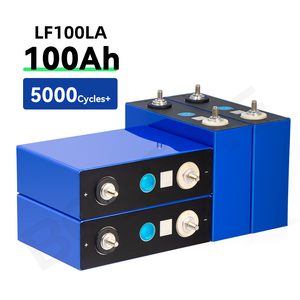
5000+ Cycles | AMRs
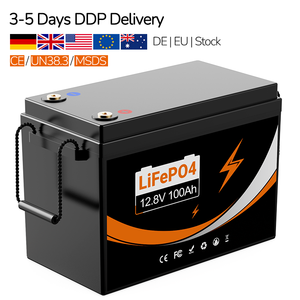
Grade A 5000 Cycles 3.2V 100Ah LFP Prismatic Lithium Pack
Heavy-duty LiFePO4 chemistry engineered for continuous 24/7 Autonomous Mobile Robot (AMR) operations in high-density New York warehouse facilities.
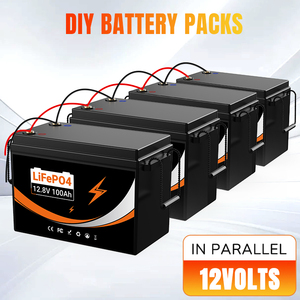
100kWh Modular | Heavy AGVs
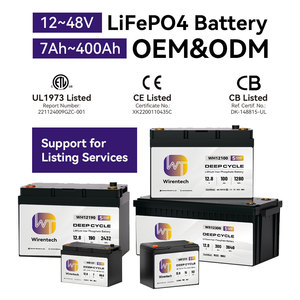
Modular 12V-48V 100Ah-300Ah Industrial LiFePO4 System
Scalable rack-mount and modular chassis architecture optimized for high-payload Automated Guided Vehicles (AGVs) operating in port terminals and logistics parks.
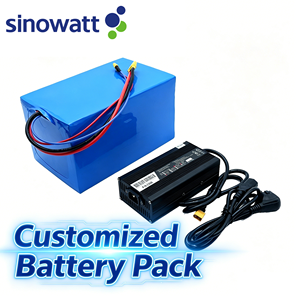
Custom BMS | Precision OEM
Customized Industrial BMS Battery Pack (10S1P to 3S10P)
Precision-tailored multi-series lithium-ion assembly featuring active thermal management and custom form factors for medical assistance and cobot limbs.
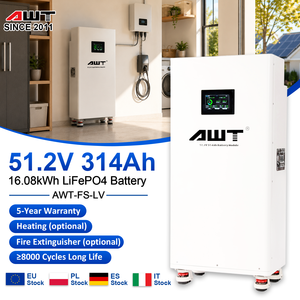
High Capacity | Solar Buffer
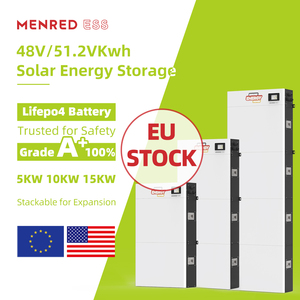
48V/51.2V 280Ah-314Ah High-Capacity Storage System
Ultra-dense 15kWh-16kWh stationary buffer packs powering autonomous robotic docking stations and localized charging hubs throughout Upstate NY industrial zones.
IP67 Waterproof | Service Robots
Ruggedized 12V-48V 50Ah-300Ah Outdoor Mobile Battery
Heavy-vibration resistant enclosure designed for last-mile delivery robots, municipal cleaning automatons, and outdoor agricultural robotics platforms.
Fast Charging | Logistics
24V/12V 100Ah-300Ah High-Rate LiFePO4 Power Pack
Rapid-charge cell configuration allowing 1C continuous charging, minimal robot downtime, and extended cycle endurance for urban fulfillment centers.
Wearable / Field | High Energy
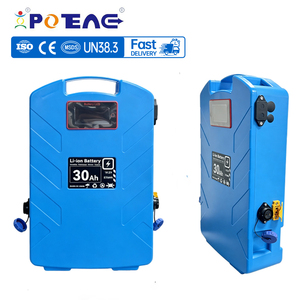
19.2V 30Ah Portable Wearable & Field Robotics Pack
Lightweight, high-energy-density tactical battery system for quadruped inspection robots, exoskeleton suits, and field exploration devices.
5kW-50kW Stackable | Micro-Grid
5kW-50kW Industrial Stackable Power Buffer Module
Enterprise-grade energy storage solution for robotic fleet charging stations, grid peak shaving, and uninterrupted power supply (UPS) in automated plants.
Technical Whitepaper: Architecting Next-Generation Robotics Battery Systems in New York
The rapid transformation of New York State into a primary East Coast hub for advanced manufacturing, autonomous logistics, and medical robotics has created an unprecedented demand for high-reliability, custom-engineered energy storage solutions. From the automated fulfillment hubs of Staten Island and Long Island to the cutting-edge hardware incubators of Brooklyn Navy Yard and Silicon Alley, system integrators and Original Equipment Manufacturers (OEMs) are shifting away from off-the-shelf lead-acid or standardized battery modules. Instead, modern robotic architectures demand highly customized Lithium Iron Phosphate (LiFePO4) and Lithium-Ion (NMC) battery packs integrated with smart Battery Management Systems (BMS).
Information Gain Insight: Operating autonomous mobile systems within the New York market entails navigating unique environmental and regulatory mandates. Battery systems must comply with stringent FDNY (Fire Department of New York) Rules (3E-01 ESS guidelines), UN 38.3 transport safety protocols, and UL 2580/UL 1642 safety standards while enduring wide thermal fluctuations—from sub-zero Upstate NY winter deployments to intense indoor industrial heat loads.
40+
Years Industry Authority
5000+
LiFePO4 Cycle Endurance
ISO 9001
Certified Manufacturing
< 15 min
1C Rapid Opportunity Charging
1. Chemistry Selection for Robotics: LiFePO4 vs. NMC vs. LTO
Selecting the optimal electrochemical formulation is the foundational step in engineering a custom robotics battery system. In the New York market, where operational uptime directly impacts logistics revenues and healthcare outcomes, engineers must balance gravimetric energy density (Wh/kg), volumetric energy density (Wh/L), thermal safety, and total cost of ownership (TCO).
For the vast majority of industrial robotics suppliers in New York, Prismatic LiFePO4 cells represent the gold standard. They eliminate the risk of catastrophic thermal runaway propagation—a crucial factor when presenting design dossiers to New York safety inspectors and risk underwriters.
A raw battery cell array is only as reliable as its internal electronic nervous system. Modern autonomous robots require real-time state-of-charge (SoC), state-of-health (SoH), individual cell voltage balancing, and temperature telemetry sent directly to the robot's main controller (ROS 2 / Industrial PLC).
Multi-Tier Overcurrent Protection: Hardware-level short-circuit reaction within <10 microseconds alongside programmable software current thresholds.
Active Balancing Circuits: Dynamically shifting charge between cell banks during operation to prevent cell-capacity degradation and extend useful pack life by up to 30%.
Black-Box Event Logging: Storing historical voltage spikes, thermal anomalies, and charge cycle counts directly on non-volatile EEPROM for rapid field diagnostic auditing.
Targeted Regional Deployments
Robotics Battery Applications Across New York Tech Hubs
We deliver tailored power hardware engineered to meet the unique operational profiles of New York's diverse commercial ecosystems.
Fulfillment & Last-Mile AMRs (Staten Island & JFK Corridor)
High-capacity 24V & 48V LiFePO4 battery modules equipped with fast 1C charging capabilities, enabling logistics robots to recharge in 15-minute intervals during automated dock cycles without battery swap delays.
Surgical & Assistive Medical Devices (Manhattan & Long Island)
Ultra-reliable 10S1P / 7S2P custom lithium-ion batteries featuring medical-grade cell screening, zero electromagnetic interference (EMI) shielding, and strict ISO 13485 alignment for hospital robotics.
Custom high-energy 19.2V-36V backpack battery systems optimized for extreme shock tolerance, subterranean moisture ingress prevention (IP67), and cold-temperature discharge performance down to -20°C.
Hardware Manufacturing Cobots (Brooklyn Navy Yard & Rochester)
Modular 48V 100Ah-300Ah power banks engineered for stationary cobot arms and mobile manipulator platforms, integrated with RS485 communication protocols for real-time factory automation feedback.
New York Localization Trends: Battery Technology Outlook
Trend 1: Stricter Urban Storage Fire Safety Codes (FDNY & NYC Building Codes)
Deploying lithium battery power systems within New York City commercial buildings requires compliance with severe local safety regulations. Municipal oversight bodies demand proof of single-cell thermal runaway containment. Our engineered battery solutions integrate ceramic thermal barriers between prismatic cells, explosion-proof vent valves, and flame-retardant structural casings (UL 94-V0) to ensure immediate approval for indoor deployment.
Trend 2: Transition from Lead-Acid to Opportunity-Charged LiFePO4
Legacy automated guided vehicles in Upstate New York industrial corridors are undergoing widespread electrification retrofits. Replacing heavy lead-acid batteries with prismatic LiFePO4 yields a 60% reduction in battery weight, 3x faster charge acceptance, and the total elimination of off-gas ventilation rooms—drastically reducing real estate footprint costs in high-rent New York industrial districts.
Trend 3: Smart Fleet Telemetry via IoT Cloud Gateways
Procurement directors across New York are mandating remote battery telemetry. Modern robotics battery packs now incorporate Bluetooth LE and CAN-to-Cloud telemetry modules, enabling fleet managers to monitor voltage degradation curve, internal impedance shifts, and state-of-health diagnostics across hundreds of active robots from a centralized dashboard.
Why Partner With Us
Engineering Authority & Enterprise Quality Control
Backing your robotics innovation with 40+ years of custom battery design experience, backed by tier-1 global cell partnerships and ISO 9001 quality assurance.
ISO 9001 Certified Quality
Every custom pack undergoes rigorous end-of-line (EOL) computerized testing—including high-pot insulation checks, thermal imaging under full load, and digital BMS handshake verification.
Tier-1 Cell Partnership Traceability
We source Grade-A cells directly from globally audited manufacturers including CATL, EVE, Saft, Panasonic, and Molicel—guaranteeing strict batch capacity matching and 100% cell traceability.
Rapid Prototype & NY Support
Our dedicated engineering team provides turnkey battery design support—from initial 3D mechanical CAD modeling and thermal simulation to rapid prototype delivery within weeks.
Frequently Asked Questions (FAQ) - New York Robotics Procurement
Addressing common technical, compliance, and logistics questions from New York-based engineering teams and purchasing agents.
Q1: How do your robotics battery packs comply with NYC FDNY energy storage regulations?
Our battery engineering teams design packs with cell-level thermal isolation, pressure-relief safety vents, and certified flame-retardant enclosures. We provide complete technical testing documentation (including UL 1642, UL 2054, and UN 38.3 test summaries) required by FDNY plan examiners for indoor robotic energy storage systems.
Q2: What continuous discharge and peak C-rates can your LiFePO4 packs sustain for AMRs?
Our standard industrial LiFePO4 prismatic packs support continuous discharge rates of 1C to 2C, with short-duration peak pulse capabilities up to 3C-5C (10 seconds) for heavy robotic lifting actuation, acceleration up inclines, and breakaway torque requirements.
Q3: Can your BMS integrate directly into ROS 2 (Robot Operating System) frameworks?
Yes. Our Smart BMS modules support CANbus (CANopen / J1939) and RS485 communication interfaces. We provide standard data frames and ROS / ROS 2 driver nodes for seamless mapping of state-of-charge, cell temperatures, health warnings, and diagnostic telemetry.
Q4: What is the typical lead time for custom prototype battery packs delivered to New York?
Initial mechanical and electrical engineering design evaluations take 3-5 business days. Once CAD models and circuit schematics are signed off, custom prototype battery packs are typically manufactured, tested, and delivered within 4 to 6 weeks, backed by full UN 38.3 transport certification.
Q5: How does cold temperature in Upstate NY impact battery performance, and how is it mitigated?
Sub-zero temperatures reduce ion mobility and temporarily lower available capacity. For outdoor or cold-storage robotics, we integrate internal low-power silicone heating blankets controlled by the BMS. The system pre-heats cells to optimal charge/discharge windows before allowing high-current flow, preserving cycle life.
Q6: Do you offer local engineering consultation and technical support for NY OEMs?
Yes. We provide complete engineering consultation, on-site integration reviews, and custom power system architecture design for robotics OEMs, system integrators, and industrial clients throughout the New York metropolitan area and Upstate NY regions.
Empower Your New York Robotics Fleet Today
Consult with our senior battery design engineers to request custom battery specifications, technical CAD models, or immediate pricing quotes for your autonomous systems project.