
Strategic Powering of Malaysia’s Industrial Automation: The Critical Role of Advanced Robotics Battery Systems
Malaysia is currently undergoing a monumental industrial transformation. Driven by the federal government’s National Robotics Roadmap 2021–2030 (NRR) and the Industry4WRD Policy, manufacturing sectors across Selangor, Penang, Johor, and Sarawak are accelerating the deployment of Automated Guided Vehicles (AGVs) and Autonomous Mobile Robots (AMRs). As cleanroom electronics fabrication plants in Penang’s "Silicon Valley of the East" and sprawling logistics fulfillment hubs in Klang Valley move toward 24/7 autonomous operations, the foundational energy storage system dictates overall operational uptime, total cost of ownership (TCO), and fleet efficiency.
As a specialized Robotics Battery Systems Factory and Exporter catering directly to the Malaysia market, we address the unique technical and environmental friction points that local plant managers and system integrators face. Standard commercial off-the-shelf lithium batteries frequently suffer premature degradation when subjected to Malaysia’s tropical ambient temperatures (+32°C to +40°C inside unconditioned industrial facilities) combined with high relative humidity exceeding 85%. Our high-cycle Lithium Iron Phosphate (LiFePO4) and custom NMC battery modules are engineered specifically to overcome thermal stress, moisture ingress, and high-frequency opportunity charging demands.
Information Gain Insight: Unlike standard stationary energy storage, robotics battery architectures demand dynamic current pulse handling (up to 3C surge currents during payload lifting), zero-downtime fast charging (0.5C to 2C continuous), and real-time state-of-charge (SoC) telemetry via closed-loop CANbus/Modbus integration with Robot Operating Systems (ROS).
1. Thermal Management & Tropical Climate Resilience for Malaysian Facilities
Thermal runaway prevention is the paramount safety metric for robotics deployed in enclosed Malaysian assembly lines and humid plantation environments. Our factory integrates custom Phase Change Material (PCM) thermal sinks alongside active aluminum heat-dissipating frame plates within every battery module. This ensures that internal cell junction temperatures remain balanced below 45°C, even during rapid 1-hour fast-charging cycles under ambient Malaysian tropical conditions.
Furthermore, humidity condensation inside battery enclosures often triggers micro-shorts across conventional PCBA balancing boards. Our export-grade robotics battery packs feature conformal PCB nano-coatings and marine-grade IP67/IP68 sealed outer enclosures with automatic pressure-equalizing GORE-TEX membranes, preventing internal moisture buildup while maintaining flame-retardant structural integrity.
2. Intelligent BMS Integration: Closed-Loop ROS & Industrial PLC Telemetry
Modern robotics fleets in Malaysia rely on automated fleet management software (e.g., Siemens, Omron, or custom ROS-based schedulers). A simple battery that only delivers power without communication creates operational blind spots. Our proprietary Smart Battery Management System (BMS) supports multi-protocol digital communication, including CAN 2.0B, RS485, Modbus RTU, and SMBus protocols.
- Cell-Level Active Balancing: Extends pack usable capacity by balancing individual cell voltages during both charge and discharge cycles, preventing premature capacity fade.
- Predictive Health Diagnostics (SoH & SoC): Transmits real-time Coulomb-counting battery state data directly to the AGV’s central controller, allowing automated routing to charging pads before power depletion.
- Multi-Layer Hardware Protections: Instantaneous electronic circuit breaker isolation (<10 microseconds) against over-current, short-circuit, over-voltage, cell under-voltage, and thermal spikes.
3. Fast Opportunity Charging Architecture for Continuous 24/7 Operations
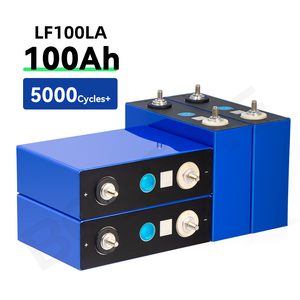
In high-throughput logistics hubs near Port Klang and automated semiconductor cleanrooms in Kulim Hi-Tech Park, battery swapping wastes valuable labor and system downtime. Our heavy-duty LiFePO4 prismatic cell chemistries support continuous high-rate opportunity charging (up to 1C–2C continuous rate). AGVs can top up 30% of their charge during brief 10-minute automated dock stops, achieving perpetual 24/7 operation without battery removal.