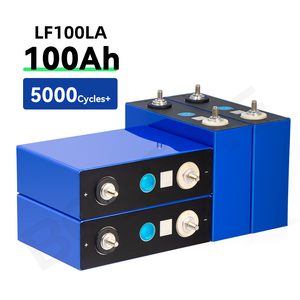
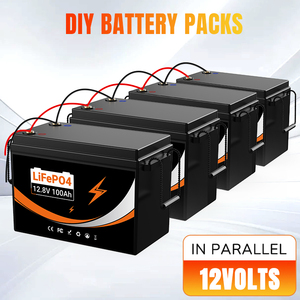
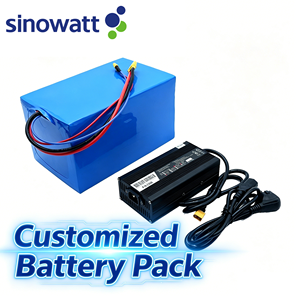
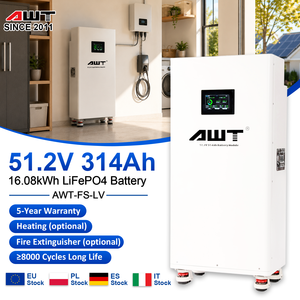
Explore our top-tier Grade-A LiFePO4 and specialized lithium battery packs engineered for extreme weather resilience, long cycle life, and seamless integration into Russian industrial telemetry and energy storage systems.
Industrial instrumentation in the Russian Federation operates under some of the most arduous climatic and environmental stress vectors on Earth. From the permafrost zones of the Yamalo-Nenets Autonomous Okrug and the Sakha Republic (Yakutia) to the offshore oil fields of Sakhalin Island and the heavy chemical complexes of the Ural region, continuous operational continuity hinges on one decisive component: uncompromising autonomous energy storage.
As a specialized supplier and exporter with over 40 years of precision battery engineering lineage (originally rooted in ISO 9001 certified manufacturing frameworks), our custom battery packs are built to overcome sub-zero capacity degradation, extreme thermal cycling (-50°C to +60°C), mechanical shock during cross-country freight transport, and explosive atmosphere safety requirements (GOST-R Ex / ATEX standards).
In regions such as Khanty-Mansiysk, Krasnoyarsk Krai, and the Arctic continental shelf, temperatures regularly plummet below -45°C for extended months. Standard lithium-ion chemistries (such as standard NMC or standard LFP) suffer severe lithium plating and sharp impedance growth under unheated charging or continuous sub-zero discharge. Consequently, industrial telemetry nodes, cathodic protection loggers, automated gas metering stations, and remote terminal units (RTUs) risk power blackouts, causing catastrophic data loss or pipeline shutdown.
To solve this, our export-grade industrial instrumentation battery packs integrate smart self-heating PTC film technology driven by proprietary BMS firmware, allowing seamless operation across severe sub-zero environments without draining critical payload reserve energy.
The selection of battery cell chemistry directly dictates operational lifespan, safety compliance, and gravimetric energy density in Russian industrial telemetry setups. Below is an engineering evaluation comparing primary and secondary lithium chemistries under Siberian sub-zero conditions:
| Chemical System | Nominal Voltage | Operating Temp. Range | Capacity Retention @ -40°C | Cycle Life (DOD 80%) | Primary Application in Russia |
|---|---|---|---|---|---|
| Low-Temp Heated LiFePO4 | 3.2V / 51.2V | -45°C to +65°C | 85% - 92% (Heated BMS) | > 5,000 Cycles | Pipeline SCADA, Substation Backup, Heavy ESS |
| Lithium Thionyl Chloride (Li-SOCl2) | 3.6V | -55°C to +85°C | 70% - 80% | Primary (Non-Rechargeable) | MWD/LWD Downhole Tools, Smart Gas Meters |
| Sub-Zero Industrial NMC | 3.6V - 3.7V | -30°C to +60°C | 45% - 60% | 1,200 - 2,000 Cycles | Portable Field Instruments, Surveying Drones |
| Lithium Titanate (LTO) | 2.3V | -50°C to +65°C | 80% - 88% | > 20,000 Cycles | Extreme Railway Signaling, Defense Automation |
Integrated microprocessors continuously evaluate thermal sensors across cell clusters. At sub-zero thresholds, charge current is safely diverted to internal thermal heating elements prior to cell acceptance, completely preventing dendrite formation.
Built with heavy-gauge aluminum alloy or stainless steel pressure housings (IP67/IP68 rated). Fully compliant with GOST 31610.0 (IEC 60079-0) requirements for Category 1 and 2 Zone hazardous industrial sites.
Supports Modbus RTU, RS485, CANbus 2.0B, and SMBus protocol integration. Enables direct digital handshake with Russian SCADA software (e.g., MasterSCADA, Alpha平台) for remote state-of-charge (SoC) and state-of-health (SoH) diagnostics.

Engineered solutions deployed across strategic economic zones in the Russian Federation, providing autonomous power resilience where grid infrastructure is absent or highly erratic.
Along thousands of kilometers of gas trunklines operated in Tyumen, Novy Urengoy, and Yamalo-Nenets, automated valve remote terminal units (RTUs), cathodic protection monitoring nodes, and pressure sensors require 24/7 unassisted power. Our high-voltage 24V/48V LiFePO4 battery modules equipped with low-temp self-heating ensure uninterrupted SCADA communication during winter polar nights.
In deep directional drilling operations across the Khanty-Mansi Autonomous Okrug, measurement-while-drilling (MWD) toolstrings operate under intense vibration (up to 30G RMS) and temperatures exceeding +150°C at borehole depth. Our specialized primary Lithium-Thionyl Chloride (Li-SOCl2) battery packs deliver extreme volumetric energy density and mechanical shock damping to guarantee drilling vector telemetry precision.
Along the Baikal-Amur Mainline (BAM) and Trans-Siberian corridors, trackside signal monitoring stations, acoustic wheel-flat detectors, and automated switch-gear require reliable backup power. Our modular 12V 100Ah - 300Ah LiFePO4 batteries replace legacy toxic lead-acid systems, offering a 10-year maintenance-free operational life and reducing trackside technician service interventions in harsh terrain.
The Russian industrial battery procurement market is experiencing a profound paradigm shift driven by technological modernization, grid decentralization, and strict regulatory standards within the Eurasian Customs Union (EAEU):
Russian electrical power utilities (Rosseti network subsidiaries, regional grid operators) are actively phasing out traditional VRLA/flooded lead-acid banks at distribution substations. The superior cycle longevity of LiFePO4 (5,000+ cycles vs. 500 cycles), combined with a 70% reduction in physical footprint and zero off-gassing requirements, makes custom lithium battery packs the preferred standard for 110kV/35kV automated substation backup systems.
With nationwide initiatives to digitalize resource consumption monitoring (smart gas meters, steam flowmeters in district heating networks, environmental monitors in Kuzbass coal fields), demand for high-reliability 3.6V primary lithium cells (Li-SOCl2) and 3.2V LFP prismatic cells has escalated by over 35% year-on-year. Procurement managers prioritize suppliers capable of providing batch-to-batch capacity consistency and low self-discharge rates (<1% per year).
Compliance with Eurasian Economic Union technical regulations—specifically TR CU 004/2011 (Low Voltage Safety) and TR CU 020/2011 (Electromagnetic Compatibility)—is now a mandatory prerequisite for importing electrical equipment into Russia. Our export battery architectures are designed and certified to clear customs seamlessly without regulatory hold-ups.
Combining 40+ years of custom lithium battery pack design expertise with globally audited cell supply chain networks.
Since 1984, our engineering team has designed over 5,000 custom battery pack configurations for oil & gas, medical device, military defense, and industrial instrumentation applications across 50+ countries.
Every battery pack undergoes 100% automated end-of-line electrical testing, helium leak testing (for sealed packs), vibration profiling, and thermal stress screening under ISO 9001 quality management protocols.
We maintain direct strategic supply alliances with world-leading cell foundries (including Tadiran, Saft, Panasonic, Molicel, LG Energy Solution, Samsung SDI, CATL, and EVE), ensuring 100% authentic Grade-A cells with full traceability.
All battery packs are shipped fully compliant with UN 38.3 transport standards (vibration, shock, thermal test, altitude simulation, external short circuit, overcharge, forced discharge), guaranteeing safe multimodal air, sea, and rail freight.
We do not rely on generic off-the-shelf BMS boards. Our in-house electronics team designs custom BMS hardware featuring hardware-level short-circuit protection, high-accuracy coulomb counting, and customizable firmware.
We provide customized trade settlement and export logistics documentation structured specifically to facilitate smooth cross-border B2B procurement for Russian industrial importers.
Here are comprehensive answers to technical, operational, and commercial questions frequently raised by Russian chief engineers, procurement directors, and system integrators: