Engineered for Zone 1, Zone 2, Zone 21, and Zone 22 hazardous environments. Designed for energy storage, underground mining, oil refineries, and drone mobility in Turkey.
The Republic of Turkey sits at the geopolitical and commercial crossroad between Europe, the Middle East, and Central Asia. As Turkey accelerates its industrial transformation under the Turkish National Energy Plan 2035—which targets over 30 GW of solar and wind capacity alongside massive grid-connected battery storage installations—the demand for hazardous-location qualified power architecture has escalated sharply.
Industrial applications in Turkey range from heavy petrochemical refining along the Aegean and Marmara coasts (such as STAR Rafineri and Tüpraş facilities) to deep underground coal and mineral mining operations in Zonguldak and Soma, alongside rapidly evolving off-grid commercial microgrids. Operating high-energy lithium-ion (Li-ion) and lithium iron phosphate (LiFePO4) energy storage systems (BESS) within these environments requires adherence to stringent thermal runaway containment, combustible gas mitigation, and explosive dust protection rules mandated by the Turkish Standards Institution (TSE) and European ATEX Directives 2014/34/EU.
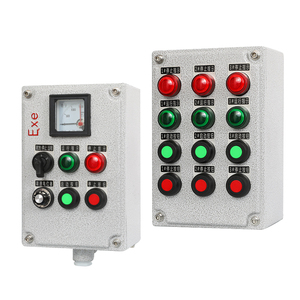
As an established OEM manufacturer and strategic global exporter of explosion-proof battery systems, our organization delivers fully integrated energy storage cabinets, solid-state high-discharge drone packs, and Ex-d flameproof control enclosures specifically tailored to meet the environmental, seismic, and regulatory realities of the Turkish market.
Standard commercial battery systems installed in hazardous areas without dual-rated Ex d / Ex e explosion-proof containment pose catastrophic arc-flash and thermal failure risks. Our system architectures combine aerosol fire suppression (Stat-X/FirePro integration), localized gas detection, SBS-compliant smart BMS, and robust A.TR movement certificate compliance to ensure zero-delay customs clearance at Turkish ports like Ambarlı, Gemlik, and Mersin.
Explosion protection in energy storage relies on multi-layered containment and active prevention strategies. When designing high-voltage battery racks (e.g., 51.2V to 800V DC clusters) for volatile gas atmospheres (Group IIA, IIB, IIC) or combustible dust conditions (Group IIIA, IIIB, IIIC), standard enclosure IP ratings are insufficient.
Depending on the localized hazardous zone classification defined under IEC 60079-10-1 and Turkish regulation Muhtemel Patlayıcı Ortamda Kullanılan Teçhizat ve Koruyucu Sistemler İle İlgili Yönetmelik, we deploy specialized containment methodologies:
| Protection Code | Underlying Principle | Applicable ATEX Zone | Primary System Application | Thermal Limit Protection |
|---|---|---|---|---|
| Ex d (Flameproof) | Internal explosion containment; flame path quenching | Zone 1, Zone 2 | Junction boxes, main circuit breakers, BMS control boxes | T6 (≤85°C) to T4 (≤135°C) |
| Ex e (Increased Safety) | Elimination of internal sparks, arcs, and hot spots | Zone 2, Zone 22 | Modular battery racks, busbar contacts, terminal blocks | T4 (≤135°C) continuous |
| Ex p (Pressurized) | Positive internal pressure overpressure gas curtain | Zone 1, Zone 2, Zone 21 | Liquid-cooled container cabinets (372kWh / 261kWh) | Automated nitrogen purge & sensor lockout |
| Ex ia (Intrinsic Safety) | Strict voltage/current limitation below ignition thresholds | Zone 0, Zone 1, Zone 2 | BMS cell monitoring sensors, temperature thermistors | T6 max voltage limit safety circuit |
Selecting cell chemistries for industrial deployment in Turkey requires balancing gravimetric density, thermal runaway onset thresholds, and cold-weather discharge performance in eastern Anatolian winter environments.
Maintains individual cell temperature variance within ±2°C across large 372kWh ESS cabinets. Prevents hot-spot creation during peak solar charging in high summer heat (Mersin / Adana regions).
4+1 automatic aerosol fire suppression units rapidly extinguish micro-thermal incidents at the module level within milliseconds, leaving non-conductive residue and maintaining Ex integrity.
20C continuous discharge capability for industrial UAVs and underground robotic creepers, providing maximum payload flight duration for Turkish mine surveying.
Custom battery engineering designed to solve specific operational challenges across Turkey’s industrial geographic hubs.
Refining complexes operated along the Aegean and Marmara coastlines handle massive quantities of volatile hydrocarbons (Group IIB+H2 gases). Critical safety telemetry, emergency shutdown (ESD) valves, and perimeter lighting require uninterrupted backup power. Standard uninterrupted power supply (UPS) systems cannot be installed within Zone 1 process areas without costly blast-proof bunkers.
Our Engineered Solution: Installing ATEX-certified 12 Station Container Battery Systems (BC12white) equipped with Ex-d sealed junction boxes (BAXIT) directly adjacent to refinery processing units. These units feature gas detection shutoffs (C2H4, H2S, CH4) and liquid-cooling chillers designed to sustain operational integrity during ambient summer temperatures exceeding 42°C.
Underground coal and mineral extraction in Zonguldak, Soma, and regional infrastructure projects (e.g., Eurasia Tunnel feeders) operate under constant threat of firedamp (methane gas) explosions and coal dust accumulation (Group I M1 / M2 underground classification).
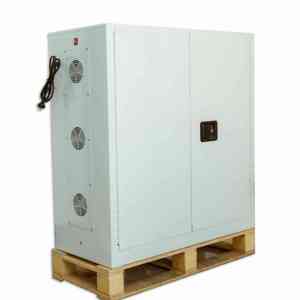
Our Engineered Solution: Heavy-duty rack-mounted 48V 10kWh/15kWh LiFePO4 batteries protected inside IP65 flameproof steel enclosures with reinforced shock absorbing mounts. These systems power mobile underground locomotives, drainage pumps, and emergency ventilation shafts without risking sparks or explosive gas ignition.
Turkey’s Energy Market Regulatory Authority (EPDK) mandates that new wind and solar generation facilities integrate energy storage systems to qualify for grid interconnection and tariff optimization. Solar farms in Konya, Karapınar, and İzmir face extreme diurnal temperature swings (-15°C in winter nights to +40°C in peak summer days).
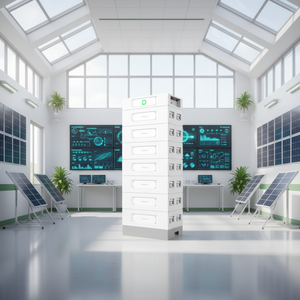
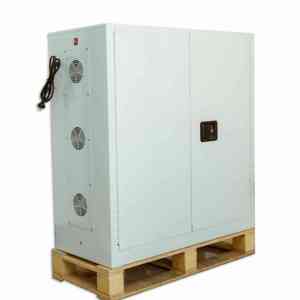
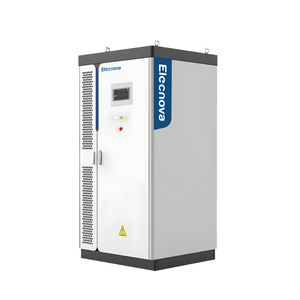
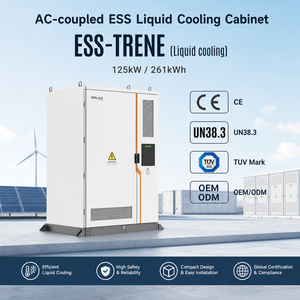
Our Engineered Solution: Deploying the Elecnova 372kWh Liquid-Cooled Outdoor ESS Container and 125kW 261kWh Industrial Cabinet. Featuring IP55/IP65 dual enclosure protection, internal HVAC thermal management, and smart SBS-compliant BMS controllers, these systems seamlessly interface with local Turkish grid operators (TEİAŞ) for frequency regulation and peak shaving.
Turkey’s defense and aerospace ecosystem—centered in Ankara and Istanbul—demands high-energy, explosion-safe batteries for tactical UAVs, uncrewed ground vehicles (UGVs), and hazardous inspection equipment operating in extreme environments.
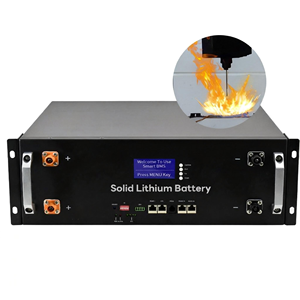
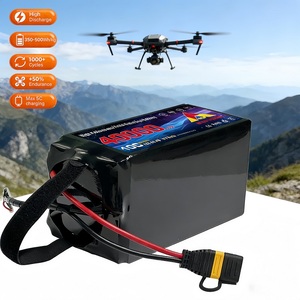
Our Engineered Solution: The Industrial Solid State UAV Battery (40000mAh 44.4V 14S 20C) delivering 400 Wh/kg gravimetric energy density. The solid polymer composition ensures that even in extreme events like bullet impact or severe mechanical crushing, the cell will not exhibit thermal runaway or open flame, protecting sensitive military-grade surveillance payloads.
Under the EU-Turkey Customs Union, our goods export smoothly under A.TR movement documentation, granting preferential zero-tariff duty status at Turkish customs ports.
Fully tested against EN 60079-0, EN 60079-1, EN 60079-7, and UN 38.3 standards, matching all TSE compliance audits for industrial deployment in Turkey.
From custom busbar shaping to personalized BMS software interfaces (CANbus, Modbus RTU, RS485), we tailor every parameter to match your project specifications.
Turkey’s battery market is experiencing a structural pivot. Several macro-economic and technical drivers shape the strategic purchasing decisions of Turkish EPC contractors and industrial buyers:
With over four decades of engineering provenance backed by global manufacturing footprints and audited cell supply partnerships (with cell innovators like Panasonic, CATL, Saft, and Tadiran), our organization offers distinct structural advantages to Turkish buyers:
Every cell batch undergoes automated 100% capacity grading, internal resistance testing, and high-potential insulation checks prior to pack assembly. Racks undergo 48-hour burn-in thermal cycling.
Integrated BMS provides hardware-level overvoltage, undervoltage, cell-balancing, short-circuit, and multi-point temperature protection, transmitting real-time diagnostics via Modbus to central SCADA networks.
Multiple manufacturing hubs ensure rapid lead times and strategic buffer stock for Turkish buyers, preventing project delays caused by global shipping bottlenecks.
Addressing key engineering, regulatory, and logistics queries for procurement managers in Turkey.
Yes. All our hazardous location battery cabinets, junction boxes, and modular racks are engineered in strict compliance with ATEX Directive 2014/34/EU and international IECEx standards (EN 60079-0, EN 60079-1, EN 60079-7). They are fully recognized by the Turkish Standards Institution (TSE) for installation in Zone 1, Zone 2, Zone 21, and Zone 22 environments.
Under the EU-Turkey Customs Union agreement, we supply products complete with A.TR Movement Certificates and Certificates of Origin. This allows qualified industrial components to clear Turkish customs (such as Haydarpaşa, Ambarlı, or Gemlik ports) with zero or reduced customs tariffs, streamlining logistics for Turkish EPC contractors.
Our containerized energy storage units (such as the 372kWh Liquid-Cooled and 125kW/261kWh Aerosol systems) feature multi-stage fire safety. They incorporate off-gas monitoring (detecting early CO and hydrogen venting), combined with 4+1 automated aerosol fire suppression devices (Stat-X/FirePro certified) and water mist interfaces to prevent thermal runaway propagation.
Yes. Our 40000mAh 44.4V Solid State UAV batteries feature an extended operating temperature range from -20°C to +60°C. Unlike conventional liquid Li-ion cells that suffer severe voltage droop in cold climates, our solid-state electrolyte maintains stable ionic conductivity and structural integrity under sub-zero conditions.
For hot and humid ambient conditions (exceeding +40°C), we recommend our liquid-cooled cabinet architectures (e.g., Elecnova 372kWh). Liquid cooling provides 3x higher heat dissipation efficiency than air cooling, maintaining intra-pack temperature uniformity within ±2°C and significantly extending cell cycle life.
Standard modular stackable batteries (such as Dyness STACK280 and 48V rack series) are available from stock with dispatch times of 1-2 weeks. Custom-engineered OEM battery solutions—including bespoke Ex-d enclosures and specialized BMS integration—typically require 4 to 8 weeks for design, assembly, testing, and export documentation.
Connect directly with our senior battery engineering team to review ATEX certificates, request CAD dimensions, or receive custom pricing for your industrial energy project in Turkey.