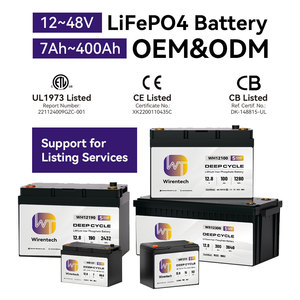
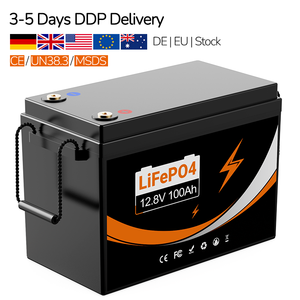
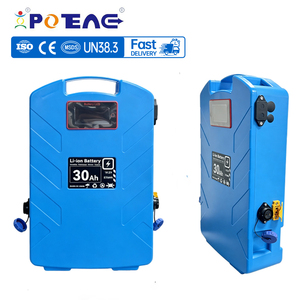
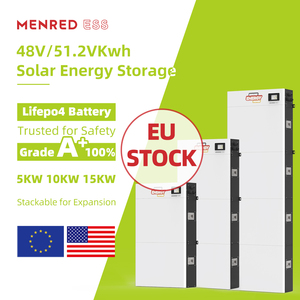
Explore our custom lithium iron phosphate (LiFePO4) and specialized primary lithium battery system configurations engineered for UK standard commercial power units, energy storage arrays, and custom OEM pack requirements.
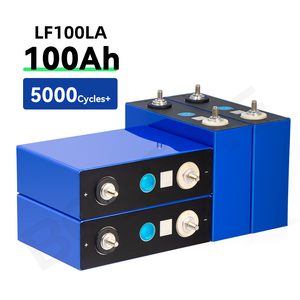
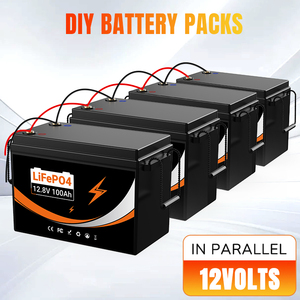
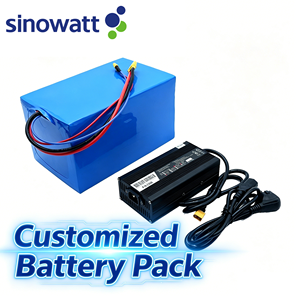
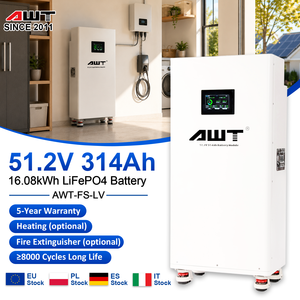
Where secondary (rechargeable) batteries fail due to self-discharge, wiring constraints, or maintenance costs, high-energy non-rechargeable Primary Lithium chemistries provide maintenance-free, mission-critical autonomous power.
Primary lithium batteries are categorized by their cathode material and liquid or solid electrolyte. For UK original equipment manufacturers (OEMs), selecting the precise primary chemistry requires balancing open-circuit voltage (OCV), operating voltage under load, thermal extremes, and pulse discharge profiles.
| Battery Chemistry | Nominal Voltage | Energy Density | Operating Temp Range | Self-Discharge / Year | Primary UK Applications |
|---|---|---|---|---|---|
| Lithium Thionyl Chloride (Li-SOCl2) | 3.6 V | Up to 700 Wh/kg (Bobbin) | -55°C to +85°C (+150°C Downhole) | < 1% at 20°C | UK Smart Metering (SMETS2), Subsea Downhole Sensors, AMR Water/Gas Meters |
| Lithium Manganese Dioxide (Li-MnO2) | 3.0 V | 280 - 400 Wh/kg | -40°C to +70°C | < 1% at 20°C | Medical Equipment, Tactical Defibrillators, Asset Tracking IoT, Toll Transponders |
| Lithium Poly-carbon Monofluoride (Li-CFx) | 3.0 V | Up to 650 Wh/kg | -40°C to +85°C | < 0.5% at 20°C | UK Aerospace & Defense Systems, Oceanographic Sensors, High-Temperature Medical |
| Hybrid Capacitor Systems (Li-SOCl2 + HLC / UPC) | 3.6 V / 3.9 V Peak | Ultra-High Pulse Capacity | -40°C to +85°C | < 1.5% at 20°C | NB-IoT, LoRaWAN, GSM/GPRS Wireless Transmitters, Subsea Acoustic Beacons |
A fundamental phenomenon in high-density Lithium Thionyl Chloride (Li-SOCl2) primary cells is the formation of a protective lithium chloride (LiCl) passivation layer on the lithium anode during storage. While passivation is the secret behind the cell's ultra-low annual self-discharge (<1% per year) enabling a 20-year shelf life, it introduces a transient voltage delay when a high current pulse is demanded.
To mitigate voltage delay in UK smart meters and offshore IoT transmitters requiring high pulse bursts (up to 2A-3A for NB-IoT or satellite transmissions), our engineering team integrates parallel-connected Hybrid Layer Capacitors (HLC) or Ultra Pulse Capacitors (UPC). The primary Li-SOCl2 cell continuously trickles charges the HLC, while the HLC delivers immediate zero-delay high-current pulses to the load—guaranteeing operational integrity even in frozen North Sea conditions.
From harsh offshore platforms in Aberdeen to automated utility networks in Greater London, our custom engineered primary battery packs power critical British infrastructure.
Operating off the coasts of Aberdeen and the Shetland Islands demands battery packs rated for extreme pressure and temperatures up to +150°C. We supply specialized high-temperature Li-SOCl2 battery assemblies for Measurement While Drilling (MWD), Logging While Drilling (LWD), and Pipeline Inspection Gauges (PIGs) that withstand severe shock, vibration (up to 30G), and corrosive environments.
The United Kingdom's national mandate for smart gas, water, and electricity meters requires power sources capable of maintenance-free operation for 15 to 20 years. Our custom Li-SOCl2 bobbin cells and hybrid capacitor modules deliver stable baseline power and reliable pulse current for long-range cellular (NB-IoT/LTE-M) and Wireless M-Bus transmissions without maintenance visits.
Supporting British defense contractors, our primary lithium batteries power emergency locator transmitters (ELT), military beacons, night vision apparatus, and remote battlefield telemetry. Engineered to stringent UK Defense Standards (DEF STAN), our hermetically sealed laser-welded stainless steel cells prevent leakage and operate reliably down to -55°C.
Deployments in the Atlantic Ocean, North Sea, and English Channel require autonomous power for oceanographic buoys, wave monitoring arrays, and subsea acoustic transponders. Our high-capacity primary battery banks provide unmatched volumetric energy density (up to 1400 Wh/l), maximizing operational lifespans between sea vessel maintenance missions.
Monitoring remote railway track temperatures, structural strain across Network Rail assets, and unpowered freight containers across the UK rail network requires rugged power source isolation. Our custom primary lithium battery packs operate continuously amidst high vibration, humidity, and wide ambient temperature fluctuations.
Essential medical equipment deployed across NHS facilities and emergency medical services—such as surgical tools, automatic external defibrillators (AEDs), and mobile diagnostic monitors—rely on instant-read, zero-fail Li-MnO2 primary battery packs certified to ISO 13485 standards.
Importing primary lithium battery assemblies into the UK requires absolute adherence to post-Brexit regulatory frameworks, transport compliance, and environmental stewardship standards.
Following the UK's exit from the European Union, battery assemblies exported to Great Britain must satisfy UKCA (UK Conformity Assessed) regulations alongside traditional CE markings for Northern Ireland and continental Europe. Our battery pack designs undergo rigorous electromagnetic compatibility (EMC) testing and electrical safety verifications to facilitate smooth customs clearance and UK market distribution.
As Class 9 Dangerous Goods, primary lithium batteries (UN 3090 for standalone batteries and UN 3091 for batteries contained in equipment) are subject to stringent air, ocean, and road freight safety protocols. Every cell batch shipped from our manufacturing facility is certified under UN Manual of Tests and Criteria Part III, sub-section 38.3, covering altitude simulation, thermal testing, vibration, shock, external short circuit, impact, and forced discharge.
Aligning with the UK's Net-Zero 2050 targets and the Waste Batteries and Accumulators Regulations, our primary lithium cells are engineered 100% free from heavy metals such as Mercury (Hg), Cadmium (Cd), and Lead (Pb). We provide complete material composition declarations (IMDS) compliant with REACH and RoHS 3 directives, supporting simplified end-of-life recycling paths.
Over 40 years of pioneering custom battery engineering, delivering end-to-end design, prototyping, compliance testing, and scalable volume production.
We maintain direct supply agreements with globally audited, leading primary lithium cell manufacturers including Tadiran, Saft, Panasonic, FDK, Murata, and Ultralife. This guarantees 100% genuine cell chemistry, consistent batch lot traceability, and priority allocation during global material shortfalls.
Our electrical engineering team designs proprietary protection circuits, current-limiting resistors, blocking diodes, thermal fuses, and customized Battery Management Systems (BMS) to meet ATEX / HAZLOC intrinsic safety standards for hazardous industrial zones.
Operating under certified ISO 9001:2015 quality systems, every single battery pack undergoes automated OCV/CCV testing, internal resistance validation, weld joint integrity inspection, and thermal cycling before final packaging and release.
Whether you require low-volume custom packs for prototype testing or high-volume automated production runs for UK-wide utility rollouts, our flexible manufacturing infrastructure delivers short lead times and responsive technical engineering support.
Get immediate technical clarity on engineering parameters, lead times, UK shipping logistics, and custom design protocols.
Partner with an industry-leading custom battery manufacturer. Our engineering team will review your discharge profile, ambient temperature requirements, mechanical constraints, and compliance targets to deliver an optimized power solution.