
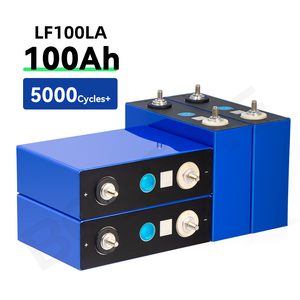
Grade A 5000 Cycles 3.2V 100AH LFP Prismatic Battery Pack (12V/24V/48V)
- 5000+ Deep Cycles @ 80% DOD
- Integrated Active Balancing BMS
- Heavy Duty Commercial & RV Use
Explore our core product lines engineered with active thermal management, multi-protocol communication networks (CANbus/RS485), and Grade-A prismatic cells for heavy-duty industrial environments in Osaka.
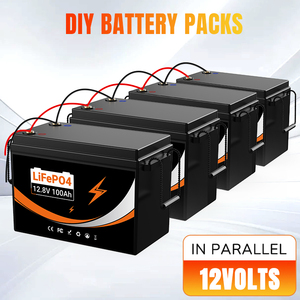
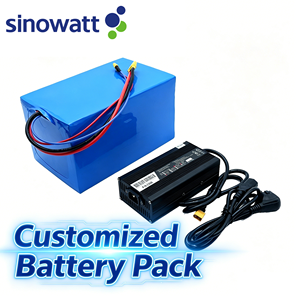
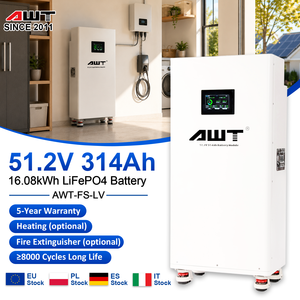
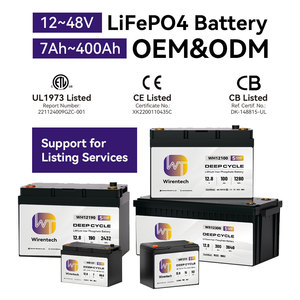
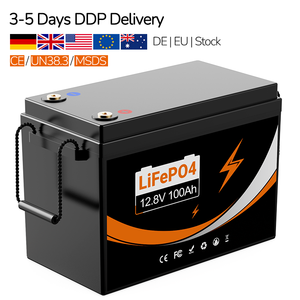
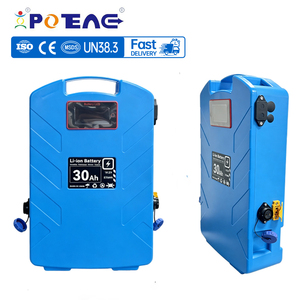
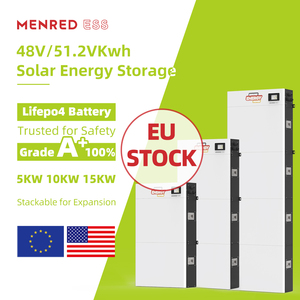
Delivering unmatched thermal stability, fault prevention algorithms, and high-frequency communication protocols for Osaka's demanding industrial sectors.
Unlike conventional passive balancing that wastes energy as heat, our custom BMS utilizes bidirectional active inductive/capacitive balance circuits up to 10A, maximizing usable battery pack capacity by 12-18% over lifetime service.
Seamlessly integrates into Japanese PLC systems (Mitsubishi MELSEC, Omron, Fanuc) via dual-isolated CANbus (CANopen/J1939), Modbus TCP/RTU, SMBus, and UART interfaces with customizable DBC files for instant plug-and-play operation.
Engineered with hardware-level redundant over-voltage, under-voltage, over-current, and thermal runaway mitigations. Galvanic optical isolation prevents high-voltage spikes from damaging sensitive system electronics.
Embedded Kalman-filter State of Charge (SOC) and State of Health (SOH) algorithms maintain true 99.2% capacity accuracy across aging cycles, reporting real-time metrics directly to edge gateways or centralized management portals.
Integrated solid-state heating pads and micro-fluidic cooling control logic allow reliable battery operation down to -40°C in cold-chain logistics and up to +85°C in heavy industrial machinery across the Kansai region.
Scalable architecture allows daisy-chaining up to 32 slave BMS modules under a central master controller, supporting high-voltage battery banks up to 1000V DC for utility-scale energy storage and electric port cranes.
Executive Summary for Osaka Procurement Engineers: As the Kansai region spearheads Japan's industrial automation, Expo 2025 green technology showcase, and port electrification initiatives, standard off-the-shelf Battery Management Systems (BMS) fail to meet the rigorous demands of custom industrial voltage profiles, strict Japanese METI PSE standards, and high-vibration marine/agv environments. This comprehensive guide outlines the technical architecture, safety topologies, and localized application matrices required when exporting custom BMS and lithium battery solutions to Osaka.
In modern industrial energy storage and automated mobility, the Battery Management System (BMS) serves as the digital brain and primary safety barrier of the energy storage matrix. A high-reliability custom BMS designed for Osaka’s manufacturing standards must integrate both analog precision and digital resilience across three distinct hardware layers:
The core of cell safety relies on high-resolution Analog-to-Digital Converters (ADCs). Our custom BMS incorporates multi-channel AFE ICs capable of sampling individual cell voltages at a resolution of ±1mV across a wide temperature spectrum (-40°C to +85°C). By executing high-frequency sampling (100Hz), the system detects micro-volatility in cell internal impedance before thermal instability can escalate. For multi-cell prismatic LFP (Lithium Iron Phosphate) strings where discharge voltage curves remain extremely flat between 20% and 80% State of Charge (SOC), ±1mV precision is non-negotiable for true capacity determination.
Depending on the continuous current magnitude, our BMS engineering supports two distinct switching architectures:
| BMS Feature | Standard Commercial BMS | Excell Custom Industrial BMS for Osaka |
|---|---|---|
| Cell Balancing Scheme | Passive Resistance (50mA - 100mA dissipation) | Active Transformer / Inductive (2A - 10A Transfer Rate) |
| Voltage Sampling Error | ±15mV to ±30mV | ±1mV (High Precision AFE) |
| Communications | Single UART / Unisolated RS485 | Dual-Galvanic Isolated CANbus 2.0B / Modbus / SMBus |
| Thermal Sensors | 1 or 2 NTC Thermistors per pack | Multi-point Thermistors (1 per 2 cells + FET + Ambient) |
| Vibration & Enclosure | Bare PCB / PVC Shrink Wrap | Conformal Coated, IP67 Sealed Aluminum Alloy Case |
| Japanese Regulatory Support | None | Full METI PSE, JIS C 8715-2 & UN 38.3 Ready |
Cell imbalance is the leading cause of premature lithium battery pack failure in long-term commercial deployments. When cells within a series string vary in internal resistance or capacity due to thermal gradients across the pack casing, the weakest cell limits the entire pack’s charge and discharge capability.
Conventional passive balancing bleed circuits bleed off excess energy from fully charged cells as heat through discharge resistors. In high-capacity prismatic cells (such as 100Ah to 314Ah LFP cells commonly used in commercial Osaka installations), passive balancing currents of 50mA are mathematically incapable of correcting a 5% capacity deviation within reasonable operational window times, resulting in cumulative capacity loss over consecutive cycles.
Our custom BMS hardware incorporates active bidirectional DC-DC charge transfer pumps. Energy is dynamically harvested from the highest-voltage cells or the entire pack bus and injected directly into the lowest-voltage cells with up to 92% power conversion efficiency. With active balancing currents selectable between 2A and 10A, cell imbalance is corrected during both charge and discharge cycles without generating thermal hotspots on the BMS controller board. This technology expands overall pack lifespan to 5000+ full charge/discharge cycles—a crucial ROI parameter for Japanese industrial buyers.
Osaka’s economy is defined by world-class precision manufacturing, vast port infrastructure, automated warehousing, and leading biomedical research hubs. Custom battery packs and BMS units exported to Osaka must address distinct operational environments:
The Nanko Port district and surrounding logistics complexes in Osaka depend heavily on Automated Guided Vehicles (AGVs) and Autonomous Mobile Robots (AMRs) operating 24/7. These vehicles demand fast 1C to 2C opportunity charging. Our custom BMS features rapid CANbus handshake integration with industrial fast-chargers, dynamic thermal throttling, and ultra-durable shock-resistant casing to endure relentless concrete vibration.
In alignment with the Osaka Expo 2025 sustainability directives and Kansai Electric Power Co. (KEPCO) grid resilience frameworks, commercial buildings and factories are installing peak-shaving Battery Energy Storage Systems (ESS). Our high-voltage modular master-slave BMS allows seamless parallel clustering up to megawatt-hour capacities, providing instantaneous UPS backup during seismic disruptions.
Maritime electric propulsion along the Yodo River and coastal Osaka Bay requires battery systems resistant to salt-spray corrosion and high humidity. Our marine-grade lithium packs are enclosed in IP67/IP68 stainless steel or anodized aluminum casings with conformal-coated BMS circuit boards and isolated marine RS485/CAN networks.
Clustered around Northern Osaka Health City (Kento) and Nakanoshima biotech parks, medical device manufacturers require battery packs with zero noise interference, extreme voltage stability, and medical-grade safety approvals (IEC 60601-1 compliant BMS architecture).
Osaka experiences humid subtropical summers with temperatures frequently exceeding 35°C combined with high relative humidity (>80%). High temperatures accelerate lithium-ion electrolyte degradation and thermal runaway risks. Our custom BMS solutions incorporate high-precision multi-sensor NTC thermistor networks mapped to intelligent cooling loops. When ambient thresholds are breached, the BMS automatically throttles charge limits or activates external cooling fans/liquid cooling pumps. Furthermore, all exposed PCBs undergo triple-dipped polyurethane conformal coating to prevent moisture condensation and salt fog bridging.
Exporting lithium battery systems to Japan requires strict adherence to national electrical safety laws overseen by the Ministry of Economy, Trade and Industry (METI):
Combining North American engineering rigor with global manufacturing scale to deliver customized, defect-free power solutions to Osaka buyers.
Every custom battery pack undergoes rigorous end-of-line automated functional testing, high-pot insulation breakdown testing, and full thermal cycle burn-in to ensure zero-defect delivery.
We source premium Grade-A cells directly from globally audited cell manufacturers including Panasonic, Saft, Tadiran, Murata, Molicel, Samsung SDI, LG Energy Solution, and Lishen.
From custom BMS schematic design, Gerber layout, firmware compiling, mechanical CAD design, prototype sample validation to mass production and export logistics to Osaka.






Key technical, regulatory, and logistics answers for Japanese engineers importing custom BMS and lithium battery packs.
Talk to our senior battery engineers today to review your voltage, current, form factor, and BMS protocol requirements. Access custom technical engineering drawings, sample evaluations, and full pricing catalogs.