Engineered with Grade A LFP Prismatic Cells, Smart BMS Telemetry, and Compliant with Japanese Grid Safety Standards.

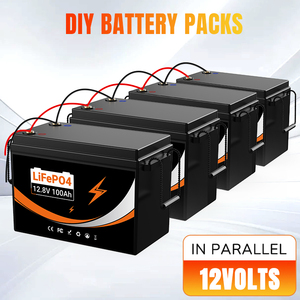
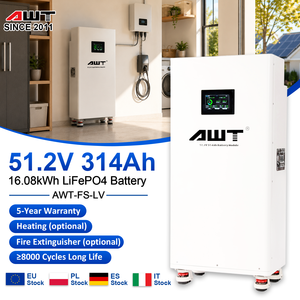
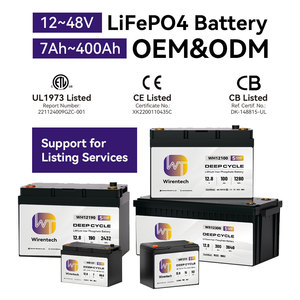
The Greater Tokyo Metropolitan Area, housing over 37 million residents and representing the world’s largest metropolitan economy, is undergoing a profound structural shift in electrical energy management. Driven by the Tokyo Metropolitan Government’s (TMG) aggressive zero-emission strategy—aiming for a 50% reduction in greenhouse gas emissions by 2030 and full carbon neutrality by 2050—commercial, industrial, and utility entities face unprecedented pressure to modernize their power infrastructure.
Operating within the TEPCO Power Grid network at a frequency of 50Hz, energy assets in Tokyo must navigate extremely tight grid stability protocols, escalating peak-demand surcharges, and volatile spot market pricing on the Japan Electric Power Exchange (JEPX). Containerized Battery Energy Storage Systems (BESS) have emerged as the foundational technology bridging grid reliability, renewable energy integration, and corporate Business Continuity Planning (BCP).
Tokyo's urban transmission lines operate near maximum thermal thresholds. Containerized BESS delivers rapid frequency response and localized grid congestion relief during peak summer loads.
Wholesale electricity prices on JEPX frequently surge during late-afternoon ramp hours. Multi-megawatt containerized storage enables automated charge/discharge financial optimization.
With Tokyo positioned along active seismic zones, industrial facilities mandate ISO-containerized BESS capable of off-grid black-start operation during natural disasters.
Deploying energy storage in urban and industrial zones across Tokyo, Kanagawa, Chiba, and Saitama demands engineering standards far exceeding standard commercial specifications. As leading global manufacturers and exporters, our containerized BESS solutions (ranging from 20ft ISO standard containers at 1.5MWh/2.5MWh to 40ft High Cube containers reaching 5MWh+ capacity) incorporate multi-layered thermal, electrical, and structural safeguards.
Tokyo experiences high summer humidity coupled with temperatures exceeding 38°C, alongside sub-zero winter spells. Traditional air-cooled BESS containers suffer from thermal gradients exceeding 5°C across cell modules, leading to accelerated degradation of prismatic cells. Our state-of-the-art Liquid-Cooled Containerized BESS utilizes a closed-loop fluorinated or glycol coolant circulating system directly contacting module cold plates.
Fire safety is paramount in dense Tokyo urban districts. Our containerized BESS export configurations adhere strictly to the Japanese Fire Service Act regulations regarding hazardous materials and energy storage safety:
Tokyo is situated in a high-intensity seismic zone. Our containerized structural envelopes are structurally simulated to withstand horizontal ground acceleration exceeding 1.0g (Class 3 Seismic Loading):
| Engineering Metric | Standard Export Specification | Tokyo Metropolitan Customized Spec |
|---|---|---|
| Container Shell Construction | Standard Corrugated Corten Steel (ISO 1496) | Reinforced Frame Corten A Steel with Anti-Seismic Dampers |
| Rack Anchor Dynamics | Floor-Bolted Rigid Frame | Dual-Axis Seismic Isolation Base Frame (1.2g Peak Load) |
| Ingress Protection (IP Rating) | IP54 Exterior / IP20 Interior Racks | IP55 Exterior Enclosure / IP67 Fully Sealed Cell Packs |
| Grid Frequency Integration | 50Hz / 60Hz Switchable | Dedicated 50Hz Phase-Locked Loop (PLL) TEPCO Matching |
| Operating Temperature | -20°C to +50°C | -30°C to +55°C (HVAC Pre-Heating & Heat-Pump Assist) |
Understanding user intent and purchasing context requires examining real-world deployment cases across Greater Tokyo’s distinct economic hubs. Our exported containerized BESS units are custom-configured for three core local use cases:
Inzai City (Chiba) and the Tokyo Bay coastline host one of Asia's largest concentrations of hyperscale data centers. Power availability is severely restricted by grid substation allocations. Containerized BESS systems function as dynamic peak-shaving systems and ultra-fast UPS backstops, ensuring 99.9999% uptime while avoiding TEPCO peak demand penalties.
Heavy manufacturing plants along the Keihin Industrial Zone require steady power quality. Voltage sags on the 50Hz utility line can halt precise robotics manufacturing line steps. Our containerized storage systems provide sub-10ms seamless transfer to islanded power during grid fluctuations, preserving high-value production cycles.
Commercial complexes in Shinjuku, Roppongi, and Marunouchi are integrating large-scale rooftop solar PV. High solar generation during weekend off-peak hours causes local voltage elevation. Containerized BESS smooths renewable intermittency, storing low-cost solar kWh and discharging during expensive weekday tariff windows.
Exporting industrial energy storage equipment to Tokyo necessitates compliance with strict regulatory hurdles administered by the Ministry of Economy, Trade and Industry (METI) and electrical safety bodies. As an ISO 9001 certified OEM manufacturer, our production process integrates rigorous end-to-end quality control frameworks:
All prismatic LiFePO4 cells incorporated in our BESS containers undergo destructive safety validation including nail penetration, external short circuit, overcharge, and thermal abuse tests, complying with JIS C 8715-2 industrial lithium storage benchmarks in Japan.
Power Conversion Systems (PCS) and grid-interface inverters bundled with our BESS units undergo full harmonic distortion and frequency stabilization checks to satisfy METI Ordinance Technical Requirements for grid-connected high-voltage installations.
Containerized battery shipments to the Port of Tokyo or Port of Yokohama are pre-certified under UN 38.3 (Transport of Lithium Metal and Lithium Ion Batteries) with full Class 9 Dangerous Goods sea transport packaging, ensuring smooth Customs clearance.
Our Energy Management System (EMS) software stack supports Modbus TCP, DNP3, and IEEE 2030.5 protocols, permitting secure TLS 1.3 encrypted cloud communication for remote telemetry and automated virtual power plant (VPP) aggregation across Tokyo.
With over 40 years of pioneering battery engineering pedigree (under parent company Ultralife Corporation alignment), we provide Tokyo EPC contractors, renewable developers, and procurement houses direct factory access to customized containerized BESS solutions.
Every single cell used in our containers is automatedly sorted by internal resistance (IR), capacity, and voltage delta to within ±0.005V, preventing cell drift over thousands of operational charge cycles.
Before shipment to Tokyo, every containerized system completes full-load 100% Depth-of-Discharge (DoD) FAT testing at our manufacturing facility, simulating TEPCO 50Hz grid conditions under realistic load profiles.
We manage complete logistics logistics—from overseas manufacturing plants straight to Tokyo job sites—handling port customs clearance, heavy crane positioning, and commissioning support.
Addressing key technical, regulatory, and logistics queries raised by Japanese procurement directors and energy engineers.
A: Japan's electrical grid is split between 50Hz (Eastern Japan, including Tokyo/TEPCO) and 60Hz (Western Japan). Our export BESS systems are engineered with high-efficiency Power Conversion Systems (PCS) specifically calibrated for 50Hz 3-phase grid coupling (typically 6.6kV high-voltage stepped up via dedicated dry-type transformers). The onboard Smart BMS and EMS firmware feature phase-locked loops optimized for tight frequency response tolerances demanded by TEPCO.
A: Our containerized designs conform to global NFPA 855 and UL 9540A unit-level fire test standards. For Tokyo municipal site deployments, we provide comprehensive thermal runaway propagation test documentation, gas detection certification, and structural design drawings matching Japanese Fire Service Act (消防法) requirements, facilitating municipal permitting.
A: We exclusively recommend Grade A Lithium Iron Phosphate (LiFePO4 / LFP) prismatic cells for containerized C&I and utility storage in Tokyo. LFP chemistry offers superior thermal runaway resistance (decomposition temperature ~470°C vs ~210°C for NMC), exceptional cycle life (6,000+ cycles to 80% SOH), and zero cobalt/nickel supply risk.
A: Yes. Our BESS containers can be configured with automatic off-grid islanding and black-start capabilities. In the event of a TEPCO grid outage caused by an earthquake or typhoon, the system transitions to microgrid mode within 10–20 milliseconds, continuing to power critical building loads, data servers, or hospital facilities continuously from stored solar/battery power.
A: Standard customized containerized BESS lead times range from 10 to 14 weeks, encompassing cell sorting, rack assembly, PCS integration, Factory Acceptance Testing (FAT), and Class 9 maritime ocean shipping to Tokyo or Yokohama ports. Expedited engineering schedules are available upon request.