Engineered for extreme ambient resilience, deep cyclic endurance, and seamless integration with Huawei, ZTE, and Ericsson telecom power cabinets across North Africa.
The Kingdom of Morocco is undergoing an aggressive digital transformation, guided by national initiatives such as Digital Morocco 2030 and the expansion of high-speed optical fiber and 5G network backbones led by major telecommunications operators including Maroc Telecom (IAM), INWI (Wana Corporate), and Orange Maroc. As telecommunication infrastructure expands across both urban centers like Casablanca, Rabat, and Tangier, and hyper-arid remote regions spanning the Atlas Mountains and Saharan provinces (Ouarzazate, Zagora, Laâyoune), maintaining zero-downtime operations for Base Transceiver Stations (BTS) and remote node enclosures has become a mission-critical challenge.
Historically, Moroccan telecom operators relied heavily on Valve-Regulated Lead-Acid (VRLA) and Absorbed Glass Mat (AGM) battery technologies. However, traditional lead-acid batteries suffer severe performance degradation under Morocco’s extreme ambient temperatures—where daytime shelter temperatures in Southern regions routinely exceed 45°C to 50°C. High heat accelerates grid corrosion and thermal runaway in lead-acid systems, reducing their effective service life from a nominal 5 years down to less than 18 months. This results in exorbitant Operational Expenditure (OpEx) driven by frequent battery replacements, site maintenance visits, and diesel generator fuel consumption during prolonged grid outages.
Information Gain Insight: Modernizing Moroccan BTS towers with Chinese Tier-1 Lithium Iron Phosphate (LiFePO4/LFP) chemistry reduces Total Cost of Ownership (TCO) by up to 62% over a 10-year operational lifecycle, offering >6,000 cycles, 98% round-trip efficiency, and uncompromised thermal safety up to 60°C.
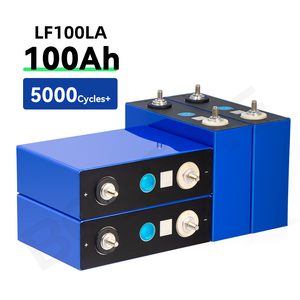
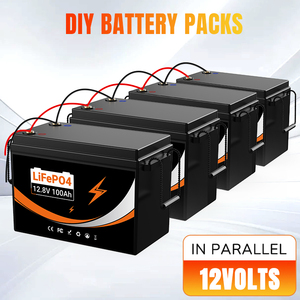
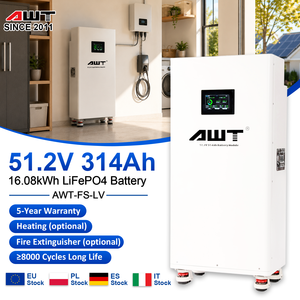
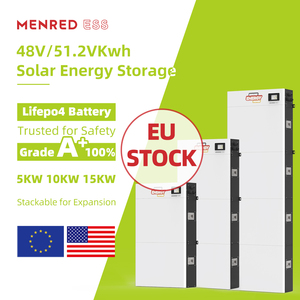
5G active antenna units (AAUs) consume 3x to 4x more power than 4G LTE systems. Our 48V/51.2V 100Ah-300Ah high-density LiFePO4 rack modules fit directly into standard 19-inch telecom cabinets, providing high discharge rates without voltage sagging.
Remote wireless repeaters in rural and desert areas rely on hybrid Solar-PV and battery energy storage systems (BESS). Our wide-temperature prismatic cells accept rapid solar charging (up to 1C rate) and tolerate partial state of charge (PSOC) operation without memory effects.
In rural Moroccan provinces experiencing daily voltage fluctuations and scheduled load shedding, our smart battery packs perform seamless ultra-fast switching (<5ms) to back up transmission control rooms, fiber optic nodes, and VSAT terminals.
As an authoritative Chinese wholesale manufacturer exporting directly to Moroccan project integrators, EPC contractors, and government tenders, our engineering philosophy centers around chemical safety, intelligent telemetry, and structural durability. We utilize premium Grade A prismatic LiFePO4 cells manufactured with automated laser-welded busbars and integrated thermal dissipation channels.
| Technical Parameter | China Wholesale LiFePO4 Telecom Pack | Conventional VRLA / AGM Battery | Morocco Field Advantage |
|---|---|---|---|
| Cycle Life (80% DoD @ 25°C) | 6,000 – 8,000 Cycles | 500 – 800 Cycles | 10+ years operational lifespan without replacement |
| High Temperature Performance (+45°C) | Retains >95% capacity; no thermal runaway | Loses 50% lifetime for every 8°C rise over 25°C | Eliminates expensive air conditioning in BTS shelters |
| Depth of Discharge (DoD) | Up to 90% – 100% usable capacity | Recommended max 50% DoD | Requires 50% smaller footprint for equal energy storage |
| Round-Trip Efficiency (RTE) | 95% – 98% | 75% – 80% | Saves solar panel capacity and generator fuel costs |
| Weight & Volumetric Density | 42 kg per 48V 100Ah pack (1U-3U design) | 130 kg per 48V 100Ah bank | Easy mounting on pole-top cabinets and high-rise rooftops |
| Remote Management Protocol | Integrated BMS: RS485, CANbus, SNMP v2/v3 | Passive / Manual voltage testing required | Real-time cloud monitoring for network operations centers (NOC) |
Every telecommunication backup lithium battery exported from our factory to Morocco is embedded with a custom-engineered multi-tier BMS. The BMS acts as the central brain, actively monitoring cell parameters and communicating directly with rectifier systems such as Huawei ETP48200, Vertiv NetSure, and ZTE ZXDU series.
Key BMS protection mechanisms include:
As Morocco positions itself as a green energy leader in the MENA (Middle East & North Africa) region—aiming for over 52% renewable power generation by 2030—the telecom industry is under tight regulatory pressure to decarbonize network operations. The ANRT (Agence Nationale de Réglementation des Télécommunications) and the Ministry of Energy Transition and Sustainable Development have implemented stricter energy efficiency guidelines for commercial telecom licensees.
Regulatory Compliance Guarantee: All battery packs produced at our Chinese factory hold full UN38.3 transport safety validation, MSDS, IEC 62619, CE, and RoHS certifications, ensuring hassle-free customs clearance and compliance with Moroccan import regulations.
With over two decades of dedicated research, electrochemistry engineering, and automated battery module assembly, our factory stands as an authoritative leader in high-capacity energy storage production. We operate state-of-the-art manufacturing facilities certified under ISO 9001:2015 (Quality Management) and ISO 14001 (Environmental Management).
Equipped with robotic cell sorting, automated CCD camera polarity checking, fiber laser busbar welding, and 100% automated aging test chambers to guarantee zero defects.
Exclusive partnerships with top-tier cell manufacturers (CATL, EVE, REPT, Ganfeng) ensure brand-new Grade A cells with QR code traceability and verified capacity matched down to 0.5% variance.
From custom sheet metal enclosure dimensions, IP rating proofing (IP55/IP65 outdoor cabinets), custom branding, to specialized communication protocols (Modbus, CAN open).
Yes, absolutely. Our telecom backup lithium battery series features built-in voltage adaptation logic and smart BMS protocols compatible with lead-acid constant voltage / constant current charging profiles. They are drop-in replacements for traditional 48V VRLA strings in standard Huawei, Vertiv, ZTE, and Eltek power cabinets.
Our lithium iron phosphate cells use high thermal stability chemical compounds that resist phase breakdown up to +300°C. Coupled with internal aluminum heat dissipation plates, thermal gap pads, and BMS software temperature protection limits, our battery packs operate safely in ambient environments reaching +55°C to +60°C without requiring active AC cooling.
We offer comprehensive Class 9 Dangerous Goods (DG) ocean shipping service directly from Shenzhen/Ningbo port to Tanger Med or Casablanca Port. Transit time is typically 20 to 28 days. We provide complete UN38.3, MSDS, Certificate of Origin, and Commercial Invoice documents for smooth Moroccan customs processing.
We back our commercial and telecom battery packs with a standard 5-year to 10-year factory warranty (depending on cell configuration and cycle count selection). In the event of a warranty claim, spare BMS boards and replacement modules are dispatched rapidly via air express alongside localized technical troubleshooting support.
Yes. Our Smart BMS hardware natively supports RS485, RS232, CANbus, and SNMP interfaces. We provide default firmware compatible with all major telecom monitoring platforms, as well as open SDK/API protocol tables for custom software integration by Moroccan network operators.
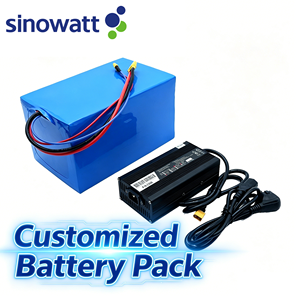
For standard 48V telecom rack modules, our wholesale MOQ starts at 10 units for sample evaluation or small pilot test sites. For custom OEM/ODM projects (custom dimensions, specialized enclosure colors, or high-voltage energy storage stacks), our MOQ is negotiable based on project volume.
Contact our senior electrochemistry engineers and international export team today to receive a technical datasheet, custom engineering proposal, and competitive factory-direct wholesale quote.