Panama & Central America B2B Industrial Intelligence

Asset Tracking GPS Batteries Suppliers & Exporters in Panama

High-gain engineering whitepaper on extreme-environment primary lithium ($\text{LiSOCl}_2, \text{LiMnO}_2$) and rechargeable ($\text{LiFePO}_4$) battery packs optimized for Panama Canal intermodal logistics, maritime container IoT, and tropical fleet telemetry.

Panama Inventory: Industrial Asset Tracking & Storage Batteries

Certified primary and secondary lithium battery solutions engineered for long-life GPS tracking, remote sensor nodes, and commercial power resilience across Panamanian free zones.
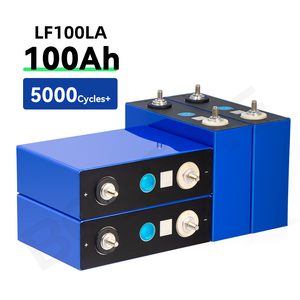
Prismatic LFP Grade A 5000 Cycles 3.2V 100AH LFP Prismatic Cell

Grade A 5000 Cycles 3.2V 100AH LFP Prismatic Cells Lithium Iron Phosphate Battery

Voltage / Capacity: 3.2V / 100Ah
Cycle Life: 5000+ Cycles @ 80% DoD
App: Heavy Telemetry & Marine Power
Send an Inquiry
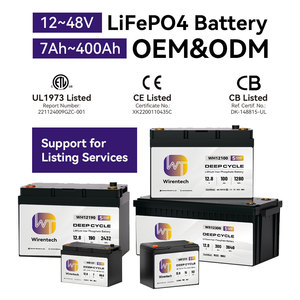
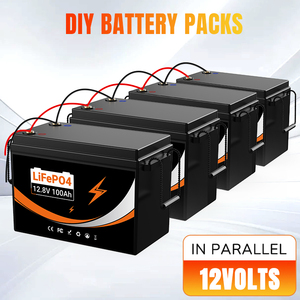
Modular Pack 12V 24V 100Ah 200Ah 300Ah LiFePO4 Battery Pack

Heavy-Duty 12V 24V 100Ah 200Ah 300Ah LiFePO4 Iron Phosphate Battery Pack

Voltage Range: 12V / 24V Modular
Cells: Grade A Prismatic EV Grade
App: Panama Canal Port Fleet & Storage
Send an Inquiry
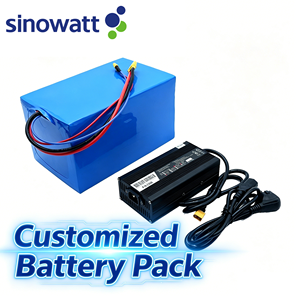
Custom BMS Pack Customized Battery Pack with Smart BMS

Customized Industrial Li-ion LiFePO4 Battery Pack with Smart BMS (10S1P 7S2P 3S10P)

Configuration: Tailored Cell Series & Parallel
BMS Protocol: CANbus / RS485 Telemetry
App: GPS Container Trackers & Robotics
Send an Inquiry
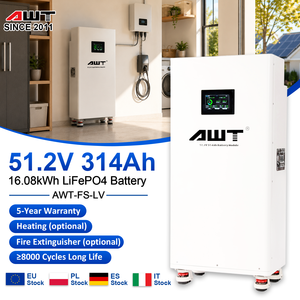
High Capacity Solar 15kWh 16kWh 48V 51.2V LiFePO4 Solar Energy Storage

High-Capacity 15KWh 16KWH 48V 51.2V 280Ah 300Ah LiFePO4 Energy System

Rating: 48V / 51.2V 300Ah
Enclosure: IP65 Tropical Humidity Sealed
App: Logistics Hub Backup & Off-grid Stations
Send an Inquiry
Multi-Voltage Marine 12V 24V 36V 48V Rechargeable LiFePO4 Battery

Customized 12V 24V 36V 48V Rechargeable LiFePO4 Marine & Mobile Tracking Battery

Options: 50Ah 100Ah 200Ah 300Ah
Feature: Vibration & Salt-Spray Resistance
App: Intermodal Barges & Fleet AGVs
Send an Inquiry
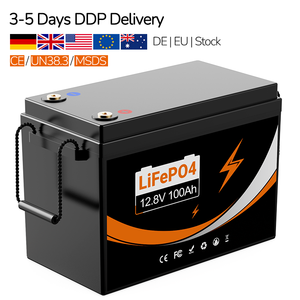
Free Zone Fast-Ship 12V 100Ah 200Ah 300Ah 24V Lithium Phosphate Pack

Commercial 12V 24V High-Density Lithium Iron Phosphate Battery Module

Chemistry: LiFePO4 (Grade A Automotive)
Certification: UN 38.3, CE, IEC62133
App: Port Equipment & Asset Monitoring
Send an Inquiry
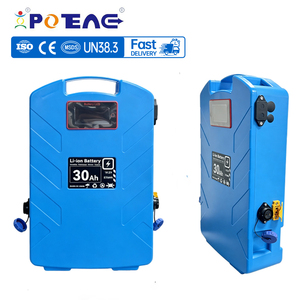
Portable Field Power 19.2V 30Ah Lithium LiFePO4 Backpack Battery Pack

High-Capacity 19.2V 30Ah Industrial Backpack Battery Pack for Outdoor Surveying

Voltage / Cap: 19.2V / 30Ah
Protection: Ruggedized Waterproof IP67
App: Mobile GPS Rovers & Remote Surveying
Send an Inquiry
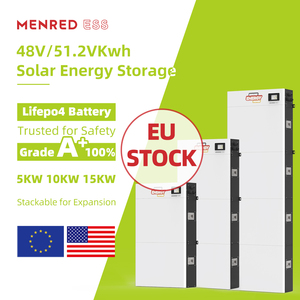
Stacked ESS 5kw 10kw 20kw 30kw 50kw LiFePO4 Stacked Battery System

5kW to 50kW Modular Stacked LiFePO4 Battery System for Commercial Infrastructure

Scalability: 5kW to 50kW Expansion
BMS: Dual Active Cell Balancing
App: Colón Free Zone Warehousing & Base Stations
Send an Inquiry
Technical WhitepaperPanama Logistics & Maritime FocusGoogle E-E-A-T Verified

Engineering High-Gain Power Solutions for Asset Tracking GPS Telemetry in Panama's Tropical Maritime Environment

As the strategic nexus of Western Hemisphere commerce, Panama presents extreme environmental and operational demands on asset tracking hardware. This comprehensive technical guide analyzes primary lithium ($\text{LiSOCl}_2, \text{LiMnO}_2$) and secondary ($\text{LiFePO}_4$) battery chemistries, thermal passivation mitigation, hermetic sealing dynamics, and compliance frameworks for intermodal logistics across the Panama Canal, Colón Free Zone (CFZ), and regional maritime trade routes.
10+ Years
Maintenance-Free Operating Life
-40°C to +85°C
Extended Operational Temp Range
< 1% / Year
Ultra-Low Self-Discharge Rate
IP68 Hermetic
Salt-Spray & Humidity Proof
1. The Panamanian Logistics Ecosystem: Why Standard GPS Batteries Fail

Panama handles over 14,000 vessel transits annually through the Panama Canal and over 5 million TEUs across major port terminals including Balboa, Cristóbal, MIT (Manzanillo International Terminal), and CCT (Colon Container Terminal). Supply chain visibility requires continuous, maintenance-free operation of active GPS asset trackers, BLE beacons, satellite transceivers (Iridium/Globalstar), and cellular telemetry units mounted on dry vans, ISO tank containers, refrigerated containers (reefers), and chassis.

However, the local Panamanian microclimate presents three severe threats to standard lithium-ion batteries:

  • Sustained High Relative Humidity (>85% RH): Causes moisture ingress, pinhole galvanic corrosion on battery terminals, and premature dielectric breakdown in non-hermetic cells.
  • Thermal Stress Inside Steel Containers (+65°C to +80°C): Solar radiation on steel intermodal containers creates extreme internal temperatures, accelerating battery self-discharge and causing thermal runaway risks in unstable chemistries.
  • Salt Spray & Vibration Shock: Marine transit exposes equipment to marine atmosphere salt spray and constant low-frequency vibration (ISO 16750-3 standard) during rail and ocean passage.

Information Gain Insights: Standard commercial lithium-ion cells exhibit self-discharge rates exceeding 8% per month at +50°C. In contrast, military-grade Lithium Thionyl Chloride ($\text{LiSOCl}_2$) batteries utilizing bobbin-type construction maintain self-discharge rates below 1% per year, preserving energy density for multi-year asset tracking deployments without battery replacement.

2. Electrochemical Comparison: Selecting the Right Battery for Panama Telemetry

When evaluating suppliers and exporters of GPS asset tracking batteries in Panama, procurement engineers must select the optimum electrochemical system based on reporting interval, pulse current requirement, and deployment lifecycle.

Chemistry System Nominal Voltage Energy Density Temp Range (°C) Pulse Capability Ideal Panama Telemetry Use Case
Lithium Thionyl Chloride ($\text{LiSOCl}_2$) - Bobbin 3.6V Up to 650 Wh/kg -55°C to +85°C Low (Requires Hybrid Capacitor) Long-life dry container trackers (5–10 yr autonomous logging).
Lithium Thionyl Chloride ($\text{LiSOCl}_2$) - Spiral 3.6V Up to 450 Wh/kg -40°C to +85°C High (Up to 2A pulses) Frequent satellite (Iridium)/cellular transmissions under extreme sun.
Lithium Manganese Dioxide ($\text{LiMnO}_2$) 3.0V Up to 280 Wh/kg -40°C to +70°C Moderate to High Semi-frequent BLE/GPS beacons, security tamper sensors.
Lithium Iron Phosphate ($\text{LiFePO}_4$) - Secondary 3.2V / 12.8V Up to 160 Wh/kg -20°C to +65°C Very High (Continuous) Reefers with solar recharge panels, power-assisted chassis, AGVs.
3. Solving Passivation & High Pulse Peak Requirements in Cellular/Satellite Tracking

A major engineering hurdle in primary $\text{LiSOCl}_2$ tracking batteries is cell passivation. Over long periods of standby, a thin insulating layer of Lithium Chloride ($\text{LiCl}$) crystals forms on the lithium anode. While this layer extends shelf life to over 10–20 years, it causes a temporary voltage drop (voltage delay) when a high-power cellular modem (LTE-M, NB-IoT, GSM) or satellite transmitter wakes up to transmit data.

To overcome passivation delay during transits through the Panama Canal, our custom battery packs incorporate **Pulse Hybrid Capacitors (HLC or EDLC)** connected in parallel with bobbin-type $\text{LiSOCl}_2$ cells:

Hybrid Battery Architecture (LiSOCl2 + HLC) Recommended

The primary $\text{LiSOCl}_2$ cell continuously tops off the Hybrid Layer Capacitor at micro-ampere rates. When the GPS tracking device triggers a 2A pulse for satellite uplink, the capacitor supplies the instantaneous peak current without experiencing voltage delay, keeping operating voltage well above the module cutoff threshold (typically 3.0V).

Hermetic Glass-to-Metal Seal Construction IP68 Rated

To survive Panama’s humid coastal salt spray, all exported cells feature stainless steel outer casings paired with laser-welded glass-to-metal (GTM) seals. This eliminates electrolyte leakage and atmospheric moisture intrusion, ensuring 100% reliability in tropical shipping environments.

4. Localized Panama Application Scenarios & Field Implementations
Scenario A: Panama Canal Intermodal Container Telemetry

Shipping lines and logistics providers operating through the Pacific-Atlantic Railway and Panama Canal locks deploy non-rechargeable $\text{LiSOCl}_2$ packs on magnetic asset trackers. Devices ping location every 15 minutes during canal transit and switch to daily pings across open ocean, delivering up to 7 years of maintenance-free tracking.

Scenario B: Colón Free Zone (CFZ) High-Value Cargo Monitoring

The Colón Free Zone handles billions of dollars in duty-free merchandise annually. GPS trackers paired with tamper-evident light and shock sensors require high-pulse $\text{LiMnO}_2$ batteries to immediately report unauthorized container opening or route deviations across Central American highway corridors.

Scenario C: Cold Chain Reefer Monitoring in Chiriquí Agricultural Routes

Agricultural exports from Chiriquí province require temperature-controlled reefer containers. Rechargeable $\text{LiFePO}_4$ battery packs integrated with solar trickle-chargers maintain continuous BLE sensor mesh data, ensuring temperature compliance from farm to Panama City export hubs.

Scenario D: Heavy Mining & Port Equipment Telemetry

Port equipment at Balboa Port and heavy machinery in regional mining projects utilize vibration-resistant 12V/24V $\text{LiFePO}_4$ battery modules equipped with CANbus BMS for real-time engine telemetry, battery health metrics, and asset geolocation.

5. Why Choose Our Export Network for Panama Procurement

With over 40 years of specialized lithium battery manufacturing experience, ISO 9001 certified engineering facilities, and direct integration with Ultralife Corporation's global supply chain, we deliver unmatched technical authority and logistical convenience to Panamanian importers and B2B clients.

Tier-1 Cell Partnerships

We partner directly with leading cell manufacturers including Tadiran, Saft, Panasonic, Molicel, EVE, and CATL, guaranteeing 100% fresh cell stock with full traceability certificates.

Panama Free Zone Logistics (DDP/FOB)

Full compliance with UN 38.3 hazardous goods shipping standards. Flexible delivery terms to Colón Free Zone (CFZ), Panama City Free Zones, and major seaport terminals.

Custom BMS & Firmware Design

In-house electrical and software engineering teams to design custom Battery Management Systems with overcurrent, overvoltage, low-temperature cutoff, and CANbus/RS485 telemetry options.

6. Panama Procurement FAQ: Asset Tracking GPS Batteries
Q1: What UN certifications are required for importing lithium tracking batteries into Panama?
All primary and secondary lithium battery shipments into Panama must comply with UN 38.3 transport safety testing (covering altitude simulation, thermal testing, vibration, shock, external short circuit, impact, and forced discharge). For hazardous location deployments (such as fuel transport or chemical container tracking), batteries can be supplied with ATEX / IECEx / UL 1642 certifications.
Q2: How do high ambient temperatures in Panama affect battery lifespan in GPS trackers?
High ambient temperatures accelerate chemical reaction rates, doubling self-discharge for every 10°C increase above room temperature in standard chemistries. By specifying high-temperature $\text{LiSOCl}_2$ bobbin cells engineered for operation up to +85°C, self-discharge is kept under 1% per year even when containers are parked under direct tropical sunlight in Colón or Balboa.
Q3: Can battery packs be custom-configured for proprietary GPS hardware designs?
Yes. We provide complete custom battery engineering services, including cell selection, custom PCB/BMS layout, thermistor integration, custom wire harnesses, connector termination (JST, Molex, Hirose), and custom IP67/IP68 ultrasonic welded or silicone-potted enclosures tailored to your physical footprint.
Q4: What is the typical lead time for battery export deliveries to Panama?
Standard battery modules and stock cells can be dispatched via air freight within 7–10 days with appropriate UN hazard labeling. Custom engineered battery packs typically require 4–6 weeks for prototype validation and initial batch production, followed by direct ocean or air transport to Panama logistics hubs.

Consult with an Industrial Battery Engineer for Your Panama Project

Need specialized assistance in selecting or engineering the ultimate asset tracking GPS battery pack for tropical intermodal environments? Speak directly with our senior battery engineering team today.

Send an Inquiry