As global industries transition toward ultra-high-density lithium-ion energy storage systems (BESS), electric mobility, and mission-critical industrial applications, battery safety engineering has shifted from standard circuit monitoring to advanced Thermal Runaway Protection (TRP) architecture. Thermal runaway—a catastrophic chain reaction initiated when an electrochemical cell exceeds its critical thermal limit—remains the single greatest engineering challenge in modern energy storage systems.
This comprehensive whitepaper explores the electro-thermal mechanics governing thermal runaway, cell-to-cell thermal propagation mitigation techniques, active/passive safety barriers, global regulatory procurement compliance (UL 9540A, NFPA 855, IEC 62619), and future technology procurement trajectories for global OEMs, system integrators, and industrial BESS buyers.
Understanding the sequence of internal chemical breakdowns is vital for procuring safe battery packs. Thermal runaway occurs when internal heat generation exceeds maximum dissipation capabilities. This phenomenon is initiated by internal short circuits (micro-dendrites), external physical impacts, severe electrical overcharging, or ambient thermal stress.
The initial thermal anomaly triggers the breakdown of the metastable SEI layer on the graphite anode. As the SEI layer dissolves, exposed lithiated intercalated carbon reacts exothermically with organic carbonate solvents in the electrolyte, releasing flammable gases ($C_2H_4$, $C_2H_6$) and accelerating internal cell temperature ramp rates up to 10°C/min.
As temperatures cross 130°C, standard polyethylene (PE) or polypropylene (PP) separators undergo endothermic melting, causing widespread direct electrical contact between anode and cathode substrate foils. This massive internal short-circuit spikes current density, driving localized internal temperatures past 200°C within milliseconds.
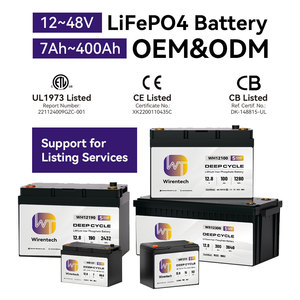
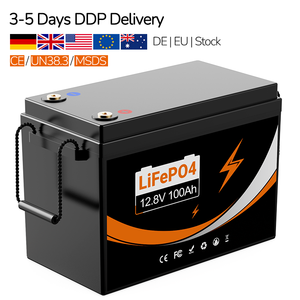
In high-nickel chemistries (such as NMC 811), cathode crystal structures collapse, releasing pure atomic oxygen ($O_2$) into the cell envelope. This internal oxygen feeds rapid oxidation reactions with organic liquid electrolyte. Conversely, Lithium Iron Phosphate (LiFePO4) features strong covalent P-O chemical bonds within its olivine crystal structure, pushing cathode decomposition past 270°C–300°C without oxygen release, making it the safest chemistry for industrial battery procurement.
Nanoporous silicate aerogel blankets ($k < 0.018 \text{ W/m·K}$) sandwiched between prismatic cells absorb up to 1200°C flame blasts, isolating adjacent cells completely.
Burst pressure-rated burst disks vent hot off-gases away from adjacent electronics and battery modules straight into gas management exhaust channels.
Microsecond-response BMS architecture continuously samples $dV/dt$ and $dT/dt$, isolating affected parallel strings prior to thermal runaway initiation.
Selecting the appropriate battery chemistry and thermal barrier design determines both the capital expenditure (CAPEX) and total operating security (OPEX) over a system's 15-year operational lifecycle. Below is a engineering evaluation of popular industrial lithium chemistries under extreme thermal stress test conditions:
| Battery Chemistry / Design | Thermal Runaway Onset ($T_{onset}$) | Peak Temperature ($T_{max}$) | Oxygen Release Potential | TR Propagation Risk | Target Industry Application |
|---|---|---|---|---|---|
| LFP (LiFePO4) Prismatic | 270°C – 310°C | < 450°C | Negligible (Olivine P-O Bond) | Very Low (Self-Limiting) | Stationary BESS, RV, Marine, Commercial Solar |
| NMC 811 Cylindrical / Pouch | 150°C – 180°C | > 950°C | High (Structural Collapse) | High (Cascade Fire Risk) | EV Racing, High-Density Aerospace |
| Li-SOCl2 Downhole Primary | 180°C – 200°C | > 600°C | Moderate (Corrosive Venting) | Medium (Requires Hermetic Shell) | Oil & Gas MWD / LWD Drilling Sensors |
| LFP with Aerogel + PCM Barriers | No Thermal Spread | Confined to Trigger Cell | Zero System Level Burst | Zero Propagation (UL 9540A) | Critical Telecom, Utility ESS, Hazardous Sites |
Procurement leaders, supply chain executives, and system design engineers face evolving international regulatory standards and shifting battery market supply dynamics. To maximize ROI and secure project bankability, strategic battery procurement must align with three macro industry trends:
Global fire safety codes no longer accept cell-level fire suppression alone. Municipalities across North America, Europe, and Asia-Pacific mandate full-scale **UL 9540A unit-level thermal runaway fire propagation testing**. Buyers are prioritizing manufacturers who design modular rack-level energy storage enclosures equipped with phase-change materials (PCM), aerosol fire suppression, and gas-explosion relief vents.
Cell quality directly dictates thermal stability margins. Global tier-1 suppliers (such as Panasonic, Saft, Tadiran, Molicel, Samsung SDI, LG Energy Solution, Lishen, and CATL) utilize automated 3D X-ray computerized tomography (CT) scanning to inspect 100% of cells for internal metallic impurities and electrode alignment defects. Partnering with certified battery pack exporters ensures complete batch-level supply chain transparency and verifiable UN 38.3 test documentation.
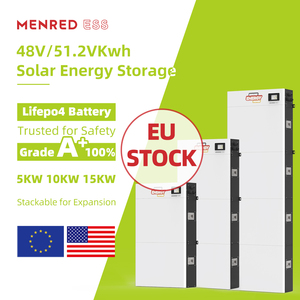
Industrial and commercial users are rapidly moving away from low-voltage high-current systems toward **High-Voltage Stackable Energy Storage (100V – 1000V DC)**. High-voltage configurations dramatically reduce system line currents, mitigating resistive $I^2R$ Joule heating in cabling by up to 75%, thereby inherently suppressing thermal hotspot generation across high-capacity battery stacked banks.
With over four decades of deep electro-chemical battery assembly experience (including heritage expertise built alongside industry leaders like Excell Battery Co. and global Tier-1 cell foundries), we serve as a premier OEM/ODM supplier for high-reliability, custom lithium battery solutions worldwide.
All battery pack assembly occurs within electro-static discharge (ESD)-controlled cleanroom facilities certified under rigorous international quality management systems.
Strategic warehouse centers in Germany, North America, and Hong Kong ensure rapid, duty-free delivery of bulk LiFePO4 packs and custom batteries directly to job sites.
Our in-house firmware engineers customize CANbus, RS485, Modbus, and Bluetooth BMS protocols to sync seamlessly with Victron, SMA, Growatt, and Deye inverters.
Require tailored thermal runaway protection battery designs, certified OEM/ODM production, or immediate wholesale warehouse dispatch? Contact our senior engineering team to request technical datasheets, full CAD specifications, and factory-direct volume quotes.