Engineered for extreme ocean depths, Autonomous Underwater Vehicles (AUV), Remotely Operated Vehicles (ROV), subsea monitoring stations, and offshore drilling installations. All packs feature custom BMS and pressure-tolerant cell enclosures.
The extreme ocean environment presents one of the most formidable engineering challenges on Earth. Equipment deployed in deepsea exploration, subsea oil and gas production, marine defense, and oceanographic research must withstand immense hydrostatic pressure, corrosive saline seawater, extreme thermal gradients, and intense mechanical vibration. At the core of every autonomous subsea system—whether an Autonomous Underwater Vehicle (AUV), Remotely Operated Vehicle (ROV), Subsea Tree control module, or acoustic seafloor node—lies the critical power pack.
As global energy OEMs shift toward deep-water electrification and long-duration subsea deployments, selecting leading subsea equipment battery packs factories & exporters has transformed from a conventional procurement task into a strategic risk management priority. This whitepaper analyzes the core technical requirements, electrochemical selection frameworks, pressure-tolerant design methodologies, and manufacturing quality controls required to produce subsea energy storage systems that achieve zero-failure operation.
Engineering pressure-tolerant electronics (PTE) or heavy-walled Titanium/Inconel pressure housings capable of resisting up to 600 bar (6,000 meters depth).
Managing heat dissipation within oil-filled or vacuum-sealed pressure enclosures without causing thermal runaway in high-density lithium cell clusters.
Developing custom Battery Management Systems (BMS) utilizing CANbus, Modbus RS-485, or subsea wet-mate connectors for real-time State of Charge (SoC) reporting.
Choosing the correct battery chemistry for subsea equipment requires balancing energy density against mechanical safety, cycle endurance, and low-temperature discharge capabilities. Ocean bottom temperatures consistently hover around 2°C to 4°C, significantly penalizing conventional lithium-ion capacity unless proper thermal balancing and cell selection are integrated into the factory assembly process.
| Battery Chemistry | Gravimetric Energy Density | Cycle Life (80% DoD) | Operating Temp Range | Subsea Application Profile | Safety / Risk Level |
|---|---|---|---|---|---|
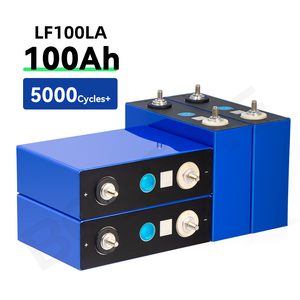
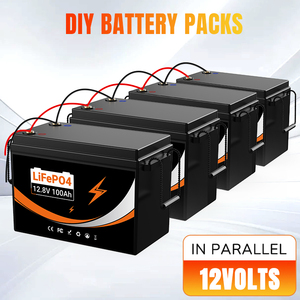
| LiFePO4 (LFP Prismatic) | 160 - 190 Wh/kg | 4,000 - 6,000 Cycles | -20°C to +65°C | Seabed Energy Vaults, Long-Term ROVs, Subsea Microgrids | Ultra-Safe (Zero Thermal Runaway) |
| NMC / NCA Cylindrical | 240 - 300 Wh/kg | 1,200 - 2,000 Cycles | -10°C to +55°C | Deep-Sea AUVs, High-Payload Inspection Submersibles | Moderate (Requires Advanced Active BMS) |
| Li-SOCl2 (Lithium Thionyl Chloride) | 400 - 650 Wh/kg | Primary (Non-Rechargeable) | -55°C to +150°C (Downhole) | MWD/LWD Downhole Tools, Long-Term Oceanographic Beacons | High Density / Strictly Monitored |
| LTO (Lithium Titanate) | 80 - 110 Wh/kg | 20,000+ Cycles | -40°C to +65°C | Fast-Charging Subsea Docking Stations, High-Pulse Tools | Maximum Thermal & Physical Stability |
Leveraging four decades of specialized engineering experience, ISO 9001 certified manufacturing facilities, and direct partnerships with world-class cell suppliers, Excell Battery stands as a premier global partner for subsea energy solutions.
Every subsea battery pack designed in our North American facilities undergoes rigorous quality auditing, mechanical shock testing, vibration screening, and hydrostatic chamber testing. Certified to UN 38.3 safety standards for seamless global hazard-compliant shipping.
We eliminate supply chain vulnerabilities by maintaining audited procurement agreements with leading global cell manufacturers including Tadiran, Saft, Panasonic, Molicel, Samsung SDI, and LG Energy Solution. Guaranteed cell consistency and full batch lot traceability.
Our proprietary Criterion Battery Management Systems provide real-time digital monitoring of cell voltage, pack temperature, impedance, and cycle accumulation. Fully compatible with subsea communication protocols (CANbus, RS485, Modbus).
As offshore wind expansion, carbon capture storage (CCS), deep-sea mining exploration, and subsea oil field electrification accelerate, procurement leaders must align with key technology vectors driving next-generation battery architecture.
Traditional subsea energy systems rely on massive titanium or stainless-steel pressure vessels to isolate standard battery cells from ambient pressure. However, these vessels add severe weight and cost penalties to AUVs and subsea skids. The market is rapidly moving toward Pressure-Tolerant Lithium (PTL) architecture, where cells and solid-state electronics are immersed directly in dielectric fluid inside flexible, pressure-compensated silicone or polyurethane housings. This design equalizes internal and external hydrostatic pressure, allowing battery packs to operate at depths exceeding 6,000 meters while eliminating up to 60% of structural weight.
Replacing a failed subsea battery pack requires vessel mobilization costs ranging from $50,000 to over $200,000 per day. Future subsea battery procurement contracts will mandate BMS systems equipped with Edge-AI health forecasting. By continuously analyzing micro-changes in internal cell resistance (DCIR) and thermal dissipation rates, these intelligent controllers predict potential cell degradation months before a functional lockout occurs, enabling scheduled preventative maintenance during routine vessel intervention windows.
The rise of resident subsea AUVs—vehicles that remain underwater for up to a year without surface retrieval—requires persistent seabed recharging stations. Modern factories are integrating high-efficiency inductive wireless charging receiver modules and standardized wet-mate connectors directly into subsea battery enclosures, facilitating seamless automated power transfer from offshore wind subsea substations.
The global subsea battery market is undergoing a seismic shift driven by strict environmental regulations, ESG mandates, and the electrification of subsea production control systems. Key development trends include:
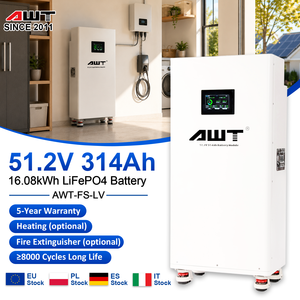
Replacing hydraulic umbilical power lines with all-electric subsea control modules powered by localized LiFePO4 battery banks to eliminate hydraulic fluid leak risks.
Advancements in high-temperature cell chemistries that withstand combined downhole temperatures (+150°C to +175°C) and subsea cold shocks without thermal degradation.
Global exporters implementing full cradle-to-grave cell recycling and modular battery re-certification programs to align with global ESG directives.
Key technical considerations and procurement answers for OEM engineers, subsea systems integrators, and international buyers.
Subsea battery enclosures undergo hydrostatic pressure vessel testing up to 1.5x their rated working depth. Fluid-filled pressure-compensated packs are pressure-cycled in hyperbaric chambers while active electrical load tests measure insulation resistance and structural cell displacement.
Custom subsea pack engineering typically takes 6 to 12 weeks from thermal/structural simulation through prototype assembly. Full UN 38.3 certification and hydrostatic validation add approximately 3 to 4 weeks prior to volume export.
For long-term multi-year deployments requiring ultra-low self-discharge, Lithium Thionyl Chloride (Li-SOCl2) primary cells are ideal. For rechargeable AUV/ROV applications, Grade A Prismatic LiFePO4 or customized High-Density NMC packs are preferred.
We utilize cell-level thermal isolation barriers, phase-change materials (PCM), oil-filled thermal sink channels, and intelligent BMS active cutoff protocols that isolate over-temperature cell strings before thermal propagation can occur.
Yes. All production packs are tested and certified under UN 38.3 regulations (T1-T8 tests), allowing compliant Class 9 dangerous goods transport globally via air, ocean, and ground freight.
Our Criterion BMS supports customizable communication protocols including CANbus (J1939 / CANopen), RS-485 Modbus, and custom subsea serial protocols for direct link with Subsea Control Modules (SCM) and acoustic modems.
Sourcing from established North American manufacturers like Excell Battery provides stringent IP protection, full ISO 9001 quality compliance, rapid engineering communication, transparent supply chains, and robust post-sale technical support.
Yes, we engineer explosion-proof and intrinsically safe battery assemblies certified for Zone 1 and Zone 2 hazardous offshore applications in accordance with ATEX and IECEx directives.
Whether you require customized pressure-tolerant battery packs for deepsea AUVs, high-capacity seabed energy storage vaults, or high-temperature downhole power modules, our engineering team is ready to accelerate your technical development.