
Sub-Zero Engineering Whitepaper & OEM Guide

Top Trusted Sub-Zero Operating Lithium Batteries Manufacturer & Exporters

Empowering Critical Applications in Sub-Zero Climates (-40°C to -20°C): Advanced Cell Chemistries, Smart BMS Heating Integration, and Industry Procurement Dynamics

High-Performance Catalog

Featured Extreme-Condition & Sub-Zero Battery Systems

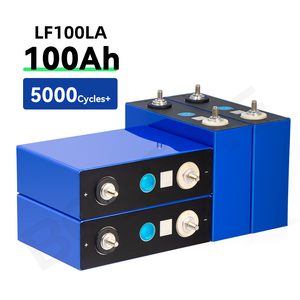
Grade A 5000 Cycles 3.2V 100AH LFP Prismatic Cells Lithium Battery
Grade A 5000 Cycles 3.2V 100AH LFP Prismatic Cells Lithium Iron Phosphate Battery 12V 24V 48V LiFePO4 Battery for RVS Campers
Contact Us
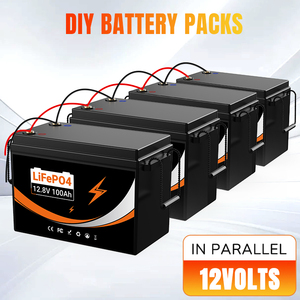
EU Stock 12v 24v 100ah 120ah 200ah 300ah Lifepo4 Iron Phosphate Battery
EU Stock 12v 24v 100ah 120ah 200ah 300ah Lifepo4 Iron Phosphate Battery Batterie 100 Kwh Lithium Pack With Grade A Cells
Contact Us
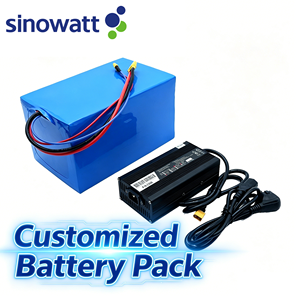
Customized Battery Pack with BMS Li-ion LiFePO4 for Industrial
Reliable Supplier Customized Battery Pack with BMS Li-ion LiFePO4 for Industrial Custom Battery Solution 10S1P 7S2P 3S2P 3S10P
Contact Us
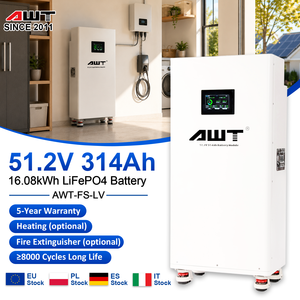
Eu Stock Solar Energy System Lithium Ion Batteries Pack 15Kwh 16KWH
Eu Stock Solar Energy System Lithium Ion Batteries Pack 15Kwh 16KWH 48V 51.2V 280Ah 300Ah 314Ah Lifepo4 Cell Home Energy Storage
Contact Us
Customized 12V 24V 36V 48V Rechargeable Lifepo4 Solar Storage Battery
Customized 12V 24V 36V 48V Rechargeable Lifepo4 Solar Storage Battery 50Ah 100Ah 200Ah 300Ah RV Marine Golf Cart Lithium Battery
Contact Us
EU DE Stock NO TAX 12V 24V Lithium Phosphate Pack Battery
EU DE Stock NO TAX 12V100Ah 200Ah 300Ah 24V100Ah Lithium Phosphate Pack Battery Pack LifePO4 Battery For Home Energy Storage
Contact Us
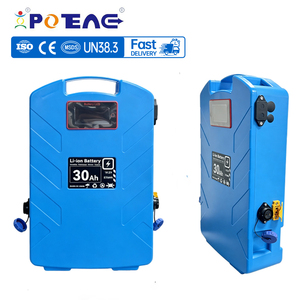
POEAE Customizable High Capacity 19.2V 30Ah Lithium LiFePO4 Backpack Battery Pack
POEAE Customizable High Capacity 19.2V 30Ah Lithium LiFePO4 Backpack Battery Pack for Various Outdoor Power
Contact Us
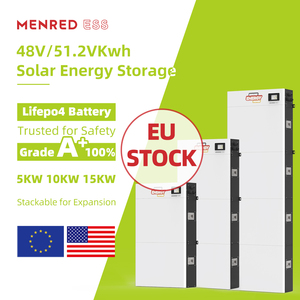
5kw 10kw 20kw 30kw 50kw Lifepo4 Whole House Battery Solar Battery
5kw 10kw 20kw 30kw 50kw Lifepo4 Whole House Battery Solar Battery Home Energy Storage Lithium Battery Stacked Backup
Contact Us
-40°C
Operational Threshold
40+
Years Engineering Excellence
ISO 9001
Certified Quality Assurance
5000+
Deep Cycle Life at 80% DOD

1. Thermal Dynamics of Sub-Zero Electrochemistry: Overcoming Low-Temperature Bottlenecks

Deploying lithium battery systems in sub-zero environments—ranging from sub-arctic telecommunications base stations and maritime navigation to defense equipment and high-altitude aerospace—presents complex electrochemical challenges. Conventional lithium-ion batteries suffer severe energy derating, voltage drop, and irreversible cell degradation when exposed to temperatures below 0°C (32°F). At temperatures reaching -20°C to -40°C, standard commercial cells experience near-complete operational failure unless specifically engineered for extreme thermal endurance.

To engineer a truly dependable sub-zero operating lithium battery, one must address three fundamental physical phenomena that govern low-temperature electrochemistry:

  • Electrolyte Viscosity Surge & Ionic Conductivity Drop: As temperature drops, organic carbonate solvents (such as EC, DMC, and EMC) within standard electrolytes experience exponential viscosity increases. Consequently, lithium-ion diffusion rates ($D_{Li^+}$) decrease sharply according to the Arrhenius relationship, causing severe internal Equivalent Series Resistance (ESR) spikes.
  • SEI Layer Impedance Acceleration: The Solid Electrolyte Interphase (SEI) layer formed on the graphite anode presents high charge-transfer resistance ($R_{ct}$) at freezing temperatures. Desolvation of $Li^+$ ions at the electrode interface becomes the rate-limiting step of the entire electrochemical cell.
  • Dangers of Lithium Plating during Low-Temp Charging: Attempting to charge standard LiFePO4 or NCM batteries below 0°C causes the anode potential to drop below 0V vs. $Li/Li^+$. Instead of intercalating smoothly into the graphite matrix, metallic lithium deposits onto the anode surface. This causes permanent capacity loss, internal micro-short circuits, and severe thermal runaway risks upon warm-up.
Technical Insight: The Arrhenius Equation in Cold-Climate Battery Design

The rate constant ($k$) of lithium-ion diffusion across the electrolyte-electrode interface is governed by $k = A \cdot e^{-E_a / (R \cdot T)}$. When ambient temperature ($T$) falls from 298.15 K (25°C) to 233.15 K (-40°C), the activation energy barrier ($E_a$) causes reaction kinetics to collapse by up to 90-95%. Advanced sub-zero battery design requires custom electrolyte formulations with low-viscosity fluorinated solvents and specialized lithium salt matrixes (e.g., LiFSI) to suppress activation barriers.

Chemical Chemistries Comparison for Sub-Zero Performance

Selecting the appropriate active chemistry is critical when designing custom battery packs for cold-climate applications. The table below illustrates the physical and operational performance metrics of primary sub-zero battery chemistries:

Battery Chemistry Min. Discharge Temp Min. Charge Temp (Standard) Capacity Retention @ -30°C Nominal Cell Voltage Primary Application Target
Sub-Zero Formulated LiFePO4 (LFP) -30°C (-22°F) -10°C (with pulse BMS) 65% - 75% 3.2 V Solar Storage, RVs, Telecom, Industrial ESS
Lithium Titanate Oxide (LTO) -50°C (-58°F) -30°C (Direct Charge) 80% - 90% 2.3 V / 2.4 V Military Ground Vehicles, Arctic Sensors, Rail
Low-Temp NMC / NCO (Specialized) -40°C (-40°F) -20°C (Controlled) 70% - 80% 3.6 V / 3.7 V High-Altitude Drones, Cold-Chain Logistics
Primary Lithium-Thionyl Chloride (Li-SOCl2) -60°C (-76°F) N/A (Non-Rechargeable) 85% - 95% 3.6 V MWD/LWD Downhole Tools, Oceanographic Buoys

2. OEM Engineering Innovations: Smart Self-Heating BMS & Thermal Insulation Systems

Achieving reliable sub-zero operation requires more than just high-quality cells. It requires holistic mechanical, thermal, and electrical integration. As a leading specialized manufacturer, Excell Battery utilizes three core engineering paradigms to ensure zero operational downtime in freezing environments:

A. Integrated PTC Heating Films & Smart Pre-Heating BMS Algorithms

To solve the fundamental barrier of safe low-temperature charging, modern battery packs integrate ultra-thin silicone or polyimide PTC (Positive Temperature Coefficient) heating elements directly within the cell assembly. Driven by an intelligent Battery Management System (BMS), the pre-heating process operates dynamically:

  • Automatic Charge Redirection: When an incoming charge current (e.g., from solar panels or ground chargers) is detected at temperatures below 0°C, the smart BMS isolates the battery cells and directs 100% of incoming energy to the internal heating elements.
  • Homogeneous Thermal Gradient: The internal heating elements warm the core cell mass at a rate of 1.5°C to 2.5°C per minute while maintaining thermal uniformity across all parallel cell blocks ($\Delta T < 2.0^\circ C$).
  • Seamless Operational Transition: Once internal temperature sensors reach a safe threshold (+5°C), the BMS seamlessly toggles the relay to allow full charge current into the cells, avoiding lithium dendrite formation.

B. Advanced Electrolyte Modification (LiFSI Salt Systems)

For applications where internal heating power overhead cannot be tolerated, cell-level electrolyte optimization is paramount. Replacing standard $LiPF_6$ (lithium hexafluorophosphate) salts with **LiFSI (lithium bis(fluorosulfonyl)imide)** significantly improves ionic mobility. LiFSI provides superior dissociation properties and higher conductivity in low-temperature organic solvents such as ethyl methyl carbonate (EMC) and fluoroethylene carbonate (FEC), lowering charge-transfer impedance down to -40°C.

C. Aerogel Insulation & Ruggedized Sealed Encasements

Passive thermal protection plays an equally vital role. Custom battery enclosures are line-fitted with high-efficiency nanoporous silanol aerogel blankets ($k \approx 0.015 \text{ W/m}\cdot\text{K}$). This design conserves self-generated Joule heat during high-rate discharge cycles, preventing thermal leakage during long standby periods in arctic conditions.

3. Future Battery Procurement Trends: Market Shift Toward Cold-Endurance Technologies

The global demand for low-temperature operating lithium batteries is undergoing explosive growth, driven by expanding infrastructure in high-latitude regions, off-grid telecom expansion, cold-chain logistics automation, and deep-well energy exploration. Procurement teams and B2B engineering managers must adapt to several critical market shifts:

1. Mandated Self-Heating Standard

Procurement specifications for outdoor ESS, RV energy systems, and commercial marine vessels increasingly mandate built-in auto-heating functionality as standard baseline hardware to reduce warranty claims caused by freezing damage.

2. Strict HAZLOC & ATEX Compliance

Industrial deployments in arctic oil fields and mining sites demand dual-certification for extreme cold operating limits combined with Class I Division 2 (HAZLOC) and ATEX Zone 1/2 explosion-proof standards.

3. Dual-Source Cell Traceability

Global OEMs are migrating away from unverified cell brokers, choosing instead contract manufacturers with direct, audited relationships with Tier-1 cell producers (e.g., Tadiran, Saft, Panasonic, Molicel, LG Energy Solution).

Furthermore, decarbonization initiatives across North America and Europe are driving retrofits of remote telecom towers in cold climates. Replacing legacy lead-acid batteries (which suffer severe sulfation and capacity decay at sub-zero temperatures) with self-heating LiFePO4 systems reduces operational maintenance trips by over 75% while extending field life to over 10 years.

4. Enterprise Battery Procurement FAQ: Technical Clarifications for Engineering Buyers

Why do standard lithium batteries fail or trigger automatic protection below 0°C?
Standard lithium-ion cells experience rapid internal resistance escalation when temperatures drop below freezing. The internal voltage drop under load triggers the low-voltage cutoff (UVLO) threshold in the BMS prematurely, even if the battery retains substantial state of charge (SOC). Furthermore, intelligent BMS units proactively disable charging below 0°C to prevent hazardous lithium metal plating on the anode.
What is the exact difference between sub-zero discharging vs. sub-zero charging capability?
Discharging at sub-zero temperatures (-20°C to -40°C) is physically feasible for many chemistries because $Li^+$ ions de-intercalate out of the graphite structure, aided by internal Joule heating ($I^2R$). Charging at low temperatures, however, forces $Li^+$ ions to squeeze into the graphite matrix against steep concentration gradients and high SEI resistance. Without specialized low-temp electrolyte or internal pre-heating, charging below freezing causes short-circuiting lithium dendrites.
How much power does an integrated self-heating BMS consume during a heating cycle?
Internal PTC heating elements typically consume between 50W to 150W per 100Ah of battery capacity, depending on ambient wind chill and insulation thickness. In well-insulated battery enclosures, heating a pack from -20°C to +5°C requires approximately 5% to 8% of total nominal energy capacity.
Which battery chemistry is best for extreme sub-zero operation (-40°C or lower)?
For rechargeable systems, **Lithium Titanate Oxide (LTO)** offers unmatched chemical stability down to -50°C without lithium plating risk due to its high zero-strain anode potential (1.55V vs. $Li/Li^+$). For primary non-rechargeable industrial deployments (such as downhole sensors or ocean telemetry), **Lithium-Thionyl Chloride (Li-SOCl2)** is the industry benchmark, functioning reliably down to -60°C.
What international transportation certifications are required for exporting sub-zero battery packs?
All commercial lithium battery shipments must comply with **UN 38.3** (covering thermal test, altitude simulation, vibration, shock, external short circuit, and impact testing). Additionally, specialized sub-zero packs often require UN 3480/3481 Class 9 hazard certification, IEC 62133, and, for European deployments, CE/ROHS/REACH documentation.
How does Excell Battery calculate capacity derating for sub-zero engineering proposals?
Our engineering team performs empirical thermal modeling using Peukert’s equation modified for thermal coefficients: $C_T = C_0 \cdot [1 - \alpha (25 - T)]$. We conduct full-spectrum thermal chamber testing (-40°C to +60°C) under your precise load profile (C-rate) to deliver exact usable watt-hour guarantees prior to contract execution.

5. Why Choose Excell Battery Co.: Enterprise Engineering & Global Supply Chain Resilience

Founded in 1984, **Excell Battery Co.** brings over 40 years of specialized battery manufacturing expertise to global Original Equipment Manufacturers (OEMs). Operating as a key division of Ultralife Corporation, we combine agile custom engineering with the robust global manufacturing capacity of a world-class leader.

ISO 9001 Certified Manufacturing Facilities

Our state-of-the-art production plants in Surrey (Vancouver, BC), Calgary (AB), and Houston (TX) adhere to rigorous ISO 9001 quality management systems, providing multi-location manufacturing redundancy and zero-defect quality control.

Direct Tier-1 Cell Partner Ecosystem

We work in direct partnership with leading global cell manufacturers including Tadiran, Saft, Panasonic, Murata, Molicel, Samsung SDI, LG Energy Solution, and Lishen—guaranteeing 100% genuine cell traceability and raw material priority access.

End-to-End Custom Engineering

From initial thermal modeling and 3D mechanical enclosure CAD design to custom SBS-compliant BMS firmware and UN 38.3 certification, our in-house engineering team works side-by-side with your design team from prototype to mass production.

Whether your application demands MWD downhole drilling endurance at +175°C or sub-zero arctic telecom battery resilience at -40°C, Excell Battery provides engineered battery systems that deliver uncompromised safety, longevity, and performance.

Ready to Engineer Your Sub-Zero Custom Battery Solution?

Consult with our senior battery engineers today to review your cold-climate performance specifications, thermal requirements, and custom BMS features.

Contact Us