ISO 9001:2015 Certified OEM/ODM Factory

Top Trusted Ruggedized Lithium Battery Packs Factory & Exporter

Engineering Mission-Critical Power Systems with Information Gain, Extreme Environment Resilience, and E-E-A-T Quality Assurance

Featured Ruggedized Lithium Battery Pack Solutions

Explore our precision-engineered, high-performance LiFePO4 and Li-ion battery modules designed for heavy-duty industrial, energy storage, marine, and mobile applications.
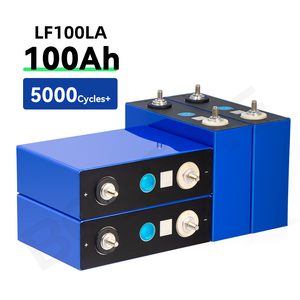
Grade A 5000 Cycles 3.2V 100AH LFP Prismatic Cells LiFePO4 Battery

Grade A 5000 Cycles 3.2V 100AH LFP Prismatic Cells Lithium Iron Phosphate Battery

  • 5000+ Deep Cycle Life @ 80% DOD
  • Prismatic Grade-A Lithium Cells
  • 12V / 24V / 48V Modular Scalability
  • Ideal for RVs, Campers & Off-Grid Power
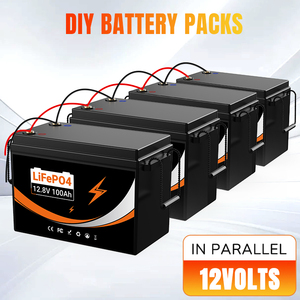
EU Stock 12V 24V LiFePO4 Battery Pack 100kWh Grade A Cells

EU Stock 12v 24v 100ah 120ah 200ah 300ah Lifepo4 Iron Phosphate Battery Pack

  • Direct EU/US Overseas Warehouse Stock
  • Integrated Smart BMS Safety Circuits
  • Scalable up to 100 kWh Industrial Bank
  • Zero Maintenance Heavy-Duty Casing
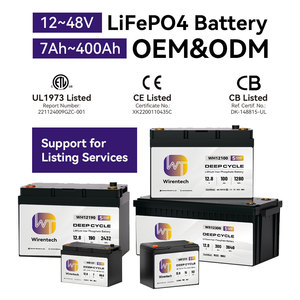
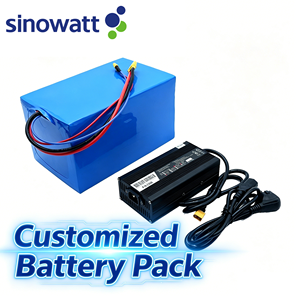
Customized Battery Pack with BMS Li-ion LiFePO4 for Industrial Custom Solutions

Customized Industrial Battery Solution 10S1P 7S2P 3S2P 3S10P with Smart BMS

  • Tailored Series-Parallel Architecture
  • Custom Communication Protocol (CAN/RS485)
  • Rugged Vibration-Isolated Packaging
  • Industrial Instrumentation & Robotics Ready
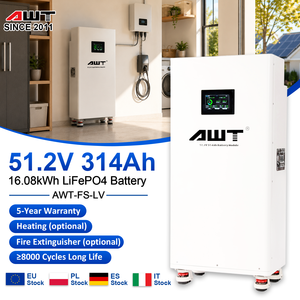
Solar Energy System Lithium Ion Batteries Pack 15Kwh 16KWH 48V 51.2V LiFePO4

Solar Energy Storage Lithium Battery Pack 15Kwh 16KWH 48V 51.2V 280Ah 300Ah 314Ah

  • High-Density 314Ah Prismatic LFP Cells
  • Wide Inverter Compatibility (Victron/SMA/Growatt)
  • Active Thermal & Voltage Balancing
  • 15-Year OEM Design Service Life
Customized 12V 24V 36V 48V Rechargeable LiFePO4 Solar Storage Battery RV Marine

Customized 12V 24V 36V 48V LiFePO4 Storage Battery 50Ah-300Ah for Marine & Golf Carts

  • IP67 Marine-Grade Waterproof Enclosure
  • High Continuous Discharge Current
  • Drop-in Replacement for Lead-Acid
  • Built-in Low Temperature Charging Cut-off
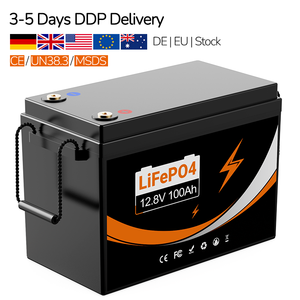
EU DE Stock NO TAX 12V 24V 100Ah 200Ah 300Ah LiFePO4 Battery Pack

EU DE Stock Duty-Free 12V 24V 100Ah 200Ah 300Ah LiFePO4 Home Energy Pack

  • Duty-Free Fast Delivery Across Europe
  • Compact Footprint & LCD Status Display
  • Multi-layer Overcharge/Short-Circuit Shield
  • UN38.3 & CE Certified Safety
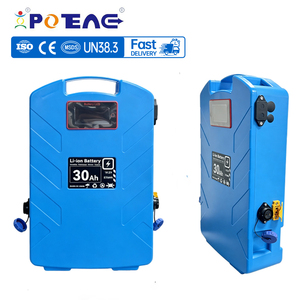
POEAE Customizable High Capacity 19.2V 30Ah Lithium LiFePO4 Backpack Battery Pack

POEAE Customizable 19.2V 30Ah Portable Backpack LiFePO4 Battery Pack

  • Ergonomic Wearable & Ruggedized Frame
  • Shockproof MIL-STD Spec Casing
  • High Instantaneous Surge Capacity
  • Designed for Field Operations & Exploration
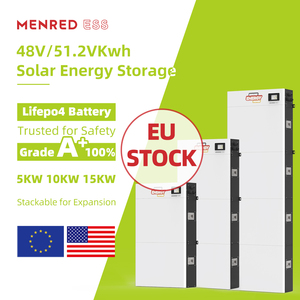
5kw 10kw 20kw 30kw 50kw Lifepo4 Whole House Stacked Backup Battery System

5kW to 50kW Modular Stacked LiFePO4 Whole House Storage System

  • Stackable Plug-and-Play Architecture
  • Real-time Cloud Monitoring & App Control
  • Seamless UPS Switching (<10ms)
  • Tier-1 Automotive Grade LFP Cells
40+
Years Engineering Heritage
5000+
Cycles @ 80% DOD
IP68 / ATEX
Extreme Protection
100%
Traceable Grade-A Cells

Enterprise Competence & Engineering Excellence

Why tier-1 global original equipment manufacturers (OEMs), oil & gas exploration firms, defense integrators, and industrial energy companies trust our custom lithium battery manufacturing capability.

40+ Years of Precision Engineering

Founded on decades of rigorous mechanical, electrical, and chemical engineering refinement, our factory delivers unmatched custom battery assembly. As part of a global footprint alongside leading manufacturers, we possess deep operational knowledge in handling complex battery chemistries—from standard Lithium Iron Phosphate (LiFePO4) and Lithium Nickel Manganese Cobalt (NMC) to specialized Lithium Thionyl Chloride (Li-SOCl2) downhole cells.

ISO 9001 & Multi-Jurisdictional Compliance

Quality reliability is engineered into every stage of production. Our facilities operate under strict ISO 9001:2015 quality management system protocols. Every custom pack undergoes 100% automated end-of-line (EOL) electrical testing, thermal imaging, insulation testing, and vibration testing. We ensure seamless compliance with UN 38.3 transport safety standards, IEC 62133-2, UL 1973, UL 2054, CE, and HAZLOC/ATEX Zone 0, 1, and 2 explosive environment specifications.

Direct Tier-1 Cell Supply Chain Strategic Alliances

Battery pack longevity begins at the electrochemical cell level. We maintain long-standing direct supply partnerships with audited Tier-1 global cell foundries including Tadiran, Saft, Panasonic, Murata, Molicel, Samsung SDI, LG Energy Solution, CATL, and EVE. This guarantees strict lot-to-lot consistency, low internal resistance (DCIR), verifiable capacity matching (<2mV voltage spread per parallel module), and zero grey-market cell contamination.

Industrial Battery Technological Trends & Engineering Breakthroughs

Analyzing the transition from legacy battery systems to intelligent, ruggedized lithium-ion architectures capable of surviving extreme mechanical stress, thermal shocks, and harsh chemical environments.

1. Structural Ruggedization & Mechanical Integrity Engineering

Standard commercial lithium battery enclosures fail prematurely when subjected to high-impact field conditions such as mining vehicles, marine vessel vibration, downhole drilling shockloads, and military field operations. Modern ruggedized lithium battery design integrates heavy-duty mechanical dampening:

  • Structural Silicone & Epoxy Potting: Encapsulating sensitive electronic BMS sub-assemblies and cell interconnects in specialized dielectric resins to eliminate wire-bond fatigue caused by harmonic resonance.
  • CNC Aluminum Alloy & Welded Stainless Cases: Utilizing heavy-gauge marine aluminum (5083/6061-T6) with hard-anodized coatings to achieve IP67/IP68 ingress protection against high-pressure water jets and continuous submersion.
  • MIL-STD-810H Vibration Isolation: Implementing internal elastomer isolation mounts that absorb multi-axis shock loads up to 50G peak acceleration without compromising electrical contact integrity.

2. Next-Generation Smart BMS & Active Cell Balancing Architecture

The controller is the brain of any high-reliability battery. Passive balancing systems bleed excess energy as wasted heat, accelerating thermal degradation in enclosed rugged battery packs. Modern industrial designs utilize intelligent active balancing algorithms:

  • Inductive & Capacitive Active Balancing: Dynamically redistributing charge between cells during both charge and discharge cycles with up to 95% energy transfer efficiency, increasing usable pack capacity by 8–12%.
  • Multi-Bus Telemetry Protocols: Native support for CANbus (CANopen/J1939), RS485 (Modbus RTU), and SMBus telemetry enables real-time monitoring of State of Charge (SOC), State of Health (SOH), individual cell voltages, and NTC thermistor sensor arrays.
  • Hardware-Level Redundant Protections: Dual-FET topology backed by secondary independent overvoltage fuse triggers prevents single-point controller failure in mission-critical applications.

3. Extreme Temperature Operating Envelopes (-40°C to +85°C)

Conventional Li-ion cells suffer severe lithium plating during sub-zero charging and catastrophic thermal runaway at elevated temperatures. Our proprietary thermal engineering includes embedded PTC heating foils, Phase Change Materials (PCM), and specialized liquid-gas cell chemistries (such as Li-SOCl2 for downhole MWD/LWD drilling up to +150°C and specialized LFP electrolyte formulations for sub-zero operation down to -40°C without capacity collapse).

Industrial Battery Chemistry Technical Matrix

A comparative engineering breakdown of key performance attributes across major lithium chemistries utilized in custom ruggedized battery packs.

Battery Chemistry Nominal Cell Voltage Energy Density (Wh/kg) Cycle Life (80% DOD) Thermal Runaway Temp Best Industry Application
Lithium Iron Phosphate (LiFePO4 / LFP) 3.2 V 140 – 180 Wh/kg 3,500 – 6,000+ Cycles ~270°C (Extremely Safe) Commercial Energy Storage, Marine, RVs, Industrial AGVs
Lithium Nickel Manganese Cobalt (NMC) 3.6 V – 3.7 V 200 – 260 Wh/kg 1,200 – 2,500 Cycles ~210°C Portable Wearables, Backpack Power, Drones, High-Power Robotics
Lithium Titanate (LTO) 2.3 V 70 – 110 Wh/kg 15,000 – 20,000+ Cycles >300°C (Ultra Stable) Extreme Cold (-40°C), Heavy Transit, Rapid 10C Charging Systems
Lithium Thionyl Chloride (Li-SOCl2 Primary) 3.6 V 400 – 650 Wh/kg Primary (Non-Rechargeable) Up to +165°C / +200°C Downhole MWD/LWD Drilling, Oil & Gas Pipeline Inspection PIGs

Global Procurement Trends for Industrial Battery Packs

Strategic sourcing metrics, supply chain resilience factors, and TCO evaluations guiding procurement directors in high-reliability sectors.

1. Total Cost of Ownership (TCO) vs. Initial Purchase Price

Procurement teams are shifting away from evaluating battery quotes purely on dollar-per-watt-hour ($/Wh) metrics. Field failures in off-grid telecom, subsea equipment, or medical diagnostic devices result in thousands of dollars in maintenance overhead and warranty liability. Investing in Grade-A prismatic LFP cells with custom active BMS reduces lifetime cost-per-cycle by over 45% compared to low-cost commercial lithium-ion packs.

2. Multi-Regional Supply Chain & Warehouse Buffer Stock

Global geopolitical shifts and maritime shipping bottlenecks have highlighted the vulnerabilities of single-source overseas manufacturing. Leading B2B buyers now demand battery suppliers with dual-region manufacturing capacities, overseas local stock warehouses (such as EU and North American hubs), and transparent cell traceability logs to guarantee continuous production flow.

3. Regulatory Stringency & Lifecycle Sustainability Compliance

With the enforcement of the new EU Battery Regulation and global ESG mandates, enterprise procurement mandates full carbon footprint transparency, conflict-free mineral verification, UN38.3 certified shipping packaging, and end-of-life battery recycling pathways. Ruggedized packs designed with modular replaceability shorten repair downtime while aligning with global circular economy goals.

Industrial Battery Procurement & Engineering FAQ

Answers to critical technical and logistical questions faced by OEM engineering lead designers and procurement managers.

Q1: What defines a "ruggedized" lithium battery pack compared to standard lithium packs? +
A ruggedized battery pack is engineered from the ground up to withstand severe environmental stress that would cause standard commercial battery failure. Key differences include heavy-gauge CNC aluminum or IP67/IP68 stainless steel enclosures, internal vibration dampening mounts compliant with MIL-STD-810H, potted electronics to resist humidity and chemical exposure, wide-temperature Grade-A cells, and industrial-grade smart BMS protection circuits with hardware redundancies.
Q2: How do you handle UN38.3 transport certification for custom lithium battery packs? +
Every custom battery pack engineered by our facility undergoes UN38.3 testing protocols prior to commercial shipping. This includes altitude simulation, thermal testing, vibration, shock, 55°C external short circuit, impact/crush, overcharge, and forced discharge tests. We provide full UN38.3 test summary reports and dangerous goods (DG) compliance documentation to facilitate seamless international air, ocean, and ground freight logistics.
Q3: Can your factory design battery packs for Hazardous Locations (HAZLOC) / ATEX rated environments? +
Yes. We possess over 40 years of experience designing non-sparking, intrinsically safe, and explosion-proof battery packs for Class 1 Division 1 / Division 2 environments, as well as ATEX Zone 0, 1, and 2 hazardous locations. Our engineering includes current-limiting thermal fuses, encapsulated potting, anti-static housing materials, and strict temperature classification controls required for oil and gas refineries, chemical processing plants, and underground mining.
Q4: What custom communication protocols does your Smart BMS support for vehicle or inverter integration? +
Our proprietary and configurable BMS platforms support CANbus (CANopen, J1939), RS485 (Modbus RTU), SMBus, I2C, and UART protocols. We provide custom firmware development to match your system’s exact telemetry packet specifications, allowing your host controller to monitor individual cell voltages, pack temperature NTC array readings, SOC, SOH, cycle counts, and real-time fault diagnostics.
Q5: What is the typical Minimum Order Quantity (MOQ) and lead time for custom OEM battery development? +
For standard modular battery packs listed in our catalog, we maintain inventory in global warehouses with zero minimum order quantity and 3-7 day dispatch. For fully custom OEM/ODM battery development projects, prototype samples are typically delivered within 4 to 6 weeks following mechanical 3D drawing and electrical BMS approval, with flexible production batch MOQs tailored to support client market launch phases.

Partner with a Leading Trusted Ruggedized Battery Factory

Whether you require custom lithium battery prototypes, specialized HAZLOC/ATEX certified battery enclosures, high-volume OEM/ODM manufacturing, or local warehouse inventory dispatch—our engineering team is ready to accelerate your power solution.