Industrial-Grade Energy Storage & Export Solutions

Top Trusted High Vibration Resistant Batteries Exporter & Custom OEM Manufacturers

Engineering heavy-duty LiFePO4 prismatic cell battery packs and smart BMS systems designed to withstand continuous shock, intense vibration, and harsh environmental stress across industrial, marine, downhole, and RV off-grid applications.

5,000+
Deep Cycles @ 80% DOD
MIL-STD
810G Vibration Standard
40+
Years Custom Battery Expertise
ISO 9001
Certified Quality Guarantee

High-Vibration Resistant LFP & Lithium Battery Packs

Excellently manufactured with Grade-A prismatic cells, heavy-duty anti-vibration laser welding, and integrated smart BMS protection. Ready for global OEM export.
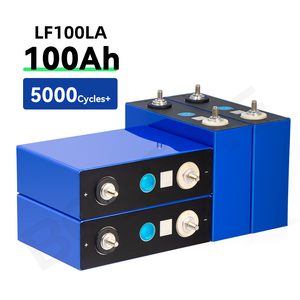
Grade a 5000 Cycles 3.2V 100AH LFP Prismatic Cells Lithium Iron Phosphate Battery

Grade A 5000 Cycles 3.2V 100Ah LFP Prismatic Cells Lithium Iron Phosphate Battery 12V 24V 48V LiFePO4 Pack

Capacity: 100Ah / 3.2V - 48V Feature: High Vibration Resistance Cycle Life: 5000+ Deep Cycles
Get a Quote
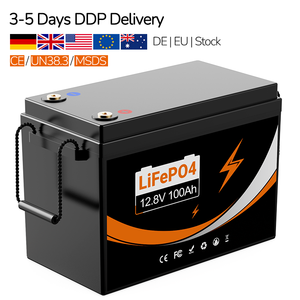
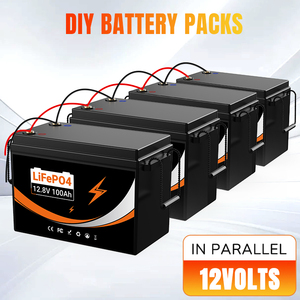
EU Stock 12v 24v 100ah 120ah 200ah 300ah Lifepo4 Iron Phosphate Battery

EU Stock 12V 24V 100Ah 120Ah 200Ah 300Ah LiFePO4 Iron Phosphate Battery Pack with Grade A Cells

Voltage Range: 12V / 24V Modular Stock Status: EU Warehouse Ready Application: RV, Marine & Off-Grid
Get a Quote
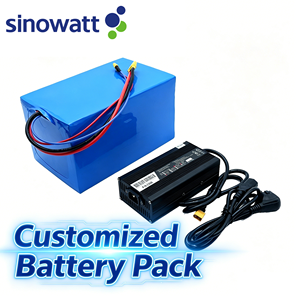
Reliable Supplier Customized Battery Pack with BMS Li-ion LiFePO4

Customized Industrial Battery Pack with BMS Li-ion LiFePO4 Solution (10S1P 7S2P 3S2P 3S10P Configs)

Custom Config: 3S to 10S Parallel/Series Protection: Anti-Shock Smart BMS Suitability: Heavy Industrial Equipment
Get a Quote
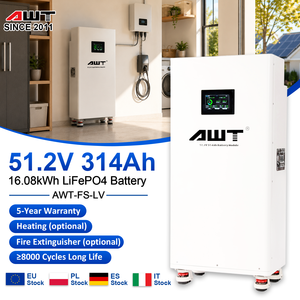
Eu Stock Solar Energy System Lithium Ion Batteries Pack 15Kwh 16KWH

EU Stock Solar Energy Storage Lithium Batteries Pack 15kWh 16kWh 48V 51.2V 280Ah 300Ah 314Ah LiFePO4

System Capacity: 15kWh - 16kWh Wall/Rack Cell Type: 280Ah / 300Ah / 314Ah LFP Features: High-Duty Shock Resistance
Get a Quote
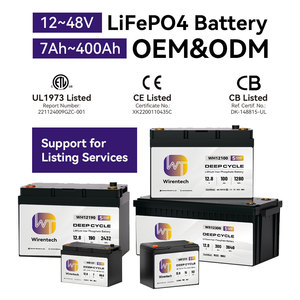
Customized 12V 24V 36V 48V Rechargeable Lifepo4 Solar Storage Battery

Customized 12V 24V 36V 48V Rechargeable LiFePO4 Solar Storage Battery 50Ah-300Ah for Marine & Golf Cart

Enclosure: Ruggedized Waterproof IP67 Vibration Rating: Marine & Off-Road Grade Applications: Golf Carts, Boats, RVs
Get a Quote
EU DE Stock NO TAX 12V100Ah 200Ah 300Ah 24V100Ah Lithium Phosphate Pack

EU DE Stock Duty-Free 12V 100Ah 200Ah 300Ah / 24V 100Ah Lithium Phosphate Battery Pack for Home Energy Storage

Certification: CE, UN38.3, IEC62133 Structure: Internal Dampening Frame Delivery: Duty-Free Fast EU Shipping
Get a Quote
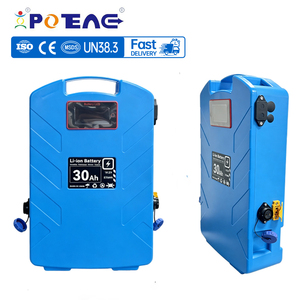
POEAE Customizable High Capacity 19.2V 30Ah Lithium LiFePO4 Backpack Battery Pack

POEAE High Capacity 19.2V 30Ah Portable Industrial Backpack Lithium LiFePO4 Battery Pack for Outdoor Power

Portability: Ergonomic Backpack Enclosure Vibration Proof: Shock-Absorbing Silicone Use Case: Portable Power & Field Equipment
Get a Quote
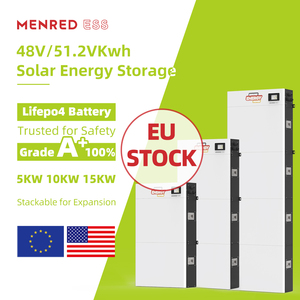
5kw 10kw 20kw 30kw 50kw Lifepo4 Whole House Battery Solar Battery

5kW 10kW 20kW 30kW 50kW Stackable High-Vibration LiFePO4 Whole House Solar Battery Energy Storage System

Scale: Modular 5kW to 50kW Stack Busbar: Heavy-Duty Copper Vibration Bus Support: Commercial & Residential ESS
Get a Quote

Engineering High-Vibration Resistant Battery Systems for Extreme Environments

In modern industrial automation, heavy commercial transportation, downhole oil & gas exploration, and maritime energy storage, energy storage systems are subjected to constant mechanical stress. Standard commercial lithium-ion batteries often fail under severe vibration profiles due to micro-fretting corrosion, busbar fatigue failure, internal cell short-circuiting, and electronic component displacement on the Battery Management System (BMS) PCB.

As a premier high vibration resistant batteries exporter, our engineering philosophy revolves around multi-layered mechanical isolation and structural damping. By combining automotive-grade Prismatic Lithium Iron Phosphate (LiFePO4) chemistry with solid-state cell hold-downs and flexible copper busbars, we deliver battery architectures capable of passing rigorous MIL-STD-810G, UN 38.3, and IEC 62133 vibration test standards.

Laser-Welded Busbars & Flex Interconnects

Traditional bolted connection lugs loosen over thousands of operational hours due to harmonic vibration. We utilize laser-welded laminated nickel-plated copper flexible busbars that absorb mechanical movement without transferring stress to cell terminals.

Polyurethane & Silicone Potting

Critical electronic components and BMS sensing leads are encapsulated in structural potting resins. This eliminates harmonic resonance, prevents lead wire detachment, and provides IP67 dust and liquid ingress protection.

Honeycomb Cell Retention Frames

Cells are secured using rigid, high-impact polycarbonate-ABS flame-retardant structural holders. Cell-to-cell contact is cushioned with specialized silicone damping sheets to absorb G-force impact load spikes.

Vibration Test Protocol & Technical Benchmark Comparison

The table below highlights the key differences between standard lithium battery assemblies and export-grade high vibration resistant battery packs developed by industry leaders like Excell Battery Co.:

Engineering Feature Standard Commercial Battery Pack Excell Export-Grade Vibration Resistant Pack
Cell Interconnection Bolted copper plates / Spot welded nickel strips Ultrasonic / Laser-welded laminated flexible copper joints
Internal Fixation Double-sided foam tape & basic plastic straps Structural aluminum compression frame with damper pads
BMS Cable Harnessing Standard ribbon cables with friction connectors Vibration-locked automotive molex connectors with strain relief
Vibration Test Tolerance Basic UN 38.3 (5Hz – 200Hz sweep) MIL-STD-810G Method 514.6 & IEC 60068-2-64 Random Vibration
Operational Environment Stationary indoor energy storage Off-road RVs, Mining, Downhole Drilling, Marine, Heavy Machinery

Global Sourcing & Procurement Trends for Industrial Batteries

As industrial electrification accelerates worldwide, global procurement officers and B2B buyers must navigate evolving technology standards, supply chain security, and sustainability mandates.

1. Transition to Large-Format Prismatic LFP Cells (280Ah – 314Ah)

Global buyers are rapidly moving away from smaller cylindrical cells (such as 18650 or 26650 arrays) toward high-capacity Grade-A LFP prismatic cells. Prismatic cells reduce internal electrical connection points by up to 80%, substantially reducing vibration-induced failure rates across large-scale ESS and industrial vehicle packs.

2. Mandated Smart BMS & Telemetry Integration

Modern international tenders now require real-time state-of-health (SOH) and vibration anomaly tracking. Smart BMS hardware (such as the Criterion system) features CANbus, RS485, and Bluetooth telemetry to monitor voltage balance, cell impedance changes, and internal temperature fluctuations during dynamic heavy equipment operation.

3. Dual-Sourcing & Resilient Regional Warehousing

To eliminate shipping bottlenecks and tariff uncertainties, leading exporters maintain bonded warehouses in key markets including Germany, North America, and the UK. Fast-ship inventory of pre-certified 12V 100Ah, 200Ah, and 48V 300Ah packs provides B2B buyers with immediate order fulfillment.

Technological Innovations Shaping the Future of Ruggedized Batteries

Solid-Electrolyte & Semi-Solid State Integration

Liquid electrolyte leakage under continuous shock load is a primary failure vector in conventional lithium cells. Semi-solid state and polymer gel electrolytes represent the next technological leap, eliminating free-flowing liquid inside the casing while maintaining high operational discharge rates under continuous mechanical shock.

AI-Powered Predictive Structural Health Diagnostics

Next-generation smart BMS boards integrate micro-electromechanical system (MEMS) accelerometers directly onto the circuit board. By continuously logging G-force impacts and vibration spectra, AI algorithms can predict micro-crack formation in busbars or spot-welds weeks before electrical breakdown occurs, allowing proactive maintenance.

Modular Stackable Mechanical Enclosures

Modern industrial installations demand modularity. New structural stackable designs feature inter-locking steel channels and rubberized shock-isolating feet, enabling systems to scale seamlessly from 5kW home backup units up to 50kW+ commercial microgrids without compromising mechanical rigidity.

Our Core Manufacturing & Global Export Advantages

Backing global original equipment manufacturers (OEMs) with decades of engineering heritage, tier-1 supply chain access, and rigorous ISO-certified manufacturing controls.

40+ Years of Engineering Excellence

Building on over four decades of custom lithium battery experience (with roots in demanding sectors like oil & gas MWD downhole tool batteries, defense, and medical devices), our engineering team brings unmatched technical depth to every custom design.

ISO 9001 Certified & Globally Compliant

Our manufacturing sites adhere strictly to ISO 9001 quality management systems. Every battery lot undergoes 100% automated cell sorting, weld inspection, environmental stress screening, and UN 38.3 transport safety verification.

Partnership with Global Tier-1 Cell Manufacturers

We work directly with audited cell producers—including Tadiran, Saft, Panasonic, Murata, Molicel, Samsung SDI, and Grade-A LFP prismatic producers—ensuring absolute chemical consistency, cell traceability, and long cycle life.

End-to-End Customization & Rapid OEM Prototyping

From initial thermal and mechanical structural modeling to custom Smart BMS firmware creation and prototype testing, we accelerate your product time-to-market with flexible production runs from small batch to mass volume.

Custom Battery Procurement & Technical FAQ

Clear, authoritative answers to essential engineering, certification, and global export questions.

Q1 What makes a lithium battery "vibration resistant" compared to standard consumer batteries?
Vibration-resistant batteries feature reinforced structural frameworks, high-grade damping polymers between cells, flexible laminated copper busbars (instead of rigid solid plates), strain-relieved wiring harnesses, and potted electronic circuit boards. These design elements prevent physical fatigue, solder joint cracking, and internal short-circuiting under continuous vibration.
Q2 Which international certifications are mandatory for exporting high-vibration lithium batteries?
For air and ocean freight export, UN 38.3 certification (which includes vibration and mechanical shock testing) is mandatory. Depending on the target region and application, batteries also require IEC 62133, CE, UL 1973 (for ESS), UL 2580 (for EVs), and ATEX/HAZLOC compliance for explosive environment use.
Q3 Why is LiFePO4 (LFP) preferred over NMC for heavy-duty industrial applications?
LiFePO4 offers superior thermal stability, a higher thermal runaway threshold (500°C vs 210°C for NMC), exceptional cycle life (3000 to 5000+ deep cycles), and enhanced mechanical safety. LFP chemistry does not release oxygen during thermal degradation, making it inherently safer under extreme vibration and impact shock conditions.
Q4 How does an anti-vibration BMS protect the battery during off-road or marine operation?
A specialized Smart BMS incorporates conformal coating or silicone potting to protect surface-mount components from dynamic stress. It actively monitors cell balance and connector integrity, instantly isolating the circuit if micro-disconnections or voltage anomalies occur, thereby preventing electrical arcing or fire risk.
Q5 Can you manufacture custom voltage and dimensions for specific equipment enclosures?
Yes. We design and build fully custom battery configurations ranging from small 12V / 24V portable modules to high-voltage 48V / 96V / 400V industrial packs. Enclosure materials include powder-coated steel, marine-grade aluminum, and high-impact IP67 ABS plastic enclosures engineered to match your physical footprint.
Q6 What are the lead times and minimum order quantities (MOQ) for custom export orders?
Standard inventory items (such as EU-stocked LFP packs) ship within 3–7 business days. Custom engineering projects typically take 3–5 weeks for prototype validation, followed by 4–6 weeks for volume manufacturing. MOQs depend on cell type and design complexity; contact our sales engineering team for tailored project quotes.

Partner with a Trusted High Vibration Resistant Batteries Exporter

Speak with our battery design engineers today to receive a comprehensive technical proposal, mechanical drawing, and price quotation tailored to your specific industrial application.

Get a Quote