Explosion-proof energy storage systems designed for chemical plants, offshore oil platforms, underground mining, and heavy industrial applications requiring complete thermal runaway mitigation.
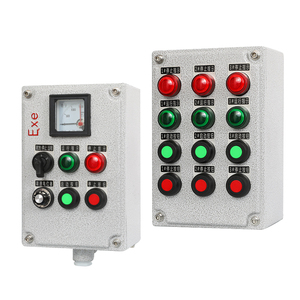

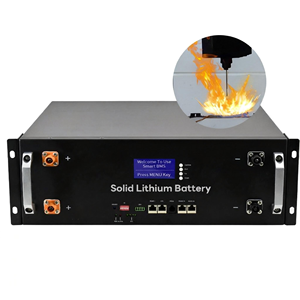
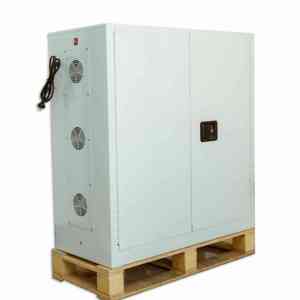
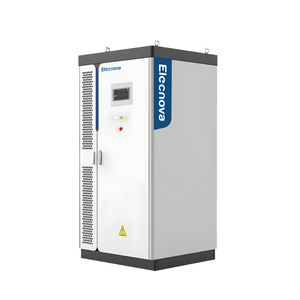
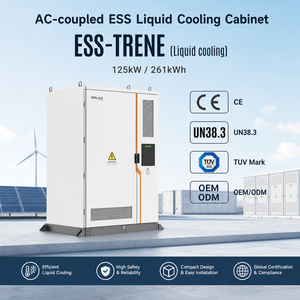
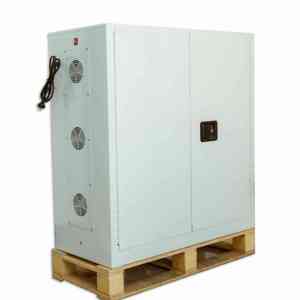
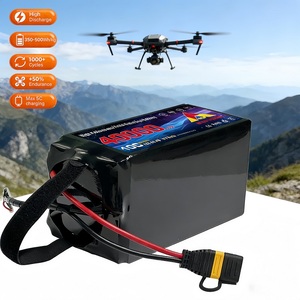
In modern heavy industry, chemical manufacturing, subterranean mining, and offshore oil exploration, high-density energy storage systems operates within volatile atmospheric conditions. The coexistence of flammable hydrocarbons, combustible dust particles, and organic chemical vapors creates classified Hazardous Locations (HAZLOC) where standard electrical apparatuses pose ignition hazards. As a premier explosion proof battery systems manufacturer and factory, our engineering paradigm synthesizes electro-chemistry mitigation, pressure-resistant mechanical containment, and intrinsic safety electronics to eliminate combustion risk.
Explosion-proof energy storage architecture requires an understanding of thermal dynamics and internal arc-flash containment. While standard industrial batteries focus primarily on gravimetric energy density ($Wh/kg$), explosion-proof systems prioritize **Flameproof Protection (Ex d)**, **Increased Safety (Ex e)**, and **Intrinsic Safety (Ex ia/ib)**. These systems are validated through rigorous pressure testing, explosive atmosphere immersion, and UL 9540A unit-level fire tests to guarantee zero thermal propagation beyond the enclosure perimeter.
Our explosion-proof cabinets integrate dual-stage aerosol fire suppression, liquid cooling loops, and internal explosion-isolation baffles designed to withstand internal overpressures exceeding 1.5 MPa without structural compromise or external gas ignition.
To achieve complete compliance across global hazardous zone classifications (ATEX Zone 1/2, IECEx, Class I Division 1/2), our engineering team utilizes a layered defense strategy covering cell chemistry, battery management system (BMS) logic, and structural enclosure dynamics.
Precision cast aluminum alloy and heavy gauge structural stainless steel enclosures designed to contain internal explosions caused by cell venting, preventing flame propagation into external volatile atmospheres.
Cell-to-cell thermal barrier barriers using aerogel insulation matrix and ceramic phase-change materials (PCM) to prevent domino-effect thermal runaway propagation between individual battery cells.
Low-voltage sensing circuits and galvano-isolated Smart BMS monitoring logic engineered to restrict electrical energy levels below spark ignition thresholds under fault conditions.
Evaluating the engineering trade-offs between standard industrial energy storage systems and specialized explosion-proof enclosures is vital for B2B procurement managers and safety engineers.
| Engineering Specification | Standard Industrial ESS | Hazardous-Location (HAZLOC) ESS | Excell Explosion-Proof Benchmark |
|---|---|---|---|
| Enclosure Protection Class | IP54 / NEMA 3R | IP66 / NEMA 4X / Ex d IIB T4 | IP67 / Ex d IIC T6 / Ex e II T6 |
| Thermal Runaway Suppression | External Water/Gas Hose | Internal FM200 / Novec 1230 | Dual Aerosol + Direct Cell Liquid Cooling |
| Internal Pressure Mitigation | Standard Vents / Louvers | Explosion Relief Disc | Multi-Stage Flame Arresting Baffles |
| Operating Temperature Range | -20°C to +50°C | -30°C to +55°C | -40°C to +80°C (Mined/Downhole Rated) |
| BMS Galvanic Isolation | 1.5 kV DC Isolation | 2.5 kV DC Isolation | > 4.0 kV Optically Isolated Intrinsic Safety |
As industrial manufacturing shifts toward automation, green hydrogen integration, and electrified heavy machinery in hazardous zones, energy storage procurement strategies are evolving rapidly. Global EPC contractors and industrial OEMs are moving away from reactive safety equipment toward integrated, intelligent explosion-proof architectures.
The adoption of solid electrolyte chemistries yields volumetric energy densities exceeding 400 Wh/kg while eliminating flammable liquid organic solvents. Solid-state UAV and industrial batteries drastically lower fire risk in subterranean mining and oil rig aerial inspection operations.
High-capacity energy storage systems (300kWh to 3MWh+) are transitioning from HVAC forced-air cooling to closed-loop dielectric liquid cooling. Liquid cooling maintains cell temperature uniformity within ±2°C, suppressing localized hot spots that trigger thermal runaway.
Next-generation procurement guidelines demand real-time gas emission monitoring (CO2, H2, volatile organic gas detection) inside battery enclosures. Smart BMS platforms transmit early off-gassing warnings via optical Modbus/CAN bus prior to temperature spikes.
When sourcing custom explosion-proof battery packs for critical infrastructure, decision-makers must look beyond upfront procurement cost per kilowatt-hour ($/kWh). Total Cost of Ownership (TCO) in hazardous environments is governed by compliance longevity, maintenance downtime, and certified safety margins.
Backed by over four decades of custom lithium battery pack manufacturing experience and supported by our corporate parent Ultralife Corporation, we operate advanced production facilities across North America, Europe, and Asia. Our facilities are fully ISO 9001 certified, providing complete lot traceability, cell tier auditing, and end-to-end quality validation.
Detailed answers to technical, regulatory, and logistics queries surrounding explosion-proof energy storage systems and custom factory manufacturing.
ATEX Zone 1 defines an environment where an explosive atmosphere consisting of gas, vapor, or mist is likely to occur occasionally in normal operation. Zone 2 defines an environment where explosive gas is not likely to occur during normal operation, but if it does, it will exist for a short period only. Zone 1 battery enclosures require heavy flameproof containment (Ex d) or double-seal intrinsic safety (Ex ia), whereas Zone 2 permits increased safety protection (Ex e) with sealed cell modules.
Our explosion-proof battery systems feature multi-stage pressure relief valves equipped with sintered metal flame arrestors. If a cell experiences abnormal outgassing, the pressure relief valve opens to release excess internal gas pressure into a dedicated exhaust manifold, while the flame arrestor cools and quenches internal sparks or flames, preventing ignition of the surrounding hazardous atmosphere.
Yes. We specialize in high-temperature, high-vibration non-rechargeable primary Lithium Thionyl Chloride (Li-SOCl2) and Lithium Sulfuryl Chloride (Li-SO2Cl2) battery packs rated for continuous operation at temperatures up to +150°C and +200°C. These downhole packs feature welded stainless steel shock-absorbing structures designed to withstand heavy drilling vibration and high shock loads.
Our industrial energy storage cabinets (such as 125kW/261kWh and 372kWh liquid-cooled systems) utilize a 4+1 redundant safety design. This includes localized aerosol suppression generators inside cell racks, Novec 1230 gas flooding systems, automated thermal isolation dampers, and active combustible gas sensors connected to an emergency battery isolation contractor.
Every shipment includes comprehensive quality assurance documentation: ISO 9001 Certificate of Conformance, UN 38.3 Transport Testing Summary, MSDS/SDS sheets, IEC 62133 / UL 1973 cell test reports, and ATEX/IECEx Factory Inspection Certificates where applicable.
Industrial solid-state UAV batteries utilize solid electrolyte matrices that offer significantly higher energy density (~400Wh/kg) while resisting thermal runaway even when subjected to physical puncture or high ambient temperatures. This makes them ideal for autonomous drone inspection in subterranean mines and oil refineries where conventional lithium-polymer (LiPo) batteries pose explosion risks.
Consult with our expert battery design engineers today for custom OEM prototypes, hazardous area compliance reviews, or turnkey industrial ESS quotes.