Global Sourcing Benchmark: The Shift to LiFePO4 Emergency Power Infrastructure
In an era defined by grid instability, extreme climate events, and stringently regulated industrial continuity protocols, global B2B procurement officers are executing a widespread transition toward next-generation Emergency Backup Power Supplies. Traditional valve-regulated lead-acid (VRLA) and diesel generator configurations are rapidly being replaced by advanced Lithium Iron Phosphate (LiFePO4 / LFP) prismatic cell matrices. Procurement directors evaluating global manufacturing partners must analyze Total Cost of Ownership (TCO), volumetric energy density, round-trip efficiency (RTE), and compliance with global transport certifications such as UN38.3, IEC 62619, and UL 9540A.
Strategic Procurement Insight: The transition from VRLA to prismatic LiFePO4 emergency storage drops operational expenditure (OpEx) by over 42% over a 10-year lifespan. This shift is driven by LFP's 5,000+ deep-cycle capabilities, zero active maintenance requirements, and superior thermal stability up to 500°C without thermal runaway escalation.
Future Procurement Trends in Industrial & Export Markets
As global supply chains demand greater transparency and resilience, key procurement trends are defining how OEMs and distributors select their battery manufacturing partners:
Overseas Inventory & Local Logistics
Importers prioritize export partners with localized European (EU/DE) and North American tax-paid warehouses. Local stock eliminates long maritime transit delays, buffers tariffs, and guarantees duty-free 48-hour dispatch for urgent critical power replacements.
314Ah+ High-Capacity Prismatic Scaling
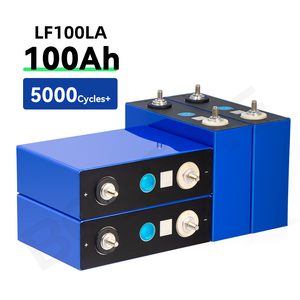
Cell procurement is migrating from standard 100Ah and 280Ah units toward high-density 314Ah and 320Ah LFP prismatic formats. This migration increases volumetric energy density by 14% while preserving physical rack footprint dimensions, driving down installation labor costs.
Embedded Telemetry & Smart BMS Integrations
Modern procurement guidelines require battery management systems (BMS) equipped with native CANbus, RS485, and cloud-connected IoT telemetry. Remote monitoring of cell-level delta voltages and internal resistance prevents unplanned industrial power interruptions.
Engineering Evolution: Critical Innovations in Lithium Backup Systems
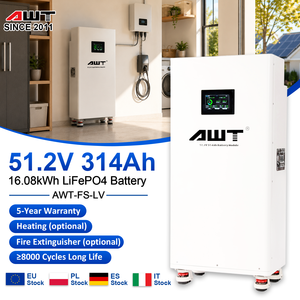
The technical architecture of modern emergency backup power supplies has advanced beyond basic electrochemical storage into highly sophisticated, multi-tiered energy ecosystems. Leading factories are engineering high-voltage (HV) stacked systems ranging from 5kW to 50kW+ that deliver rapid sub-10-millisecond uninterruptible transfer times during grid collapse, protecting sensitive data infrastructure, medical instruments, and hazardous industrial control loops.
Key Technical Milestones Driving Next-Gen Emergency Power
To provide concrete engineering depth, the following table compares key technical parameters across modern emergency backup battery chemistries and structural formats:
| Performance Metric |
Prismatic LiFePO4 (Modern Standard) |
Cylindrical Li-ion (NMC) |
Legacy Sealed Lead-Acid (AGM) |
| Deep Cycle Life (80% DoD) |
5,000 – 8,000 Cycles |
1,500 – 2,500 Cycles |
300 – 500 Cycles |
| Thermal Runaway Threshold |
Ultra-Safe (~270°C – 500°C) |
Moderate (~150°C – 210°C) |
Thermal Hydrogen Off-gassing Risk |
| Volumetric Round-Trip Efficiency |
95% – 98% |
92% – 95% |
70% – 78% |
| 10-Year Maintenance Expenditure |
$0 (Zero Maintenance) |
Low to Moderate |
High (Multiple Battery Replacements) |
Active Safety Systems & Microcontroller-Driven Balancing
The safety profile of contemporary emergency backup power exporter systems relies on multi-layer hardware-software redundancy. Modern microcontrollers perform continuous active cell balancing, ensuring that voltage disparities between prismatic cells do not exceed 5mV. Passive balancing dissipates surplus energy as heat, whereas active balancing shuttles charge between adjacent cells, extending usable pack capacity by up to 8% over standard operational lifecycles.
B2B Sourcing FAQ: Key Technical & Export Requirements
Answers to common technical, regulatory, and logistics queries raised by international procurement managers and power engineering teams during vendor evaluation:
Q1:
Why are Grade-A Prismatic LFP cells preferred over cylindrical cells for industrial emergency backup power supplies?
Grade-A prismatic LiFePO4 cells provide superior space utilization, robust aluminum shell casing, and lower mechanical interconnect complexity compared to thousands of small cylindrical cells (e.g., 18650 or 21700). Prismatic cells reduce internal electrical connection points by up to 90%, dramatically decreasing failure modes caused by thermal vibration, while delivering enhanced thermal dissipation across high-amp hour emergency discharge cycles.
Q2:
What legal certifications are required to import commercial emergency backup batteries into EU and North American markets?
To legally import and deploy backup battery packs, factories must provide UN 38.3 transport safety test reports (covering altitude simulation, thermal shock, vibration, impact, and external short circuit tests), CE declarations of conformity, IEC 62619 for industrial safety, and RoHS/REACH compliance. For energy storage systems installed in building structures, UL 1973 and UL 9540A fire propagation test reports are increasingly mandated by local fire codes.
Q3:
How does low-temperature charging protection safeguard emergency power systems in cold climates?
Charging lithium cells below 0°C (32°F) without thermal management causes irreversible lithium plating on the graphite anode, inducing internal short circuits and permanent capacity loss. Top backup power factories integrate intelligent low-temp cut-off microcontrollers and internal PTC heating films within the BMS, automatically preheating the battery cells to safe ambient operating temperatures prior to accepting charge current.
Q4:
What is the typical lead time for custom OEM emergency backup battery pack engineering and mass production?
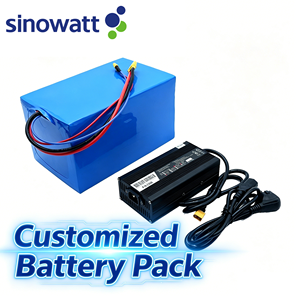
Standard off-the-shelf LFP battery modules stored in local EU/US warehouses ship within 48 to 72 hours. Custom OEM/ODM battery projects follow a structured timeline: initial mechanical/electrical engineering design review (1-2 weeks), custom BMS prototyping and sample testing (3-4 weeks), regulatory certification testing (4-6 weeks), followed by full mass production scaling (4-6 weeks).
Q5:
How do vertical stacked modular energy storage units simplify emergency capacity expansion?
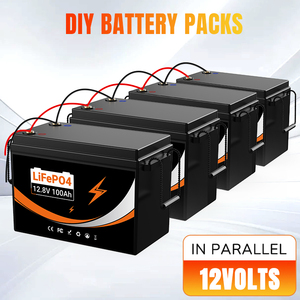
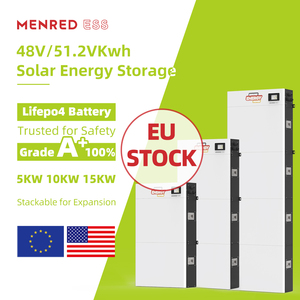
Modular stacked backup systems utilize blind-mating plug-and-play quick connectors for DC power and BMS communication. This modular architecture allows facility engineers to expand capacity incrementally (e.g., from 5kW to 10kW up to 50kW) by stacking additional LFP sub-modules vertically without complex external wiring, reducing installation footprint and field labor costs.
Q6:
What quality assurance metrics should sourcing directors request during a factory audit?
Sourcing directors should inspect the factory’s Cell Grading & Capacity Sorting procedures (verifying <2mV voltage match and <0.5mΩ internal resistance variance per pack), automated Laser Welding quality controls for busbars, X-ray inspection logs, high-pot isolation resistance testing, and 100% automated EOL charge-discharge aging test records prior to shipment.