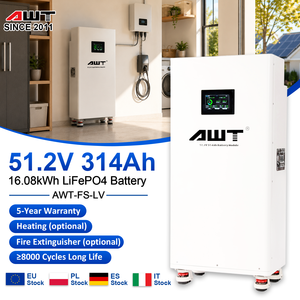
High-capacity LiFePO4 cells, rack-mounted home energy storage systems, and industrial custom battery packs engineered for maximum cycle life and thermal stability under rigorous operational profiles.
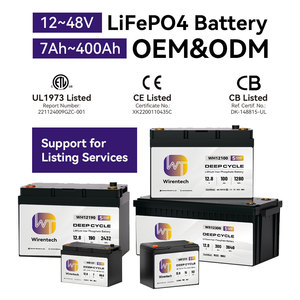
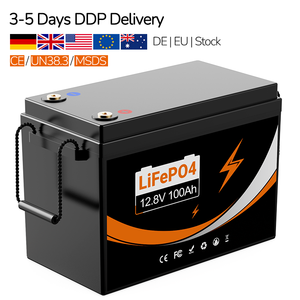
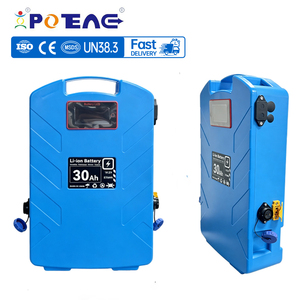
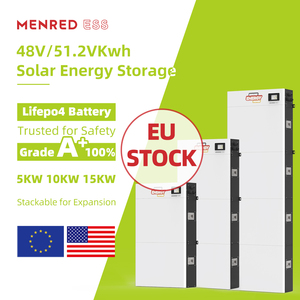
Backed by Ultralife Corporation, our ISO 9001 certified North American base and global manufacturing facilities deliver field-proven deep cycle solar storage systems for mission-critical applications worldwide.
Pioneering customized electrochemical solutions since 1984.
Rigorous quality control management system across all production lines.
Grade A LFP cells maintaining >80% capacity retention under 80% DOD.
Direct partnerships with audited Tier-1 global cell manufacturers.
Why Lithium Iron Phosphate (LiFePO4) prismatic cell technology has superseded legacy lead-acid and ternary NMC chemistries in stationary energy storage systems (ESS).
Information Gain Insight: Selecting a deep cycle solar storage manufacturer requires examining cell-level electrochemistry, mechanical casing integrity, and active Battery Management System (BMS) balancing algorithms. Modern solar installations demand long cycle stability, thermal safety above 270°C without oxygen release, and minimal Levelized Cost of Storage (LCOS).
Unlike ternary Lithium Nickel Manganese Cobalt Oxide (NMC) chemistries, Lithium Iron Phosphate features a strong P-O covalent bond crystal lattice. This structural integrity prevents oxygen liberation during thermal abuse, granting an elevated thermal runaway threshold of 270°C to 300°C. For deep cycle solar energy storage, this inherent electro-chemical stability guarantees maximum operational safety in high-ambient environments.
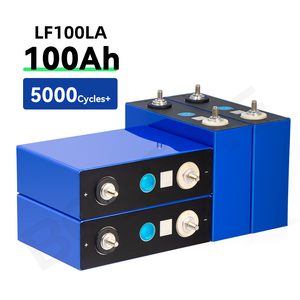
Leading deep cycle solar battery factories prioritize Grade A prismatic cells over cylindrical or pouch form factors. Prismatic cells offer superior volumetric efficiency, robust aluminum alloy casing, and robust threaded terminal posts capable of handling high continuous discharge currents. Combined with laser-welded busbars, prismatic packs minimize internal resistance (IR) and structural vibration degradation.
A deep cycle storage pack is only as reliable as its Battery Management System. OEM enterprise-grade BMS architectures integrate hardware short-circuit protection, cell-level temperature sensors, dual-microprocessor control, and active cell balancing (up to 2A to 5A balancing current). Real-time communication protocols including CANbus 2.0B, RS485, and Modbus RTU enable seamless integration with top solar inverters.
A quantitative evaluation of storage chemistries for commercial, residential, and industrial solar installations.
| Battery Chemistry / Feature | LiFePO4 (Grade A Prismatic) | Legacy Lead-Acid / GEL | Lithium NMC (Ternary) |
|---|---|---|---|
| Cycle Life (80% DOD) | 5,000 - 8,000 Cycles | 500 - 1,200 Cycles | 1,500 - 2,500 Cycles |
| Usable Depth of Discharge (DOD) | 90% - 100% | 50% | 80% - 90% |
| Thermal Runaway Threshold | 270°C - 300°C (Extremely Safe) | Exothermic Sulfation Risk | 210°C (Requires Active Cooling) |
| Round-Trip Efficiency (RTE) | > 96% | 75% - 82% | 92% - 94% |
| Levelized Cost of Storage (LCOS) | Lowest ($0.04 - $0.06/kWh) | High ($0.15 - $0.25/kWh) | Moderate ($0.09 - $0.12/kWh) |
| Maintenance Requirements | Zero Maintenance | Regular Fluid/Equalization | Zero Maintenance |
Global energy transitions, supply chain localization, and technological innovations shaping high-capacity solar battery procurement.
The solar energy storage sector is rapidly transitioning from standard 280Ah cells to next-generation 314Ah+ prismatic cells. This shift boosts volumetric energy density by 12% to 15%, enabling 20ft containerized Utility ESS systems to reach 5MWh+ capacity. B2B purchasers gain lower transport costs per kWh, reduced footprint, and simplified balance of plant (BOP) installation.
Modern factory integration emphasizes IoT-enabled Smart BMS units. By leveraging cloud analytics and machine learning algorithms, system integrators can monitor cell impedance, capacity fade trajectory, and State of Health (SoH) in real-time. Thermal anomalies are detected days before physical symptoms emerge, virtually eliminating catastrophic downtime in remote microgrids.
With the implementation of the EU Battery Regulation (2023/1542) and carbon border adjustment mechanisms, enterprise solar buyers must verify full material supply chain transparency. Top trusted factories provide digital QR-coded Battery Passports documenting ethical lithium/cobalt sourcing, recycled material percentages, and lifecycle carbon footprint verification from mine to final assembly.
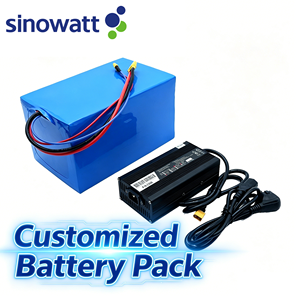
We engineer custom deep cycle solar battery packs utilizing original, A-grade cells directly from globally recognized tier-1 manufacturers.
Expert technical responses to critical sourcing, compliance, and longevity inquiries encountered by EPC contractors and OEM distributors.
Grade A cells are manufactured within strict manufacturer tolerances for capacity, internal resistance (IR), and physical dimensions, accompanied by official factory test reports and full QR code traceability. Grade B cells are factory seconds that failed micro-variance tests, exhibiting faster capacity decay, IR imbalance, and potential swelling over cycle life. Top trusted manufacturers exclusively build deep cycle solar storage using 100% Grade A cells.
Under standard operating conditions (25°C ambient temperature, 0.5C charge/discharge rate, and 80% Depth of Discharge), a premium Grade A LiFePO4 solar battery pack delivers between 5,000 to 8,000 continuous cycles before reaching 80% of its initial nominal capacity. Operating under active BMS thermal management further extends operational lifespan beyond 10–15 calendar years.
International procurement requires UN 38.3 (Lithium Battery Transport Testing), UL 1973 (Stationary Battery Safety Standard), UL 9540A (Thermal Runaway Fire Propagation Test), IEC 62619 (Industrial Lithium Safety), and CE certification. For specialized hazardous environments (mining, chemical plants), ATEX or HAZLOC certifications are mandatory.
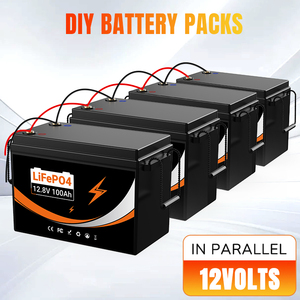
Yes. High-quality battery modules engineered with intelligent BMS support expansion up to 16 units in parallel (expanding total current capacity) and up to 4 or more units in series (for 48V, 192V, or high-voltage stacked systems up to 800V DC). Always ensure all connected packs originate from the same factory batch and possess identical state of charge (SoC).
Passive balancing dissipates excess energy from high-voltage cells as heat through resistors, typically limited to small currents (30mA to 100mA). Active balancing transfers charge from higher-energy cells to lower-energy cells with minimal heat generation at higher currents (1A to 5A). For large-capacity solar storage banks (200Ah to 314Ah+), active balancing dramatically improves total usable capacity and prevents premature pack shutdown.
Sourcing from manufacturers with regional distribution centers (such as EU stock in Germany or North American facilities) eliminates long maritime transit delays (4-6 weeks saved), avoids unexpected customs tariff surges, provides DDP (Delivered Duty Paid) convenience, and ensures rapid local RMA warranty replacement and technical support.