Our engineered battery rack systems leverage tier-1 prismatic LiFePO4 chemistry, multi-tier BMS controls, and high-density modular configurations designed for commercial, industrial, and utility energy storage.
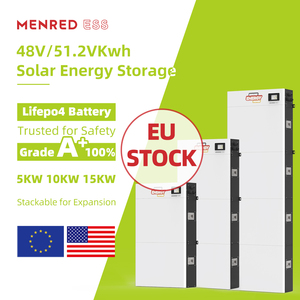
The global energy transition has created a paradigm shift in Commercial & Industrial (C&I) energy storage systems (BESS). Traditional low-voltage (48V/51.2V) battery architectures, while suitable for residential backup, face profound physical and financial limitations when scaled to megawatt-hour capacities. High Voltage (HV) lithium battery rack systems—typically operating between 192V DC to over 800V DC—have emerged as the definitive benchmark for enterprise-grade energy infrastructure.
As premier China-based OEM/ODM manufacturers and global exporters, our engineering facilities bridge the gap between advanced electrochemical cell science and industrial electrical safety standards. By shifting from low-voltage high-current topologies to high-voltage low-current rack designs, engineering teams significantly decrease internal heat generation, optimize cable cross-sectional area, and maximize overall Round-Trip Efficiency (RTE) up to 98.4%.
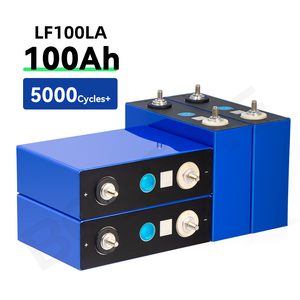
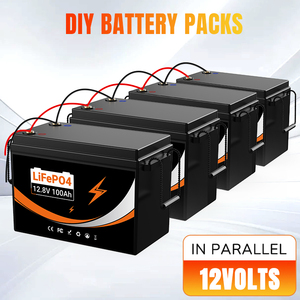
We utilize exclusively Grade-A 3.2V Lithium Iron Phosphate (LiFePO4) prismatic cells (100Ah, 280Ah, 314Ah). LiFePO4 offers unmatched thermal stability (thermal runaway threshold >270°C) and resistance to chemical degradation under continuous high-C charge/discharge cycles.
Safety in high-voltage DC environments requires multi-tiered monitoring. Our architecture comprises Cell Monitoring Units (BMU), System Control Units (SBMS), and Rack Master Units (MBMS) communicating via isolated CAN-bus / RS485 to eliminate single-point failure risks.
Featuring dual cooling methodologies: intelligent HVAC forced air ducting for standard industrial setups, and closed-loop liquid cooling cold plates for ultra-dense high-power installations, maintaining cell-to-cell delta T < 2°C.
| Technical Parameter | Low Voltage Racks (48V DC) | High Voltage Racks (192V - 800V+ DC) | Impact on Project LCOS / Performance |
|---|---|---|---|
| Operating Current (at 100kW load) | ~2083 Amperes | ~125 Amperes (at 800V) | HV reduces copper conductor thickness by over 80%. |
| Conductor Heat Loss ($I^2R$) | Extremely High ($I^2$ scaling) | Minimal Line Losses | HV delivers 3-5% higher system energy efficiency. |
| PCS / Inverter Conversion Efficiency | 88% - 92% (Heavy step-up losses) | 97.5% - 98.8% (Direct DC link pairing) | Drastically improves daily usable kilowatt-hours. |
| System Scalability | Parallel limits due to high-current bussing | High-voltage series stacking + containerized parallel | Enables gigawatt-hour grid-scale utility deployment. |
| BMS Complexity & Safety | Single-stage balancing | 3-Level Master-Slave with HV Breakers & Contactors | Superior arc detection, insulation monitoring & containment. |
Procurement directors and system integrators sourcing high-voltage lithium battery racks from China face an evolving technological landscape. Key market drivers and design developments include:
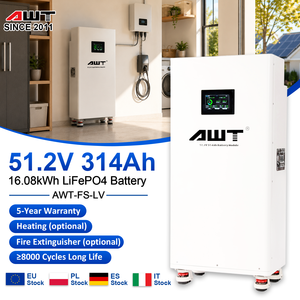
While 280Ah prismatic cells remain an industry workhorse, top Chinese exporters are standardizing on 314Ah LFP cell form factors. Without altering the physical footprint of standard 20-foot containerized racks, volumetric energy density increases by over 12%, maximizing yield per square meter.
International grid safety standards (UL9540A, NFPA855) now dictate zero flame-propagation between cells. Chinese manufacturers are incorporating pack-level off-gas detection sensors, localized fire-extinguishing aerosol cartridges, and direct-to-pack liquid cooling plates to isolate thermal events instantaneously.
Modern HV rack procurement focuses heavily on LCOS rather than initial Capex. Extended cycle life cells (exceeding 6,000–8,000 cycles at 80% Depth of Discharge), paired with active cell-balancing algorithms, significantly reduce O&M intervention costs over a 15-year operational lifecycle.
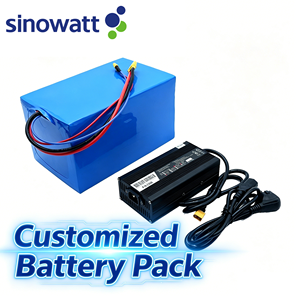
As a pioneer in custom lithium pack assembly and high-voltage rack integration, our manufacturing footprint combines four decades of engineering legacy with state-of-the-art automated production lines. In partnership with global tier-1 cell vendors—such as Tadiran, Saft, Panasonic, Murata, Lishen, Molicel, and Samsung SDI—our enterprise delivers uncompromised quality assurance across every step.
Rigorous quality control protocols governing incoming cell sorting (capacity matching, internal resistance grading) and automated ultrasonic busbar welding.
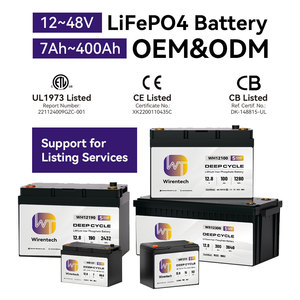
Full compliance and certification support for UN38.3 shipping, UL1973 (Stationary Batteries), UL9540/UL9540A, IEC62619, and CE/ATEX hazardous location options.
Every high-voltage rack undergoes full insulation resistance testing, high-pot dielectric testing, multi-C rate load testing, and simulated thermal stress validation prior to dispatch.
Custom cabinet dimensions (19-inch, 23-inch, containerized), localized language protocol mapping (Modbus TCP, CAN 2.0B), and custom brand white-labeling.
Partner with China's leading high-voltage lithium battery rack manufacturer and exporter. Our technical sales engineers are ready to evaluate your system specifications, provide detailed CAD drawings, and issue comprehensive OEM price quotations.