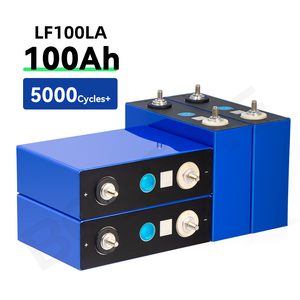
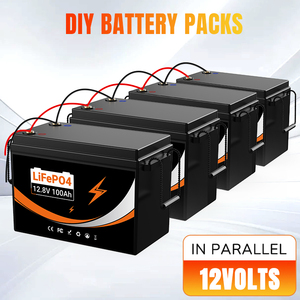
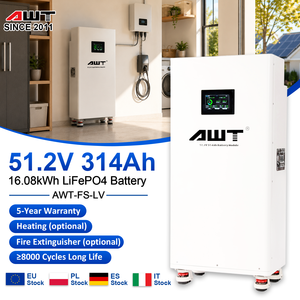
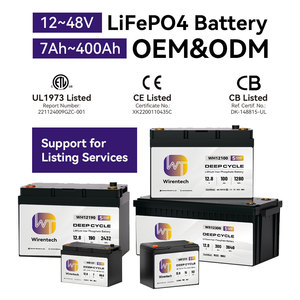
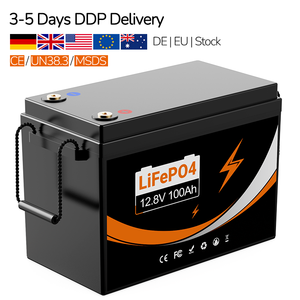
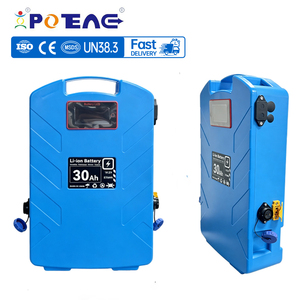
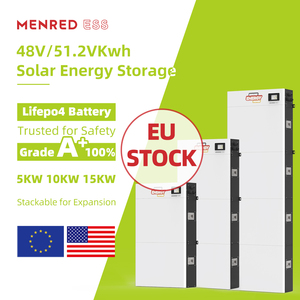
Explore our flagship OEM/ODM lithium iron phosphate (LiFePO4) and lithium titanate (LTO) battery packs. Engineered for 24/7 continuous warehouse automated guided vehicles, electric forklifts, cleanroom AMRs, and heavy-duty port logistics carriers.
Quantifiable engineering standards that differentiate Tier-1 Chinese AGV battery exporters in global supply chains.
The global acceleration of automated material handling, smart warehousing, and Industry 4.0 manufacturing has placed unprecedented operational demands on Automated Guided Vehicles (AGVs) and Autonomous Mobile Robots (AMRs). As the core energy engine, the battery system determines fleet uptime, total cost of ownership (TCO), thermal safety, and ROI.
China has established itself as the global epicenter for industrial lithium battery engineering, leveraging integrated supply chains from raw materials to Grade-A prismatic cell fabrication and proprietary Smart Battery Management Systems (BMS). This industry report provides procurement officers, fleet engineers, and OEM manufacturers with deep insights into technology selection, custom engineering protocols, and verified supplier evaluation criteria.
Industrial AGVs operate on continuous 24/7 schedules. Premium Chinese AGV battery packs incorporate high-rate LiFePO4 cells paired with automated copper slide-plate or inductive charging systems, supporting 1C to 3C fast charging during 15-minute shift breaks without triggering thermal degradation.
Modern AGV batteries are intelligent nodes in warehouse management software (WMS). Intelligent BMS architecture supports CANopen, SAE J1939, RS485, and Modbus protocols, enabling real-time telemetry of State of Charge (SOC), State of Health (SOH), cell voltage balancing, and thermal warnings.
Safety is non-negotiable in dense automated logistics spaces. Top manufacturers implement multi-layered safety mechanisms including aerosol fire suppression, ceramic insulation barriers, cell-level fuses, and rugged IP65/IP67 steel casings engineered for extreme vibration resilience.
While NCM (Nickel Cobalt Manganese) offers higher volumetric energy density, Lithium Iron Phosphate (LiFePO4) commands over 88% of global industrial AGV battery procurement. The key technical drivers are thermal stability (glow point at 500°C vs 210°C for NCM), superior cycle life (5,000 cycles vs 1,500 cycles), and complete freedom from cobalt supply volatility. For extreme sub-zero applications (cold storage logistics down to -30°C), Lithium Titanate (LTO) serves as the primary high-end alternative due to zero dendrite formation during rapid charging.
Comparing core electrochemistry characteristics to align battery selection with operational fleet duty cycles.
| Battery Electrochemistry | Cycle Life (80% DOD) | Operating Temp Range | Fast Charge Rate | Thermal Runaway Temp | Target Industrial AGV Application |
|---|---|---|---|---|---|
| LiFePO4 (LFP) Prismatic | 4,000 - 6,000 Cycles | -20°C to +60°C | 1C Continuous (0-80% in 45m) | 270°C - 500°C | Standard Warehouse AGVs, Autonomous Forklifts, Tuggers |
| LTO (Lithium Titanate) | 15,000 - 25,000 Cycles | -30°C to +65°C | 5C - 10C (0-80% in 6m) | > 600°C (Ultra Safe) | 24/7 Cold-Chain Storage AGVs, Heavy Duty Port Carriers |
| NCM / NMC High Density | 1,500 - 2,500 Cycles | -20°C to +55°C | 0.5C - 1C Max | 210°C | Weight-Sensitive Service Robots, Small Payload AMRs |
| LiFePO4 (High-Rate Cell) | 5,000+ Cycles | -10°C to +55°C | 2C - 3C Opportunity Charge | 300°C | High-Speed Automated Guided Carts (AGC), Sortation AMRs |
Future AGV fleet deployments require real-time health analytics. Chinese manufacturers are embedding IoT edge modules directly into battery cases, streaming cell-level impedance, temperature gradients, and charge-cycle degradation metrics to cloud WMS platforms to prevent unplanned downtime.
Physical copper contact plates suffer from mechanical wear, sparking, and debris accumulation. The market is shifting rapidly toward wireless inductive charging pads integrated with high-efficiency receiver coils within the battery pack chassis, permitting automated opportunity charging over parking pads.
Next-generation AGV batteries are transitioning from liquid electrolytes to semi-solid state gel matrix materials. This eliminates leakage risks, significantly enhances volumetric energy density by 30%, and lowers thermal runaway vulnerability in explosive or cleanroom environments.
Leading Chinese AGV battery manufacturers provide end-to-end custom engineering that bridges raw cell chemistry with complex industrial mechanical integration. By controlling the entire manufacturing pipeline, OEMs benefit from direct factory pricing, tailored mechanical dimensions, and full international safety compliance.
Exclusive deployment of top-tier prismatic cells (CATL, EVE, Gotion) with QR code tracking and capacity matching under <2mV voltage variance.
100% factory validation including 3-axis mechanical vibration, thermal shock (-40°C to +85°C), short-circuit insulation tests, and salt spray testing.
Precision CNC sheet metal enclosures with custom mounting brackets, drop-resistant rubber dampeners, and IP65/IP67 ingress sealing.
Pre-certified pack designs compliant with UN 38.3 (transport safety), IEC 62619 (industrial lithium safety), UL 2580, CE, and RoHS standards.
Answers to common engineering and commercial queries raised by industrial fleet buyers, system integrators, and OEMs.
Work directly with senior lithium battery application engineers in China. Receive customized 2D/3D CAD models, electrical schematic diagrams, and competitive wholesale factory pricing within 24 hours.