
2026 Engineering & Procurement Whitepaper

Top 10 Containerized Battery Energy Storage Systems Factory & Suppliers

A Comprehensive Global Guide to Utility-Scale BESS Manufacturers, 314Ah Cell Architectures, Liquid Cooling Performance, and E-E-A-T Sourcing Benchmarks.

Containerized & High-Density Battery Packs Catalog

Engineered for grid-scale stability, commercial peak shaving, marine, and extreme hazardous environments. Built with Grade-A prismatic LFP cells and advanced BMS.

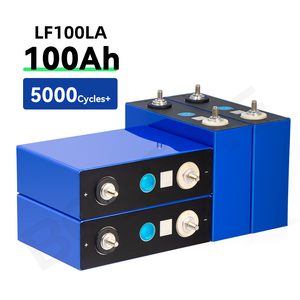
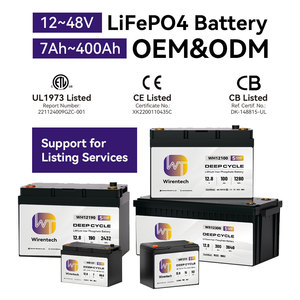
Grade A LFP Grade A 5000 Cycles 3.2V 100AH LFP Prismatic Cells

Grade A 5000 Cycles 3.2V 100AH LFP Prismatic Cells Pack

Chemistry: LiFePO4
Cycle Life: 5000+ Cycles
Voltage: 12V / 24V / 48V
Application: RV / ESS / Off-Grid

High-precision prismatic cell assembly featuring thermal insulation barriers and active cell balancing, engineered for prolonged operational life.

Get Catalog
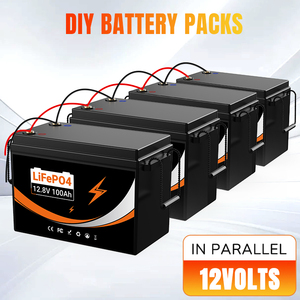
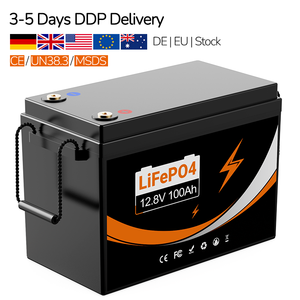
EU Stock Ready EU Stock 12v 24v 100ah 200ah Lifepo4 Pack

Modular EU Stock 100kWh Lithium Iron Phosphate Container Block

Capacity: 100Ah - 300Ah
BMS: Smart CAN/RS485
Protection: IP65 Metal Case
Stock: Germany / Rotterdam

Pre-configured high-capacity lithium packs tailored for rapid European installation, fulfilling stringent CE and IEC 62619 safety criteria.

Get Catalog
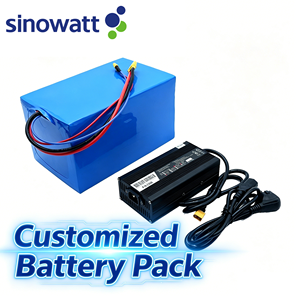
Custom OEM/ODM Customized Battery Pack with BMS Li-ion LiFePO4

Customized Industrial Battery Pack Solutions (10S1P to 3S10P)

Topology: 10S1P / 7S2P / 3S10P
Custom BMS: SBS Compliant
Enclosure: Flame Retardant
Warranty: 5 Years

Tailor-engineered industrial battery assemblies designed for hazardous location instrumentation, robotics, and specialized commercial OEM hardware.

Get Catalog
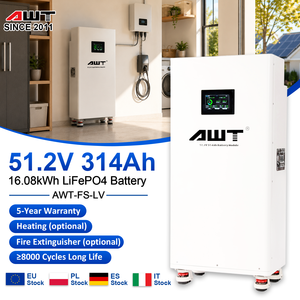
High Density 314Ah EU Stock 15Kwh 16KWH 51.2V 314Ah Lifepo4 Pack

51.2V 314Ah 16kWh High-Capacity Container Storage Module

Energy: 16.07 kWh
Cell Tech: 314Ah LFP Cell
Expandable: Up to 15 Units
Protocols: SMA/Victron/Growatt

Next-generation high-density storage module engineered for modular container integration, featuring integrated aerosol thermal safety suppression.

Get Catalog
Marine Grade 12V 24V 36V 48V Rechargeable Lifepo4 Marine Battery

Custom 12V-48V Heavy-Duty Marine & Solar LiFePO4 Pack

Rating: IP67 Sealed
Capacities: 50Ah - 300Ah
Shock Test: MIL-STD-810G
Temp Range: -20°C to 60°C

Ruggedized rechargeable battery system designed to withstand marine vibration, saltwater corrosion, and high discharge rates in auxiliary power systems.

Get Catalog
Zero Tax EU EU DE Stock 12V 24V 300Ah LiFePO4 Battery Pack

German Warehouse Stock 12V/24V 300Ah Modular Battery

Duty: DDP Shipping EU
Efficiency: > 98% RTE
Lifespan: 10+ Years Design
Certifications: UN38.3 / MSDS

Direct-from-warehouse lithium storage units built with automatic thermal throttling and low-temperature cutoff for European operational conditions.

Get Catalog
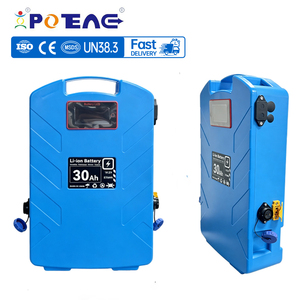
Portable Power 19.2V 30Ah Lithium LiFePO4 Backpack Battery Pack

High-Capacity 19.2V 30Ah Industrial Portable Power Module

Voltage: 19.2V Nominal
Form Factor: Ergonomic Module
C-Rate: 3C Peak Discharge
Monitoring: LED SoC Indicator

Lightweight, ultra-durable primary and secondary energy storage module developed for field operations, remote inspection devices, and outdoor power units.

Get Catalog
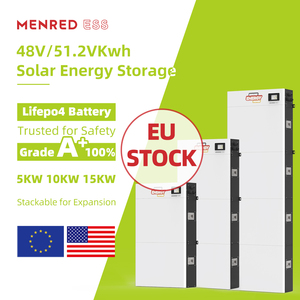
C&I Cabinet 5kw 10kw 20kw 50kw Lifepo4 Energy Storage Battery Stacked

5kW - 50kW Stackable Containerized Battery Storage Rack

Scale: 5kW to 500kW
Architecture: Stackable Rack
HVAC: Smart Liquid/Air
Fire System: Aerosol + Novec

Fully integrated commercial energy storage cabinet designed for seamless parallel expansion inside standard 20ft and 40ft ISO storage containers.

Get Catalog

Key Metrics Defining Modern Containerized BESS Systems

Engineered to satisfy utility grid demand, renewable integration (solar + wind), microgrids, and peak shaving applications worldwide.

5.0 MWh+
Capacity Per 20ft Container
6000+
Cycles @ 80% EOL
< 2.5°C
Liquid Cooling Thermal Variance
UL 9540A
Thermal Runaway Compliance

Executive Summary: The Evolution of Containerized Energy Storage

The global transition toward intermittent renewable energy sources—primarily solar photovoltaics and wind generation—has shifted Grid-Scale Battery Energy Storage Systems (BESS) from auxiliary reserves to critical infrastructure assets. Among all structural form factors, Containerized Battery Energy Storage Systems (BESS) have consolidated their position as the industry standard for commercial, industrial (C&I), and utility-scale installations. By encapsulating high-density Lithium Iron Phosphate (LiFePO4) cell arrays, multi-tier Battery Management Systems (BMS), Power Conversion Systems (PCS), thermal management (liquid vs. air cooling), and certified fire suppression inside standard 20-foot and 40-foot ISO shipping containers, tier-1 suppliers deliver plug-and-play energy assets capable of rapid field deployment.

However, procurement directors, EPC contractors, and project developers face a highly fragmented manufacturing landscape. Selecting the top BESS factory or supplier requires navigating strict technical metrics: volumetric energy density (switching from 3.35MWh to 5MWh+ per 20ft enclosure), cell degradation curves, thermal gradient uniformity, levelized cost of storage (LCOS), and compliance with stringent fire safety regulations such as NFPA 855 and UL 9540A.

Key Procurement Shift (2026 Paradigm): The energy storage sector has officially transitioned from 280Ah cell standard arrays to 314Ah and 500Ah+ ultra-large prismatic cells. This advancement allows containerized systems to achieve up to 5.015 MWh within a standard 20ft container footprint—reducing overall Balance of Plant (BOP) costs by up to 22%.

Key Evaluation Criteria for Selecting a Top Containerized BESS Factory

To evaluate battery factories under Google’s E-E-A-T (Experience, Expertise, Authoritativeness, Trustworthiness) framework, procurement managers must look beyond superficial pricing per kilowatt-hour ($/kWh) and rigorously benchmark suppliers across five core engineering dimensions:

1. Cell Quality & Supply Chain

Tier-1 cell integration (CATL, EVE, Lishen, BYD) ensuring high purity, low internal impedance, and strict zero-defect manufacturing standards.

2. Thermal Management

Advanced liquid cooling plates that maintain cell-to-cell thermal variance below 2.5°C, preventing localized hotspot degradation.

3. Multi-Layer Fire Safety

Combustion gas monitoring (CO/H2), aerosol suppression, water sprinkler backups, and structural blast relief doors certified to UL 9540A.

1. Cell Architecture and Electrochemical Chemistry (LFP Dominance)

Lithium Iron Phosphate (LiFePO4) remains the undisputed chemical chemistry for stationary energy storage due to its exceptional thermal runaway threshold (~270°C vs. ~210°C for NMC), high intrinsic cycle life, and freedom from cobalt/nickel supply constraints. Top factories utilize Grade-A prismatic cells equipped with explosion-proof safety valves and double-sealed terminal posts. When evaluating suppliers, request cell batch matching data: capacity variance should not exceed ±0.5Ah, and internal resistance (AC IR) variance must remain within ±0.05 mΩ to prevent premature pack unbalancing.

2. Liquid Cooling vs. Forced Air HVAC Systems

Legacy BESS container designs relied heavily on forced-air HVAC units. However, air cooling suffers from poor heat transfer coefficients, leading to internal thermal gradients exceeding 5°C to 8°C. This temperature variance causes uneven cell aging, where warmer modules degrade twice as fast as cooler ones.

Leading containerized BESS factories have migrated to micro-channel liquid cooling cold plates directly integrated into cell racks. Liquid cooling systems reduce internal parasitic power consumption by up to 30%, extend cell cycle life by 20%, and maintain precise thermal uniformities (<2.5°C across the entire containerized enclosure), even under 1C continuous charge/discharge profiles.

Technical Comparison: 20ft Container BESS Architectures

Architecture Metric Standard Air-Cooled (280Ah) Advanced Liquid-Cooled (314Ah) Next-Gen High Density (500Ah+)
Container Energy Capacity 3.35 MWh 5.015 MWh 6.00+ MWh
Thermal Variance (Cell-to-Cell) ≤ 6.0°C ≤ 2.5°C ≤ 2.0°C
Parasitic Power Draw High (~4.5% Total Energy) Low (~2.1% Total Energy) Ultra-Low (<1.8%)
Footprint Density (kWh/m²) ~230 kWh/m² ~345 kWh/m² ~410 kWh/m²
Round Trip Efficiency (RTE) 87.5% - 89.0% 92.0% - 94.5% > 95.0%
UL 9540A Unit Test Status Passed (Module Level) Passed (System Level No Propagation) Passed (System Level)

3. BMS Intelligence and Cloud Diagnostics

The Battery Management System (BMS) is the central nervous system of any containerized battery asset. A robust 3-tier BMS architecture consists of:

  • BMU (Battery Monitoring Unit - Tier 1): Directly monitors cell voltage, temperature, and performs active balancing at the module level.
  • BCU (Battery Cluster Unit - Tier 2): Controls rack-level contactors, calculates State of Charge (SoC), State of Health (SoH), and enforces current limiters.
  • BAMS (Battery Array Management System - Tier 3): Aggregates system-wide data, interfaces via Modbus TCP / CANopen with the local PCS and cloud EMS (Energy Management System).

Advanced factories now embed AI-driven predictive fault algorithms into their BMS software. By analyzing micro-changes in internal resistance and voltage response curves, the BMS can predict internal short circuits or thermal anomalies up to 72 hours before a potential failure event occurs.

Top Containerized Battery Energy Storage Suppliers Overview

When conducting global vendor audits, procurement teams categorize top manufacturers into three primary factory models:

  1. Vertically Integrated Cell-to-Container Giants: Companies like CATL, BYD, and EVE Energy manufacture their own lithium cells, build internal battery packs, and integrate full container systems. They offer massive production capacity and high energy density, though custom OEM flexibility can be constrained by rigid mass-production lines.
  2. Specialized System Integrators & PCS Specialists: Companies such as Sungrow, Tesla (Megapack), and Fluence focus on combining premium third-party cells with proprietary inverter technology, advanced liquid-cooling manifolds, and grid-scale EMS software.
  3. Custom Engineering & High-Reliability Manufacturers: Precision manufacturers (including engineering leaders like Excell Battery Company) specialize in custom-tailored battery pack architectures, hazardous location (HAZLOC/ATEX) certifications, high-temperature downhole/industrial applications, and flexible OEM volume manufacturing. These suppliers provide tailored BMS protocols, specialized enclosure protection, and individual batch traceability required for complex enterprise applications.

Manufacturing & Engineering Strength: The Enterprise Edge

A reliable containerized BESS manufacturing facility operates under rigorous quality control standards. Drawing upon decades of specialized battery engineering experience, leading custom manufacturers adhere to strict operational benchmarks:

ISO 9001 & Tier-1 Sourcing Ecosystem: Enterprise-grade manufacturers partner directly with premier cell vendors—such as Tadiran, Saft, Panasonic, Murata, Lishen, Molicel, and Samsung SDI—to engineer fully certified battery systems. Built with certified quality control procedures, these packs undergo comprehensive thermal chamber testing, vibration testing (MIL-STD-810G), and full UN 38.3 transport validation prior to site deployment.

Furthermore, enterprise buyers benefit from geographic redundancy. Operating manufacturing hubs across North America, Europe, and Asia ensures supply chain resilience against geopolitical tariffs, localized logistics delays, and raw material bottlenecks. Whether providing 16kWh modular residential/C&I blocks or engineering 5MWh 40ft containerized utility sub-stations, top-tier factories back their hardware with extended cycle life guarantees and dedicated field support.

Future Procurement Trends in Containerized Battery Energy Storage

As energy storage deployment accelerates globally, procurement teams must align their 5-year hardware strategies with several emerging technological developments:

  • Adoption of Sodium-Ion (Na-Ion) Hybrid Containers: While LiFePO4 remains dominant, factories are beginning to introduce hybrid containerized systems combining Lithium-ion (for high energy density) with Sodium-ion batteries (for extreme cold-climate performance down to -40°C and lower raw material costs).
  • High-Voltage Busbar Architectures (1500V DC): Transitioning from 1000V to 1500V DC bus architectures reduces cable copper volume, lowers resistive thermal losses, and optimizes overall inverter efficiency, delivering significant CAPEX savings across large-scale installations.
  • Second-Life Battery Container Integration: Circular economy mandates in Europe and North America are prompting factories to develop containerized storage units utilizing remanufactured EV battery packs, managed by adaptive BMS algorithms to balance varying cell capacities safely.

Containerized Energy Storage Sourcing FAQ

Key answers to technical, safety, and logistical questions commonly posed by B2B procurement managers, engineers, and project developers.

What is the standard storage capacity of a 20ft Containerized BESS in 2026?

While legacy 20ft containerized systems utilizing 280Ah cells provided approximately 3.35 MWh to 3.7 MWh, modern 2026 industry standards utilize 314Ah to 500Ah+ Grade-A prismatic LFP cells combined with high-efficiency liquid cooling cold plates. This allows a standard 20ft ISO container footprint to achieve capacities between 5.015 MWh and 6.0 MWh without increasing physical dimensions.

How do liquid cooling systems prevent thermal runaway in high-density containerized systems?

Liquid cooling systems pump thermally regulated coolant (water-glycol mixture) directly through micro-channel aluminum plates sandwiched between battery cells. Because liquid heat transfer coefficients are significantly higher than air, liquid cooling maintains internal cell temperature variations within ≤2.5°C. By keeping peak operating temperatures below critical thresholds during 1C charge/discharge cycles, the system prevents localized heat accumulation—the primary trigger for cell degradation and thermal runaway.

What fire protection safety standards are mandatory for containerized battery storage systems?

Top-tier BESS containers must strictly adhere to international safety certifications, including:
1. UL 9540: System safety certification for energy storage systems and equipment.
2. UL 9540A: Test method for evaluating thermal runaway fire propagation at the cell, module, unit, and installation level.
3. NFPA 855: Standard for the Installation of Stationary Energy Storage Systems.
4. Multi-Stage Suppression: Early off-gas detection (H2/CO), aerosol suppression (e.g., Stat-X or Novec 1230), and dry-pipe water sprinkler connections for localized firefighter hookups.

What is the expected cycle life and degradation warranty of a Tier-1 LFP BESS enclosure?

Grade-A Lithium Iron Phosphate (LiFePO4) containerized energy storage systems typically offer 6,000 to 10,000 continuous charge/discharge cycles at 80% Depth of Discharge (DoD) under nominal temperatures (25°C). Most reputable factories provide a 10-year to 15-year linear performance warranty guaranteeing at least 70% to 80% remaining battery capacity at the end of the warranty period, provided operating parameters (C-rate, ambient temperature) are maintained per contract terms.

Can containerized battery storage systems be customized for hazardous or extreme environments?

Yes. Custom engineering suppliers (such as specialized custom pack manufacturers) design containerized systems tailored for extreme operating environments. Options include ATEX / IECEx / HAZLOC certified explosion-proof enclosures for oil & gas fields, HVAC anti-corrosion marine coatings (C5-M rating) for offshore applications, internal thermal insulation pads for sub-zero environments (-40°C), and reinforced structural frames tested against seismic vibration (Zone 4 standards).

What are the shipping and transport compliance protocols for fully loaded BESS containers?

Shipping high-capacity battery containers requires compliance with Dangerous Goods (DG) Class 9 regulations. The battery modules must be certified to UN 38.3 (transportation testing for lithium batteries). Depending on total container weight and structural design, systems can be shipped fully assembled (Pre-assembled Plug-and-Play) or as container enclosures with separate battery rack shipments to prevent structural stress during ocean freight transit.

Request Your Custom BESS Container Specification & Factory Quote

Need technical documentation, CAD drawings, thermal modeling data, or direct wholesale pricing for your energy storage project? Connect with our senior engineering team today.