High-reliability energy solutions specifically targeted for Wireless Sensor Networks (WSN), industrial gateways, environmental telemetry, micro-grid energy storage, and extreme-environment monitoring nodes.
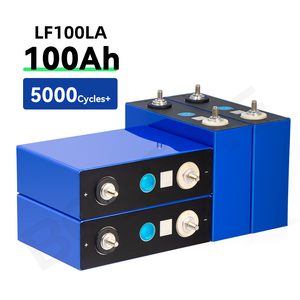
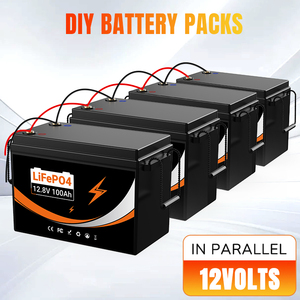
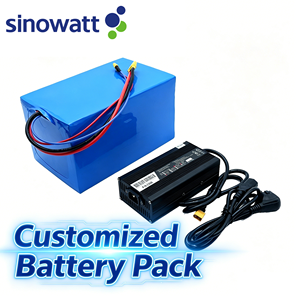
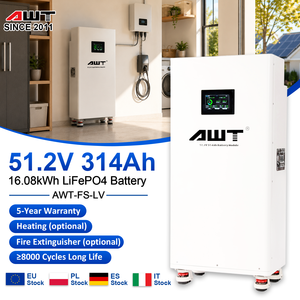
An exhaustive technical evaluation for OEM design leads, procurement directors, and hardware architects seeking zero-maintenance power systems in remote IIoT, smart utility, oil & gas, and structural health monitoring environments.
Wireless Sensor Networks (WSN) and Industrial Internet of Things (IIoT) architectures represent the digital nervous system of modern industrial infrastructure. Deployed across vast geographical expanses—from offshore oil rigs and subsea pipelines to municipal water distribution networks and remote agricultural monitoring nodes—these devices are mandated to operate unattended for 10 to 20 years without battery replacement.
From an electrochemical and electronic engineering standpoint, WSN power design presents a severe micro-power paradox. A typical wireless sensor node (utilizing protocols such as LoRaWAN, NB-IoT, Sigfox, WirelessHART, or Zigbee 3.0) spends over 99% of its operational lifecycle in a deep sleep mode, drawing quiescent currents as low as 1.5 µA to 5 µA. However, during periodic sensor sampling, data processing, and wireless RF packet transmission, the system demands short-duration, high-amplitude current pulses ranging from 30 mA to over 2000 mA.
Standard off-the-shelf commercial batteries fail catastrophically under these operational dynamics. High continuous self-discharge rates, voltage delay caused by passivation layer buildup, and severe capacity degradation under extreme ambient temperatures often lead to unexpected early node failure—resulting in millions of dollars in field service overhead and critical data loss.
Choosing the optimal cell chemistry requires a multi-variable analysis matching the node's duty cycle, ambient thermal profile, peak current pulse requirement, and structural housing footprint. As an expert OEM/ODM custom manufacturer, our engineering team synthesizes raw cell characteristics into highly tailored battery packs integrated with custom Battery Management Systems (BMS).
| Electrochemical System | Nominal Voltage | Energy Density (Wh/kg) | Annual Self-Discharge | Temp Envelope (°C) | Primary WSN Application Fit |
|---|---|---|---|---|---|
| Li-SOCl2 (Primary Lithium Thionyl Chloride) | 3.6 V | 650 – 700 Wh/kg | < 1% at 25°C | -55°C to +85°C (+150°C for Downhole) | Ultra-long life primary meters, smart gas/water metering, pipeline sensors. |
| Li-MnO2 (Primary Lithium Manganese Dioxide) | 3.0 V | 280 – 400 Wh/kg | < 1.5% at 25°C | -40°C to +70°C | High pulse RF communication nodes, asset tracking, security sensors. |
| LiFePO4 (Rechargeable Lithium Iron Phosphate) | 3.2 V | 120 – 160 Wh/kg | < 3% per month | -20°C to +65°C | Solar-assisted energy harvesting WSN gateways, high-throughput IIoT routers. |
| Hybrid Systems (Li-SOCl2 + HLC Capacitor) | 3.6 V | Custom High Density | < 1% at 25°C | -40°C to +85°C | Heavy peak pulse wireless sensors (5G RedCap, satellite telemetry). |
A critical challenge in primary Lithium Thionyl Chloride (Li-SOCl2) chemistry is passivation—the natural formation of a Lithium Chloride (LiCl) thin film over the lithium anode during storage or prolonged low-current draw. While this passivation film is advantageous because it inhibits chemical self-discharge and enables a 20-year shelf life, it causes an initial "voltage delay" when a sudden high current pulse is demanded by a wireless transmitter.
If the transient voltage drops below the wireless chipset's minimum shutdown threshold (typically 2.75V to 3.0V), the node resets unexpectedly, resulting in communication dropouts. To eliminate passivation risk in ODM solutions, we integrate proprietary Hybrid Layer Capacitors (HLC) or Pulsesort™ capacitor banks in parallel with the primary cell stack. The high-capacitance HLC instantaneously satisfies the high-current pulse requirement (up to 3A) while the primary cell steadily recharges the capacitor at a low, non-passivating micro-current rate.
From micro-circuit PCB layout to environmental encapsulation, we provide complete vertical engineering for custom WSN battery systems.
Custom circuit board design featuring ultra-low standby current draw (< 500 nA), state-of-health (SoH) Coulomb counting, SMBus/I2C communication, and multi-stage over-discharge protection.
Certified encapsulation and current-limiting resistor protection engineered specifically for Zone 0, Zone 1, and Class I Div 1 hazardous locations in petrochemical monitoring networks.
Integrated power management ICs (PMIC) capable of seamlessly blending inputs from solar PV micro-panels, thermal gradient generators, or kinetic energy harvesters into rechargeable LiFePO4 cells.
Proprietary glass-to-metal hermetic sealing, stainless steel laser-welded casings, and specialized high-temperature electrolyte formulations operational up to +150°C for subsea and oilfield telemetry.
In-house thermal shock chambers, random vibration testing, high-altitude simulation, and long-term electrochemical impedance spectroscopy (EIS) to validate 15+ year operational life.
Full regulatory documentation including UN 38.3 transport safety testing, IEC 62133, UL 1642, UL 2054, CE, RoHS, and REACH compliance for seamless export to European and American markets.
As wireless sensor density escalates globally, purchasing directors and R&D engineers must align battery procurement strategies with emerging technical shifts over the next decade.
Field replacement costs for industrial IoT batteries frequently exceed the capital cost of the sensor node itself by 10x to 50x. Enterprise buyers are shifting away from lower-cost standard commercial cells toward premium grade hermetically sealed Li-SOCl2 cells with audited annual self-discharge rates under 0.7%. Procurement contracts increasingly specify 15-to-20-year performance warranties backstopped by accelerated thermal aging data.
Legacy sub-GHz proprietary RF protocols are rapidly yielding to 5G NR-RedCap (Reduced Capability), NB-IoT, and satellite LPWAN connectivity. While these modern protocols enable direct cloud connectivity for remote sensors, their transmission pulse power spikes can exceed 2A for up to 2 seconds. Procurement requirements now mandate integrated hybrid battery-capacitor assemblies (HLC / LiC) to prevent voltage droop during high-bandwidth uplink bursts.
Edge-AI microcontrollers executing real-time machine learning inference (e.g., predictive vibration analysis on industrial motors) introduce dynamic power consumption curves. Future-ready procurement strategies involve hybrid systems combining long-cycle LiFePO4 chemistry with energy harvesting interfaces. This hybrid architecture dynamically balances solar/vibration charging during peak environmental generation while maintaining continuous operation through multi-year battery backup.
Address key engineering specs, regulatory certifications, and custom manufacturing workflows prior to placing OEM/ODM orders.
For non-rechargeable (primary) systems requiring 10 to 20 years of maintenance-free operation, Lithium Thionyl Chloride (Li-SOCl2) paired with a Hybrid Layer Capacitor (HLC) is the industry gold standard. Li-SOCl2 provides the highest energy density (up to 700 Wh/kg) and an extraordinarily low self-discharge rate (<1% per year). The parallel HLC handles the high peak pulse current (up to 2A+) required during LoRaWAN/NB-IoT wireless data transmissions without causing voltage delay or dropouts.
Voltage delay occurs due to passivation—a protective LiCl crystalline layer that builds up naturally on the lithium anode during inactivity. When a sudden wireless payload transmission is initiated, this film creates transient electrical resistance. We mitigate this through two OEM methods: (1) Integrating high-pulse pulse-sustaining hybrid capacitors (HLC/LiC) that supply immediate power while the cell depassivates, and (2) Custom BMS background conditioning routines engineered for specific RF transmission profiles.
For international air and ocean transportation, UN 38.3 testing (covering altitude simulation, thermal shock, vibration, impact, external short circuit, and overcharge) is legally mandatory. For European distribution, CE, RoHS, and REACH compliance are necessary. If your WSN devices operate in explosive industrial environments (such as oil refineries or chemical plants), we provide complete engineering design for ATEX / IECEx / HAZLOC Intrinsic Safety (IEC 60079-11) certification.
Our typical OEM/ODM rapid engineering engineering timeline spans 2 to 4 weeks for initial proof-of-concept PCB/BMS layout and 3D enclosure modeling. Prototype samples for environmental and customer validation are delivered within 4 to 6 weeks. Complete UN 38.3 certification and mass production tooling take approximately 6 to 8 weeks depending on mechanical design complexity and cell procurement volumes.
High ambient temperatures accelerate chemical reaction rates, increasing self-discharge and shortening overall service life. Conversely, extreme low temperatures (-20°C to -40°C) increase internal cell impedance, temporarily reducing available capacity. Our custom industrial battery solutions incorporate specialized electrolyte formulations, thermal insulation barriers, internal heating films, and temperature-compensated BMS algorithms to maintain continuous power delivery across -55°C to +85°C operating windows.
Partner with our senior battery engineering team to specify, prototype, and manufacture high-reliability power systems tailored to your exact Wireless Sensor Network (WSN) or IIoT application requirements.