OEM/ODM Unmanned Aerial Vehicle Battery Solutions

High-Energy-Density Lithium-Ion & LiFePO4 Power Packs Purpose-Engineered for Commercial, Industrial, and Tactical UAV Operations. Certified ISO 9001 Custom Engineering with Smart BMS Integration.

Featured OEM/ODM UAV Battery Systems

Customized high-discharge prismatic cells, intelligent BMS architecture, and lightweight thermal packaging designed to optimize endurance, payload capacity, and flight stability across extreme environments.

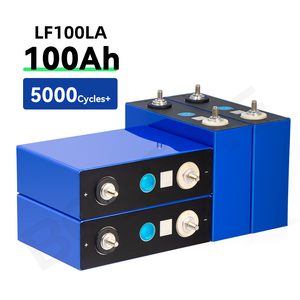
Long-Range UAV Grade A 3.2V LFP Prismatic Lithium Cells for UAV Packs

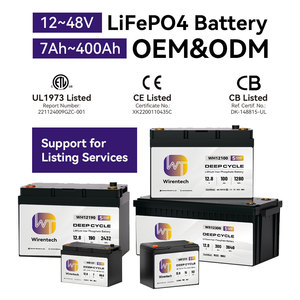
Grade A High-Cycle LFP Prismatic Cells 12V/24V/48V Module

  • 5000+ Deep Flight Cycle Life
  • High-Current Continuous Discharge
  • Integrated Vibration Dampening
Send an Inquiry
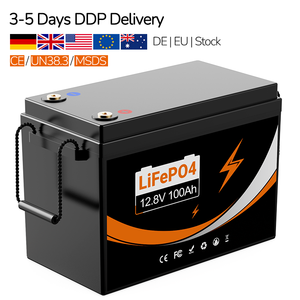
Heavy-Payload Drone High Capacity LiFePO4 Battery Pack for Industrial Drones

High-Density Industrial UAV LiFePO4 Power System

  • Grade A Precision Matched Cells
  • Low Internal Resistance (IR) Architecture
  • Custom IP67 Ruggedized Enclosure
Send an Inquiry
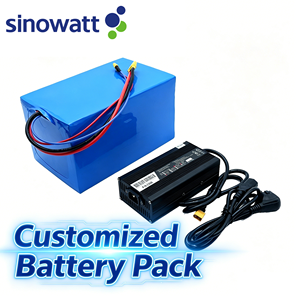
Custom BMS Pack Customized Battery Pack with Smart BMS for UAV Applications

Customized Li-Ion / LiFePO4 UAV Battery Pack with Smart BMS

  • 10S1P to 3S10P Tailored Configurations
  • Real-Time SMBus / CANbus Diagnostics
  • Active Cell Balancing & Over-Discharge Protection
Send an Inquiry
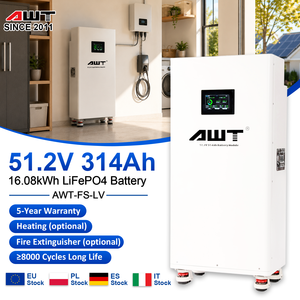
Ground Station Energy Tactical Ground Support Battery Energy System

UAV Mobile Command & Ground Station Power Module

  • High-Density Modular Storage Pack
  • Rapid Field Recharge Capability
  • Multi-Voltage Output Interfaces
Send an Inquiry
VTOL & Multi-Rotor Multi-Voltage Rechargeable LiFePO4 Battery Solution

Multi-Voltage 12V-48V High-C Rate Airborne Battery Pack

  • Lightweight Carbon-Composite Housing
  • High Burst C-Rate for Take-Off & Landing
  • Wide Operating Temperature (-20°C to 65°C)
Send an Inquiry
High-Gravimetric Density High Capacity UAV Battery Pack

Ultra-Lightweight Lithium Iron Phosphate Airborne Module

  • Optimized Gravimetric Energy Ratio
  • Zero-Maintenance Sealed Structure
  • UN 38.3 & CE Certified Safe Cell Tech
Send an Inquiry
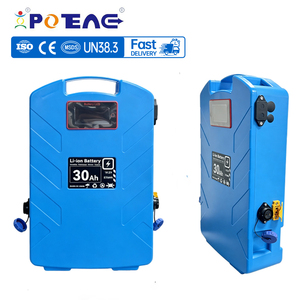
Tactical Backpack Unit Portable High Capacity Backpack Battery Pack for Field UAV Systems

Portable Backpack High-Capacity Battery Pack for Field Operations

  • Ergonomic Tactical Field Deployment Pack
  • Hot-Swappable Battery Interface
  • Advanced State-of-Charge (SoC) Visual Indicator
Send an Inquiry
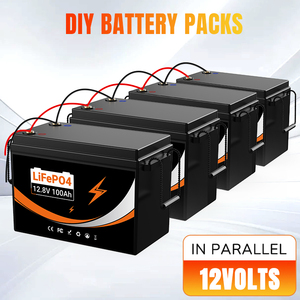
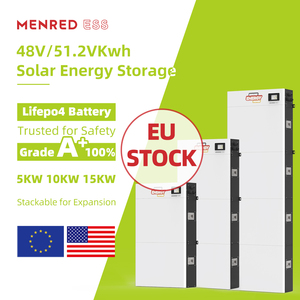
Base Camp Storage Stacked Solar Field Backup Battery Pack for UAV Swarms

Modular Stackable Field Charger & Power Station Hub

  • High kW Fast Charging Output for UAV Fleets
  • Solar & Generator Direct Input Charging
  • Scalable Parallel Power Stacking Architecture
Send an Inquiry
40+
Years Engineering Heritage
300+
Wh/kg Gravimetric Target
ISO 9001
Quality Management Standard
100%
Traceable Cell Sourcing

Unmanned Aerial Vehicle Energy Demands: An OEM/ODM Engineering Perspective

The rapid global deployment of Unmanned Aerial Vehicles (UAVs)—spanning agricultural spraying, mapping & geospatial surveying, tactical defense reconnaissance, and long-range logistics—has elevated power storage from a peripheral component to the single most critical engineering factor determining mission viability. Modern OEM/ODM drone design requires overcoming a fundamental trade-off: maximizing gravimetric energy density ($Wh/kg$) to extend flight duration while preserving high continuous discharge capabilities ($C-rates$) to stabilize take-off, hover maneuvers, and severe weather resistance.

As a premier custom lithium battery manufacturer backed by over 40 years of specialized battery engineering experience, our organization provides end-to-end design, custom BMS integration, cell tier screening, and full compliance validation. By shifting away from off-the-shelf hobby batteries toward precision OEM/ODM engineered lithium packs, drone manufacturers unlock unprecedented thermal safety margins, extended cycle life, and seamless telemetry integration.

Technical Gain Insight: Off-the-shelf LiPo packs frequently suffer from rapid thermal degradation, cell swelling, and premature voltage drop under sustained loads. Precision OEM battery packs utilize customized prismatic LFP or NMC cell matching with internal resistance (IR) variances under $\le 0.5m\Omega$, eliminating cell imbalance during peak power demands.

Engineering & Manufacturing Corporate Advantages

Leveraging decades of battery engineering mastery, rigorous ISO 9001 certified manufacturing facilities, and direct relationships with top-tier global cell chemistry manufacturers.

ISO 9001 Certified & Full Traceability

Every battery assembly follows stringent ISO 9001 quality controls. All raw cells undergo incoming capacity grading, automated IR testing, and serial code tracking for 100% mission-critical reliability.

Criterion Smart BMS & Telemetry

Proprietary Smart Battery Management Systems (BMS) supporting CANbus, SMBus, and UART protocols. Enables real-time State-of-Charge (SoC), State-of-Health (SoH), and cell temperature telemetry to flight control units.

Tier-1 Direct Supply Chain

Strategic partnerships with premier global cell suppliers (Panasonic, Samsung SDI, LG Energy Solution, Saft, Molicel, Tadiran) guarantee authentic, top-grade chemistries without gray-market risks.

Extreme Environmental Resiliency

Engineered thermal management solutions utilizing silicon phase-change materials and custom heating circuits, maintaining full operational capacity in extreme sub-zero or high-temperature environments.

Rapid Co-Development & Prototyping

Dedicated engineering teams work directly with your mechanical and electrical engineers from CAD enclosure modeling and thermal analysis to rapid 3D prototyping and pre-production validation.

UN 38.3 & HAZLOC Certification Support

Full support for international transport regulatory compliance, including UN 38.3 lithium battery shipping tests, IEC 62133, UL 2054, and hazardous location (HAZLOC/ATEX) certifications.

Future Technology & Chemistry Trends in UAV Power Systems

As global air mobility and autonomous drone operations evolve toward beyond-visual-line-of-sight (BVLOS) missions, UAV battery technologies are experiencing rapid technological leaps. OEMs planning next-generation drone platforms must align their supply chains with four major technology trends:

1. Solid-State & Semi-Solid Electrolytes

Replacing volatile liquid electrolytes with solid-state or semi-solid ceramic matrixes pushes gravimetric energy density beyond 350 Wh/kg while eliminating thermal runaway risks under severe mechanical puncture.

2. Silicon-Composite Anode Integration

Transitioning from pure graphite to silicon-carbon composite anodes allows up to 20% higher lithium storage capacity per gram, translating directly into extended flight range for payload-heavy agricultural and surveillance drones.

3. AI-Assisted Predictive BMS Diagnostics

Next-gen smart BMS units leverage embedded machine learning algorithms to continuously calculate remaining battery lifetime based on real-time flight vibrations, thermal spikes, and atmospheric pressure variations.

4. Structural Battery Packaging & Aero Integration

Combining carbon-fiber drone structural frames directly with load-bearing battery casing reduces total dead weight by 15-25%, vastly improving overall drone aerodynamic efficiency.

Strategic UAV Battery Procurement Trends: What Buyers Must Know

Procurement directors and supply chain managers in the UAV sector face tightening international regulations, strict aviation safety standard enforcement, and geopolitical supply constraints. To mitigate risks, leading drone manufacturers are adopting proactive procurement strategies:

Dual-Sourcing & Regional Hubs Transitioning away from single-region battery production to dual-sourcing partnerships with North American and European engineering hubs ensures tariff compliance and regional supply chain agility.
Full Environmental Life-Cycle Audit Enterprise clients now demand full carbon footprint transparency, conflict-free mineral sourcing, and end-of-life battery recycling compliance across all commercial OEM battery suppliers.
Modular Standardized Pack Architecture Standardizing module interfaces allows drone manufacturers to quickly scale power capacities across multi-copter, fixed-wing, and VTOL platforms without redesigning core avionics.

Frequently Asked Questions by UAV OEM Buyers

Expert insights resolving key technical, regulatory, and logistics considerations when specifying custom lithium battery packs for commercial drone platforms.

Q1 What is the optimal cell chemistry for long-endurance commercial UAV batteries?
The optimal chemistry depends on mission profile requirements. High-nickel NCM/NCA lithium-ion chemistries deliver superior gravimetric energy density (up to 260-300+ Wh/kg), making them ideal for long-range mapping and surveillance drones where weight is critical. Conversely, LiFePO4 (LFP) offers superior thermal stability, higher safety, and up to 3500-5000 cycle lives, making it the preferred choice for industrial ground station backup and heavy-duty agricultural drones operating under demanding daily charge cycles.
Q2 How does custom BMS design improve UAV flight safety and operational efficiency?
A customized Smart Battery Management System (BMS) continuously monitors cell voltage, temperature, and current draw. By utilizing communication protocols like SMBus or CANbus, the BMS provides real-time telemetry to the flight controller, allowing predictive auto-return-to-home (RTH) execution before voltage sag leads to catastrophic altitude loss. Furthermore, smart cell-balancing algorithms prevent cell over-charging and over-discharging, expanding overall pack longevity by up to 40%.
Q3 What regulatory certifications are mandatory for international UAV battery shipping and sales?
For global air and sea transport, UN 38.3 testing (covering altitude simulation, thermal shock, vibration, impact, external short circuit, and overcharge) is strictly required by international aviation authorities (IATA/ICAO). For commercial sales, packs typically require IEC 62133, UL 2054, CE, and RoHS certifications. For tactical or hazardous environment drones (e.g., oil & gas pipeline inspection), ATEX/HAZLOC explosive atmospheric safety compliance is also necessary.
Q4 Can custom battery packs operate effectively in extreme cold altitude environments?
Yes. Standard lithium cells lose significant discharge performance below 0°C due to increased internal impedance. Our custom OEM/ODM solutions integrate low-temperature electrolyte chemistry, internal silicone micro-heating elements powered by the BMS during pre-flight, and aerogel thermal insulation. This ensures stable power delivery even at altitudes with ambient temperatures as low as -30°C.
Q5 What is the typical NPI lead time for custom OEM/ODM UAV battery prototyping?
Our typical New Product Introduction (NPI) process spans 4 to 6 weeks for initial CAD enclosure design, BMS schematic customization, and prototype assembly. Following prototype client validation, compliance testing (UN 38.3 / IEC 62133) takes an additional 3 to 4 weeks before launching pilot-series production.
Q6 How do high C-rate requirements impact overall battery cycle life?
Frequent continuous high C-rate discharges generate severe Joule heating within lithium cells, accelerating solid electrolyte interphase (SEI) growth and capacity fade. By engineering custom multi-tab cell designs, optimizing nickel-plated copper busbars, and incorporating thermal phase-change materials, our OEM battery designs dissipate heat rapidly, maintaining long cycle life even under high C-rate take-off loads.

Partner with a World-Class UAV Battery Manufacturer

Accelerate your next-generation drone platform with engineered custom battery solutions tailored for maximum energy density, intelligent BMS diagnostics, and uncompromised flight safety.