Explore our OEM/ODM custom-engineered lithium power modules built for deep submergence resilience, high energy density, and zero-leakage underwater deployment.
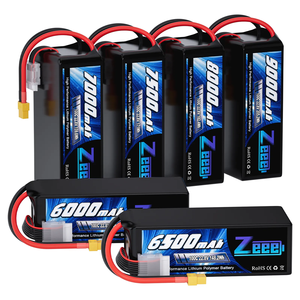
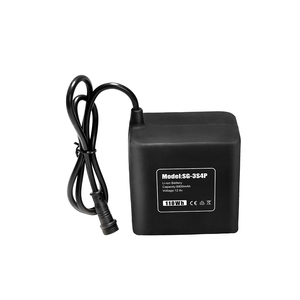
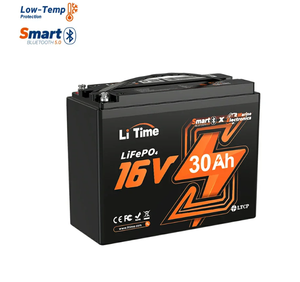
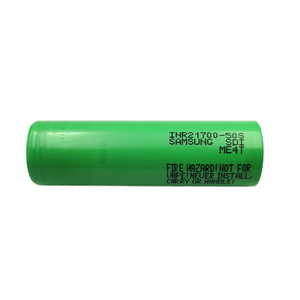

Deploying electronic payload systems in oceanographic environments represents one of the most punishing operational challenges in electrochemical engineering. Subsea equipment—ranging from Autonomous Underwater Vehicles (AUVs) and Remotely Operated Vehicles (ROVs) to Acoustic Doppler Current Profilers (ADCPs), subsea landers, and ocean floor seismometers—demands specialized battery systems capable of withstanding extreme hydrostatic pressures, low ambient seawater temperatures (-2°C to +4°C in deep abyssal zones), and prolonged submersions without maintenance intervention.
As a premier ISO 9001-certified custom battery pack manufacturer with over 40 years of specialized engineering heritage, our facilities bridge the gap between initial electrochemical cell selection and ruggedized, marine-class battery assembly. Providing full-lifecycle Original Equipment Manufacturer (OEM) and Original Design Manufacturer (ODM) services, we build mission-critical primary and secondary (rechargeable) energy storage solutions tailored to global oceanographic institutions, defense contractors, offshore energy firms, and environmental monitoring agencies.
Oil-filled, pressure-compensated enclosures and specialized syntactic foam potting designed to eliminate internal air voids, allowing batteries to operate seamlessly at pressures exceeding 600 bar (6,000m depth).
Integrated Battery Management Systems (BMS) with RS485, CANbus, or Modbus telemetry for real-time State-of-Charge (SoC), State-of-Health (SoH), and cell-level balancing under deep water dynamic loads.
Ultra-low self-discharge chemistry combinations (Li-SOCl2 primary and high-grade LiFePO4/NMC secondary) engineered for multi-year oceanic deployments without capacity degradation.
Selecting the optimal battery chemistry for oceanographic equipment requires evaluating operational pulse requirements, volumetric energy density constraints, temperature profiles, and safety protocols. Below is a comparative engineering matrix utilized by our ODM design team during system specification:
| Chemistry Architecture | Nominal Cell Voltage | Energy Density (Wh/kg) | Operating Temp Range | Optimal Oceanographic Application |
|---|---|---|---|---|
| Lithium Thionyl Chloride (Li-SOCl2) | 3.6V - 3.9V | 400 - 650 Wh/kg | -55°C to +85°C | Long-term mooring buoys, subsea landers, ocean bottom seismometers (OBS), emergency beacons. |
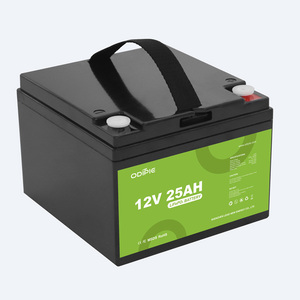
| Lithium Iron Phosphate (LiFePO4) | 3.2V | 140 - 180 Wh/kg | -20°C to +60°C | Rechargeable AUVs, ROV tool skids, surface autonomous vessels (SAVs), fish finders, marine sonar. |
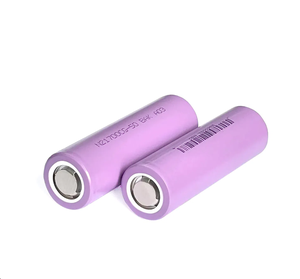
| Nickel Manganese Cobalt (NMC 21700) | 3.6V - 3.7V | 240 - 300 Wh/kg | -20°C to +55°C | High-drain propulsion systems, compact underwater drones, thermal imaging subsea cameras. |
| Lithium Sulfuryl Chloride (Li-SO2Cl2) | 3.9V | 450 - 700 Wh/kg | -40°C to +85°C | Ultra-deep water instrumentation requiring maximum capacity in constrained titanium pressure housings. |
The oceanographic research and marine technology sector is undergoing a profound paradigm shift driven by prolonged autonomous missions, decarbonization mandates, and deep-sea exploration expansion. Procurement directors and engineering leads must align their supply chain strategies with several emerging industry trajectories:
Traditional oceanographic power systems relied on housing standard battery cells within thick-walled metallic pressure vessels (such as Titanium Grade 5 or Anodized Aluminum 7075). However, modern procurement trends favor pressure-tolerant, fluid-filled battery enclosures. By filling voids with non-conductive dielectric oils, hydrostatic pressure is equalized internally and externally. This dramatically reduces system structural weight, eliminates risk of explosive decompression, and reduces overall OEM manufacturing costs by up to 35%.
Global logistics regulations governing lithium battery transport (UN 38.3, IATA, IMDG Code) present significant risk to project schedules. Forward-thinking oceanographic OEMs are increasingly procuring modular, scalable battery building blocks that carry pre-existing UN 38.3 certification. This enables equipment builders to scale system capacity (e.g., from 1kWh to 20kWh) without undergoing costly and time-consuming recertification cycles for custom pack configurations.
With the rise of persistent subsea docking stations and seabed resident AUVs, procurement specifications now routinely request BMS architectures compatible with inductive (contactless) power transfer. Next-generation marine batteries must accept high-rate pulse charges directly from underwater docking plates while providing robust galvanic isolation to prevent saltwater corrosion at mechanical interface nodes.
Geopolitical shifts and raw material volatility have made supply chain transparency a critical procurement priority. Leading oceanographic equipment manufacturers demand direct verification of cell origin—partnering exclusively with factories that maintain direct tier-1 supply agreements with certified manufacturers like Saft, Tadiran, Panasonic, Molicel, BAK, and Samsung SDI to guarantee batch consistency and long-term availability.
To maintain competitive advantage in subsea robotics and sensor development, OEM/ODM manufacturers are pioneering key technological innovations in battery design over the coming decade:
Solid-state lithium chemistries and advanced silicon-anode 21700/46800 formats are transitioning from laboratory prototypes to pilot ocean deployments. Offering volumetric energy densities exceeding 800 Wh/L, these cells enable AUVs to double their survey range or payload capacity without increasing vehicle hydrodynamic drag profiles.
Modern marine battery packs are evolving into intelligent nodes. Embedded microcontrollers running light edge-AI algorithms monitor internal impedance changes, electrochemical temperature gradients, and microscopic cell swelling. This predictive health analytics capability allows autonomous subsea software to dynamically alter vehicle mission profiles before catastrophic power loss occurs at depth.
For long-term oceanic monitoring buoys requiring high continuous energy paired with periodic high-burst data transmission (e.g., satellite telemetry bursts via Iridium), hybrid battery architectures combine primary Li-SOCl2 cell banks (for ultra-high energy density) with secondary LiFePO4 or supercapacitor modules (for rapid peak current delivery).
With a global manufacturing footprint spanning North America, Europe, and Asia, our facilities bring unmatched engineering depth, manufacturing capability, and quality assurance to custom marine battery development:
Decades of field-proven expertise engineering power solutions for extreme environments—ranging from deep-sea marine exploration to aerospace and oil & gas instrumentation.
Rigorous quality management systems certified by Intertek and SWEDAC. Turnkey compliance engineering for ATEX, IECEx, and HAZLOC Zone 0/1 hazardous marine applications.
Direct contractual partnerships with premium cell providers (Tadiran, Saft, Panasonic, Molicel, Lishen, BAK) ensure authentic, traceable chemistry for every pack built.
Partner with an industry-leading custom battery manufacturer. Contact our technical team today for a comprehensive feasibility review, CAD mechanical integration assessment, and detailed quote for your custom marine power requirements.