Custom-engineered Grade-A LiFePO4 battery modules equipped with smart BMS, high C-rate capability, and heavy-duty IP67 enclosures for marine and industrial electrification.
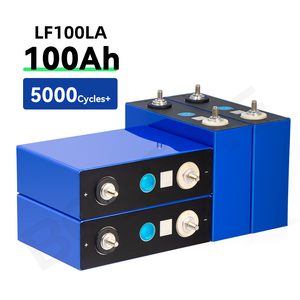
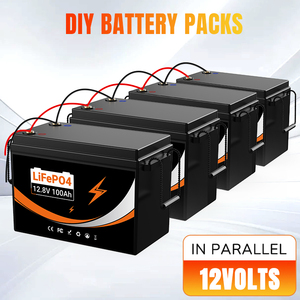
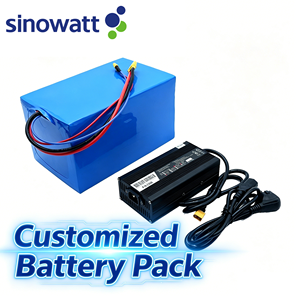
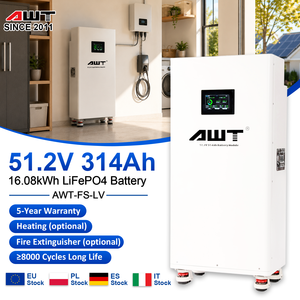
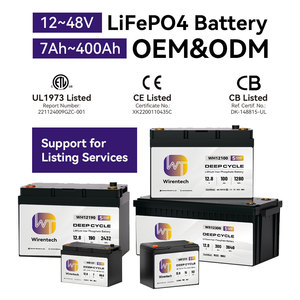
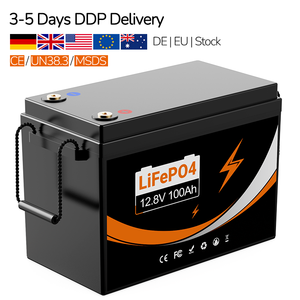
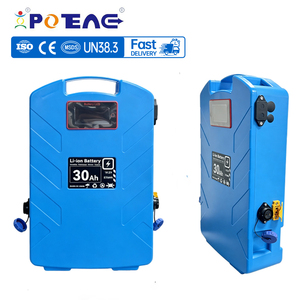
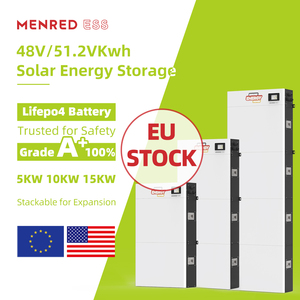
The global transition toward maritime decarbonization has forced vessel manufacturers, naval architects, and commercial fleet managers to move beyond standard off-the-shelf energy storage. As an established OEM/ODM Electric Boat Battery Systems Manufacturer and Factory, our engineering organization provides tailored, end-to-end lithium battery design—from chemistry selection and thermal runaway mitigation to NMEA 2000 CANbus smart communication.
Backed by over four decades of custom lithium battery assembly, ISO 9001 compliance, and rigorous North American engineering governance, our facility manufactures marine battery systems capable of withstanding hydrodynamic shock, continuous high C-rate discharge, and aggressive salt mist corrosion.
Our turnkey custom battery engineering framework delivers absolute reliability, global supply chain stability, and strict regulatory compliance for boat builders worldwide.
We source audited, Grade-A prismatic LiFePO4 cells exclusively from global leaders including Panasonic, CATL, Saft, Tadiran, Molicel, and Samsung SDI, guaranteeing lot-to-lot consistency and maximum energy density.
Our in-house firmware engineers design tailored Battery Management Systems featuring dual-bus redundancy, active cell balancing, and seamless integration with marine communication networks (NMEA 2000, CANopen, RS485, J1939).
Built for harsh marine operational profiles. Enclosures feature 316 stainless steel or anodized aluminum housings, silicone-potted electronics, IP67/IP68 sealing, and internal vibration dampeners tested to UN 38.3 & DNV standards.
From 3D CAD thermal simulation and mechanical design to rapid prototype fabrication and hardware-in-the-loop (HIL) testing, our engineers work as an extension of your naval design team.
With state-of-the-art automated assembly facilities across North America and international logistics hubs, we mitigate single-region supply chain bottlenecks and guarantee timely global delivery.
Electrification across the marine sector demands unprecedented safety, energy density, and thermal endurance. Unlike land-based electric vehicles (EVs) or stationary solar energy storage systems (ESS), an electric boat operates in an environment defined by high continuous loads, non-stop wave impact vibration, humid high-salinity air, and restricted ventilation within engine compartments. Designing custom marine battery packs requires a deep synthesis of mechanical integrity, electrochemistry selection, thermal management physics, and advanced electronic architecture.
Selecting the appropriate lithium electrochemistry is the foundational decision for any marine OEM project. While Nickel Manganese Cobalt (NMC) cells offer high volumetric energy density, Lithium Iron Phosphate (LiFePO4 or LFP) has emerged as the definitive standard for commercial electric ferries, passenger water taxis, recreational yachts, and naval auxiliary craft due to three core attributes:
| Electrochemical Parameter | Lithium Iron Phosphate (LiFePO4) | Nickel Manganese Cobalt (NMC) | Lithium Titanate (LTO) |
|---|---|---|---|
| Nominal Cell Voltage | 3.2 V | 3.6 V - 3.7 V | 2.3 V |
| Gravimetric Energy Density | 160 - 180 Wh/kg | 220 - 260 Wh/kg | 80 - 110 Wh/kg |
| Cycle Life (80% DoD) | 4,000 - 6,000 Cycles | 1,500 - 2,500 Cycles | 15,000 - 20,000 Cycles |
| Thermal Runaway Temp | > 270°C (Extremely Safe) | ~ 150°C - 210°C (Moderate Risk) | > 300°C (Ultra Safe) |
| Continuous Discharge C-Rate | 1C to 3C Continuous | 1C to 2C Continuous | 5C to 10C Continuous |
| Ideal Marine Application | Electric Ferries, Yachts, Tugs, Workboats | High-Speed Racing Boats (Weight Critical) | Ultra-Fast Charge Harborside Vessels |
Marine propulsion engines demand continuous sustained power output. Unlike automotive applications where average power draw is a fraction of peak power, electric boats often operate at 70% to 90% continuous throttle while cruising through heavy water resistance. This sustained current draw generates significant internal Joule heating ($I^2R$ losses) inside the battery pack.
Our factory engineers custom thermal dissipation architectures tailored to your vessel’s operating envelope:
Water ingress in a high-voltage lithium battery pack causes immediate short-circuiting, electrolytic corrosion, and potential fire hazards. Furthermore, continuous pounding from pounding waves places immense mechanical fatigue on internal weld joints, cell busbars, and harness connectors.
Our factory enforces strict mechanical design protocols for marine battery systems:
As maritime environmental regulations tighten globally—such as the International Maritime Organization (IMO) 2030/2050 decarbonization targets and local zero-emission mandates in inland waterways—procurement strategies for vessel manufacturers are undergoing a structural shift. Buyers are moving away from component sourcing toward integrated OEM/ODM partnerships.
Small recreational boats traditionally operated on low-voltage 48V to 96V DC systems. However, commercial passenger vessels, electric catamarans, and high-performance yachts are rapidly adopting 400V and 800V DC high-voltage traction networks. High voltage reduces electric current for a given power level, allowing naval architects to use thinner, lighter copper wiring, thereby reducing overall vessel displacement, decreasing heat generation, and enabling fast DC charging (CCS2 / Megawatt Charging System - MCS) at municipal docks.
Modern vessel captains expect complete visibility over energy reserves from their helm multi-function displays (MFDs) like Garmin, Raymarine, or Simrad. Future-proof battery systems must communicate natively via NMEA 2000 micro-C connectors using standardized Controller Area Network (CAN) PGN messages. Our smart BMS platforms report real-time State of Charge (SoC), State of Health (SoH), cell temperature differentials, remaining range at current speed, and instant fault warnings directly to the vessel's primary display network.
Global procurement directors are increasingly prioritizing battery manufacturers that provide full digital battery passports. From raw lithium material auditing and automated cell sorting data to second-life energy storage repurposing protocols, transparent supply chains are becoming a mandatory requirement in B2B contract tenders.
The marine energy sector is on the threshold of major technological breakthroughs. Over the next decade, three core technological vectors will redefine marine battery engineering:
Expert answers to the most common engineering, customization, safety, and supply chain questions when procuring electric boat battery systems.
Marine-grade battery packs are specifically engineered to endure continuous high-vibration environments, salt fog atmospheric corrosion, and enclosed spaces with limited passive ventilation. They feature IP67/IP68 hermetic sealing, 316 stainless steel hardware, conformal-coated BMS circuit boards, laser-welded busbars, and rigorous compliance with marine safety standards such as DNV Type Approval, IEC 62619, and UN 38.3. Standard industrial batteries lack these structural, thermal, and corrosion safeguards.
Yes. As a dedicated OEM/ODM manufacturer, we engineer tailor-made battery modules from the ground up. Our design engineering team uses 3D CAD modeling to match the exact spatial geometry of your boat’s hull or engine room, configuring system voltages from 12V, 48V, and 96V up to 400V or 800V high-voltage propulsion banks with customizable amp-hour capacities.
Our smart Battery Management Systems support native NMEA 2000, CANbus (CANopen, J1939), and RS485 communication protocols. This enables direct plug-and-play integration with major marine MFD navigation systems (Garmin, Raymarine, Simrad, Lowrance), allowing captains to monitor real-time battery voltage, individual cell temperatures, state of charge (SoC), operational status, and telemetry alerts from the helm.
For light-duty or auxiliary power, we utilize high-efficiency passive aluminum thermal heat sinks with phase-change materials (PCM). For continuous high C-rate commercial propulsion, we integrate active closed-loop liquid cold plates between cell banks. This liquid cooling system connects seamlessly to heat exchangers cooled by seawater or raw water loops, ensuring internal temperatures stay safely below 35°C even at maximum throttle.
Our manufacturing facilities operate under strict ISO 9001 quality standards. Depending on your target market requirements, we engineer and test our battery packs to achieve UN 38.3 (transport safety), IEC 62619 (industrial lithium safety), CE, UL 1973, UL 2580, ATEX/HAZLOC (explosive atmosphere rating for oil & gas support craft), and DNV / ABS marine type approval compliance.
Project timelines vary based on system complexity. Concept design, 3D CAD modeling, thermal simulation, and initial BMS firmware customization typically require 3 to 5 weeks. Prototype assembly and internal hardware verification take approximately 4 to 6 weeks. Mass production lead times generally range between 6 and 10 weeks following client approval of sample units and certification testing.
We exclusively procure Grade-A prismatic cells with full factory origin traceability from Tier-1 cell manufacturers (Panasonic, CATL, Saft, Molicel, Samsung SDI). Every incoming cell undergoes 100% automated screening for internal resistance (IR), open-circuit voltage (OCV), and capacity matching. At the pack level, our smart BMS provides physical relay disconnects, fuse isolation, and multi-sensor monitoring to prevent over-charge, over-discharge, over-current, and thermal runaway propagation.
Simply click the "Send an Inquiry" button below to open our live consultation window. You will connect directly with an experienced senior battery application engineer who will review your technical specifications (voltage, continuous/peak power, physical space constraints, target operating environment) and provide a comprehensive engineering proposal.
Partner with an ISO 9001 certified OEM/ODM electric boat battery factory backed by 40+ years of lithium pack engineering expertise. Request a technical consultation or fast quotation today.