Explore our engineered lithium battery pack architectures, featuring Grade-A cells, smart SMBus/CANbus BMS, and rugged industrial enclosures.
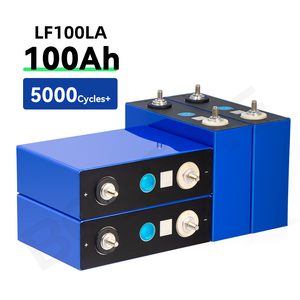
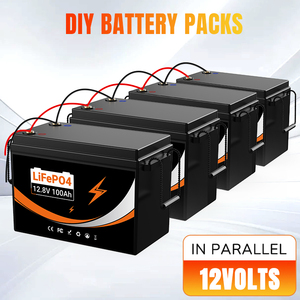
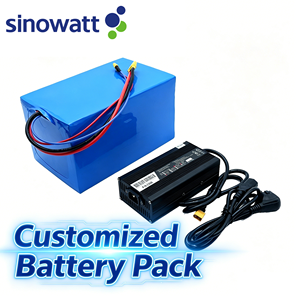
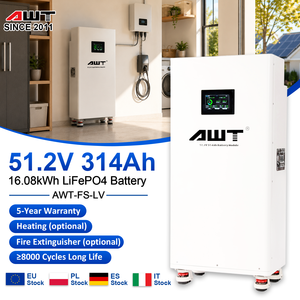
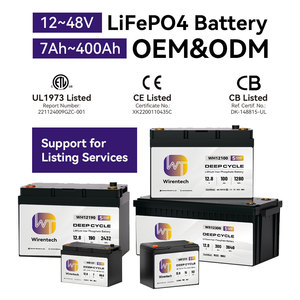
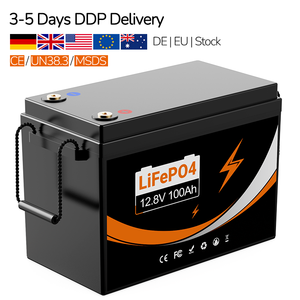
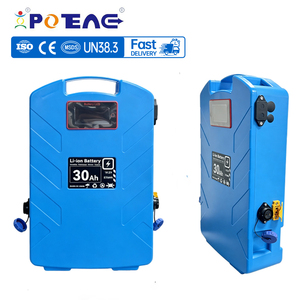
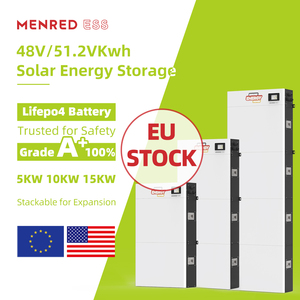
An engineering analysis of next-generation lithium battery manufacturing, BMS integration, and procurement risk mitigation for OEM project managers.
SEO Information Gain Note: Modern B2B procurement of lithium-ion and lithium iron phosphate (LiFePO4) battery packs has shifted from price-per-kilowatt-hour buying to total cost of ownership (TCO), safety integration, smart data logging, and long-term cell availability. Sourcing custom OEM modules requires rigorous verification of cell consistency, thermal runaway barriers, and global compliance certifications (UN 38.3, IEC 62133, UL 2054, ATEX/HAZLOC).
OEM procurement managers are increasingly standardizing on modular sub-assemblies (such as 3S2P, 7S2P, or 10S1P base units) that can be connected in series or parallel. This approach slashes prototype development timelines from 12 months down to 8 weeks while maintaining granular quality control and easing UN 38.3 transport recertification.
Basic Protection Circuit Modules (PCM) are rapidly being replaced by intelligent Battery Management Systems (BMS) equipped with SMBus, CANbus (J1939), or RS485 communication protocols. Modern OEM modules stream real-time State of Charge (SOC), State of Health (SOH), individual cell impedance matching, and thermal telemetry directly to industrial cloud dashboards.
Safety rating parameters under Google's E-E-A-T and global standards prioritize thermal containment. Leading OEM pack designers implement ceramic insulation separators, flame-retardant phase-change materials (PCM), and pressure relief vents to prevent single-cell failure propagation across dense prismatic or cylindrical arrays.
Comparative technical specifications to assist system engineers in selecting between Lithium Iron Phosphate (LiFePO4), NCM, and Specialty Downhole Primary Chemistry.
| Performance Metric | Lithium Iron Phosphate (LiFePO4) | Nickel Cobalt Manganese (NCM) | Primary $Li-SOCl_2$ (Downhole / Primary) |
|---|---|---|---|
| Nominal Cell Voltage | 3.2 V | 3.6 V - 3.7 V | 3.6 V |
| Gravimetric Energy Density | 140 - 180 Wh/kg | 220 - 280 Wh/kg | 400 - 650 Wh/kg (Non-Rechargeable) |
| Cycle Life (80% DOD) | 3,500 - 6,000 Cycles | 1,000 - 2,000 Cycles | Primary (Single Use High Energy) |
| Thermal Runaway Threshold | 270°C (Ultra-Stable) | 210°C (Requires Active Cooling) | Up to 200°C High-Temp Downhole Grade |
| Target OEM Applications | Energy Storage (ESS), RVs, Solar, Robotics | Medical Devices, Portable Instruments, EVs | MWD/LWD Drilling, Pipeline Inspection Gauges |
| BMS Integration Level | Active Balancing / CANbus / SMBus | Precision Voltage/Current Management | Passivation Protection / Diode Matrix |
With over four decades of engineering legacy, we deliver custom energy storage systems that satisfy demanding military, medical, downhole, and industrial specifications.
Our strategic manufacturing facilities across Vancouver, Calgary, and Houston — supported by global supply chain networks under Ultralife Corporation — eliminate single-point sourcing risks. We provide full geographic redundancy for OEM buyers across Europe, Asia, and the Americas.
We directly integrate premium audited cells from global technology leaders including Panasonic, Saft, Tadiran, Samsung SDI, LG Energy Solution, Molicel, and Murata. Every cell batch undergoes rigorous internal impedance sorting and automated capacity grading prior to pack assembly.
For harsh oil & gas drilling, underground mining, and explosive chemical processing environments, our engineering team manufactures intrinsically safe battery packs certified under ATEX, IECEx, and HAZLOC standards, featuring pressure-encapsulated housings and redundant safety fuses.
Detailed technical answers to common queries regarding custom lithium module design, certification protocols, BMS selection, and procurement logistics.
Our standard prototype engineering cycle typically spans 4 to 8 weeks, depending on design complexity. This includes initial 3D mechanical CAD modelling, thermal simulation, custom BMS schematic design, sample building, and preliminary functional testing. Full production ramping occurs immediately following customer sample approval and UN 38.3 transport certification.
We employ automated cell-sorting technology that matches individual raw cells within strict tolerances of ±5mV open-circuit voltage (OCV) and ±0.5mΩ internal AC resistance (ACIR). Furthermore, our custom BMS incorporates active or high-efficiency passive balancing circuitry to maintain voltage equilibrium across all series banks throughout charge and discharge cycles.
All commercial lithium battery shipments must comply with UN 38.3 testing criteria covering altitude simulation, thermal tests, vibration, shock, external short circuit, impact, and overcharge. For end-use medical or consumer products, we engineer packs to meet IEC 62133-2, UL 2054, UL 1973, and CE compliance standards.
LiFePO4 offers superior thermal and chemical stability, virtually eliminating the risk of thermal runaway up to 270°C. Additionally, LiFePO4 delivers exceptional cycle longevity (3,500 to 6,000+ deep cycles at 80% DOD), making it ideal for stationary solar storage, heavy robotics, and marine equipment where long service life outweighs ultra-lightweight density requirements.
Yes. For sub-zero operations, we incorporate low-temperature chemistries paired with self-heating silicone jackets managed by the BMS. For high-temperature downhole oilfield applications (MWD/LWD), we utilize specialized non-rechargeable Lithium Thionyl Chloride ($Li-SOCl_2$) cells engineered to operate reliably up to 150°C - 200°C under severe shock and vibration conditions.
Our proprietary BMS designs support standard industrial communication interfaces, including CANbus (CANopen / J1939), SMBus 1.1, I2C, SPI, RS485 (Modbus RTU), and Bluetooth Low Energy (BLE) for wireless telemetry and remote smartphone diagnostic applications.
Partner with ISO 9001 certified engineering specialists. Request a custom module design, preliminary CAD layout, or detailed technical quotation today.