Medical-Grade ISO 13485 & ISO 9001 Certified OEM Manufacturer
Custom OEM Medical Grade LiFePO4 Batteries Suppliers & Exporter
Mission-Critical, High-Safety Lithium Iron Phosphate Battery Solutions & Custom BMS Systems for Healthcare Equipment, Ventilators, Surgical Carts, and Mobile Diagnostic Systems.
Featured OEM Medical & Industrial Battery Solutions
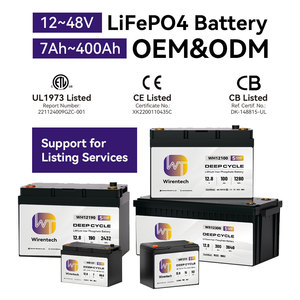
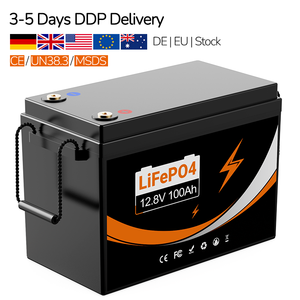
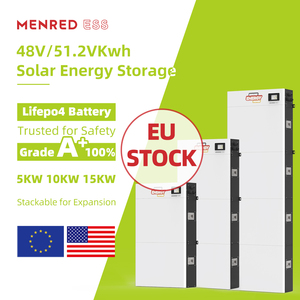
High-cycle life, thermal-stable LiFePO4 battery modules equipped with smart BMS telemetry, compliant with IEC 62133-2, UL 2054, and UN 38.3 standards for global export.
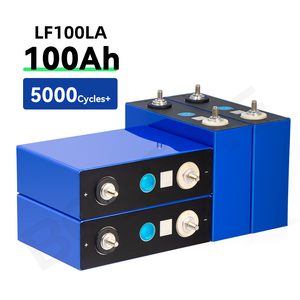
Grade A 5000 Cycles 3.2V 100AH LFP Prismatic Cells Lithium Iron Phosphate Battery 12V 24V 48V Pack
Technical Whitepaper: Engineering Medical-Grade LiFePO4 Battery Systems
In modern clinical environments, surgical suites, and intensive care units (ICUs), electrical energy storage systems are classified as safety-critical components. The transition from legacy Lead-Acid and early Lithium Nickel Manganese Cobalt Oxide (NMC) chemistries toward Lithium Iron Phosphate (LiFePO4 / LFP) represents a structural technological paradigm shift. As an established OEM/ODM custom battery manufacturer and exporter, our engineering architecture is designed to address the zero-tolerance threshold for catastrophic failure required by global medical equipment OEMs.
1. The Molecular Advantage: Crystal Lattice Dynamics of LiFePO4
The operational security of LiFePO4 cells originates in the P-O strong covalent bonds within the olivine-type crystal structure ($LiMPO_4$). Unlike layered transition metal oxide chemistries (such as LiCoO2 or LiNiMnCoO2) which undergo exothermic structural collapse and release gaseous free oxygen at temperatures exceeding 150°C to 200°C, the iron phosphate framework remains thermally stable up to 270°C–300°C.
Clinical Safety Threshold: LiFePO4 chemistry exhibits zero oxygen outgassing during severe internal micro-short-circuits or mechanical penetration, completely eliminating the thermal runaway cascade mechanism in oxygen-enriched operating room (OR) environments.
This structural resilience yields profound benefits for medical device OEMs requiring long-term, zero-maintenance battery packs for ventilators, mobile infusion pumps, surgical robotics, and motorized medical carts (Workstations on Wheels - WOWs):
Extended Electrochemical Cycle Life: Retention of > 80% nominal capacity after 3,500 to 6,000 complete charge/discharge cycles at 100% Depth of Discharge (DOD), compared to 500–800 cycles in standard NMC cells.
Flat Voltage Discharge Profile: Maintains a remarkably constant output voltage (~3.2V per cell) across 85% of its discharge curve, mitigating the need for aggressive DC-DC boost conversion and reducing electromagnetic interference (EMI) near sensitive patient monitors.
Low Internal Impedance (DCR): Enables rapid pulse-discharge current delivery for dynamic medical loads (e.g., motor actuators in surgical tables and portable defibrillator recharging circuits) without causing localized thermal spikes.
Selecting the optimal electrochemical core for medical electronics requires balancing energy density, volumetric efficiency, lifecycle economics, and international regulatory compliance. The following data visualization matrix illustrates key technical metrics engineered across primary industrial battery chemistries:
A high-performance LiFePO4 cell is only as dependable as its managing electronics. Our OEM custom battery packs feature proprietary Smart Battery Management Systems (BMS) designed in strict alignment with IEC 60601-1 (4th Edition EMC) and ISO 13485 quality frameworks.
Active Cell Balancing Logic
Utilizes bidirectional inductive cell-balancing circuitry to equalize voltage across prismatic or cylindrical strings during charge and discharge phases, maximizing usable capacity and extending operational lifespan by up to 25%.
SMBus 1.1 & HDQ Telemetry
Integrated fuel gauge ICs utilizing Impedance Track™ technology provide precision State-of-Charge (SOC, ±1% accuracy) and State-of-Health (SOH) reporting over SMBus 1.1, I2C, or CAN-bus protocols directly to the host device OS.
Hardware-Level Redundant Protections
Triple-stage over-voltage, under-voltage, over-current, short-circuit, and dual NTC temperature sensing circuit breakers guarantee immediate galvanic isolation in the event of external fault vectors.
Industry Trends & Future OEM Procurement Vectors (2025–2030)
The global medical battery procurement landscape is experiencing major structural transformations driven by healthcare decentralization, point-of-care emergency medicine, and stringent regulatory demands. B2B procurement directors and engineering leads must consider four macro trends when specifying custom battery suppliers:
1. Transition to Hot-Swappable Modular Architectures
Modern clinical workstations and mobile imaging equipment require continuous 24/7 uptime without tethering to wall outlets. OEM buyers are increasingly migrating toward dual-bay hot-swappable LiFePO4 battery modules equipped with fast-charging controllers. This approach eliminates equipment downtime and reduces localized facility power draws.
With global sustainability mandates tightening (such as the EU Battery Regulation 2023/1542), enterprise buyers require comprehensive digital material passports and supply chain audit trails. LiFePO4 batteries eliminate cobalt and nickel reliance, mitigating ethical sourcing liabilities while offering an environmentally benign disposal lifecycle.
3. AI-Driven Predictive Maintenance Integration
Next-generation smart BMS boards incorporate machine-learning degradation models that predict cell degradation trajectories based on real-world thermal histories and charge discharge profiles. This allows hospital biomechanical engineering departments to perform scheduled preventative battery swaps before critical in-field depletion occurs.
Our Enterprise Advantages: 40+ Years of Manufacturing Excellence
With over four decades of specialized battery design and custom assembly experience, our engineering facilities serve as trusted partners for world-leading medical device original equipment manufacturers (OEMs). We combine regional North American engineering support with high-volume, automated manufacturing capabilities.
Long-term supply agreements with global cell leaders (including Tadiran, Saft, Panasonic, Murata, and Molicel) ensure consistent batch-to-batch chemical purity and price stability.
Turnkey Regulatory Pre-Certification Support
In-house testing laboratories capable of pre-testing battery packs for UN 38.3, IEC 62133-2, UL 2054, and CE compliance, reducing your time-to-market by up to 12 weeks.
Global Logistics & Hazmat Export Compliance
Fully certified dangerous goods (DG) packaging, customs documentation, and bonded warehousing across North America, Europe, and Asia for seamless global distribution.
Frequently Asked Questions (FAQ) for Medical Device OEMs
Why is LiFePO4 preferred over NMC chemistry for indoor hospital medical carts and ventilators?
LiFePO4 features an extremely stable olivine crystal structure with a thermal runaway threshold exceeding 270°C, compared to ~150°C for NMC. In the event of a internal failure, LiFePO4 does not release free oxygen, preventing fiery combustion. Furthermore, LiFePO4 delivers 3,500–6,000 cycle lives, matching the typical 7-to-10-year lifespan of medical capital equipment without requiring mid-life battery replacement.
What mandatory international safety certifications are required for exporting medical battery packs globally?
For global export, medical battery packs must strictly comply with UN 38.3 (Transport Safety for Dangerous Goods), IEC 62133-2 (Safety requirements for portable sealed secondary cells), and UL 2054 (Commercial and Industrial Batteries). In addition, system designs must satisfy medical equipment standards like IEC 60601-1 4th Edition (EMC and collateral safety) and ISO 13485 quality management.
Can your engineering team customize the Smart BMS to communicate with our custom host device protocol?
Yes. Our embedded firmware engineers regularly design smart BMS communications utilizing standard SMBus 1.1, I2C, SPI, RS485, and CAN-bus protocols. We provide customized communication registers, fuel gauging algorithms, and software development kits (SDKs) allowing your software developers to directly read real-time parameters like SOC, SOH, cell temperature, cycle count, and fault flags.
How do you ensure cell consistency and quality control across large OEM production runs?
Every cell lot undergoes 100% automated sorting and grading for internal resistance (AC-IR & DC-IR), open-circuit voltage (OCV), and capacity matching before assembly. Pack construction utilizes micro-computer-controlled spot welding or laser welding, followed by 100% automated end-of-line (EOL) functional testing, thermal imaging, and vibration testing under ISO 9001 control workflows.
What is the typical engineering sample lead time for custom prototype LiFePO4 packs?
Initial 3D mechanical models and electrical schematics are typically delivered within 5 to 7 business days. Upon design approval, fully functional engineering prototype samples with 3D-printed or custom CNC enclosures and functional BMS samples are generally dispatched within 3 to 5 weeks, depending on component availability and complexity.
Accelerate Your OEM Battery Development Cycle
Partner with an industry-leading ISO 9001 certified custom battery manufacturer. Contact our engineering team today to receive detailed technical specifications, CAD models, and customized pricing options.