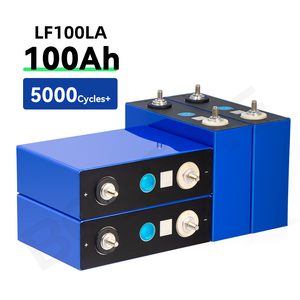
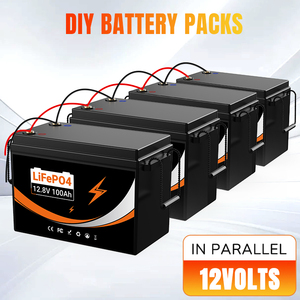
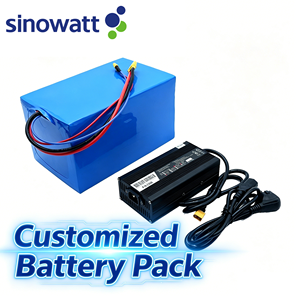
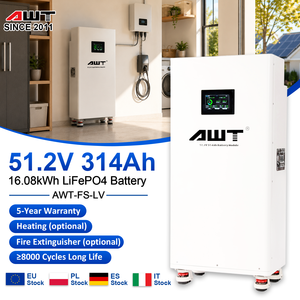
In high-reliability industrial automation, defense systems, medical devices, emergency pulse equipment, and downhole MWD/LWD drilling, energy storage systems are subjected to severe operational constraints. Rather than providing linear current discharge profiles, these applications demand massive power spikes—frequently reaching 15C to 50C peak pulse rates for intervals ranging from milliseconds to several seconds—without compromising terminal voltage integrity or risking thermal runaway.
High pulse discharge is fundamentally constrained by electrochemical impedance, cathode-electrolyte interface resistance (SEI film resistance), and lithium-ion diffusion rates across electrode matrices. When a sudden high pulse current ($I_{pulse}$) is drawn, the battery module experiences immediate voltage sag determined by Ohm's Law and polarization phenomena:
V_{terminal} = V_{ocv} - I_{pulse} \times (R_{AC-IR} + R_{polarization})
Standard lithium-ion battery modules experience catastrophic voltage drop under intense surge currents due to high internal resistance (DC-IR). Custom OEM high pulse current battery modules overcome this through nanostructured cathode formulations (e.g., carbon-coated LiFePO4 or hybrid nickel-manganese-cobalt chemistries), multi-tab cylindrical cell architectures, and heavy-gauge ultrasonic copper-cladding interconnects that minimize bulk impedance down to sub-milliohm levels.
Heat generation within a high-pulse battery module scales quadratically with current draw, governed by the thermal dissipation formula $Q = I^2 \times R \times t$. A 30C pulse generates 900 times more instantaneous internal heat than a 1C continuous load.
To preserve structural battery pack integrity and maintain compliance with ISO 9001 and UL 2580 safety standards, OEM battery designers must integrate active thermal containment layers:
1. Phase Change Materials (PCM): Absorbing transient heat spikes through latent heat absorption during phase transitions.
2. Direct-Contact Cold Plates: Aluminum or copper liquid cooling channels integrated directly beneath module cell tabs.
3. Directional Pyrolytic Graphite (DPG): Spreading localized thermal hotspots evenly across heat sinks.
| Chemistry Architecture | Nominal Voltage | Max Continuous C-Rate | Peak Pulse C-Rate (10s) | DC Internal Resistance (DC-IR) | Thermal Safety Profile |
|---|---|---|---|---|---|
| Custom High-Rate LiFePO4 (LFP) | 3.2V | 3C - 5C | 15C - 30C | < 0.6 mΩ | Extremely High (Thermal runaway > 270°C) |
| Lithium Titanate (LTO) | 2.3V | 10C - 15C | 40C - 50C | < 0.3 mΩ | Ultra-Safe (No dendrite formation down to -40°C) |
| High-Pulse NMC / LMO Hybrid | 3.7V | 5C - 8C | 20C - 35C | < 0.8 mΩ | Moderate (Requires Advanced Solid-State BMS) |
| Hybrid Supercapacitor-LFP Module | 3.2V - 48V | 25C | > 100C Instantaneous | < 0.15 mΩ | Inherently Safe (Capacitive surface charge storage) |
Building custom pulse-capable battery packs requires a holistic cross-disciplinary approach encompassing cell selection, mechanical interconnects, firmware balancing algorithms, and protective enclosure design.
Standard spot-welded nickel strips suffer from micro-cracking and high resistance under 100A+ pulse spikes. Custom OEM modules utilize ultrasonic wedge-bonded heavy copper busbars or laser-welded copper-nickel clad plates, reducing interconnect electrical resistance by over 75%.
Conventional BMS ICs sample current every 100ms—far too slow for microsecond pulse spikes. Our high-pulse BMS hardware features high-speed shunt resistors and parallel solid-state MOSFET arrays capable of sensing transient overload in under 500 microseconds without false tripping.
High pulse loads often coincide with physical shock (e.g., downhole drilling or military vehicle movement). OEM modules are potted with flame-retardant polyurethane resins and structurally reinforced with polycarbonate-ABS frames meeting MIL-STD-810G requirements.
As global OEMs push the boundaries of electrification, power density, and operational uptime, procurement managers and engineering executives must navigate several pivotal technology shifts in high-pulse battery module manufacturing:
Liquid organic electrolytes represent the thermal bottleneck in pulse-discharge batteries due to volatility under high $I^2R$ heating. Next-generation OEM procurement is rapidly moving toward semi-solid gel electrolytes and sulfide-based solid-state cells. Solid electrolytes suppress lithium dendrite growth under extreme pulse C-rates while offering operating windows exceeding 100°C without degradation.
Procurement specifications are shifting from static battery monitoring to active edge computing BMS hardware. Advanced OEM battery modules now embed micro-electrochemical impedance spectroscopy (EIS) chips that calculate AC internal resistance in real-time during operational pulses, predicting thermal degradation and battery state-of-health (SoH) months before field failure occurs.
For applications demanding repetitive microsecond current bursts—such as electromagnetic actuators, radar system sweeps, and heavy-duty grid frequency regulation—procurement teams are specifying hybrid modules. By pairing supercapacitors in parallel with high-capacity LiFePO4 cells, the capacitor buffers the instantaneous current surge while the lithium battery recharges the capacitor during rest intervals.
Global procurement standards now enforce strict supply chain transparency. Under regulations like the EU Battery Regulation (2023/1542), OEM manufacturers are required to provide a digital battery passport detailing raw material sourcing (cobalt, lithium, nickel), carbon footprint during manufacturing, and full UN 38.3 transport compliance documentation.
Leveraging over 40 years of precision engineering heritage, certified quality control labs, and a global Tier-1 cell supply network to deliver turn-key custom battery packs.
Backed by decades of specialized design expertise serving oil & gas, medical, aerospace, defense, and industrial instrumentation markets worldwide.
Every custom high pulse battery module undergoes stringent automated end-of-line (EOL) testing, thermal imaging, voltage sag evaluation, and helium leak testing.
Strategic partnerships with globally recognized audited cell manufacturers including Tadiran, Saft, Panasonic, Murata, Molicel, Samsung SDI, and LG Energy Solution.
In-house electrical engineering team capable of designing customized SBS-compliant smart BMS boards, CANbus 2.0B / MODBUS communication interfaces, and solid-state protection circuitry.
Full support for international certifications including UN 38.3 transport safety testing, IEC 62133, UL 1642, UL 2054, ATEX, and HAZLOC intrinsic safety standards.
Multiple state-of-the-art assembly facilities across North America providing flexible prototype development, fast NPI lead times, and reliable volume production.
Technical guidance and answers for purchasing managers, systems engineers, and product development teams considering custom OEM high pulse battery solutions.
Collaborate directly with our senior battery design engineers to optimize cell chemistry, thermal architecture, BMS protection, and enclosure design for your specific high-pulse application.
Send an Inquiry