Factory-direct customized energy storage modules, industrial packs, and grade-A prismatic cells designed for heavy cycle durability and international compliance.
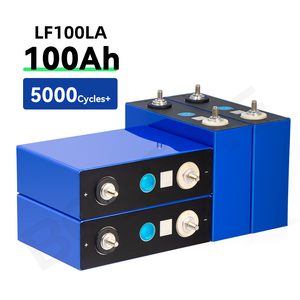
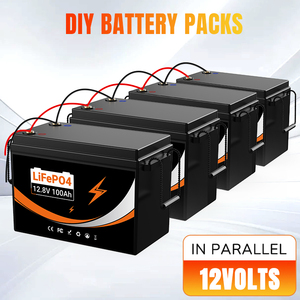
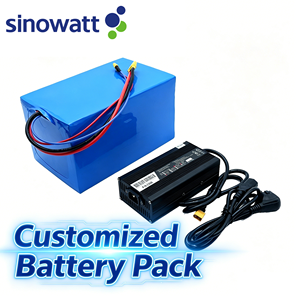
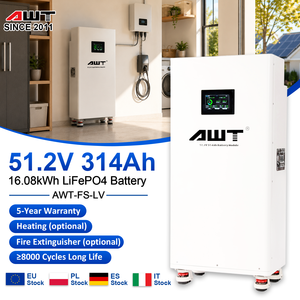
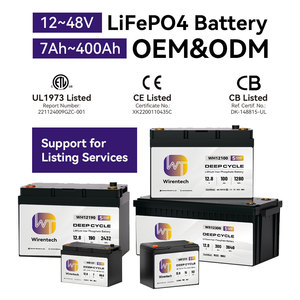
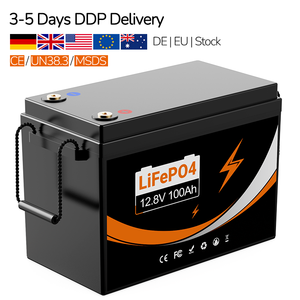
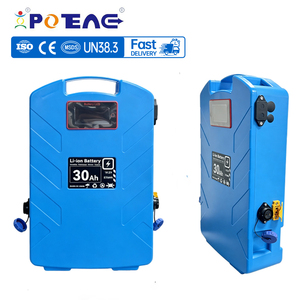
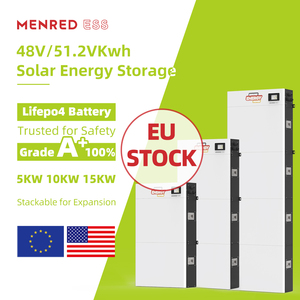
In modern industrial power engineering, B2B procurement managers and system integrators no longer evaluate lithium battery packs solely by initial capacity or unit cost. The critical vector driving total cost of ownership (TCO) is cycle longevity under real-world thermal and electrical stress. A standard commercial lithium-ion pack undergoing rapid cycling in heavy-duty applications (such as AGVs, commercial solar ESS, or marine propulsion) typically suffers from microstructural degradation within 1,000 to 1,500 cycles. Conversely, a purpose-built Custom OEM High Cycle Life Lithium Iron Phosphate (LiFePO4) Battery Pack engineered by a specialized manufacturing factory delivers between 4,000 and 8,000 deep discharge cycles before capacity degrades to 80% of its original state of health (SOH).
Information Gain Metric: Standard market LFP cells experience an average capacity decay rate of ~0.035% per cycle at 1C/1C rate (25°C). Premier OEM factories achieve a decay rate under 0.012% per cycle by optimizing Solid Electrolyte Interphase (SEI) layer kinetics, implementing mechanical pre-clamping at 3000N, and pairing cells with active balance telemetry within ±0.005V tolerances.
The foundational bottleneck in achieving high cycle life lies at the electrode interface. During initial formation charging at the factory, electrolyte decomposition forms an SEI film on the graphite anode. In lower-tier cell manufacturing, continuous expansion and contraction during intercalation cause the SEI layer to crack, consuming active lithium ions and thickening the interface internal resistance (Ri). Leading custom lithium battery factories introduce proprietary film-forming additives (such as Vinylene Carbonate and Fluoroethylene Carbonate) alongside nano-coated LiFePO4 cathodes. This yields an ultrathin, elastic SEI layer that remains mechanically intact over thousands of 100% Depth of Discharge (DOD) cycles.
Prismatic lithium cells experience volumetric expansion during continuous lithium intercalation. Left unconstrained, internal foil buckling leads to micro-short circuits and non-uniform current distribution across the current collectors. Advanced OEM pack designs integrate precision cold-rolled steel or extruded aluminum structural frames fitted with high-resilience silicone cushioning sheets. By applying uniform pre-clamping force (typically calibrated between 2,500N and 4,000N per module string), the structural integrity of the electrode stack is maintained, preventing delamination and extending operational cycle life by over 35% compared to unconstrained battery enclosures.
High-precision fiber laser welding of nickel-copper composite busbars ensures zero thermal distortion and ultra-low contact resistance across high-current terminals.
Integrated telemetry boards with 2A to 5A active bi-directional cell balancing, transferring energy from high-voltage cells to low-voltage cells to prevent capacity bottle-necking.
Aerogel insulation pads and phase-change materials (PCM) sandwiched between prismatic cells prevent thermal propagation in the event of localized abuse or high C-rate operation.
The international landscape for industrial lithium battery sourcing is undergoing a structural transition. Sourcing managers across Europe, North America, and Australia are shifting away from off-the-shelf catalog batteries toward deep OEM/ODM custom partnerships. Driving this transition are four macroeconomic and technical shifts:
Modern equipment—whether a high-capacity solar inverter, a medical cart, or an electric utility vehicle—requires granular real-time telemetry from the battery system. Custom battery exporters must deliver integrated BMS software compatible with CANbus 2.0B, RS485, Modbus RTU, and IoT Bluetooth protocols. Enterprise buyers demand remote diagnostics capable of reporting State of Charge (SOC), State of Health (SOH), individual cell voltages, temperature gradients, and fault event logs directly to cloud management platforms.
Space constraints in commercial installations have elevated the demand for modular, high-voltage stacked battery architectures (ranging from 192V to 800V DC). Rather than deploying bulky individual mono-block units, OEMs prefer standardized 3U/4U rack-mountable modules or toolless floor-stacked enclosures that can be expanded seamlessly from 5 kWh to 100 kWh+. Factories capable of designing interlocking plug-and-play bus connectors and central master-slave BMS controllers hold a decisive competitive advantage.
Regulatory compliance is no longer limited to basic CE or UN 38.3 shipping safety test reports. Global importers now require comprehensive supply chain audits verifying conflict-free cobalt/nickel sourcing, low-carbon factory manufacturing footprint metrics, and compliance with the EU New Battery Regulation (EU 2023/1542). Direct exporters must provide transparent QR-code Battery Passports detailing carbon intensity, recycled material ratios, and full lifecycle recyclability pathways.
| Cell Topology & Pack Spec | Typical Cycle Life (80% DOD) | Nominal Energy Density | Thermal Runaway Threshold | Best Fit Application | OEM Customization Index |
|---|---|---|---|---|---|
| Grade A Prismatic LiFePO4 | 5,000 - 8,000 Cycles | 160 - 180 Wh/kg | 270°C (Extremely Safe) | Solar ESS, RVs, Marine, Telecom | High (Custom BMS/Enclosure) |
| High-Rate Cylindrical 21700 LFP | 3,000 - 5,000 Cycles | 170 - 195 Wh/kg | 250°C (High Stability) | Robotics, AGVs, Portable Power | Medium (Custom Cell Arrays) |
| NMC High Density (Pouch/Cyl) | 1,500 - 2,500 Cycles | 240 - 280 Wh/kg | 210°C (Requires PCM Cooling) | Drones, Ultra-light EVs, Medical | High (Precision Thermal Mgmt) |
| LTO (Lithium Titanate) | 15,000 - 25,000 Cycles | 80 - 110 Wh/kg | 300°C+ (Ultra Safe) | Heavy Rail, Sub-zero Military | Specialized Niche Custom |
Sourcing direct from a fully certified OEM battery factory eliminates intermediary markups while providing raw engineering capability from CAD modeling to international regulatory submission. Our state-of-the-art production lines incorporate rigorous Quality Assurance (QA) protocols designed specifically for high-reliability, long-life energy systems.
100% of incoming cells undergo automated testing. Cells are paired within strict parameters: internal resistance variance ≤ 0.5mΩ, voltage delta ≤ 2mV, and capacity tolerance within ±0.5%.
Every prototype design is subjected to 3-axis vibration testing, thermal shock chambers (-40°C to +85°C), high-G mechanical drop tests, and IP67 water immersion validation before mass assembly.
We handle full certification workflows for custom packs, including UN 38.3 transport safety, IEC 62133-2, UL 1973, UL 9540A, CE, and MSDS documentation ready for global customs clearance.
Our engineering team collaborates directly with your R&D department to transform application specifications into commercial production units within an expedited timeframe:
Clear, technical answers to common questions asked by B2B buyers, electrical engineers, and global procurement specialists.
High cycle life is achieved through a multi-tiered engineering approach: using 100% Grade-A fresh prismatic cells (never recycled or B-grade surplus), applying physical pre-stress clamping (~3000N) to counteract cell swelling, utilizing active balance BMS boards to prevent single-cell overcharging/overdischarging, and engineering passive/active thermal management to maintain operating temperatures between 20°C and 35°C.
We offer complete customization across all system parameters: nominal pack voltage (12V to 800V+), capacity (10Ah to 1000Ah+), physical footprint & enclosure material (sheet metal, extruded aluminum, stainless steel, or molded plastic), communication protocol (CANbus, RS485, RS232, SMBus, Bluetooth), heater pads for sub-zero charging, and specialized terminal connectors (Radsok, Anderson, Amphenol, or heavy-duty busbars).
Passive balancing bleeds off excess energy from higher-voltage cells as heat via resistors, typically limited to low balancing currents (35mA - 100mA). It is ineffective for large-capacity industrial packs. Active balancing uses capacitive or inductive energy transfer to move charge from high-voltage cells to lower-voltage cells with up to 95% efficiency at currents up to 2A - 5A. Active balancing significantly slows down cell divergence, adding up to 20% effective lifespan to multi-cell packs.
All custom lithium battery shipments must comply with UN 38.3 transport testing (including altitude simulation, thermal test, vibration, shock, external short circuit, impact, overcharge, and forced discharge) alongside a certified MSDS and Dangerous Goods (DG) declaration. For specific regional markets, IEC 62133-2 (Europe/Global), UL 1973/UL 9540A (North America), and CE certification are required. Our export team provides full compliance dossier packages.
For customized OEM battery packs requiring custom tooling or specialized BMS firmware, typical prototype production lead time is 2 to 3 weeks. Mass production lead time ranges from 3 to 5 weeks upon sample approval. MOQ depends on cell chemistry and pack complexity: standard prismatic LiFePO4 packs have an MOQ as low as 10 to 50 units, while small custom cylindrical packs start at 100 to 500 units.
Overseas localized warehouses allow commercial buyers to order standardized high-demand LiFePO4 modules (such as 12V 100Ah/200Ah or 48V 100Ah/280Ah rack modules) with 2-5 day domestic delivery, zero customs clearance delays, and duty-free (DDP) invoicing. This enables B2B buyers to maintain lean inventories while relying on rapid local replenishment.
Consult with our senior electrochemical and mechanical engineers to request a custom design proposal, detailed CAD rendering, or direct factory quotation for your project.
Send an Inquiry