Explore our high-density, ISO 9001-certified primary lithium and rechargeable lithium-iron-phosphate (LiFePO4) battery packs designed for edge computing nodes, remote telemetry, and industrial IoT sensors.
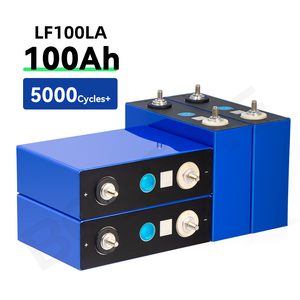
High-capacity LiFePO4 battery cell engineered for heavy-duty industrial IoT gateways, off-grid telemetry hubs, and stationary sensor micro-grids requiring deep-cycle power reliability.
Send an Inquiry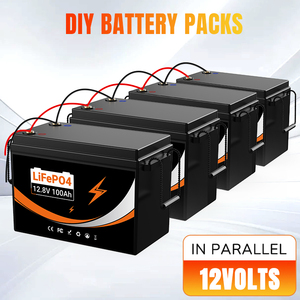
Integrated intelligent BMS power module designed for high-stress industrial node backup, remote environmental monitoring arrays, and enterprise IoT power architecture.
Send an Inquiry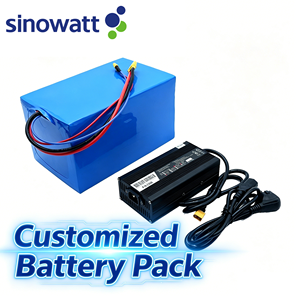
Tailor-made Li-ion & LiFePO4 battery assemblies fitted with custom-engineered hardware protection circuits for compact IoT sensors, robotics, and HAZLOC field assets.
Send an Inquiry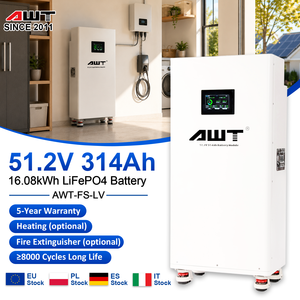
Industrial-scale solar storage energy bank built to support remote cellular IoT base stations, pipeline inspection telemetry, and off-grid mining sensor network towers.
Send an Inquiry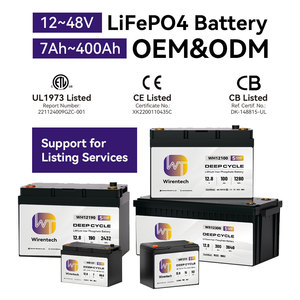
Multi-purpose, ruggedized battery units designed for mobile IoT field diagnostic systems, maritime sensor buoys, and rugged industrial fleet monitoring nodes.
Send an Inquiry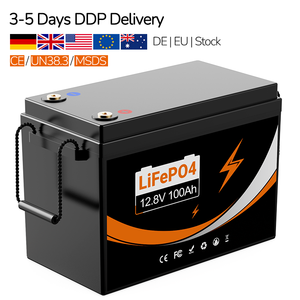
Designed for rapid wholesale distribution and immediate field replacement in critical industrial automation setups, SCADA units, and smart grid meters.
Send an Inquiry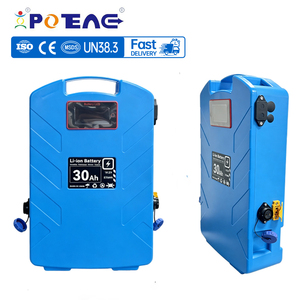
Ergonomic, lightweight form factor designed for field testing instruments, remote pipeline inspection gauges (PIGs), and tactical environmental monitoring gear.
Send an Inquiry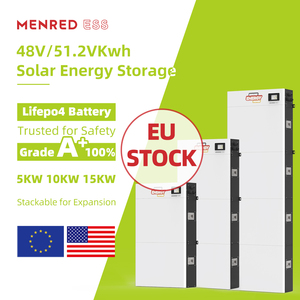
Scalable rack-mounted battery bank designed for centralized edge-data centers, smart factory master controllers, and municipal water management sensor hubs.
Send an InquiryAs global industries transition toward Industry 4.0, autonomous telemetry, smart metering, and remote condition monitoring demand unprecedented battery reliability. Sourcing directly from certified China wholesale industrial battery suppliers provides OEMs with advanced cell chemistries, optimized thermal management, and substantial total cost of ownership (TCO) savings.
Selecting the ideal battery chemistry requires balancing energy density, pulse current requirements, and ambient thermal profiles. Lithium Thionyl Chloride (Li-SOCl2) delivers unmatched energy density (up to 650 Wh/kg) and an exceptional 20-year shelf life, making it the industry benchmark for smart water and gas meters. Lithium Manganese Dioxide (Li-MnO2) provides stable 3.0V power without passivation delay, perfectly suited for high-frequency IoT tracking nodes. For energy harvesting and rechargeable gateway architectures, Lithium Iron Phosphate (LiFePO4) delivers superior cycle endurance (5,000+ cycles) and unmatched safety.
Primary lithium batteries utilizing Li-SOCl2 chemistry naturally form a protective LiCl passivation layer on the lithium anode. While this layer suppresses self-discharge to <1% per year, it introduces a momentary voltage dip when high-current wireless transmission pulses (such as LoRaWAN, NB-IoT, or Cat-M1) are triggered. Advanced Chinese battery engineering solves this by integrating Hybrid Layer Capacitors (HLC) or Super Pulse Capacitors (SPC) in parallel with primary cells, delivering pulse currents up to 3A without voltage breakdown.
Industrial IoT sensors deployed in downhole oil & gas fields, sub-zero cold chains, or desert solar farms must maintain electrical integrity across severe thermal spectrums. Premier Chinese factories specialize in high-temperature bobbin cell construction and hermetic glass-to-metal seals. Furthermore, customized battery packs engineered for hazardous environments comply with ATEX and IECEx standards, incorporating intrinsic safety resistors and thermal fuses to prevent explosion hazards.
| Battery Chemistry | Nominal Voltage | Energy Density (Wh/kg) | Self-Discharge Rate | Operating Temperature | Primary LPWAN IoT Application |
|---|---|---|---|---|---|
| Lithium Thionyl Chloride (Li-SOCl2) | 3.6 V | 500 - 650 Wh/kg | < 1% / year | -55°C to +85°C (+150°C custom) | Smart Gas/Water Meters, Pipeline Sensors, Structural Monitoring |
| Li-SOCl2 + SPC/HLC Capacitor | 3.6 V | 450 - 580 Wh/kg | < 1.5% / year | -40°C to +85°C | NB-IoT, LoRaWAN, Cellular Cat-M1 High-Pulse Sensor Nodes |
| Lithium Manganese Dioxide (Li-MnO2) | 3.0 V | 280 - 400 Wh/kg | < 1% / year | -40°C to +70°C | Asset Trackers, Smart Security Badges, Medical IoT Devices |
| Lithium Iron Phosphate (LiFePO4) | 3.2 V | 140 - 180 Wh/kg | < 3% / month (Rechargeable) | -20°C to +60°C | Solar IoT Gateways, Edge Computing Hubs, Heavy Robotics |
Navigating the global energy transition requires supply chain directors to adopt proactive procurement strategies. Here are the top macro trends reshaping industrial IoT battery procurement from China factories.
Purely primary-battery-powered sensors are increasingly yielding to hybrid architectures. Combining small photovoltaic solar arrays or thermoelectric generators with long-cycle LiFePO4 cells enables indefinite operational lifespans for outdoor environmental monitoring, agricultural sensors, and smart city infrastructure.
Modern industrial buyers demand battery management systems (BMS) capable of transmitting battery State of Charge (SoC), State of Health (SoH), and internal impedance metrics directly over the wireless IoT network. This eliminates manual physical battery audits and prevents unpredicted downtime in critical manufacturing plants.
Procuring off-the-shelf commercial batteries often results in dimensional mismatches and thermal bottlenecks. Forward-thinking OEMs are partnering directly with China factories for end-to-end custom battery pack engineering—from 3D mechanical enclosure design and PCB protection circuit development to UN 38.3 transport certification.
Get answers to essential technical and commercial questions when purchasing industrial battery packs at wholesale volumes from China suppliers.
Contact our senior engineering team today to review your voltage, capacity, pulse current, and thermal specifications.