Direct from China's leading ISO 9001 certified cell tower & energy storage battery manufacturing hubs.
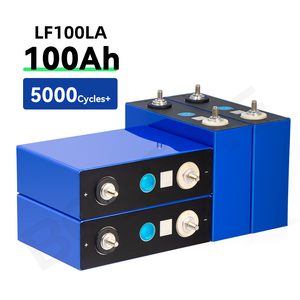
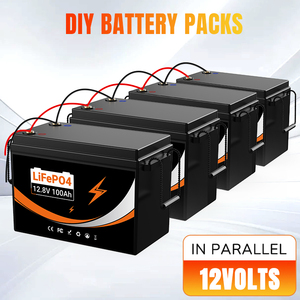
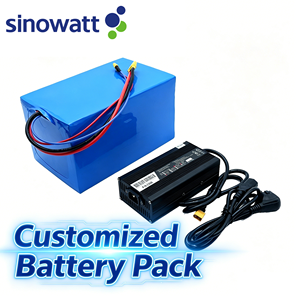
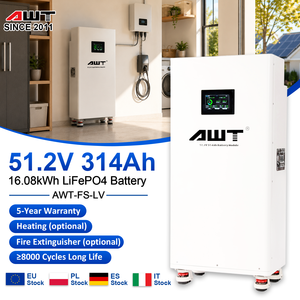
The global telecommunications infrastructure landscape is undergoing its most radical transformation since the initial rollout of cellular networks. As 5G standalone (SA) macro base transceiver stations (BTS), small cell densification, and remote radio units (RRUs) proliferate worldwide, power delivery requirements have scaled exponentially. 5G macro sites consume anywhere from 2.5x to 3.5x more power than legacy 4G LTE stations, driven by Massive MIMO active antenna units (AAUs) and high-throughput edge computing hardware.
Historically, telecom tower companies (TowerCos) and mobile network operators (MNOs) relied heavily on Valve-Regulated Lead-Acid (VRLA) batteries for uninterruptible power supply (UPS) backup. However, VRLA technology suffers from debilitating structural flaws when deployed in modern telecom architectures: rapid thermal degradation under ambient heat above 25°C, limited cycle lifespan (typically 500–800 cycles), extreme weight overhead, slow recharge rates, and a complete lack of granular telemetry integration.
Strategic Insight for Procurement Officers: Transitioning from lead-acid to 48V/51.2V Smart Lithium Iron Phosphate (LiFePO4) rack-mounted battery systems reduces 10-year Total Cost of Ownership (TCO) by over 47%, slashes site physical footprint by 65%, and enables dynamic peak-shaving capabilities that monetizes energy storage assets across fluctuating electrical grids.
China has emerged as the unchallenged powerhouse of global telecom battery manufacturing, housing over 80% of the world's lithium-ion cell production capacity and advanced battery management system (BMS) R&D centers. OEM buyers, procurement managers, and engineering procurement contractors (EPCs) looking for top China telecom base station battery factories must navigate complex criteria—evaluating cell tier grading, thermal design safety, BMS firmware resilience, and compliance with international standards such as UL 1973, IEC 62619, and UN 38.3.
A rigorous quantitative comparison of primary energy storage chemistries utilized in global telecom power infrastructures.
| Performance Metric | Smart LiFePO4 (LFP) | Legacy VRLA (Lead-Acid) | Sodium-Ion (Na-Ion) | Lithium NMC / NCM |
|---|---|---|---|---|
| Gravimetric Energy Density | 140 – 170 Wh/kg High | 30 – 45 Wh/kg Low | 100 – 130 Wh/kg Moderate | 200 – 250 Wh/kg Very High |
| 80% DOD Cycle Life (+25°C) | 5,000 – 8,000 Cycles Exceptional | 500 – 1,000 Cycles Poor | 3,000 – 4,500 Cycles Good | 1,500 – 2,500 Cycles Moderate |
| High-Temp Degradation Threshold | Stable up to +60°C Superior | Degrades 50% per +10°C > 25°C | Stable up to +55°C High | Thermal Runway Risk > 55°C |
| Recharge Time (0% to 100%) | 1.0 to 2.0 Hours Fast | 8.0 to 12.0 Hours Slow | 0.5 to 1.0 Hours Ultra-Fast | 1.5 to 2.5 Hours Fast |
| Thermal Runaway Safety profile | Extremely Safe (>270°C decomposition) | Emits Hazardous Hydrogen Gas | Inherently Safe Chemical Structure | Volatile Thermal Runway Risk |
| Smart BMS / Telemetry Integration | Native RS485 / CAN / SNMP / Modbus | External Analog Sensing Only | Native RS485 / CAN / SNMP | Native Smart BMS Integration |
| 10-Year Total Cost of Ownership (TCO) | Lowest (Baseline 100%) | Highest (185% - 210%) | Competitive (110%) | Moderate (140% - 160%) |
Key architectural advancements shaping global MNO and TowerCo sourcing strategies over the next decade.
Next-generation telecom LiFePO4 packs feature dual-processor microcontrollers running edge analytics. Remote network operations centers (NOCs) monitor real-time cell-level impedance, State of Charge (SoC), State of Health (SoH), and thermal profiles via SNMPv3, MQTT, and cloud gateways—eliminating physical site inspection overhead.
MNOs are transforming passive backup energy systems into active revenue-generating assets. Modern 48V 100Ah/200Ah battery modules allow programmable discharge during peak electricity tariff hours, feeding power back to base station rectifiers or grid aggregators via VPP software orchestrations.
Off-grid and weak-grid telecom towers in Africa, Southeast Asia, and Latin America are replacing diesel generators with solar PV + LiFePO4 hybrid energy systems. Chinese OEM exporters provide pre-integrated DC power distribution cabinets (PDU) engineered to handle wide PV input voltage ranges.
Form factor standardization around 3U, 4U, and 5U 19-inch rack enclosures enables seamless hot-swapping inside standard outdoor telecom cabinets. Anti-theft GPS tracking and soft-start pre-charge circuitry are now standard requirements in major operator tenders.
Top China factories have shifted from passive resistive cell balancing to high-efficiency bi-directional active balancing (1A to 5A current equalization). This prevents capacity bottlenecks, extends string usable capacity by 15%, and doubles pack longevity in deep-cycling environments.
With sodium-ion technology maturing in Chinese giga-factories, hybrid sodium-lithium battery control algorithms are being deployed in sub-zero alpine telecom installations (-40°C), leveraging sodium's exceptional low-temperature discharge capabilities.
Evaluating potential OEM/ODM partners in China requires a systematic multi-tier auditing methodology. Procurement managers must look beyond surface marketing brochures and interrogate core engineering practices, supply chain transparency, and quality verification pipelines.
The heart of any telecom battery pack is the electrochemical cell. Leading exporters partner strictly with Tier-1 battery manufacturers (such as CATL, EVE Energy, BYD, Molicel, Lishen, or Gotion). Ensure your supplier provides complete cell traceability documentation, including original factory batch test reports, capacity classification logs, and proof of 100% Prime A-Grade prismatic cell allocation. Beware of suppliers utilizing re-wrapped EV-grade second-life cells or B-grade off-spec cells, which exhibit rapid capacity loss and severe cell imbalance within 12–18 months of installation.
The Battery Management System is the brains of the battery system, responsible for keeping it operating safely within established parameters. A telecom-grade BMS must incorporate hardware-level redundant over-voltage, under-voltage, over-current, thermal lockout, and short-circuit protection. Firmware must support multi-pack parallel expansion (up to 16 to 32 units on a single communication bus) without communication collisions or master-slave synchronization drops. Demand access to the factory’s BMS development team to verify custom protocol mapping (e.g., matching Emerson, ZTE, Huawei, Eltek, or Delta rectifier communication protocols).
Uncertified lithium batteries pose massive regulatory compliance and logistics liabilities. Prior to signing supply contracts, verify that the factory holds current test reports issued by internationally recognized accredited laboratories (Intertek, TÜV Rheinland, SGS, UL, or Dekra) for the following core standards:
Outdoor telecom enclosures undergo extreme ambient temperature fluctuations. Inspect the mechanical construction of the battery module. Premium Chinese factories utilize sheet metal housings with internal structural insulation barriers, laser-welded copper/nickel busbars (rather than flimsy screwed interconnects), and integrated thermal insulation pads between cells to prevent thermal runaway propagation.
Combining 40+ years of heritage engineering with China's world-class battery manufacturing ecosystem.
Our production facilities utilize automated cell testing, high-speed laser welding, automated BMS surface-mount technology (SMT), and 100% full-capacity aging test chambers to guarantee zero-defect delivery.
We maintain direct factory supply agreements with global cell leaders including Tadiran, Saft, Panasonic, Murata, Molicel, Samsung SDI, LG Energy Solution, and Lishen, ensuring full traceability and continuous supply continuity.
With established stocking hubs in Europe (Germany), North America, and Asia, we offer immediate local dispatch, DDP (Delivered Duty Paid) shipping solutions, and zero customs hassle for global telecom buyers.
Direct technical answers to common questions raised by telecom network operators, tower companies, and system integrators.
A 48V (or 51.2V nominal 16S configuration) direct current bus is the universal voltage standard for telecom rectifiers and power plant systems worldwide. 51.2V LiFePO4 modules match the exact operating voltage range of traditional rectifiers while delivering 3x higher energy density, superior thermal tolerance, and over 5,000 deep discharge cycles. Furthermore, LiFePO4 chemistry is non-volatile, eliminating thermal runaway risks associated with cobalt-based lithium chemistries.
Unlike lead-acid (VRLA) batteries—where life expectancy drops by 50% for every 10°C rise above 25°C—Grade A LiFePO4 prismatic cells maintain robust chemical stability up to +60°C. At sustained operation at +45°C, high-grade LiFePO4 batteries still deliver 3,500–4,000 cycles, reducing air-conditioning and cooling power demands at remote cell tower sites.
Direct parallel connection of lithium and lead-acid batteries without an intelligent hybrid controller is strongly discouraged due to disparate internal resistance and discharge voltage curves. However, using specialized Smart Hybrid Lithium Management Systems (which incorporate DC/DC voltage converters), new LiFePO4 modules can operate alongside legacy lead-acid strings, allowing phase-out replacement schedules without wasting existing capital equipment.
Our smart telecom battery BMS systems support industry-standard communication protocols including RS485, CAN 2.0B, Modbus RTU, and SNMP (v1/v2c/v3). They interface directly with site controllers from major telecom vendors such as Huawei, ZTE, Emerson/Vertiv, Delta, and Eltek, transmitting real-time voltage, current, temperature, state-of-charge (SoC), state-of-health (SoH), and fault alarms.
Standard 19-inch 48V 50Ah/100Ah/200Ah module configurations in stock can ship within 3–7 business days. For customized OEM/ODM projects (custom branding, unique chassis dimensions, or specialized BMS communication protocol development), sample prototyping takes approximately 2 to 3 weeks, with mass production lead times ranging from 25 to 35 days. MOQs start as low as 10 units for evaluation samples.
Lithium-ion batteries are classified as Class 9 Dangerous Goods under UN 3480. All our exported products are fully certified with UN 38.3 transport testing, MSDS, and Official Dangerous Goods Packaging Certificates (海运危险货物运输包装使用鉴定结果单). We provide full DDP/CIF ocean freight, air freight, and railway logistics solutions with complete customs clearance documentation.