High-reliability LFP & Li-ion battery configurations engineered for extreme cycle stability, smart BMS integration, and international safety compliance.
An authoritative evaluation framework for B2B procurement managers, robotics engineers, and system integrators worldwide.
In the rapidly evolving landscape of Industry 4.0, smart manufacturing, and autonomous logistics, power reliability is no longer merely a component specification—it is a critical pillar of operational continuous availability. As global original equipment manufacturers (OEMs) shift away from legacy lead-acid and standard consumer-grade battery packs, selecting top industrial automation battery packs manufacturers in China has become a high-stakes strategic imperative.
Industrial automation environments present punishing operational stress: high vibration profiles in Automated Guided Vehicles (AGVs) and Autonomous Mobile Robots (AMRs), extreme thermal gradients in downhole MWD/LWD drilling operations, continuous heavy micro-cycling in automated storage and retrieval systems (ASRS), and stringent intrinsic safety compliance for hazardous location (HAZLOC/ATEX) certifications. This technical report provides an end-to-end framework evaluating electrochemical chemistries, Smart Battery Management System (BMS) architectures, cell grading standards, and supply chain risk mitigation protocols.
Dual microprocessors running advanced SOC/SOH algorithm estimation, active cell balancing, and CANbus / Modbus RS485 communication protocols for zero-downtime industrial telemetry.
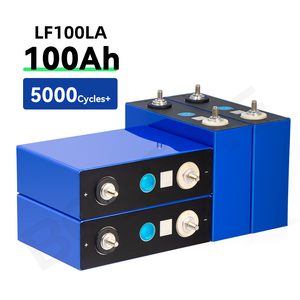
Transitioning from lead-acid or low-tier lithium to Tier-1 Grade A LFP cells delivers up to 5,000 to 6,000 cycles at 80% DoD, reducing lifetime replacement costs by 64%.
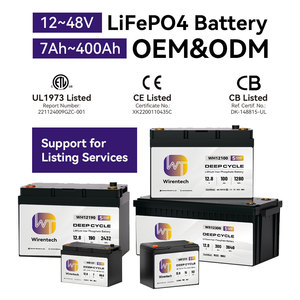
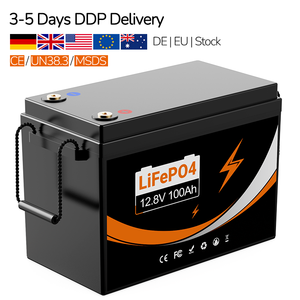
Fully compliant with UN 38.3 transport safety, IEC 62619 industrial storage certification, UL 2580 motive power benchmarks, and European CE/RoHS directives.
Selecting the optimal lithium chemistry requires balancing energy density, rate capability, calendar life, and thermal safety margin. China’s tier-1 manufacturers lead global production of Lithium Iron Phosphate (LiFePO4 / LFP), Lithium Nickel Manganese Cobalt Oxide (NMC), and specialized Lithium Titanate (LTO) cells.
| Battery Chemistry | Nominal Voltage | Cycle Life (80% DoD) | Thermal Runaway Threshold | Primary Industrial Application |
|---|---|---|---|---|
| LiFePO4 (LFP) | 3.2V / cell | 4,000 - 6,000+ Cycles | ~270°C (Extremely Safe) | AGVs, AMRs, Stationary Energy Storage, Heavy Forklifts |
| NMC (Nickel Manganese Cobalt) | 3.6V - 3.7V / cell | 1,500 - 2,500 Cycles | ~210°C (Requires Thermal Barriers) | High Energy Density Wearables, Medical Devices, Compact Robotics |
| LTO (Lithium Titanate) | 2.3V / cell | 15,000 - 25,000 Cycles | >300°C (Inherent Safety) | Ultra-Fast Charge AGVs (10C Rates), Sub-Zero Arctic Operations (-30°C) |
| Primary Lithium Thionyl Chloride (Li-SOCl2) | 3.6V / cell | Single Use (10+ Yrs Life) | High Thermal Stability up to 150°C-200°C | MWD / LWD Downhole Drilling, Remote Sensors, Pipeline Inspection Gauges |
Unlike consumer electronics where volume density is paramount, industrial automation prioritizes thermal stability, cycle longevity, and cost-per-kWh-cycle. LFP’s olivine crystal structure prevents oxygen release during mechanical puncture or overcharge, making it the safest choice for high-density warehouse environments and automated factory floors.
A high-capacity industrial battery pack without an intelligent Battery Management System is a liability. Top Chinese manufacturers integrate industrial-grade custom BMS units equipped with high-speed digital signal processors (DSPs) to ensure full operational protection:
Procurement teams must align current RFP criteria with forward-looking engineering developments to avoid technical obsolescence. Key macro trends shaping industrial battery pack manufacturing include:
Next-generation LFP and synthetic graphite anodes allow AMRs to charge at 2C to 4C rates during 5-minute shift breaks, eliminating the need for spare battery swapping stations.
Mandatory digital carbon footprint tracking and ethical cobalt/lithium sourcing data embedded directly into the BMS micro-controller via QR codes and encrypted cloud nodes.
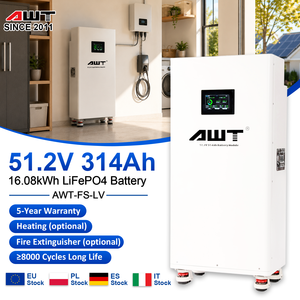
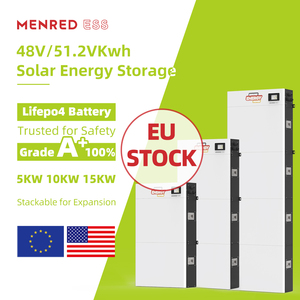
Migration from traditional low-voltage 24V/48V architectures to 102V, 307V, and 512V modular rack systems for large-scale microgrids and automated port equipment.
When auditing custom lithium battery factories in China, enterprise buyers should verify specific quality management standards rather than relying solely on marketing claims:
Cell Sorting & Internal Resistance (IR) Matching: Premier manufacturers perform automated 4-point Kelvin probe testing, matching cells to within ±0.05V voltage variance and ±0.5mΩ internal resistance prior to pack assembly. This step prevents early pack degradation and thermal hot-spots.
Precision Laser Welding vs. Bolted Connections: Automated fiber-laser welding of nickel-copper composite busbars provides minimal contact resistance and superior resistance to heavy industrial shock and vibration compared to traditional mechanical screw terminals.
Full Traceability & MES Tracking: Every battery serial number must link back to individual cell batch data, insulation test records, high-potential (Hi-Pot) safety clearance, and 100% automated aging charge/discharge curve logs.
Expert answers to common engineering, logistics, and customization queries regarding industrial battery procurement.
For custom engineering projects, the prototype phase (BMS design, CAD enclosure modeling, cell matching, and sample build) typically takes 3 to 4 weeks. Once prototype validation and UN 38.3 safety certification are complete, mass production lead times range from 4 to 6 weeks depending on volume.
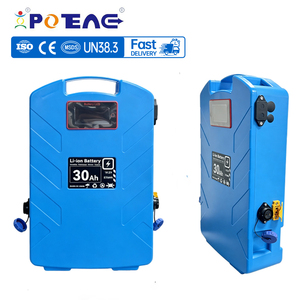
All battery configurations undergo full laboratory testing including altitude simulation, thermal shock, vibration, 50G mechanical shock, external short circuit, impact, overcharge, and forced discharge. Official UN 38.3 test reports and MSDS documents are provided with every shipment for air and ocean freight clearance.
Yes. Our custom Smart BMS solutions support customizable CANbus (CANopen, J1939) and RS485 Modbus protocol maps. We supply technical documentation and data registers so your software engineering team can effortlessly map battery SOC, voltage, temperature, and alarm bits into your PLC architecture.
We partner exclusively with Tier-1 globally audited cell manufacturers including CATL, EVE, Panasonic, Samsung SDI, LG Energy Solution, Molicel, Saft, and Tadiran. 100% cell batch traceability and Grade-A factory test certificates are guaranteed.
Standard LFP chemistry experiences reduced discharge capacity below 0°C and cannot be safely charged sub-zero without damage. For cold-storage automated warehouses (-20°C to -30°C), we integrate internal silicone heater pads controlled automatically by the BMS, or specify specialized low-temperature LFP / LTO cell variants.
We support prototype development with flexible low-volume MOQs (5 to 10 units for evaluation). For standard production runs, MOQs vary based on pack capacity and enclosure complexity, ensuring cost efficiency for both niche industrial machinery and high-volume robot deployments.
Request a complete engineering consultation, custom BMS protocol datasheet, or competitive factory-direct quote for your automation equipment.