Explore our benchmark product line of wall-mounted energy storage systems, custom battery packs, and modular LiFePO4 solutions engineered for maximum density, thermal safety, and multi-inverter protocol compatibility.
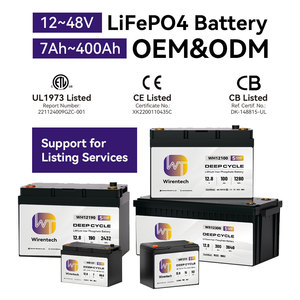
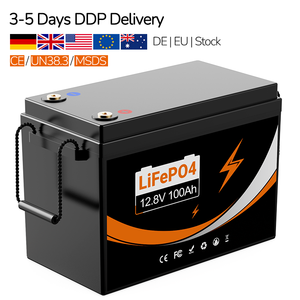
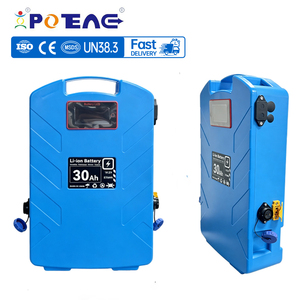
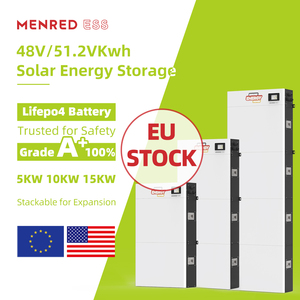
Over four decades of dedicated battery chemistry engineering, backed by certified ISO 9001 manufacturing standard operating procedures, robust cell procurement, and end-to-end custom BMS development.
We work directly with tier-1 cell manufacturers (CATL, EVE, BYD, Panasonic, Saft, Tadiran). Every wall-mounted battery pack utilizes Grade-A, zero-cycle prismatic LFP cells with rigorous cell-matching protocols (ΔV < 5mV, ΔR < 0.5mΩ).
Equipped with custom-engineered Smart BMS supporting dual RS485, CANbus, and Modbus telemetry. Features real-time cell voltage monitoring, thermal shutdown, overcurrent isolation, and active balancing up to 2A per channel.
Operating localized fulfillment hubs across Germany, the Netherlands, and the USA. We offer rapid duty-paid delivery (DDP) to European and North American distributors, ensuring fast stock replenishment without customs hurdles.
The global transition toward decentralized renewable power and residential resilience has transformed the energy landscape. Among energy storage architectures, wall-mounted battery storage systems (Powerwalls) have emerged as the standard for modern residential energy storage systems (RESS) and light commercial applications. China represents over 75% of global lithium iron phosphate (LiFePO4) cell manufacturing capacity and advanced battery pack assembly, placing Chinese OEMs and suppliers at the core of international clean energy procurement strategies.
However, navigating the supplier ecosystem in China requires more than assessing unit costs per kilowatt-hour ($/kWh). Industrial buyers, EPC contractors, solar distributors, and brand OEMs must evaluate internal cell thermal stability, Battery Management System (BMS) communication protocol integration, cycle life validation under elevated ambient temperatures, and compliance with international electrical codes (such as UL1973, UL9540A, CE, and IEC 62619).
“Information Gain in Energy Storage Procurement: True cost efficiency is achieved not by purchasing the lowest-cost pack, but by minimizing Levelized Cost of Storage (LCOS) through strict cell grading, active thermal dissipation, and long-term BMS firmware support.”
Wall-mounted battery packs are engineered to offer high energy density within a compact footprint. Understanding the internal engineering layer helps procurement managers select reliable supplier partners.
Lithium Iron Phosphate (LiFePO4 or LFP) has largely superseded Nickel Manganese Cobalt (NMC) in stationary energy storage due to key safety and physical advantages:
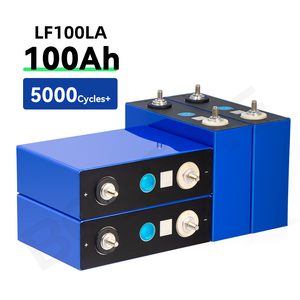
Top China wall-mounted battery storage factories predominantly utilize aluminum-sheathed prismatic cells (e.g., 3.2V 100Ah, 280Ah, 314Ah) rather than smaller 18650 or 28000 cylindrical cells. Prismatic cells reduce internal connection points by up to 90%, minimizing serial resistance, thermal hot spots, and potential point failures across busbar welds.
Premium suppliers employ heavy-gauge cold-rolled steel or aluminum-alloy enclosures with IP65 weather-resistance ratings. Internal layouts isolate high-voltage power components from sensitive telemetry logic boards. Anti-seismic mounting brackets and internal fire-retardant aerosol suppression cushions add protection against physical impacts or grid power surges.
The Battery Management System (BMS) serves as the primary controller of a wall-mounted storage pack. A common point of integration failure during field deployment is protocol mismatch between the battery BMS and hybrid solar inverters.
Leading Chinese battery manufacturers supply smart BMS architectures equipped with dual isolated CANbus and RS485 communication channels. This ensures plug-and-play integration with major inverter brands globally, including:
Standard consumer-grade batteries use passive balancing, bleeding off excess charge as waste heat (typical balance current 30mA–50mA). Industrial-grade wall batteries feature active balancing circuits capable of transferring up to 2A–5A of balancing current between mismatched cells. This prevents cumulative capacity drift over years of operation, unlocking up to 15% more usable energy over the lifecycle of the system.
Procurement teams must align their sourcing strategies with evolving technology standards and market dynamics. Key global market trends shaping the 2025–2030 procurement outlook include:
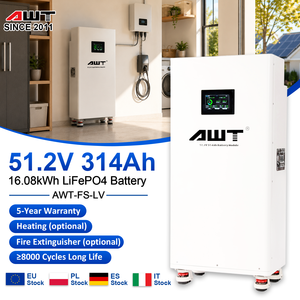
The energy storage industry is shifting from standard 280Ah cells toward next-generation 314Ah and 320Ah prismatic cells within the same physical dimensions. This yields a 12% increase in volumetric energy density, allowing wall-mounted units to offer 15kWh to 16kWh of usable storage within slim chassis designs without increasing wall-mounting load requirements.
Leading factories now embed Wi-Fi / 4G IoT modules directly into the battery BMS. End-users and grid operators can monitor cell-level state-of-charge (SoC), state-of-health (SoH), and internal temperatures remotely via mobile applications or web platforms. AI algorithms analyze historical charge/discharge telemetry to predict cell degradation trends and alert technical support before hardware faults occur.
While 48V/51.2V low-voltage (LV) systems remain the standard for residential retrofit applications, demand for high-voltage (HV) wall-mounted architectures (ranging from 192V to 400V DC) is expanding rapidly. High-voltage configurations reduce DC current flow, lowering cable copper cross-section requirements and system thermal losses while increasing round-trip efficiency (RTE) to over 96%.
Regulatory authorities in North America and Western Europe enforce stringent safety compliance. Merely holding a cell-level UL1642 or UN38.3 test report is no longer sufficient. International buyers now require full system-level UL9540A fire propagation test reports to verify that cell-to-cell thermal runaway cascading is prevented within the battery enclosure.
Behind manufacturing innovations lie several technical trends altering battery production and operational lifespans:
Manual bolt connections and hand welding have been largely phased out by Tier-1 Chinese suppliers. Modern production lines utilize fully automated continuous-wave fiber laser welding machines. Automated Optical Inspection (AOI) systems inspect weld depth, surface consistency, and electrical contact resistance, virtually eliminating human assembly error.
To withstand extreme operating conditions, high-end wall batteries incorporate nano-silica aerogel thermal insulation blankets between adjacent cells. In the event of an isolated cell defect, the aerogel barrier limits heat transfer to adjacent cells, preventing systemic thermal runaway.
Top manufacturers design batteries with end-of-life recycling in mind. Modular cell retention systems replace potted glues with mechanical fastening frames. This allows for straightforward disassembly, cell sorting, and raw material extraction (lithium, copper, aluminum) at end-of-life, supporting corporate sustainability goals and compliance with the EU Battery Regulation.
To avoid supplier selection pitfalls, overseas procurement teams should use a structured technical evaluation framework when auditing prospective Chinese factories:
Answers to critical engineering, logistics, and commercial questions faced by solar distributors, system integrators, and OEM procurement managers.
Our wall-mounted battery systems use premium automotive Grade-A LFP prismatic cells, yielding over 6,000 continuous cycles at 80% Depth of Discharge (DoD) under standard 25°C operating conditions. This equates to an operational service life exceeding 15 years under daily cycling conditions.
Our standard 51.2V smart BMS architecture supports up to 16 battery packs connected in parallel without requiring an external controller hub. This allows seamless scaling from a single 5kWh or 15kWh wall unit up to 240kWh total energy storage for light commercial or estate power backup.
Yes. Our smart BMS features integrated multi-protocol firmware auto-selection. It natively supports CANbus and RS485 communication protocols for major global inverter manufacturers, including Victron, Deye, Growatt, Sol-Ark, Sofar, GoodWe, SMA, and Luxpower. Protocol switching can be adjusted via touchscreen or Bluetooth app.
All battery packs carry complete international transport certification packages, including UN 38.3 cell/pack test reports, MSDS (Material Safety Data Sheets), Dangerous Goods (DG) export packages, and drop-test packaging verification compliant with IMO/ICAO maritime and aviation regulations.
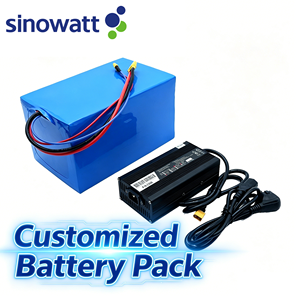
Yes, we specialize in comprehensive OEM/ODM solutions. We offer silk-screen logo placement, custom sheet metal color powder-coating, unique hardware branding, customized packaging, and tailor-made BMS software protocols to meet your exact market positioning.
Safety is integrated into every engineering layer. We utilize Grade-A LiFePO4 cells with high thermal decomposition thresholds, place nano-aerogel insulation blankets between cells, embed multi-point temperature sensors monitored 24/7 by the BMS, and incorporate mechanical pressure-relief vents into the IP65 steel chassis.
Connect directly with our engineering team to request technical datasheets, factory audit documentation, or custom OEM project quotes.
Get a Quote