China Best Off-Grid Solar Power Storage Packs Factories & Supplier

Tier-1 Industrial White Paper & B2B Procurement Benchmark Guide for Utility, Commercial, and Residential Off-Grid Energy Systems
Factory Direct Catalog

Featured Off-Grid Solar Energy Storage Packs

High-capacity LiFePO4 battery modules equipped with Grade-A prismatic cells, intelligent multi-protocol BMS, and EU/US warehouse immediate dispatch capability.

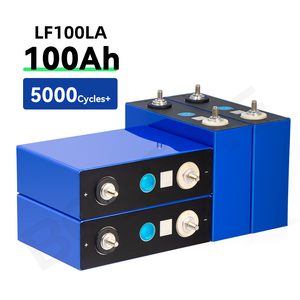
Grade A 5000+ Cycles Grade A 5000 Cycles 3.2V 100AH LFP Prismatic Cells Lithium Iron Phosphate Battery

Grade A 5000 Cycles 3.2V 100AH LFP Prismatic Cell Battery 12V 24V 48V for RVs & Off-Grid Solar

Nominal Capacity:100Ah / 3.2V
Cycle Life:>5000 Cycles @80% DOD
Application:RVs, Marine, Solar Storage
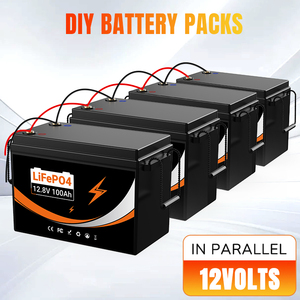
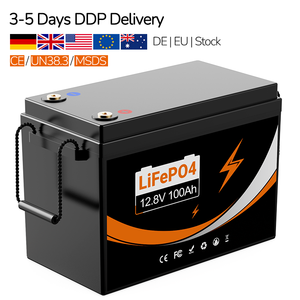
EU Stock / Duty Paid EU Stock 12v 24v 100ah 120ah 200ah 300ah Lifepo4 Iron Phosphate Battery

EU Stock 12V/24V 100Ah-300Ah LiFePO4 Iron Phosphate Pack with Integrated Grade A Cells

Voltage Options:12.8V / 25.6V
Scalability:Up to 100kWh Stackable
Logistics:3-7 Days EU Delivery
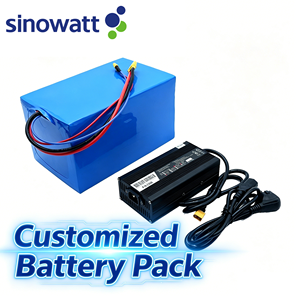
Custom OEM BMS Reliable Supplier Customized Battery Pack with BMS Li-ion LiFePO4

Customized Industrial Battery Pack Solutions with Smart BMS (10S1P 7S2P 3S10P Configurations)

Chemistry:LiFePO4 / Li-ion NCM
BMS Features:CANbus / RS485 / Bluetooth
Customization:Voltage, Casing, Pinout
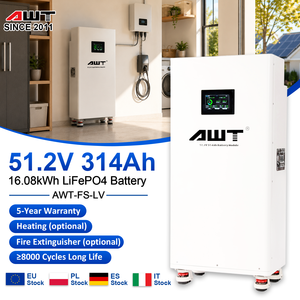
High Density 314Ah Eu Stock Solar Energy System Lithium Ion Batteries Pack 15Kwh 16KWH 51.2V

15kWh/16kWh Home Energy Storage System 51.2V 280Ah/314Ah LiFePO4 Server Rack Battery

Energy Rating:14.3kWh - 16.0kWh
Inverter Match:Victron, SMA, Deye, Growatt
Enclosure:Heavy-duty 19" Rackmount
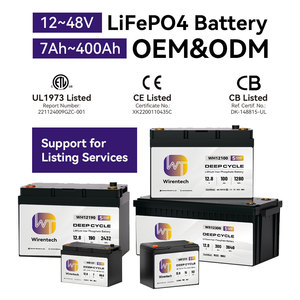
Deep Cycle Marine Customized 12V 24V 36V 48V Rechargeable Lifepo4 Solar Storage Battery

Custom 12V 24V 36V 48V Rechargeable Solar Storage Battery 50Ah-300Ah for Golf Carts & Marine

Protection:IP65 Waterproof Casing
Weight Efficiency:70% Lighter than Lead-Acid
Operating Temp:-20°C to +60°C Discharge
DE Stock No Tax EU DE Stock NO TAX 12V100Ah 200Ah 300Ah Lithium Phosphate Pack

EU DE Stock Tax-Free 12V/24V 100Ah 200Ah 300Ah Lithium Iron Phosphate Battery Pack

Terminal Type:M8 Heavy-Duty Brass
Internal Resistance:<0.5mΩ High Consistency
Tax Policy:0% VAT EU B2B Wholesale
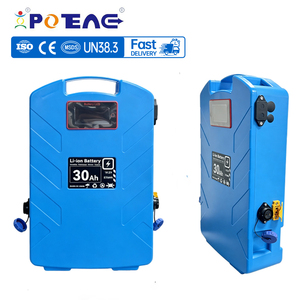
Portable Backpack POEAE Customizable High Capacity 19.2V 30Ah Lithium LiFePO4 Backpack Battery Pack

Customizable High-Capacity 19.2V 30Ah LiFePO4 Backpack Battery Pack for Tactical & Field Power

Form Factor:Wearable / Field Portable
Voltage Output:19.2V Nominal (6S LFP)
Durability:MIL-STD Drop & Shock Tested
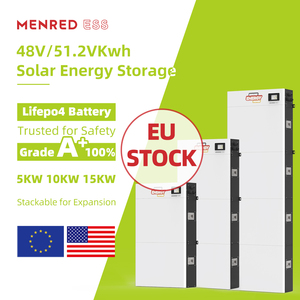
Modular Stackable 5kw 10kw 20kw 30kw 50kw Lifepo4 Whole House Battery Solar Battery

5kW-50kW Stackable High-Voltage Whole House Solar Storage LiFePO4 Backup System

System Range:5kWh to 50kWh Modular
Bus Voltage:102.4V - 512V HV Options
Features:Self-Heating & Fire Suppression
78% Global LFP Cell Supply Share
6000+ EoL Cycles @ 0.5C 80% DoD
< $68/kWh Pack-Level OEM B2B Cost Target
ISO 9001 Certified Quality Management

1. Executive Strategic Overview: China's Dominance in Off-Grid Solar Storage Pack Manufacturing

The global energy landscape is undergoing an unprecedented structural transition toward decentralization. Off-grid renewable energy ecosystems—encompassing microgrids, remote industrial stations, agricultural irrigation, telecommunication base stations, and self-sufficient residential properties—demand energy storage architectures with extreme longevity, low levelized cost of storage (LCOS), and zero thermal runaway volatility. Within this macro demand wave, global procurement directors, EPC contractors, and OEM distributors are systematically consolidating their supply chains with China's premier off-grid solar storage pack factories.

China currently commands over 78% of the global lithium iron phosphate (LiFePO4 / LFP) cell manufacturing output and over 85% of the refined lithium, iron, and synthetic graphite processing capacities. The country's competitive advantage in battery pack manufacturing extends far beyond low labor costs; it is anchored in end-to-end supply chain integration, advanced robotic automation, rigorous automated optical inspection (AOI), and unmatched economies of scale.

Energy Storage Parameter Lithium Iron Phosphate (LiFePO4) Nickel Manganese Cobalt (NCM) Traditional Lead-Acid (AGM/GEL)
Cycle Life (80% DoD) 4,000 - 8,000 Cycles 1,500 - 2,500 Cycles 500 - 1,200 Cycles
Thermal Runaway Temp > 270°C (Extremely Safe) ~ 210°C (Requires Active Liquid Cooling) N/A (Thermal runaway risk via hydrogen emission)
Depth of Discharge (DoD) up to 90% - 100% 80% - 90% 50% Maximum Recommended
Levelized Cost (LCOS) < $0.04 / kWh / Cycle $0.09 / kWh / Cycle $0.18 / kWh / Cycle
Volumetric Energy Density 320 - 400 Wh/L 550 - 700 Wh/L 70 - 90 Wh/L

As highlighted in the engineering matrix above, LiFePO4 chemistry has established absolute hegemony over off-grid solar energy storage. Chinese manufacturing giants have optimized prismatic cell manufacturing (notably 280Ah, 302Ah, and the new generation 314Ah Form Factors), pushing pack-level energy efficiency above 95% while drastically compressing unit production expenses.

Market Foresight

Future Procurement Trends for Solar Storage Packs (2026–2030)

Key technological shifts and supply chain dynamics every B2B battery buyer, distributor, and system integrator must navigate to maintain competitive advantage.

1. Transition to 314Ah+ Next-Gen Cells

Leading Chinese factories are rapidly shifting from classic 280Ah cells to high-density 314Ah and 320Ah prismatic cells. This migration yields a 12% increase in volumetric energy density within identical standard 19-inch rack footprints, reducing total system balance of plant (BOP) cost by up to 8%.

2. High-Voltage (HV) Stackable Architectures

While low-voltage 48V/51.2V systems remain standard for residential off-grid setups under 20kWh, commercial and industrial off-grid projects are adopting High-Voltage (102V to 800V DC) stackable battery arrays. HV architectures reduce internal I²R line losses, optimize inverter conversion efficiency to 98%+, and lower copper cabling gauge requirements.

3. Localized Overseas Warehousing (EU/US Stock)

Leading Chinese solar storage manufacturers are scaling localized warehouse hubs across Germany, the Netherlands, Poland, and the United States. This strategy empowers global buyers to order duty-paid (DDP) stock with zero lead-time, avoiding month-long maritime transit delays and capital lockups.

4. AI-Driven Smart BMS & Active Balancing

Conventional passive balancing BMS (wasting excess energy as heat via resistor dissipation) is being superseded by active inductive dynamic balancing BMS. Coupled with IoT cloud telemetry and edge AI predictive algorithms, modern packs can detect cell degradation, internal micro-short circuits, and thermal anomalies weeks before operational failure.

5. Carbon Passport & ESG Traceability

Driven by strict international battery regulations (such as the EU Battery Regulation 2023/1542), top-tier Chinese manufacturers now integrate digital QR battery passports. This provides absolute supply chain transparency, tracking recycled material ratios, cobalt/nickel-free certification, and scope 1-3 manufacturing carbon footprints.

Core Enterprise Superiority & Engineering Trust Benchmarks

Selecting an off-grid solar storage battery supplier requires evaluating comprehensive manufacturing integrity, engineering rigor, and financial stability. Drawing upon over 40 years of combined battery pack design lineage, ISO 9001 certified quality control systems, and strategic Tier-1 cell vendor alliances (including direct strategic sourcing partnerships with CATL, EVE, BYD, REPT, and Molicel), top-tier OEM Chinese factories provide unparalleled supply chain security.

Full-Lifecycle Customization (OEM/ODM)

From initial thermal simulation modeling (ANSYS Fluent), 3D CAD structural enclosure design, and custom PCB BMS firmware development, factories support full turn-key design customization tailored to harsh climatic conditions—from sub-zero Arctic freeze to +60°C desert environments.

Strict Quality Control & Testing Protocol

Every battery module undergoes 100% end-of-line dynamic charging/discharging tests, automated cell matching (ΔCap < 0.5%, ΔIR < 0.3mΩ), high-pot voltage insulation testing, thermal shock chambers (-40°C to +85°C), and 3-axis vibration endurance simulation.

Global Certification Compliance

Full international certification portfolio ensuring smooth customs clearance and grid connection approvals worldwide: UN 38.3 (transport safety), CE-EMC, IEC 62619 (industrial safety), UL 1973 (stationary battery safety), UL 9540A (unit-level thermal runaway fire safety), and ATEX/HAZLOC explosive atmosphere compliance.

User Intent Mining

B2B Off-Grid Solar Storage Procurement FAQs

Expert answers to technical, commercial, and logistical inquiries frequently encountered by procurement managers during factory selection.

Q1: How do Chinese factories verify and guarantee Grade A cell quality vs Grade B/recycled cells?

Top-tier factories provide factory-issued OCV/IR testing reports for every cell batch, complete with original manufacturer QR codes laser-etched onto the cell terminal cover. Furthermore, automated scanning prevents cell re-wrapping. B2B buyers can request trace data showing dynamic cell capacity consistency within ΔCap ≤ 0.5% and internal resistance variance ≤ 0.3mΩ.

Q2: What are the key compatibility parameters between off-grid battery packs and solar inverters?

BMS protocol integration is paramount. Reliable battery suppliers pre-program dual CANbus and RS485 communication protocols into the BMS hardware, offering plug-and-play auto-recognition with major global inverter brands (including Victron Energy, Deye, Growatt, Luxpower, Voltronic, Sol-Ark, and Schneider Electric).

Q3: Why is LiFePO4 preferred over NCM for off-grid energy storage applications?

While NCM boasts higher volumetric density for passenger EVs, LiFePO4 is non-flammable under thermal shock, offers over double the cycle life (6,000 vs 2,000 cycles), exhibits lower self-discharge rates, and operates without expensive, ethically problematic cobalt. For stationary off-grid storage where physical weight is secondary to long-term LCOS and absolute safety, LiFePO4 is the industry benchmark.

Q4: How does low-temperature charging protection function in cold-climate off-grid setups?

Lithium plating occurs if LiFePO4 cells are charged below 0°C (32°F), causing permanent capacity loss and internal short circuits. Advanced Chinese battery packs incorporate smart BMS low-temp cut-offs alongside integrated internal PTC heating film pads. When solar PV power initiates in sub-zero environments, current is first directed to warmup heating elements until internal cell temperatures reach +5°C before charging begins.

Q5: What are the advantages of sourcing from EU/US localized stock versus direct sea freight shipping?

Ordering from overseas factory-owned warehouses reduces delivery lead-time from 45–60 days down to 3–7 business days. Furthermore, localized warehouses handle import customs, anti-dumping tariffs, and tax compliance (DDP), eliminating administrative burdens and allowing regional distributors to operate leaner inventory models.

Q6: How many battery modules can be safely connected in parallel or series?

For low-voltage 48V/51.2V systems equipped with active parallel-control BMS, up to 15 to 32 battery packs can be paralleled simultaneously without requiring external busbars, expanding capacity up to 500kWh+. Series connection depends on cell design; standard server-rack packs are strictly designed for parallel expansion, whereas High-Voltage (HV) stackable modules utilize dedicated HV control boxes to series-connect up to 1,000V DC.

Q7: What is the real-world lifespan expectation of a 5000-cycle solar storage battery pack?

Assuming one complete 80% DoD charge/discharge cycle per solar day, 5000 cycles equate to approximately 13.7 years of daily continuous operation. Under ambient temperatures (25°C) and moderate charge rates (0.5C), quality LiFePO4 packs routinely retain over 70% of original capacity past 15 years.

Q8: What minimum safety certifications should be verified before importing battery packs?

At a minimum, UN 38.3 test reports (including altitude simulation, thermal test, vibration, shock, external short circuit, impact, overcharge, and forced discharge) and MSDS are mandatory for international transport. For installation compliance, IEC 62619, CE-EMC, and UL 1973 or UL 9540A certification reports are essential.

Accelerate Your Off-Grid Battery Sourcing Strategy

Connect directly with our senior battery engineering team for custom engineering consultation, factory-direct OEM pricing, sample requests, and instant EU/US inventory availability.