China Best Low Temperature Lithium Battery Solutions Manufacturer & Factory

Pioneering Sub-Zero Electrochemical Engineering, Custom BMS Thermal Integration & Industry-Grade Battery Manufacturing Operating Down to -50°C

Premier OEM / ODM Product Catalog

Featured Sub-Zero Lithium Battery Solutions

Engineered for extreme sub-zero operation, aerospace high-altitude UAVs, energy storage thermal management, cold-chain GPS tracking, and industrial electric vehicles.
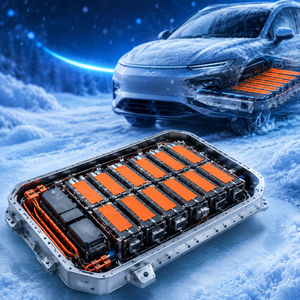
Custom LiFePO4 Battery Heater Pad Silicone Rubber Heating Solution Thermal Management

Custom LiFePO4 Battery Heater Pad Silicone Heating Solution

  • Integrated PTC self-regulating heating elements
  • Silicone rubber insulation with uniform heat distribution
  • BMS automatic sub-zero pre-heating interlock
Inquire Now
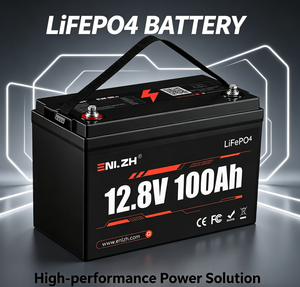
LiFePO4 12V 100Ah Solar Battery Storage Low-temp Cut-off -20°C Charge Cut-off

12V 100Ah TM LiFePO4 Low-Temp Cut-off Solar Storage Battery

  • Smart Low-Temp Charge Protection BMS
  • 4000+ Deep Cycles at 80% DOD
  • Maintenance-free solar energy storage cell array
Inquire Now
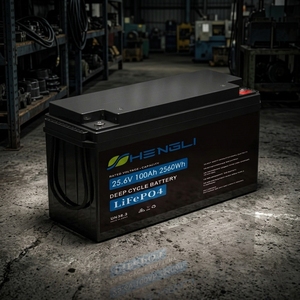
Semi-solid State Lithium Battery 25.6V 50Ah 100Ah -20C Discharge -20°C High Discharge

25.6V Semi-Solid State Low-Temp LiFePO4 Forklift Battery

  • High-density semi-solid state electrolyte matrix
  • 85% capacity retention at -20°C ambient discharge
  • High rate discharge for industrial AGVs & forklifts
Inquire Now
High Altitude Industrial UAV 14.8V 19000mAh 450Wh/kg Solid State Battery -40°C Ultra-Low Proof

14.8V 19Ah 450Wh/kg UAV Ultra Low-Temp Solid State Battery

  • Ultra-high energy density: 450 Wh/kg ratio
  • Operates down to -40°C sub-zero flight conditions
  • Custom high-altitude drone payload optimization
Inquire Now
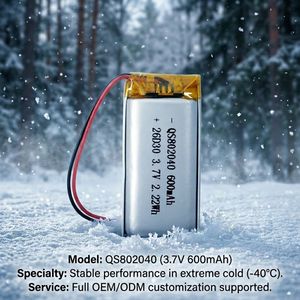
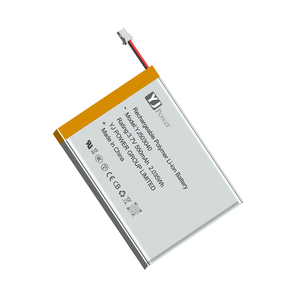
Low-temperature Lipo Pouch Battery 600mAh 3.7V -40C GPS -40°C GPS Tracking

3.7V 600mAh -40°C Low-Temp LiPo Pouch Cell for GPS Tracking

  • Ultra-thin pouch packaging (QS802040 format)
  • Sustained current delivery under freezing conditions
  • Ideal for IoT asset trackers & cold-chain telemetry
Inquire Now
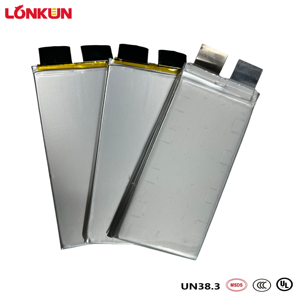
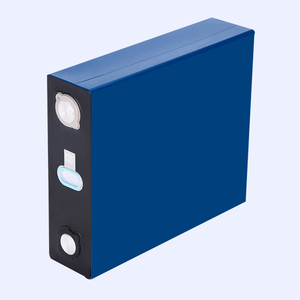
Prismatic Low-Temperature Lithium Iron Phosphate Cells Prismatic Grade A

Wholesale Prismatic Low-Temperature LiFePO4 Cells

  • Low internal resistance (IR) sub-zero formula
  • High safety aluminum prismatic cell housing
  • Custom capacity grade matching for B2B packs
Inquire Now
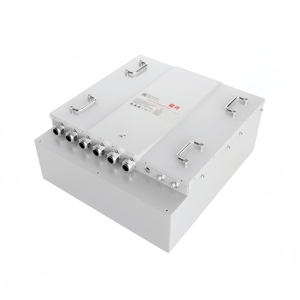
Low Temperature Heating LiFePO4 Liquid Batteries Integrated Heating

Self-Heating Low Temperature LiFePO4 Long-Cycle Battery

  • Internal warm-up mechanism before charging cycles
  • 3500+ extended lifecycle under cold climates
  • High-durability ABS/Steel casing for heavy machinery
Inquire Now
Custom Low Temperature Rechargeable Battery for Heating Garments Wearable Tech

Custom 3.7V 550mAh Low-Temp Battery for Heated Apparel

  • Lightweight polymer build tailored for smart garments
  • Stable output voltage in extreme sub-zero weather
  • Multiple circuit safety protection (OVP/OCP/SCP)
Inquire Now
-50°C
Extreme Discharge Floor
85%+
-20°C Capacity Retention
450 Wh/kg
Peak Solid-State Density
ISO 9001
Audited Quality Facility
Technical Whitepaper Insights

Engineering Low-Temperature Lithium Ion Batteries: Electrochemical Mechanics & Information Gain Analysis

In standard lithium-ion battery chemistries, exposure to sub-zero temperatures (below 0°C to -40°C) triggers severe physical and electrochemical bottlenecks. Standard liquid electrolytes experience drastic viscosity spikes, charge transfer resistance increases at the solid-electrolyte interphase (SEI), and lithium-ion diffusion within the graphite anode slows exponentially. Left unaddressed, forcing standard lithium cells to charge under freezing conditions leads to destructive lithium plating—causing micro-dendrite formation, permanent capacity degradation, and catastrophic thermal runaway risks.

As China’s leading custom low-temperature lithium battery manufacturer, our engineering team solves sub-zero performance constraints at the atomic level through three core scientific innovations:

Low-Viscosity Ternary Electrolyte Formulations

We blend customized organic solvents (such as low-freezing point linear carbonates like ethyl acetate and fluorinated carbonate additives) with high-conductivity LiPF6/LiFSI lithium salts to maintain high ionic conductivity (>1.5 mS/cm) even at -40°C.

Nano-Structured Electrode Modifications

By engineering nano-scale primary cathode particles (NMC/LiFePO4) and ultra-thin, low-impedance artificial SEI layers on silicon-carbon anodes, we drastically reduce ion insertion energy barriers during sub-zero operation.

Smart PTC Self-Heating BMS Architectures

For heavy-duty applications requiring rapid sub-zero charging, our smart BMS controls flexible silicone heater matrices or internal AC pulse self-heating circuits to elevate core temperature to >0°C within minutes prior to charging.

Information Gain Key Takeaway: Unlike generic battery assembly shops that rely on standard off-the-shelf cells wrapped in insulation tape, our manufacturing plant designs custom electrochemistry chemistry formulations tailored specifically to your operational ambient temperature spectrum (-20°C, -40°C, or -50°C), ensuring maximum specific energy retention without lithium plating risks.

Sub-Zero Battery Technology Electrochemical Performance Comparison

Electrochemical Metric Standard LiFePO4 Battery Standard NMC Lithium Ion China Best Low-Temp LiFePO4 China Best Low-Temp Solid State
Discharge Temp Floor -10°C -20°C -40°C -50°C
Capacity Retention @ -20°C 35% - 45% 50% - 60% 82% - 88% 90% - 94%
Capacity Retention @ -40°C 0% (Inoperable) <15% 65% - 72% 80% - 85%
Direct Charge Temp Floor 0°C (Requires Heat) 0°C (Requires Heat) -20°C (Direct Low C-rate) -30°C (Direct Charge)
Cycle Life (25°C / 80% DOD) 2000 - 3000 800 - 1200 4000+ Cycles 2500+ Cycles
Primary B2B Target Market Indoor Commercial UPS Standard Consumer Electronics Cold-Chain, AGV, Solar ESS UAV, Aerospace, Defense, Arctic
Technology R&D Roadmap

Key Technological & Industry Development Trends

As global industries expand into polar robotics, aerospace exploration, cold-chain logistics, and high-altitude energy storage, low-temperature lithium technology is evolving rapidly.

1. Semi-Solid & Solid-State Low-Temp Electrolization

Liquid electrolytes inevitably freeze or increase in internal viscosity as ambient temperatures drop below -30°C. The transition toward solid-state and semi-solid polymer electrolytes eliminates liquid freezing risks while providing energy densities exceeding 400 Wh/kg for high-altitude UAV flight missions.

2. Internal Pulse Self-Heating Technology

Traditional external resistive heater pads waste precious battery power warming external casings. Next-generation low-temperature batteries utilize high-frequency AC pulse currents generated by intelligent BMS logic, causing ions inside the cell matrix to oscillate rapidly and warm the core uniformly within 120 seconds.

3. Cloud-Connected Sub-Zero BMS Telemetry

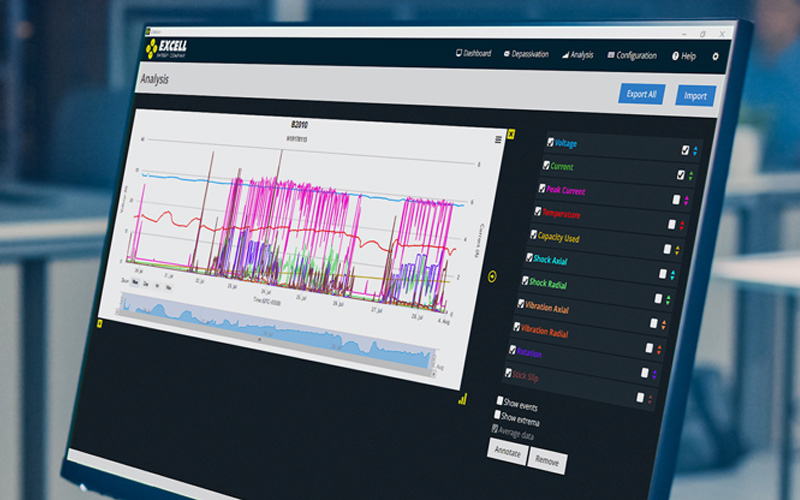
Modern B2B battery systems now integrate IoT telemetry protocols (CANbus, SMBus, RS485, Bluetooth LE) directly into low-temperature BMS designs. Fleet engineers monitor cell internal impedance variations, charge acceptance limits, and thermal gradients in real time from cloud dashboards.

Strategic Sourcing Blueprint

Future Procurement Trends for Global B2B Buyers

Navigating international supply chains, environmental compliance, and OEM custom engineering requirements when sourcing sub-zero energy systems from China.

• Total Cost of Ownership (TCO) Shift

Procurement directors are shifting away from initial unit purchase price toward lifecycle TCO. Sourcing high-cycle low-temperature LiFePO4 cells reduces replacement downtime in remote solar stations and cold-storage AGV facilities by up to 65% over a 10-year operating horizon.

• Turnkey Module Integration (Pack + BMS + Heating)

Rather than sourcing cells, heater pads, and BMS components separately, global OEMs prefer turnkey sub-assembly modules certified together under UN38.3, UL1642, and IEC62133. This eliminates system integration friction and accelerates time-to-market.

• Dual-Chemistry & Hybrid Battery Configurations

Procurement trends point toward hybrid energy storage systems that pair high-capacity sub-zero LiFePO4 prismatic cells with high-power-density ultracapacitors or LTO (Lithium Titanate) starter units to deliver instant sub-zero cranking power alongside long sustained runtimes.

Factory Manufacturing Infrastructure

Why Partner with China’s Leading Low-Temp Battery Factory?

Bringing together 40+ years of collective electrochemistry heritage, rigorous ISO 9001 certified manufacturing controls, and international compliance assurance.

Custom Low Temperature Lithium Battery Pack Manufacturing Line

Automated Cell Sorting & Laser Welding

Our factory utilizes fully automated 5-tier internal resistance and voltage capacity matching equipment to ensure tight cell delta tolerances (<5mV), followed by robotic laser tab welding for robust sub-zero vibration resilience.

Low Temperature Lithium Battery Testing and BMS Diagnostics Lab

Environmental Sub-Zero Testing Chambers

Every custom pack batch undergoes full thermal shock testing, sub-zero temperature soak cycles down to -60°C, altitude simulation, and UN38.3 vibration testing inside our in-house certified testing laboratory.

Global Supply Chain Logistics and Cell Manufacturer Partnerships

Direct Global Supply Chain Network

We maintain direct tier-1 strategic cell supply agreements with world-class cell manufacturers, ensuring authentic Grade-A cell chemistry, full lot traceability, and reliable global freight shipping compliance.


Audited Tier-1 Cell & Component Partners
Panasonic
Samsung SDI
LG Energy
Molicel
Saft
Tadiran
ISO 9001 Certified Intertek Certified SWEDAC Certified
B2B Procurement Knowledge Base

Low Temperature Lithium Battery Sourcing FAQ

Answers to common engineering and commercial queries from B2B buyers, OEM product managers, and system integrators.

Q1: Why cannot standard lithium batteries be charged below 0°C without custom low-temp engineering?
Charging standard lithium batteries at sub-zero temperatures forces lithium ions to deposit directly onto the graphite anode surface as metallic lithium rather than intercalating into the carbon layers. This phenomenon—known as lithium plating—permanently reduces battery capacity, creates internal micro-short circuits, and drastically increases thermal runaway risks. Our custom low-temperature solutions utilize specialized electrolyte additives and smart pre-heating BMS protection to prevent lithium plating entirely down to -40°C.
Q2: What is the difference between Low-Temp Discharge batteries and Low-Temp Chargeable batteries?
Discharging at sub-zero temperatures is chemically easier than charging. A low-temperature discharge battery is engineered to deliver sustained current down to -40°C or -50°C, but must still be warmed above 0°C to recharge. A low-temperature chargeable battery features modified anode structures and low-viscosity electrolyte matrices that allow safe, direct charging at -20°C (or relies on an integrated automatic self-heating BMS pad to warm the cells prior to current input).
Q3: How does an integrated battery heater pad solution function under freezing conditions?
Our integrated silicone heating pad solution connects to the battery pack’s smart BMS. When a charger is connected in sub-zero ambient conditions (e.g. -30°C), the BMS temporarily diverts incoming charge power directly into the ultra-thin PTC heater pad matrix wrapped around the cell array. Once internal temperature sensors verify the core cell temperature has reached +5°C, the BMS seamlessly switches current into cell charging mode, guaranteeing 100% safety and prolonged cycle life.
Q4: What custom parameters can China Best Low Temp Battery Factory tailor for OEM projects?
We provide comprehensive turnkey OEM/ODM customization: operating voltage (3.7V up to 800V HV systems), capacity specifications (mAh to hundreds of Ah), physical form factors (prismatic, cylindrical 18650/21700/32700, or ultra-thin LiPo pouch cells), custom IP67/IP68 stainless steel or aluminum enclosures, integrated heating power, and custom BMS communication protocols (CANbus 2.0B, Modbus, RS485, SMBus).
Q5: What international safety certifications do your low-temperature battery packs comply with?
All our low-temperature lithium battery designs are built to pass UN 38.3 (transportation safety), IEC 62133-2, UL 1642 / UL 2054, CE, RoHS, and REACH requirements. For specialized explosive environment applications (mining, oil & gas), we supply custom ATEX and HAZLOC compliant battery pack solutions.
Q6: What is the typical manufacturing lead time for custom prototype samples and mass production?
Initial engineering design proposals and CAD/BMS schematics are finalized within 3 to 5 working days. Custom prototype samples (including 3D printed housing validation and thermal chamber testing) are generally delivered in 2 to 3 weeks. Mass production lead times range from 3 to 5 weeks depending on cell volume and enclosure complexity.

Partner with China's Premier Sub-Zero Lithium Battery Manufacturer

Contact our senior electrochemistry engineers today to request technical datasheet specifications, customized design proposals, or instant bulk factory pricing for your low-temperature application.

Inquire Now