Explore our flagship lithium iron phosphate (LiFePO4) and customizable battery pack modules engineered for hazardous locations, energy storage systems, and heavy-duty industrial applications.
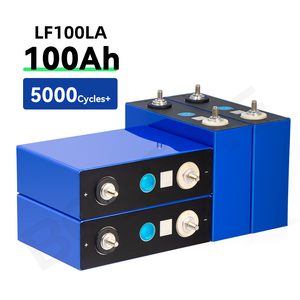
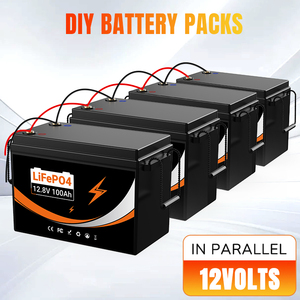
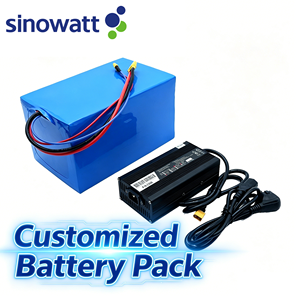
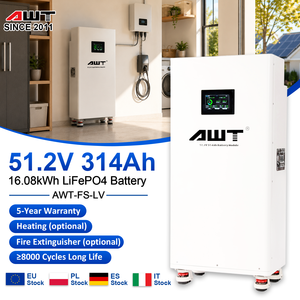
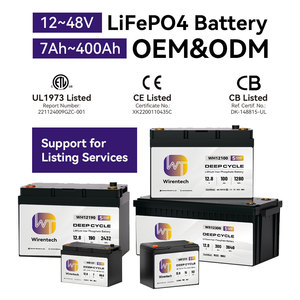
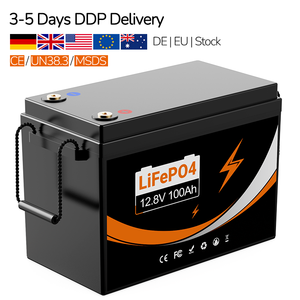
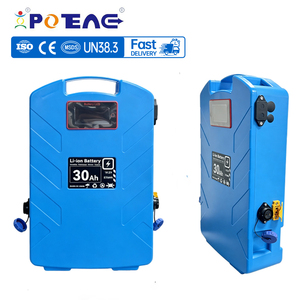
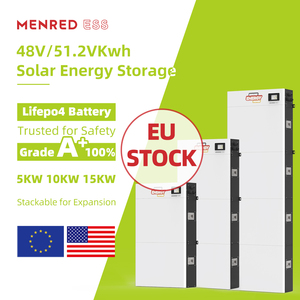
Operating electronic instrumentation, downhole monitoring tools, pipeline inspection gauges (PIGs), and tactical wireless nodes in potentially explosive atmospheres demands energy storage solutions designed to rigorous safety standards. As a premier hub for high-reliability energy hardware, China's leading intrinsically safe battery module suppliers and exporters have bridged the gap between cutting-edge energy density and uncompromising thermal-electrical safety.
Intrinsically Safe (IS) design protection concept (standardized under IEC 60079-11, ATEX 2014/34/EU, UL 913, and GB3836) ensures that an electrical system—including its battery power source—is incapable of releasing sufficient electrical or thermal energy under normal operating conditions or specified fault conditions to ignite a specific explosive atmospheric mixture (such as methane in coal mines, hydrogen in chemical processing, or hydrocarbon vapours in oil & gas rigs).
Critical Engineering Insight (Information Gain): Unlike flameproof or explosion-proof enclosures (Ex d) which rely on robust mechanical structures to contain an internal explosion, an Intrinsically Safe battery module (Ex ia / Ex ib) prevents ignition entirely by limiting voltage, current, energy storage ($E = \frac{1}{2}LI^2$ and $E = \frac{1}{2}CV^2$), and maximum surface temperatures below ignition thresholds (T-Class rating, typically T4 $\le 135^\circ\text{C}$).
Engineering an intrinsically safe battery module requires a multi-layered defence mechanism across three distinct domains:
To assist global procurement officers, EPC contractors, and OEM design managers in defining exact project specifications, the table below provides a side-by-side comparison of hazardous location battery module topologies.
| Engineering Parameter | Intrinsically Safe (Ex ia) | Intrinsically Safe (Ex ib) | Explosion-Proof (Ex d) |
|---|---|---|---|
| Target Hazardous Zone | Zone 0 / Zone 20 (Continuous Risk) | Zone 1 / Zone 21 (Intermittent Risk) | Zone 1 / Zone 2 (Container Rely) |
| Allowed Fault Tolerances | 2 Independent Component Faults | 1 Component Fault | No Component Fault Requirement (Relies on Enclosure) |
| Primary Safety Mechanism | Energy & Temperature Limitation | Energy & Temperature Limitation | Flame-path Spark Containment |
| Module Weight & Compactness | Ultra-lightweight, Compact Form Factor | Lightweight, Ergonomic Packaging | Heavy, Thick-walled Metallic Enclosure |
| Field Maintenance & Swappability | Hot-swappable in Live Hazardous Zones | Hot-swappable with Hot Work Permit | Strictly Prohibited to Open Live in Zone |
| Typical Battery Chemistry | LiFePO4, Li-SOCl2, Li-Mn-O2 | LiFePO4, Custom Li-Ion with Smart BMS | VRLA, Lead-Acid, Standard Li-Ion Packs |
When selecting a supplier and exporter for intrinsically safe battery modules, global buyers require more than basic assembly capability. Sourcing from top-tier Chinese manufacturers provides strategic procurement advantages built upon comprehensive supply chain integration and rigorous engineering controls.
Our direct access to world-class cell manufacturers (including CATL, EVE, Saft, Tadiran, Panasonic, Samsung SDI, Molicel, and Lishen) guarantees cell consistency, complete lot traceability, and low internal resistance (IR) variations critical for series-parallel balance in Ex-modules.
Custom circuit development featuring SMBus, CANbus (J1939), RS485 (Modbus), and Bluetooth Low Energy (BLE) communication protocols allows real-time state-of-charge (SOC), state-of-health (SOH), cell-level voltage monitoring, and automated safety cut-offs.
Full compliance with ISO 9001 quality management systems, UN 38.3 transport safety testing, IECEx quality assessment reports (QAR), and ATEX production quality assurance notifications (PQAN) ensures smooth global customs clearance and site auditing.
The global industrial energy landscape is undergoing rapid innovation driven by automation, IIoT deployments in hazardous areas, and strict carbon zero mandates. As a result, intrinsically safe battery modules are evolving across several key technological vectors:
Traditional liquid electrolyte lithium batteries present internal short-circuit and leakage hazards when subjected to severe mechanical shock or thermal stress. The industrial energy sector is transitioning toward semi-solid and solid-state electrolyte cells. Solid-state architectures eliminate volatile organic solvents, rendering the battery cell immune to thermal runaway ignition up to temperatures exceeding 350°C—significantly easing the design burden for Ex ia classification.
Modern intrinsically safe modules are replacing passive fuse networks with active, AI-assisted microcontroller protection units. These systems utilize continuous electrochemical impedance spectroscopy (EIS) algorithms to detect microscopic internal dendrite formation, thermal anomalies, and insulation degradation weeks before a fault condition occurs. Furthermore, fast-acting current-limiting semiconductors can disconnect fault currents in less than 2 microseconds, reducing available spark energy to micro-joule levels.
In Measurement-While-Drilling (MWD), Logging-While-Drilling (LWD), and deep subterranean pipeline monitoring, standard commercial batteries suffer rapid breakdown. Modern Chinese exporters specialize in high-temperature primary Lithium-Thionyl Chloride ($\text{Li-SOCl}_2$) and specialized rechargeable LiFePO4 cells built with high-glass-transition-temperature encapsulants and hermetic stainless-steel glass-to-metal seals capable of continuous operation at extreme depths.
Procurement teams sourcing intrinsically safe energy solutions from China face evolving regulatory frameworks, carbon tracking policies, and supply chain strategies. Understanding these trends ensures long-term operational resilience:
Below are authoritative answers to common engineering and commercial questions asked by international buyers, system integrators, and safety compliance managers.
Zone 0 (Continuous Hazard): Requires Ex ia protection. The battery module must remain intrinsically safe even in the event of two independent, simultaneous component faults. Energy and surface temperatures must be limited under extreme failure conditions.
Zone 1 (Intermittent Hazard): Requires Ex ib protection. The module must remain safe under normal operation plus one single component fault.
Zone 2 (Abnormal/Rare Hazard): Requires Ex ic or non-incendive protection, focusing primarily on safe performance under normal operation without catastrophic failure.
A smart intrinsically safe BMS utilizes current-limiting zener diode barriers, high-impedance surface-mount resistors, and encapsulated solid-state switches. The circuit board layout maintains strict creepage and clearance distances (per IEC 60079-11) between high-voltage traces. Any telemetry communication (such as CANbus or Bluetooth) is opto-isolated or galvanically isolated to prevent high voltages from external equipment feeding back into the battery pack.
LiFePO4 (Lithium Iron Phosphate) possesses a highly stable olivine crystal structure with strong P-O covalent bonds. Unlike NMC (Nickel Manganese Cobalt) or LCO (Lithium Cobalt Oxide), LiFePO4 does not release oxygen during thermal breakdown. It exhibits an ignition point over $270^\circ\text{C}$ (compared to $\approx 150^\circ\text{C}$ for NMC), significantly lower heat release rates, and superior cycle life ($>5000$ cycles), making it inherently safer for hazardous atmosphere certifications.
A certified exporter must provide a comprehensive compliance packet containing: 1) UN 38.3 Transport Testing Report and Summary (DGM certified), 2) Material Safety Data Sheet (MSDS) & Safety Data Sheet (SDS), 3) IECEx Certificate of Conformity (CoC) or ATEX Type Examination Certificate (for Ex-rated packs), 4) ISO 9001 Factory Quality Audit, and 5) CE / RoHS / REACH declarations.
Yes. OEM customization is a core strength of specialized Chinese exporters. Engineering teams can design custom PCB shapes, custom cell configuration matrices (e.g., 3S10P, 10S1P), custom CNC-milled or injection-molded casings, and tailored potting encapsulation to fit within tight spaces, such as downhole tool housings or portable gas detectors.
Industrial-grade Ex modules utilize dual-component polyurethane (PU), silicone gel, or epoxy encapsulation materials. These resins must feature high dielectric strength ($>15 \text{ kV/mm}$), thermal conductivity ($>0.8 \text{ W/m}\cdot\text{K}$ to dissipate cell heat), UL 94-V0 flame resistance, and resistance to hydrocarbons, hydrogen sulfide ($\text{H}_2\text{S}$), and industrial solvents.
Whether you require standard off-the-shelf LiFePO4 power modules, ATEX-certifiable downhole battery packs, or custom smart BMS energy systems, our engineering team provides full-lifecycle support from concept to global deployment.