An authoritative technical analysis on volumetric energy optimization, high-rate continuous discharge physics, and international procurement standards for commercial, industrial, and heavy-duty applications.
In the rapidly evolving landscape of electrochemical energy storage, the demand for high power density battery solutions has transitioned from a specialized niche to a mainstream imperative across global industrial sectors. Unlike conventional energy-dense batteries designed primarily for extended low-current discharge cycles, high power density lithium-ion and lithium iron phosphate (LiFePO4) systems are engineered to deliver massive instantaneous current loads, sustain elevated discharge C-rates (ranging from 3C continuous to 30C peak pulse), and withstand aggressive charge-discharge duty cycles without compromising thermal stability or structural integrity.
As global original equipment manufacturers (OEMs), energy system integrators, and industrial engineers evaluate procurement options, China has consolidated its position as the world’s leading factory and export ecosystem for high power density battery solutions. Through complete vertical integration—spanning raw lithium refining, advanced cathode/anode synthesis, precision laser-welded prismatic cell manufacturing, and AI-assisted Battery Management System (BMS) design—Chinese manufacturers offer unprecedented technical flexibility and cost-effectiveness. This whitepaper delivers a comprehensive technical evaluation of high power density architectures, procurement trends, cell sorting methodologies, and core application matching to assist global buyers in establishing resilient, high-performance supply chains.
Explore our top-tier export configurations engineered with Grade-A prismatic cells, custom BMS topology, and international safety compliance.
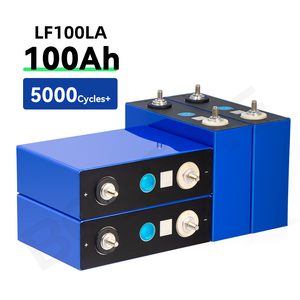
High-discharge prismatic cells for custom 12V, 24V, and 48V RV, marine, and off-grid mobile power systems requiring low internal resistance.
Get Catalog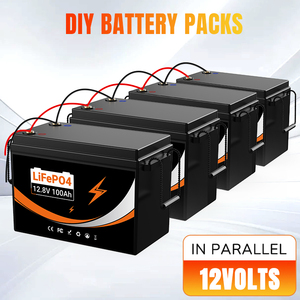
Overseas warehouse ready supply with integrated high-rate BMS for rapid deployment up to 100kWh commercial battery arrays.
Get Catalog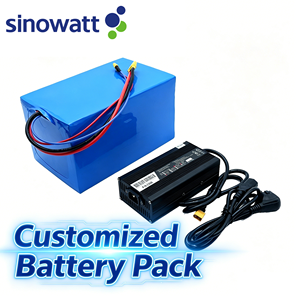
Tailored multi-series lithium-ion and LiFePO4 modules engineered with precision nickel busbars and custom enclosure footprints.
Get Catalog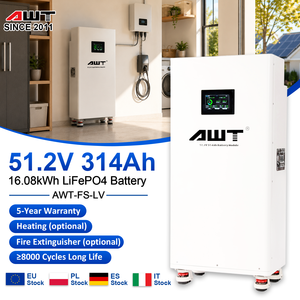
Ultra-dense residential and commercial backup battery modules utilizing 314Ah high-capacity power cells with CAN/RS485 communication.
Get Catalog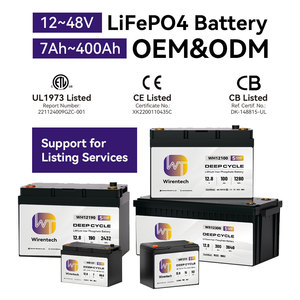
Ruggedized anti-vibration battery enclosure designed for deep-cycle traction, high impulse starter loads, and harsh outdoor environments.
Get Catalog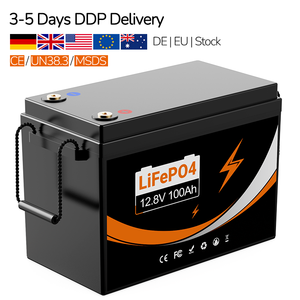
Zero-tariff European spot stock featuring real-time LCD cell voltage monitoring, active cell balancing, and robust thermal isolation.
Get Catalog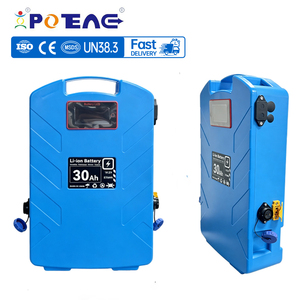
Lightweight, high-gravimetric power density backpack battery designed for field robotics, outdoor survey equipment, and remote operations.
Get Catalog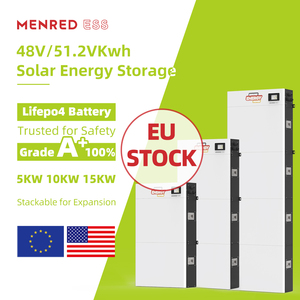
Modular high-power battery storage architecture supporting hot-swappable expansion for commercial microgrids and whole-house backup.
Get CatalogUnderstanding the delicate trade-offs between energy capacity ($Wh/kg$) and instant rate discharge capability ($W/kg$) in high-demand industrial environments.
Achieving superior power density requires optimizing two core vectors: Volumetric Power Density (W/L)—the power output per unit volume—and Gravimetric Power Density (W/kg)—the power output per unit mass. In applications such as heavy electric machinery, emergency grid stabilization, automated guided vehicles (AGVs), and marine propulsion, maximizing volumetric efficiency enables engineers to fit higher peak-rate battery capacity within constrained physical chassis spaces.
Key Engineering Insight: Power density is primarily governed by the internal resistance ($R_i$) of the individual cells, the cross-sectional area of internal current collectors, and the electrical conductivity of the tab-to-busbar connection interface. Reducing internal impedance from 1.5 mΩ down to <0.4 mΩ decreases internal Joule heating ($I^2R$ losses) by over 70% during a 5C continuous discharge pulse.
China's leading high power density battery factories utilize specialized manufacturing techniques to optimize internal cell dynamics:
Utilizing carbon-coated LiFePO4 (LFP) nanoparticles and single-crystal NCM chemistry to accelerate lithium-ion diffusion rates across the electrode-electrolyte interface.
Replacing traditional single-tab cell constructions with multi-tab or tabless cylindrical/prismatic designs to shorten electron travel paths and eliminate localized current hotspots.
Implementation of thick-gauge ultra-pure copper and aluminum busbars joined via automated fiber laser welding to minimize contact resistance ($R_{contact} < 10\ \mu\Omega$).
Choosing the correct chemical system depends on the specific operational environment, space envelope, and duty cycle requirements of your equipment.
| Chemistry Vector | Prismatic LiFePO4 (LFP) | NCM High-Rate Lithium | Lithium Titanate (LTO) | Solid-State (Emerging) |
|---|---|---|---|---|
| Gravimetric Energy Density | 160 – 185 Wh/kg | 240 – 300 Wh/kg | 80 – 110 Wh/kg | 350 – 450 Wh/kg |
| Volumetric Power Density | 3500 – 5000 W/L | 6000 – 9000 W/L | 2500 – 4000 W/L | 10000+ W/L |
| Continuous Discharge C-Rate | 3C – 5C Continuous | 5C – 15C Continuous | 10C – 30C Continuous | 8C – 20C Continuous |
| Cycle Life (80% DOD) | 4,000 – 7,000 Cycles | 1,500 – 3,000 Cycles | 15,000 – 30,000 Cycles | 2,500 – 4,000 Cycles |
| Thermal Runaway Temp | > 270°C (Extremely Safe) | ~ 210°C (Requires Active Cooling) | > 300°C (Ultra Safe) | > 350°C (Inherent Safety) |
| Primary B2B Application | RV, ESS, Marine, AGVs | Robotics, Drones, EV Racing | Heavy Rail, Subsea, Defense | Next-Gen Aerospace & Medical |
Key technological, regulatory, and supply chain shifts shaping B2B lithium battery procurement from China over the next decade.
As international technical specifications become more rigorous, high-power battery buyers must align their procurement strategies with four macro trends driving Chinese battery manufacturing innovation:
Eliminating intermediate modular plastic casings and wiring harnesses directly integrates prismatic cells into structural battery housings. CTP technology increases pack volumetric utilization efficiency from 40% up to 68%, boosting overall energy and power density without raising cell-level costs.
Modern high-rate battery packs now incorporate microcontrollers capable of high-frequency impedance spectroscopy. Intelligent algorithms monitor individual cell health (SOH) and internal temperature in real-time, dynamically adjusting balancing currents to prevent thermal degradation during high C-rate bursts.
By blending synthetic graphite with sub-micron silicon-carbon compounds, Chinese cathode manufacturers are breaking energy density caps while facilitating 10-minute ultra-fast charging capability (0% to 80% SOC) without dendrite formation.
Driven by the EU Battery Regulation, top-tier Chinese battery exporters are implementing full supply-chain digital product passports (DPPs). Global buyers gain complete traceability of raw materials, recycled cobalt/lithium content, and scope 1–3 production emissions.
Combining over 40 years of combined engineering capability with cutting-edge automated production lines, our facility bridge advanced electrochemical R&D with cost-optimized global distribution.
Direct answers from our senior battery engineering team regarding cell sorting, customization, international shipping, and quality assurance.
High power density batteries are specialized electrochemical systems designed to release energy quickly (high current output relative to capacity). While energy-dense batteries prioritize max energy storage per volume ($Wh/L$) for long, slow discharge cycles, power-dense batteries use thinner electrode coatings, higher porosity separators, and multi-tab current collectors to sustain high discharge C-rates (3C to 20C+) without excessive internal heating or voltage sag.
Cell inconsistency is the leading cause of premature battery pack failure. Prior to module assembly, our factory subjects all Grade-A prismatic cells to a strict 14-day aging and automated sorting protocol. Cells are matched within extremely tight parameters: Voltage Variance $\le \pm 2\text{mV}$, Internal Resistance Variance $\le \pm 0.05\text{m}\Omega$, and Capacity Matching $\le \pm 0.5\%$. This guarantees uniform current distribution, prevents individual cell over-discharge, and maximizes pack cycle life.
Under international dangerous goods regulations (DG Class 9), all lithium batteries exported via air or ocean must pass UN 38.3 testing. This encompasses eight rigorous tests: T.1 Altitude Simulation, T.2 Thermal Test (-40°C to +72°C), T.3 Vibration, T.4 Shock, T.5 External Short Circuit at 55°C, T.6 Impact/Crush, T.7 Overcharge, and T.8 Forced Discharge. Our factory provides complete UN 38.3 test summary reports, MSDS, and drop-test certification for seamless customs clearance.
Yes. Standard lithium electrolyte freezes or increases in viscosity at sub-zero temperatures, causing severe lithium plating during charging. We offer specialized wide-temperature electrolyte formulations paired with integrated PTC self-heating films or silicon heating pads that allow safe charging down to -30°C and stable discharge up to +65°C. For extreme industrial applications (such as oil & gas downhole drilling), we manufacture specialized primary and secondary cells rated for operation up to 150°C+.
Our structured engineering workflow proceeds through four distinct stages: 1) Initial Requirements Analysis & Electrical/Mechanical Envelope Definition (3–5 business days); 2) 3D CAD Enclosure Modeling, Thermal Simulation & BMS Architecture Selection (5–7 business days); 3) Prototype Assembly, Laser Welding & Safety Testing (2–3 weeks); 4) Full Mass Production & Automated End-of-Line (EOL) Testing (3–4 weeks post prototype approval).
Unlike passive balancing, which bleeds off excess energy as heat through resistors, our active BMS topology transfers charge from higher-voltage cells to lower-voltage cells using high-frequency inductive or capacitive transfer circuits with up to 5A balancing current. This prevents localized cell overheating, reduces thermal stress across the module matrix, and prevents thermal runaway conditions before temperature thresholds are reached.
Partner directly with China's premier high power density battery solutions manufacturer. Access custom CAD designs, comprehensive datasheets, and direct factory pricing within 24 hours.